Table of Contents >> Show >> Hide
- What Happened in Java, Indonesia?
- Why This Story Exploded Worldwide
- The Bigger Context: Indonesia’s COVID-19 Burden
- Did the Punishment Make Sense?
- What Mask Resistance Really Revealed
- Why the Cemetery Was Such a Powerful Symbol
- Public Health, Punishment, and the Ethics Problem
- What the Story Still Says in 2026
- Experiences Related to the Story: What This Moment Likely Felt Like on the Ground
- Final Thoughts
- SEO Tags
Some news stories sound like satire until you realize the pandemic was so brutal that reality beat satire to the punch. One of the most startling examples came out of Java, Indonesia, in 2020, when local authorities reportedly ordered people who violated mask rules to help dig graves for COVID-19 victims. Yes, actual graves. Not a metaphor. Not a badly translated warning sign. Graves.
The story spread quickly because it was shocking, cinematic, and emotionally loaded. But beneath the headline was something bigger than internet outrage bait. It reflected a period when local officials were scrambling for any method they thought might make the danger of COVID-19 feel real. In places where deaths were rising, hospitals were strained, and cemeteries were under pressure, public health messaging was no longer a neat little infographic. It was desperation wearing work boots and holding a shovel.
This article takes a closer look at what happened in Java, why the punishment drew so much attention, what it revealed about pandemic enforcement, and why the story still matters years later. Because while the headline is unforgettable, the real lesson is less about spectacle and more about how communities behave when fear, misinformation, fatigue, and grief all show up at the same time.
What Happened in Java, Indonesia?
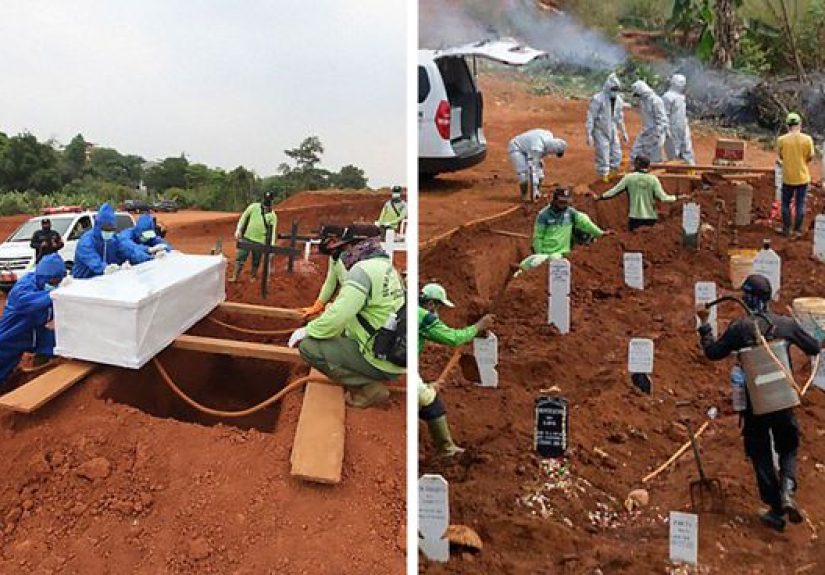
In September 2020, reports from Indonesia said local authorities in Cerme district, Gresik Regency, East Java, ordered several residents who had violated mask rules to dig graves for people who had died from COVID-19. The number most widely reported was eight offenders. The headline version called them “anti-maskers,” although the more precise description is that they were people caught in public without masks during a period when face coverings were mandatory.
The punishment stood out for two reasons. First, it was public and symbolic. Second, it was tied directly to the human cost of the pandemic. Authorities were not making violators do generic community service like sweeping a sidewalk or collecting trash. They were sending them to a cemetery, the one place where denial gets very quiet very fast.
Officials reportedly framed the measure as both punishment and education. The idea was simple: if people refused to believe COVID-19 was serious, let them witness the labor surrounding pandemic death. It was also reported that cemetery workers were under heavy pressure, which made the order feel less like political theater and more like a rough-edged local response in an emergency.
Why This Story Exploded Worldwide
There are some headlines that practically come with their own neon lights. This was one of them. It had everything that makes a story travel: a controversial punishment, pandemic politics, moral drama, and a vivid image that readers could instantly picture. It also tapped into a global frustration that had been simmering for months. By late 2020, many people were exhausted by arguments over masks, even as health officials kept warning that face coverings could reduce viral spread.
The story resonated far beyond Indonesia because it spoke to a universal pandemic problem: how do you convince people to take a public health threat seriously when statistics alone no longer work? By that stage of COVID-19, charts, case counts, and press briefings had become background noise for many people. But a cemetery? That cuts through.
In that sense, the Java grave-digging order became more than a local punishment. It became a global symbol of just how surreal and strained public health enforcement had become. One place had turned noncompliance into a confrontation with mortality, and the rest of the world couldn’t look away.
The Bigger Context: Indonesia’s COVID-19 Burden
To understand why such a punishment emerged, it helps to remember what Indonesia was facing. During 2020, the country was under serious pressure from rising case numbers, uneven restrictions, and concerns about testing, reporting, and public compliance. East Java was among the areas repeatedly identified as heavily affected during the pandemic’s earlier waves, while Jakarta’s cemeteries and burial systems also came under increasing strain.
That burial pressure was not just anecdotal. Reports from the period described graveyards in and around Jakarta handling far more COVID-19 burials in September 2020 than they had during calmer weeks in July and August. Later reporting also pointed to a major increase in burials over the course of 2020, suggesting that the visible stress on cemeteries was not media exaggeration. It was part of the lived infrastructure crisis of the pandemic.
In other words, the Java story did not appear in a vacuum. It came from a moment when the distance between public rule-breaking and public death felt terribly short. For communities watching graves fill and workers struggle to keep up, mask enforcement was not some abstract debate about personal preference. It was tied to ambulance sirens, funeral logistics, and exhausted families trying to bury loved ones with dignity.
Did the Punishment Make Sense?
This is where the story gets uncomfortable, and honestly, it should. On one hand, the punishment had a certain grim logic. Officials wanted a deterrent. They wanted a message people would remember. Mission accomplished. Few penalties say “please follow basic health rules” quite like making someone help prepare the ground for people who didn’t make it.
On the other hand, effective public health is not supposed to run entirely on fear, shame, and dramatic symbolism. Experts have long warned that misinformation, distrust, and inconsistent communication can make people less likely to follow health guidance. Public compliance tends to improve when rules are clear, leaders are credible, and communities understand both the reason for the policy and the stakes of ignoring it.
That is why the Java punishment remains so divisive. It may have been emotionally powerful, but emotional power and long-term effectiveness are not always the same thing. A policy can be memorable and still raise ethical concerns. It can communicate urgency while also inviting questions about dignity, coercion, and whether public shame is a smart substitute for public trust.
What Mask Resistance Really Revealed
The phrase “anti-masker” became a kind of pandemic shorthand, but it often flattened a more complicated reality. Some people rejected masks because of ideology. Some because of misinformation. Some because they were confused by changing guidance. Some simply did not want the inconvenience. And some treated the whole thing like a challenge to their independence, as if a piece of fabric had somehow staged a coup against liberty.
That messy mix mattered. Public health was not dealing with one single behavior problem. It was dealing with a trust problem, a communication problem, and a social identity problem all at once. Research and public-health guidance during the pandemic consistently emphasized that masks could help reduce transmission, especially as part of layered prevention strategies. But facts alone did not always win. Rumors spread fast. Social media added gasoline. Mixed messaging made everything worse.
The Java case showed what can happen when a local government decides to fight that resistance not with another pamphlet, but with a vivid moral lesson. It was a blunt-force way of saying: this virus is real, these deaths are real, and your choices are not separate from the consequences.
Why the Cemetery Was Such a Powerful Symbol
Cemeteries are where public health stops being theoretical. They are the final ledger. During COVID-19, burial grounds around the world became places of tragic evidence. They showed what case curves meant in human terms. They showed the hidden labor of pandemic response. And they reminded everyone that behind every number was a family trying to process loss under extraordinary restrictions.
That is why the grave-digging punishment hit such a nerve. It forced a collision between denial and consequence. A person who ignored mask rules was being placed, literally, in the geography of grief. It was not subtle, and subtlety was clearly not the goal.
From a messaging standpoint, the cemetery was also brutally effective because it stripped away the comfortable distance many people kept between themselves and the pandemic. It is easy to dismiss a statistic. It is much harder to dismiss fresh soil, a shovel, and the knowledge that someone else’s family will soon stand there crying.
Public Health, Punishment, and the Ethics Problem
There is a reason this story still sparks debate. It sits at the intersection of two ideas that do not always get along: public safety and individual rights. During emergencies, governments often expand enforcement in the name of protecting the public. Sometimes that is necessary. Sometimes it becomes excessive. The pandemic exposed both realities at once.
Supporters of tough enforcement argued that extraordinary times justified extraordinary measures. Critics countered that humiliation-based penalties could undermine trust, target vulnerable people, or create a false impression that fear is the same thing as education.
Both arguments contain some truth. Public health needs compliance, but it also needs legitimacy. A community may obey a frightening rule in the short term and still come away more cynical, more resentful, or less trusting in the long run. That is one reason the best public health systems do not rely only on punishment. They rely on clear communication, consistent leadership, access to protective tools, and policies people can realistically follow.
What the Story Still Says in 2026
Years later, the Java incident reads like a dispatch from the emotional extremes of the COVID era. It reminds us how quickly societies can move from persuasion to punishment when institutions are stressed and patience evaporates. It also shows that the pandemic was never only about medicine. It was about behavior, belief, symbolism, and the constant struggle to make collective risk feel personal.
Viewed now, the story is less a curiosity and more a warning. When public trust erodes, governments are tempted to compensate with spectacle. When misinformation spreads, officials may resort to shock tactics. And when death becomes too visible to ignore, policy can start speaking the language of grief instead of the language of public service.
That is the deeper meaning of the grave-digging order in Java. It was not just a weird punishment from a weird moment. It was a sign of how thin the line can become between public education and public shaming when fear is high and systems are stretched.
Experiences Related to the Story: What This Moment Likely Felt Like on the Ground
To make sense of this story, it helps to step away from the headline and consider the human experiences surrounding it. For cemetery workers, the pandemic was not a culture war. It was physical labor, repeated grief, and relentless exposure to mourning. Reports from Indonesia during the height of COVID-19 described gravediggers working long hours as burials rose. That means the story was not just about punishing mask violators. It was also about a workforce operating in a constant atmosphere of death, exhaustion, and urgency.
For families of COVID-19 victims, the experience was likely even harsher. Every new grave represented a rushed goodbye, a disrupted ritual, and the trauma of losing someone during a crisis that often limited normal funeral practices. In many communities, burial is not just a practical task; it is sacred, social, and deeply emotional. When cemeteries become crowded and funerals become compressed by emergency conditions, grief can feel unfinished. The headline about anti-maskers digging graves may have sounded shocking to outsiders, but for families standing near those plots, there was nothing theatrical about it. It was just another day the pandemic took too much.
For the rule-breakers themselves, the punishment probably created a sudden and uncomfortable collision with reality. A mask violation might have felt trivial moments earlier, something easy to shrug off or joke about. A cemetery would have changed the mood instantly. Even if the offenders did not handle bodies and were assigned limited tasks, the symbolism alone was heavy. Fresh graves have a way of ending arguments no social media thread ever could. The lesson was not subtle: actions that seem minor in public can connect to consequences that are devastating in private.
For local authorities, the experience was likely shaped by frustration as much as policy. Officials in many parts of the world spent the pandemic trying to balance health rules, public resistance, limited resources, and mounting pressure to “do something.” In that climate, punishments became messages. The Java order may have been crude, but it reflected a common official emotion from that era: exhaustion with people who still treated COVID-19 like an overreaction while others were burying the dead.
And for readers today, the experience of revisiting this story can be strangely disorienting. It may sound extreme, but it also captures a truth many people remember: the pandemic kept producing moments that felt unbelievable until you remembered the scale of the loss. That is why this story lasts. Not because it is bizarre, but because it compresses the whole era into one image: disbelief on one side, grief on the other, and a shovel in the middle.
Final Thoughts
The story of local authorities ordering anti-maskers to dig graves in Java, Indonesia, remains one of the most unforgettable snapshots of the COVID-19 era. It was dramatic, controversial, and impossible to ignore. But more importantly, it revealed what happens when public health systems are under immense pressure and ordinary messaging no longer feels strong enough.
At its core, this was not just a story about punishment. It was a story about grief made visible. It was about how a community tried to force reality onto people who were treating a deadly virus too casually. Whether you see the policy as necessary, excessive, or somewhere in between, it reflected a painful truth of the pandemic: when preventive measures are dismissed, someone else often pays the price.
If the headline still feels shocking, that may be the point. COVID-19 left millions of deaths, broken routines, fractured trust, and a long trail of stories that sounded unbelievable because the times themselves were unbelievable. Java’s grave-digging order was one of those stories. It still matters because it asks a hard question we should never stop asking: how do societies respond when too many people refuse to take shared risk seriously until the consequences are standing right in front of them?