Table of Contents >> Show >> Hide
- What Is the Philips Hue Light Strip, Exactly?
- Setup and Installation: Easier Than It Looks
- Smart Features and App Control
- Performance: Brightness, Color Quality, and Everyday Use
- Where Philips Hue Light Strips Really Shine
- Limitations and Annoyances
- Philips Hue vs. Other Smart LED Light Strips
- Are Philips Hue Light Strips Worth It?
- Real-World Experiences: Tested Like a Bob Vila Project
- Final Verdict: A Premium Strip for Serious Smart Lighting Fans
If you’ve spent any time doomscrolling smart home content, you’ve probably seen the glowing rainbow of a Philips Hue light strip in someone’s kitchen, behind a big-screen TV, or framing a gaming setup. These flexible LED strips promise “limitless possibilities” for mood lighting, task lighting, and full-on smart home wizardryat a premium price.
But are Philips Hue light strips actually worth it, especially now that competitors like Govee, Nanoleaf, and Wyze sell much cheaper LED strips? After looking at lab-style tests, specs from Philips, and hands-on reviews (including those from Bob Vila’s testing team), this deep-dive breaks down what you really get for the moneyand who should skip them.
What Is the Philips Hue Light Strip, Exactly?
In this review, we’re mainly talking about the Philips Hue White and Color Ambiance Lightstrip Plus (often just called the Hue Lightstrip Plus). It’s a flexible, 80-inch (about 2-meter) LED strip you can stick under cabinets, behind furniture, or along coves and shelves to create a wash of colored or white light.
Some key specs from Philips:
- Brightness: Up to around 1,700 lumens at 4000K for the newest versionsroughly as bright as a high-output LED bulb spread along the full strip.
- Color and white light: Millions of colors plus adjustable white light from warm (cozy, candlelike) to cool (daylight-like) tones.
- Length and flexibility: The base strip is about 2 meters, cuttable at marked points, and extendable (up to about 10 meters with extensions on certain models).
- Control: Bluetooth out of the box, or Zigbee plus Matter if you connect it to a Philips Hue Bridge for full smart home integration.
- Lifespan: Rated for around 25,000 hoursenough for years of daily use.
- Indoor use: IP20 rating, so it’s meant for dry, indoor locations (no showers or outdoors with this version).
In short, Hue light strips are designed less like cheap party lights and more like a permanent part of your home’s lighting system. The ecosystem is the main selling point: the strip plays nicely with Hue bulbs, Hue lamps, smart buttons, motion sensors, and major voice assistants.
Setup and Installation: Easier Than It Looks
Unboxing and First Impressions
Out of the box, the Hue Lightstrip Plus feels more like a finished lighting product than a random roll of LEDs from a discount retailer. The strip is coated in a flexible, translucent material that diffuses the light, and the integrated adhesive backing is ready to stick onto cabinets or walls. The power supply and controller are included, so you don’t need to hunt for extra transformers or adapters.
Most reviewersand Bob Vila’s testersnote that the strip looks and feels premium. The cabling is tidy, the connectors feel solid, and the overall design doesn’t scream “DIY experiment” once installed. That matters if you’re putting this in a kitchen or living room instead of a dorm room.
Mounting the Strip
Installation is pretty straightforward:
- Plan the route: Dry-fit the strip where you want itunder cabinets, behind a TV, around a bed framebefore peeling any adhesive.
- Clean the surface: Wipe down the mounting area so the adhesive sticks properly. Greasy cabinets are enemy number one.
- Stick and press: Peel the backing and press the strip in place a section at a time, especially around corners.
- Trim if necessary: Cut only at the marked scissor icons if you need a shorter run.
- Plug in and power up: Connect to power, then pair via Bluetooth or the Hue Bridge.
For most people, the biggest “installation skill” required is patience. Once it’s up, though, it looks clean and intentionalmore like built-in lighting than a temporary gadget.
Smart Features and App Control
Philips Hue’s secret weapon is not just the hardwareit’s the software and ecosystem. The Hue app is mature, powerful, and relatively easy to navigate compared with a lot of budget-brand apps.
Bluetooth vs. Hue Bridge
You can use the strip in two main ways:
- Bluetooth only: Out of the box, you can control the strip with your phone within Bluetooth range. You can change colors, dim the lights, and pick from basic scenes.
- With a Hue Bridge: Add the Hue Bridge and the strip joins your full Hue system via Zigbee (and now Matter compatibility through certain hubs). You unlock remote control away from home, advanced automations, integrations with Alexa/Google/Apple Home, and the ability to group dozens of Hue devices together.
This flexibility is great, but it also exposes one of Hue’s pain points: Bluetooth performance can be flaky, especially in bigger homes or noisy wireless environments. Several long-term testers have reported occasional lag or dropped connections when using only Bluetooth, while Zigbee via the Bridge tends to be rock solid.
Scenes, Routines, and AI-Assisted Lighting
The Hue app includes a gallery of scenesthink “Arctic Aurora,” “Tropical Twilight,” or “Relax”that instantly change your strip’s color and brightness. You can also create your own looks, tie them to schedules or motion sensors, and sync multiple lights throughout your home.
Philips has also started rolling out an AI-powered lighting assistant that lets you create scenes using voice or text prompts (for example, “give me a cozy rainy-day reading scene”). Features like this apply to all Hue lights, including the strips, and keep the system feeling fresh and high-end as the smart lighting market evolves.
Performance: Brightness, Color Quality, and Everyday Use
Here’s where the Hue light strip really earns its reputation. Independent tests and user reviews consistently mention three big strengths: brightness, color quality, and smooth dimming.
Brightness and White Light
At up to around 1,600–1,700 lumens spread across the strip, Hue is noticeably brighter than many bargain LED strips. When installed under kitchen cabinets, it comfortably doubles as functional task lighting, not just a decorative glow. Dimming is smooth across the range, so you can go from “let’s chop onions” bright to “late-night snack” subtle without harsh steps.
The adjustable white light temperature means you can pick a warm 2700K tone for evening or a cooler 4000K+ tone for focusing at a desk. That flexibility is a big step up from single-color warm-white strips.
Color Reproduction and Effects
The color rendering on Hue strips is rich and consistent. Reds look deep rather than pinkish, blues are vivid without blowing out, and pastels don’t just merge into generic white. While some competitors now offer individually addressable zones with more dramatic animated effects, Hue focuses on clean, even light that feels more “architectural” than “arcade.”
If you’re after wild gradients and fireworks-style animations along the strip itself, Govee and Nanoleaf may go further in that direction. But for classy, whole-room scenes that coordinate with other light fixtures, Hue’s color performance holds up extremely well.
Where Philips Hue Light Strips Really Shine
Once installed, Hue light strips can quietly improve day-to-day life in ways that go beyond “cool colors.” Common use cases from real-world testing and long-term owners include:
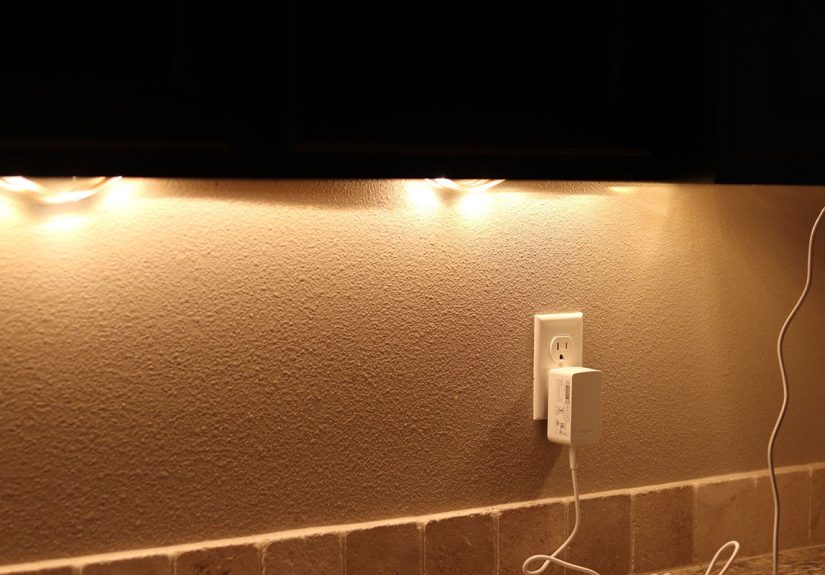
- Under-cabinet kitchen lighting: Bright enough for food prep, with the option to dial it down for late-night snacking.
- TV bias lighting: A soft halo behind the TV reduces eye strain and makes the picture appear higher contrast.
- Bed frame or toe-kick lighting: Motion-triggered low light at night so you’re not blinded at 3 a.m.
- Home office backlighting: Subtle color shifts to signal “work time,” “meeting mode,” or “done for the day.”
- Accent lighting in living rooms or hallways: Highlight floating shelves, coves, and architectural details.
The common thread: Hue strips are usually used as part of a larger lighting plan, not as a one-off novelty. If you already own Hue bulbs or fixtures, the strip slots in almost effortlessly.
Limitations and Annoyances
As good as the Philips Hue Lightstrip Plus is, it’s not perfect. There are some downsides that may be deal-breakers depending on your budget and expectations.
The Big One: Price
Hue products are among the most expensive smart lighting options on the market, and light strips are no exception. The base kit costs significantly more than many competitors’ full-length strips, and extensions add up quickly. In the United States, prices have even crept up recently due in part to tariffs and supply chain costs.
When you compare a Hue strip plus a Hue Bridge against a budget Govee or Wyze strip that includes Wi-Fi control out of the box, the price gap can be dramaticsometimes two to three times more for Hue.
Indoor Only and Limited Waterproofing
The standard Hue Lightstrip Plus is IP20-rated, which basically means “keep this dry.” If you want outdoor strips or ones for damp locations, you need different models or other brands. That’s not a flaw, but it’s a limitation buyers sometimes discover too late.
Cutting and Reusing Pieces
Like most LED strips, you can cut Hue strips only at specific points. Once you cut it, you can’t easily reuse the off-cut unless you have extra connectors or accessories. If you mismeasure, you may end up with a short or oddly placed strip.
Bluetooth Quirks Without the Bridge
Running Hue light strips in Bluetooth-only mode works fine for smaller setups, but users have reported occasional lag, failure to connect, or lights not responding reliably. These issues mostly disappear when you add a Bridge and run everything over Zigbee/Matter insteadbut, again, that adds cost.
Philips Hue vs. Other Smart LED Light Strips
Smart light strips have exploded in popularity, and Hue now competes with a whole lineup of strong alternatives. Here’s how Hue typically stacks up:
Hue vs. Govee
Govee strips tend to be much cheaper and often feature individually addressable zones with impressive animated effects. They’re great for gamers and users who love dynamic scenes. However, Hue still wins on integration: the Hue ecosystem, app polish, and reliability (especially with the Bridge) feel more refined. If you value everyday dependability and whole-home lighting scenes over flashy patterns, Hue has the edge.
Hue vs. Nanoleaf
Nanoleaf is known for stylish light panels and light bars, but its strips and bulbs compete in the same smart lighting space. Nanoleaf strips can be extremely bright and work well in Apple Home setups. However, if you already have a Hue Bridge and several Hue lights, adding a Nanoleaf strip means one more app and one more ecosystem to manage. Hue remains the “one brand to rule them all” approach.
Hue vs. Generic Wi-Fi Strips
There are countless Wi-Fi LED strips from no-name brands on large online marketplaces that cost a fraction of Hue’s price. Some are surprisingly decent for temporary setups or holiday decor. But you’re gambling on long-term app support, firmware updates, security, and color accuracy. Hue, backed by a major lighting manufacturer, is the safer choice if you want something that should still work years from now.
Are Philips Hue Light Strips Worth It?
The answer depends on who you are.
They’re Worth It If…
- You already use Philips Hue bulbs or fixtures and love the ecosystem.
- You want reliable, high-quality lighting that feels permanent, not like a toy.
- You care about smooth dimming, accurate colors, and polished app control.
- You’re willing to pay more upfront for a system that integrates neatly with Alexa, Google, and Apple Home.
They Might Not Be Worth It If…
- You want the cheapest possible way to add color lighting.
- You’re only planning to use a single strip in one room and don’t care about smart home automation.
- You’re more excited by wild gradients, music-sync patterns, and individually addressable LEDs than by “serious” architectural lighting.
In other words, Philips Hue light strips make the most sense when you think of them as part of a whole-home smart lighting systemnot as an isolated purchase. If that’s your goal, they’re genuinely hard to beat.
Real-World Experiences: Tested Like a Bob Vila Project
So what is it actually like to live with Philips Hue light strips day after day? Think of this section as the “we drilled into cabinets so you don’t have to” part of the review.
Under-Cabinet Kitchen Test
One of the most popular tests involves installing the Hue strip under kitchen cabinets. Once mounted and set to a bright, neutral white, the strip is bright enough to illuminate the countertop for food prep, even with other lights off. The light falls evenly across the backsplash and counter, without obvious hotspots or dark gaps.
Switching to a warm white makes the kitchen feel cozy and relaxed for dinner or late-night tea. On weekends, you can switch to soft color sceneslike a dim amber or pastel purpleto create a slightly festive, café-like vibe without turning your kitchen into a nightclub.
The main complaint in this scenario isn’t brightness or qualityit’s price. When people calculate how much it would cost to run strips under all cabinets and across a larger kitchen, the total can be eye-opening. For many homeowners, that’s still worth it for the reliability, but budget-conscious DIYers might mix Hue with cheaper strips in less visible areas.
TV Bias Lighting and Living Room Use
Behind a TV, the Hue strip acts as bias lighting. At low brightness and a neutral white tone, it helps reduce eye strain and makes the picture appear richer. You don’t need to crank the brightness; even at 10 to 20 percent, the glow is noticeable.
For movie nights, you can switch to deeper colorslike a very dim, warm amber or subtle blueto match the mood without distracting from the screen. If you have other Hue bulbs in the room, you can tie them into the same scene, so a single tap puts your whole living room into “movie mode.”
Some users pair their Hue setup with sync boxes or TV apps that change the lighting based on what’s on the screen. While this requires extra hardware and cost, it’s one of those “once you try it, you can’t unsee it” upgrades for home theater fans.
Bedroom and Nighttime Scenarios
In bedrooms, a Hue light strip under the bed or along the baseboard becomes an extremely practical nightlight. Using motion sensors, you can set the strip to come on at 5 to 10 percent brightness with a warm color temperature when someone gets out of bed at night. That’s enough to see where you’re going without waking you up fully.
Parents often appreciate this feature for kids’ rooms: instead of a plug-in nightlight that’s either on or off, the Hue strip can fade in gently at bedtime, dim overnight, and turn off automatically in the morningall controlled from the app.
Home Office and Productivity Lighting
In a home office, a Hue strip behind a monitor or backlighting shelves can actually help with focus. Setting a cooler, brighter white during working hours can make the space feel more energetic, then switching to a warmer, softer tone at the end of the day signals that work is done.
Because Hue strips integrate with routines, you can automate these shifts. For example, at 9 a.m., the strip brightens to a crisp daylight white, while at 6 p.m. it fades to a warm, relaxing tone. It’s a subtle but effective way to give your brain time cues when working from home blurs the line between office and living room.
Day-to-Day Reliability
Most long-term Hue users report that once they’ve installed the strips and set scenes, they mostly forget about themand that’s a compliment. Lights turn on when they should, turn off when they should, and respond to voice commands quickly, especially when using a Bridge.
Occasional hiccups happen (like a scene not triggering or a Bluetooth-only setup failing to connect), but overall, the system is more stable than many competing apps and devices. That reliability matters more the longer you live with the lightsespecially when your family expects the lights to just work.
Final Verdict: A Premium Strip for Serious Smart Lighting Fans
Philips Hue light strips are not the cheapest way to bathe your walls in color, but they are one of the most polished, dependable, and flexible options available. In true Bob Vila spirit, you can think of them like quality power tools: bargain models might get the job done, but the high-end version feels better, lasts longer, and integrates more smoothly into the rest of your setup.
If you want professional-looking accent lighting that doubles as functional illuminationand you’re building or already invested in a smart home ecosystemPhilips Hue light strips are absolutely worth considering. If you just want a quick hit of neon glow for as little money as possible, you’ll be happier with a cheaper brand.
SEO metadata in JSON format