Table of Contents >> Show >> Hide
- Why Minimalists Approach Holiday Decorating Differently
- The Holiday Decor Minimalists Would Never Buy
- 1. Giant Inflatable Yard Decor
- 2. Glitter-Coated Everything
- 3. Loud Holiday Word Signs
- 4. Matchy-Matchy Decor Sets
- 5. Cheap Plastic Faux Greenery That Looks… Suspicious
- 6. Tiny Knickknacks That Multiply Like Rabbits
- 7. Fragile Ornaments You Have to Babysit
- 8. Trendy Holiday Decor With No Shelf Life
- 9. Over-The-Top Tablescape Extras
- 10. Sale-Bin Decor Bought Only Because It’s Cheap
- What Minimalists Prefer in Holiday Decor
- How to Shop Like a Minimalist During Holiday Sales
- A Personal Take: What I Learned From Buying Too Much Holiday Decor
- Conclusion
There are two kinds of people during the holidays: the ones who see a blinking reindeer on clearance and whisper, “It’s destiny,” and the ones who stare at it for three seconds and think, “That thing is going to live in my garage until 2034.” This article is for the second group.
Minimalist holiday decor is not about being anti-fun, anti-Christmas, or anti-anything that sparkles. It is about being anti-regret. It is about choosing holiday decorations that feel warm, intentional, timeless, and actually pleasant to live with once the sugar cookies are gone and the gift wrap explosion has settled. A minimalist home during the holidays should still feel festive, but it should not feel like a craft store had a nervous breakdown in your living room.
That is why minimalists tend to skip the holiday decor items that are flashy, flimsy, overly themed, hard to store, or impossible to style without creating visual chaos. Yes, even if they are 40% off. Yes, even if the label says “limited edition.” And yes, even if your cart is already halfway to checkout.
If your goal is a clutter-free holiday home that feels elegant instead of exhausting, here are the holiday decor buys minimalists would never touch, plus what they choose instead.
Why Minimalists Approach Holiday Decorating Differently
Minimalists do not decorate less because they hate tradition. They decorate with more intention because they want their homes to feel calm, cohesive, and livable. In other words, the holiday setup should support the season, not swallow the entire house whole.
That mindset changes everything. Instead of buying decorations because they are trendy, discounted, or weirdly adorable in the store, minimalists ask a few ruthless questions: Does this work with my existing space? Will I still like it next year? Does it have to be stored in a giant plastic tub? Does it make the room feel better or busier? If the answer is “busier,” back on the shelf it goes.
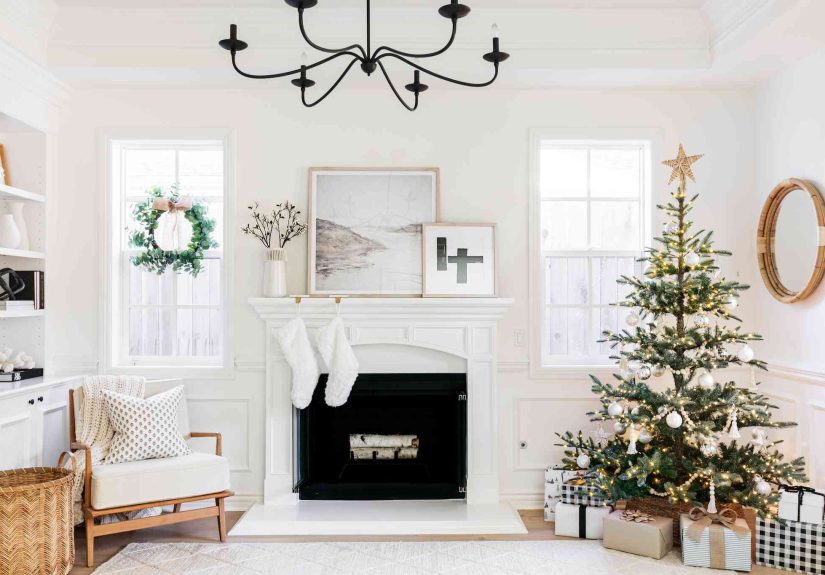
A minimalist Christmas decor strategy usually leans on a restrained color palette, natural textures, warm lighting, and fewer pieces with bigger impact. Think greenery, candles, ribbon, paper ornaments, wood accents, ceramic houses, linen stockings, and one beautiful wreath instead of seventeen tiny holiday knickknacks looking for shelf space.
The real magic is that this style often feels more expensive, even when it costs less. Why? Because it looks curated. And curated always beats crowded.
The Holiday Decor Minimalists Would Never Buy
1. Giant Inflatable Yard Decor
Minimalists are not usually bringing home a 9-foot snowman that deflates into a sad puddle by sunrise. Inflatable holiday decor is the fast food of seasonal design: fun for a minute, not exactly elegant, and oddly hard to forget once it is in your life.
These oversized pieces dominate a porch or lawn, compete with the architecture of the house, and often look more chaotic than charming. They can also read as visually noisy, especially in small outdoor spaces. And when they are not inflated, they have all the grandeur of a crumpled raincoat.
What minimalists buy instead: a classic wreath, a simple garland, a pair of lanterns, potted evergreens, or warm white string lights that make the entry feel inviting rather than cartoonish.
2. Glitter-Coated Everything
Glitter is the clingy ex of holiday decor. Once it enters your home, it refuses to leave with dignity. It gets on the mantel, in the rug, on your sweater, and somehow inside a coffee mug you have not used since Thanksgiving.
Minimalists avoid glitter-heavy ornaments, signs, faux florals, and table decor because the finish tends to look fussy instead of refined. It also adds visual static. A calm room needs texture and glow, not a full-scale sparkle riot.
What minimalists buy instead: matte finishes, brushed metal accents, glass with clean lines, velvet ribbon, paper stars, or ornaments in wood, ceramic, linen, or soft metallics.
3. Loud Holiday Word Signs
If a sign has to scream “JOY,” “MERRY,” “LET IT SNOW,” and “BELIEVE” all at once, a minimalist is probably going to walk away. Word decor is one of the quickest ways to make a room feel over-themed, especially when multiple signs are layered together like the home has turned into a motivational bulletin board for Santa.
The issue is not the sentiment. The issue is the literalness. Minimalist holiday decorating usually favors atmosphere over announcements. The room should feel festive without needing subtitles.
What minimalists buy instead: framed winter botanicals, a bowl of ornaments, a branch arrangement, simple stockings, or candles that quietly do the job without shouting from the shelf.
4. Matchy-Matchy Decor Sets
The all-in-one holiday bundle can be tempting: matching tree skirt, matching stockings, matching pillow covers, matching table runner, matching mug, matching dish towel, matching everything short of the dog. But minimalists tend to side-eye anything that looks too coordinated in a “decor starter pack” kind of way.
Perfectly matched decor often feels flat and overly themed. It can make a home look staged rather than personal. Minimalists usually prefer a collected look, where each item feels chosen instead of assigned by a seasonal catalog committee.
What minimalists buy instead: a limited palette with varied textures. Cream, forest green, brass, black, and natural wood can look deeply festive without feeling like they came in a shrink-wrapped holiday bundle.
5. Cheap Plastic Faux Greenery That Looks… Suspicious
Not all faux greenery is bad. But the shiny, obviously fake kind with the weirdly aggressive pine scent? That is usually a no. Minimalists love the look of nature because it softens a space and adds warmth. They do not love fake stems that look like they were assembled in a hurry by a robot with no emotional connection to cedar.
Cheap faux garlands and wreaths can make even a beautiful room look tired. They also tend to age badly, shed, flatten, or lose shape in storage. A bargain is not a bargain if it looks worn out by year two.
What minimalists buy instead: real greenery in small doses, high-quality faux stems mixed with real branches, magnolia leaves, eucalyptus, pinecones, bare branches, or one excellent wreath instead of five mediocre ones.
6. Tiny Knickknacks That Multiply Like Rabbits
Mini Santas. Mini elves. Mini sleighs. Mini ceramic snowmen. Tiny bottlebrush trees in every possible corner. Individually, each one seems harmless. Together, they become a dusting project with a backstory.
This is one of the biggest reasons minimalists avoid novelty holiday decor. Small decorative objects create visual clutter fast, especially when scattered across shelves, side tables, counters, and windowsills. They also require more setup, more arranging, more dusting, and more storage bins in January.
What minimalists buy instead: fewer, larger elements with presence. One sculptural vase of winter branches can do more for a room than twelve tiny figurines lined up like they are waiting for coffee.
7. Fragile Ornaments You Have to Babysit
Minimalists are practical. If you have toddlers, pets, a tiny space, or a general history of bumping into furniture while carrying cocoa, a tree full of super-delicate glass ornaments may not be the peaceful holiday move you think it is.
Beautiful? Sure. Relaxing? Not if every guest brushing past the tree turns into an action scene. Minimalist homes aim for ease. Decor should feel enjoyable, not like a liability.
What minimalists buy instead: shatter-resistant ornaments, paper ornaments, dried orange slices, wooden beads, bows, pinecones, or a deliberately sparse tree where every ornament earns its branch.
8. Trendy Holiday Decor With No Shelf Life
Every year has its “must-have” holiday item. Maybe it is the hyper-themed color of the moment. Maybe it is a gimmicky tree topper. Maybe it is a viral decor object that looks amazing in one social media video and deeply confusing in real life.
Minimalists usually skip trend-driven holiday purchases because they know seasonal trends burn hot and fast. Something can be wildly popular in November and look dated by January. Buying because something is “on trend” is often just a festive version of panic shopping.
What minimalists buy instead: timeless holiday decor they can reuse for years: neutral stockings, classic candlesticks, vintage ornaments, linen ribbons, brass bells, simple wreaths, and pieces tied to memory rather than internet momentum.
9. Over-The-Top Tablescape Extras
Holiday tables can get cluttered in a hurry. Chargers, place-card holders, decorative napkin rings, faux snow, mini trees, scattered ornaments, themed crackers, and enough centerpiece material to block eye contact across the table. It starts as “festive” and ends as “pass the potatoes through this obstacle course.”
Minimalists want the table to feel warm and special, but still functional. If guests cannot see each other, set down a drink, or reach the gravy without moving a ceramic deer, the decor has officially taken over.
What minimalists buy instead: a simple runner, taper candles, greenery down the center, cloth napkins, and maybe one low arrangement. A holiday table should frame the meal, not wrestle it for attention.
10. Sale-Bin Decor Bought Only Because It’s Cheap
This is the big one. Minimalists are suspicious of the “But it was on sale!” defense because they know a discounted item still costs money, takes up space, and demands storage. The cheapest holiday decoration can become the most expensive if it creates clutter for years.
Holiday sale shopping often triggers a strange seasonal optimism. Suddenly you are buying six extra pillow covers, a glitter reindeer, two peppermint-scented wreath picks, and a felt sign you did not even like ten minutes ago. Why? Because red clearance stickers are powerful little hypnotists.
Minimalists resist this by focusing on fit, function, and longevity. A deal only counts if the item was right for the home before it was marked down.
What minimalists buy instead: almost nothing on impulse. If they do buy, it is usually one thoughtful upgrade that replaces something flimsy, fills a real need, or becomes part of a long-term holiday decorating plan.
What Minimalists Prefer in Holiday Decor
Once you strip away the clutter, the minimalist holiday home still has plenty of charm. It just gets there differently. Instead of a hundred competing pieces, it uses a handful of intentional choices that create mood.
Warm white lights instantly soften a room. Fresh greenery adds scent, texture, and life. Candles make everything look more flattering, including your last-minute wrapping job. Velvet ribbon can elevate a tree, a wreath, or even a stack of plain boxes. Neutral ornaments and natural materials blend with everyday decor instead of fighting it. A small tabletop tree can be just as magical as a towering one if it suits the room.
The secret is not deprivation. It is editing. Minimalist Christmas decor works when it feels connected to the home you already have. It should not look like you packed away your personality and replaced it with a December costume.
How to Shop Like a Minimalist During Holiday Sales
If you are trying to keep holiday decorating intentional, use this simple test before buying anything seasonal: Would I want this if it were full price? Do I already own something that does the same job? Can I picture exactly where it will go? Will I be happy storing it for the next eleven months? Does it make my home feel calmer, warmer, or more “me”?
If those answers are shaky, the item is probably not a smart buy. Walk away. Let it live its life on that discount shelf.
A more minimalist approach is to decorate slowly, build traditions around fewer objects, and invest in pieces with staying power. That might mean one excellent wreath instead of a cart full of random filler. It might mean using what you already own in a fresh way. It might even mean deciding that your holiday home only needs candles, greenery, and a beautifully lit tree. Imagine that: peace on earth, and also on your mantel.
A Personal Take: What I Learned From Buying Too Much Holiday Decor
For years, I decorated for the holidays like I was being graded on enthusiasm. If a little garland was good, then six garlands had to be better. If one wreath looked pretty on the door, then surely a basket of miniature wreaths belonged on every window, cabinet, and unsuspecting chair back. I was not decorating a house so much as trying to win an invisible pageant called Most Committed to December.
And every year, the same thing happened. I would buy holiday decor because it was cute, cheap, or “too good to pass up,” and by the second week of the season, my house felt busy instead of cozy. The mantel was crowded. The coffee table had no room for actual coffee. The entryway looked festive, yes, but also mildly stressed. I had created a holiday atmosphere that was photogenic for six minutes and annoying for six weeks.
The real breaking point came one January when I was packing everything away. I had bins full of decorations I barely used, forgot I owned, or did not even like that much. There were glittery ornaments that shed like nervous confetti, novelty signs I was embarrassed to display by year two, and a collection of sale-bin impulse buys that made me wonder if I had been temporarily possessed by a coupon app.
That was the year I changed how I decorate. I stopped shopping for quantity and started shopping for feeling. I asked myself what actually made my home feel special during the holidays. The answer was not more stuff. It was softer lighting, a real wreath, a bowl of ornaments, candles on the table, fresh greenery on the mantel, and a tree that did not need to be dressed like it was headed to a red carpet event.
I also learned that the most memorable holiday decor is usually the least aggressive. A velvet ribbon tied around a vase. A few pine branches in a crock. White lights glowing in the corner while the kitchen smells like cinnamon and something buttery. Those details do not beg for attention, but they completely change the mood of a room.
Now, when holiday sales roll around, I still look. I am human. But I look differently. I do not ask, “How cheap is it?” I ask, “Will this earn its storage space?” That single question has saved me money, time, and several future headaches involving overstuffed plastic bins.
The funny thing is, decorating less has made the season feel richer. My home feels calmer. The pieces I keep mean more. Setup takes less time, cleanup is dramatically less tragic, and the whole house feels more like itself, just dressed up for the holidays instead of disguised by them.
So no, minimalists are not missing out by skipping the giant sale section of holiday decor. If anything, they are avoiding the exact kind of impulse buys that turn a cheerful season into a storage problem. And honestly, that may be the most festive wisdom of all.
Conclusion
The holiday decor minimalists would never buy is not necessarily the cheapest, the loudest, or the most popular item in the store. It is anything that creates clutter, fights the room, or only feels appealing because of a markdown sticker. Minimalist decorating is about choosing beauty with intention: warm light over visual noise, natural texture over plastic shine, timeless pieces over trend-chasing, and atmosphere over excess.
So the next time a sale tries to convince you that your home urgently needs a glitter moose in a scarf, take a deep breath. Minimalism does not kill holiday cheer. It just asks better questions before bringing it through the front door.