Table of Contents >> Show >> Hide
- Lawn Weeds 101: A Quick Game Plan
- 1. Dandelion
- 2. Crabgrass
- 3. White Clover
- 4. Chickweed
- 5. Plantain
- 6. Ground Ivy (Creeping Charlie)
- 7. Yellow Nutsedge
- 8. Spotted Spurge
- 9. Oxalis (Yellow Woodsorrel)
- 10. Bindweed
- 11. Thistle (Canada Thistle and Relatives)
- 12. Foxtail Grass
- Safe and Smart Weed Control: A Few Quick Notes
- Real-World Lessons from Battling Lawn Weeds
- Conclusion
If your lawn currently looks like a salad bar for rabbits instead of a lush green carpet, you’re in good company. Weeds love thin, stressed turf, compacted soil, and distracted homeowners. The good news? Once you know what you’re looking at and how it behaves, even the toughest lawn weeds become manageable.
This guide breaks down 12 of the most common lawn weeds you’re likely to see across the U.S. We’ll cover how to identify each one, why it’s so stubborn, andmost importantlyhow to get rid of it and keep it from crashing your lawn party again.
Lawn Weeds 101: A Quick Game Plan
Before we pick on individual weeds, it helps to understand why they’re there in the first place. Extension services and turf experts agree on one big idea: a dense, healthy lawn is the best weed control strategy you’ll ever use. Thick turf shades the soil, outcompetes weed seedlings, and recovers quickly from use and weather stress.
Across university extension resources and professional lawn guides, three themes come up again and again:
- Cultural control first. Proper mowing height, overseeding bare spots, watering deeply (but not constantly), and fertilizing at the right times make weeds less competitive.
- Use herbicides thoughtfully. Pre-emergent products help stop annual grassy weeds like crabgrass from sprouting, while selective post-emergent products target broadleaf weeds such as dandelions and clover without killing your grasswhen applied correctly.
- Know your weed’s life cycle. Annuals (like crabgrass) die each year from seed, while perennials (like dandelions and plantain) come back from roots. Timing your attack around those cycles makes life much easier.
With that playbook in mind, let’s meet the usual suspects.
1. Dandelion
How to Identify Dandelion
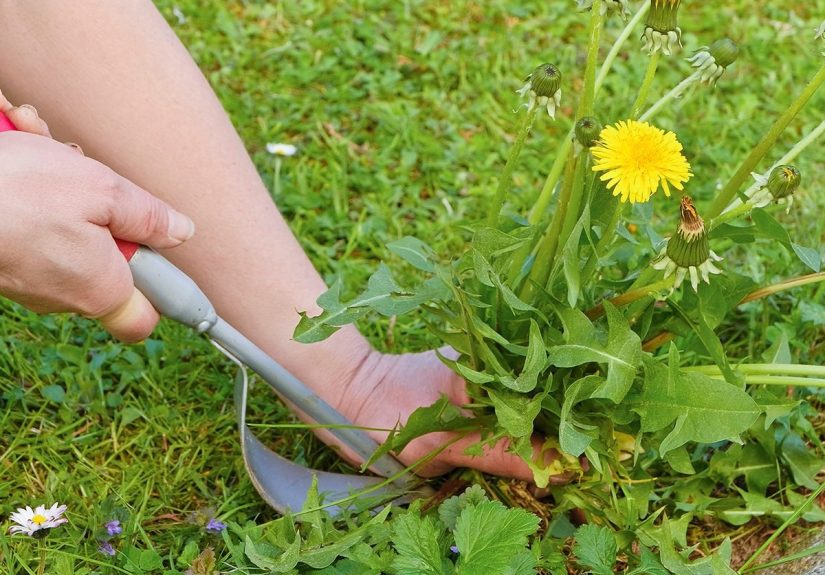
Dandelions are the poster child for lawn weeds: bright yellow flowers on hollow stalks, jagged “lion’s tooth” leaves in a basal rosette, and those fluffy seed heads just waiting for a kid (or a breeze) to scatter them across your yard.
Why Dandelions Are a Problem
Dandelions are tough perennials with deep taproots that can reach a foot or more into the soil. Snap the top off and the root simply shrugs and grows back. They steal water, nutrients, and space from turf, especially in thin or neglected lawns.
How to Get Rid of Dandelions
- Manual removal: Use a long-shaft weeding tool or screwdriver to loosen soil and pry out as much of the taproot as possible. Pull when soil is moist for best results.
- Spot-treat broadleaf herbicide: Apply a selective broadleaf herbicide labeled for dandelions in fall or early spring when the plant is actively moving energy to its roots. Always follow label directions.
- Prevention: Keep your lawn thick with overseeding and proper fertilization so fewer seeds find bare soil to colonize.
2. Crabgrass
How to Identify Crabgrass
Crabgrass is a coarse, light-green, annual grass that forms low, spreading clumps. The stems radiate out from the center like crab legs, with seed heads that look like several fingers extending from a single point. It often pops up along sidewalks, driveways, and bare patches of lawn during the hottest part of summer.
Why Crabgrass Is a Problem
Each crabgrass plant can produce thousands of seeds, which remain in the soil and germinate year after year. It loves compacted soil, thin turf, and full sun. Once it takes hold, it can quickly outcompete desired grass, leaving ugly bare patches when it dies in fall.
How to Get Rid of Crabgrass
- Pre-emergent control: Apply a pre-emergent herbicide in early spring, just before soil temperatures consistently reach about 55°F (often around when forsythia blooms in many regions). This prevents crabgrass seedlings from establishing.
- Post-emergent control: For existing plants, use a selective crabgrass herbicide labeled for your grass type while the plants are still young and small.
- Lawn care basics: Mow at the upper end of the recommended height for your turf species, aerate compacted soil, and overseed bare or thin spots so crabgrass seeds have fewer places to sprout.
3. White Clover
How to Identify White Clover
White clover forms low mats of three-leaflet clovers (sometimes with the lucky four-leaf surprise) and small white pom-pom flowers. It creeps by stolons, rooting at nodes as it spreads.
Why Clover Is a Problem
Clover actually fixes nitrogen, which is great in a meadow but less charming when it turns your front yard into a patchwork quilt. It thrives in lawns with low fertility and can quickly outcompete thin turf.
How to Get Rid of Clover
- Improve soil fertility: Because clover loves low-nitrogen soil, applying fertilizer according to soil test recommendations can give your grass the edge.
- Spot-treat: Use a selective broadleaf herbicide that lists clover on the label.
- Hand removal: Small patches can be dug out with a trowel, making sure to remove the rooting stolons.
4. Chickweed
How to Identify Chickweed
Common chickweed is a cool-season annual that forms low, bright-green mats with small, oval leaves and tiny white star-shaped flowers. It often appears in early spring or fall, especially in moist, shady areas.
Why Chickweed Is a Problem
Chickweed grows fast, sets seed quickly, and can smother young grass. It loves thin turf and compacted, moist soil.
How to Get Rid of Chickweed
- Hand pulling: Shallow roots make it fairly easy to pull when soil is damp.
- Mulching in beds: A 2–3 inch layer of mulch in landscape beds helps prevent chickweed from sprouting.
- Selective herbicide: Broadleaf herbicides labeled for chickweed can be used in established lawns; follow timing and temperature guidelines on the label.
5. Plantain
How to Identify Plantain
Broadleaf plantain grows as a rosette of large, oval leaves with prominent parallel veins and tall, narrow seed spikes. Buckhorn plantain has more lance-shaped leaves but the same general rosette habit.
Why Plantain Is a Problem
Plantain tolerates compaction and low fertility, so it loves high-traffic areas such as along walkways and kids’ play zones. Its deep fibrous roots make it tough to remove by casual tugging.
How to Get Rid of Plantain
- Manual removal: Use a weeding knife to cut below the crown and pull out the root system.
- Broadleaf herbicide: Spot-treat with a selective product during active growth.
- Fix the soil: Aerate compacted spots and follow a regular fertilization schedule so turf can reclaim the area.
6. Ground Ivy (Creeping Charlie)
How to Identify Ground Ivy
Ground ivy, a member of the mint family, has square stems, round scalloped leaves, and small bluish-purple flowers. It creeps aggressively along the soil surface, rooting at nodes and forming dense mats.
Why Ground Ivy Is a Problem
It thrives in moist, shady lawns and can quickly choke out grass. Once established, it’s notoriously hard to control because it spreads by stolons and can regrow from small fragments.
How to Get Rid of Ground Ivy
- Improve light and drainage: Prune trees and shrubs to allow more sunlight to reach the turf and divert water away from persistently soggy areas.
- Specialty herbicides: Use a lawn herbicide labeled specifically for ground ivy; it often requires multiple applications spaced according to the label.
- In beds, not lawns: In landscape beds, smother patches with cardboard and mulch or dig them out, roots and all.
7. Yellow Nutsedge
How to Identify Yellow Nutsedge
Yellow nutsedge looks like grass but stands taller and stiffer, with shiny, yellow-green leaves in groups of three around a triangular stem. It often forms clumps in wet or poorly drained areas.
Why Nutsedge Is a Problem
This is not actually a grass but a sedge, with underground tubers (“nutlets”) that make it extremely persistent. Break the top off and multiple new shoots may appear.
How to Get Rid of Yellow Nutsedge
- Improve drainage: Correct low areas, fix irrigation leaks, and avoid overwatering to make the lawn less hospitable.
- Specialized herbicides: Use a nutsedge-specific product labeled for your turf; standard broadleaf herbicides won’t touch it.
- Patience: Expect to treat for multiple seasons; nutsedge is a long-game opponent.
8. Spotted Spurge
How to Identify Spotted Spurge
Spotted spurge forms flat, spreading mats with reddish stems and small, paired leaves often marked with a darker spot. When broken, the stems ooze a milky sap.
Why Spurge Is a Problem
It grows rapidly in hot weather, especially in thin turf and bare soil along sidewalks and driveways. Some people find its sap irritating to skin.
How to Get Rid of Spurge
- Hand weeding: Pull small patches before they set seed, wearing gloves if you’re sensitive to the sap.
- Pre-emergent: Products labeled for annual broadleaf weeds can help prevent spurge from germinating.
- Turf thickening: Overseed thin areas and maintain proper mowing height so spurge seeds don’t get the sunlight they crave.
9. Oxalis (Yellow Woodsorrel)
How to Identify Oxalis
Oxalis looks a bit like clover but with heart-shaped leaflets that fold up at night, plus small yellow flowers. It often appears in lawns, flower beds, and cracks in pavement.
Why Oxalis Is a Problem
Oxalis spreads by both seeds and tiny underground bulbs, making it persistent once established. It can quickly fill gaps in lawns and beds.
How to Get Rid of Oxalis
- Pull carefully: Remove the entire plant, including bulbs, when the soil is moist.
- Mulch beds: A thick layer of mulch in landscape areas helps block new seedlings.
- Selective herbicide: In turf, use a broadleaf herbicide labeled for oxalis, following timing and temperature guidelines.
10. Bindweed
How to Identify Bindweed
Field bindweed is a twining vine with arrow-shaped leaves and white or pink funnel-shaped flowers that look like small morning glories. It winds through grass, shrubs, and fences.
Why Bindweed Is a Problem
Bindweed has a deep, extensive root system and spreads by rhizomes and seed. Once it’s comfortable, it can strangle other plants and is infamously hard to eliminate.
How to Get Rid of Bindweed
- Persistence: Repeatedly cut or pull top growth to starve the root system. Expect this to take multiple seasons.
- Targeted herbicide use: In non-turf areas, some homeowners paint systemic herbicide onto bindweed leaves to limit contact with desired plants. Always follow label directions and local regulations.
- Barrier methods: In beds, consider landscape fabric plus mulch over heavily infested areas.
11. Thistle (Canada Thistle and Relatives)
How to Identify Thistle
Thistles are prickly customers with spiny leaves and purple or pink flower heads. Canada thistle, a common lawn and pasture pest, spreads by creeping roots and stands taller than most turf grasses.
Why Thistles Are a Problem
The spines make thistles painful to walk on barefoot or mow over, and their spreading root systems make them difficult to remove completely.
How to Get Rid of Thistle
- Digging: For small infestations, dig out as much of the root system as possible, wearing gloves and long sleeves.
- Repeated cutting: Mowing or cutting plants just as they’re about to flower helps weaken the root system over time.
- Selective herbicides: Use broadleaf herbicides labeled for thistle control in turf, with repeat applications as recommended.
12. Foxtail Grass
How to Identify Foxtail
Foxtail is an annual grassy weed with bushy, bottlebrush-like seed heads that resemble a fox’s tail. Leaves are flat and often wider than typical turf grass. Plants tend to appear in disturbed or bare areas during warm weather.
Why Foxtail Is a Problem
Its seed heads can be irritating to pets and people, and like crabgrass, each plant can produce a large number of seeds that persist in the soil.
How to Get Rid of Foxtail
- Pre-emergent herbicide: Apply products labeled for annual grassy weeds in early spring, before seeds germinate.
- Mowing and bagging: Mow before seed heads mature and bag clippings to avoid spreading seeds.
- Dense turf: Overseed and fertilize appropriately so foxtail seedlings can’t compete with established grass.
Safe and Smart Weed Control: A Few Quick Notes
It’s tempting to reach for “miracle” home remedies like straight vinegar or random household chemicals, but many of these either don’t kill the roots or can damage your soil, nearby plants, and hardscape surfaces. Stick with proven methods: hand weeding, mulch, good lawn care practices, and EPA-registered herbicides used exactly as the label directs. When in doubt, your local cooperative extension office is a fantastic resource for region-specific recommendations.
Real-World Lessons from Battling Lawn Weeds
Reading about weed control is one thing. Actually spending Saturday morning chasing crabgrass around your driveway is another. Here are some field-tested lessons and experiences that can save you time, money, and a few deep sighs.
1. The Year I Tried to “Out-Mow” the Dandelions
Many homeowners (maybe you) have tried this strategy: “If I just mow often enough, the dandelions won’t bloom and go to seed.” In practice, this usually ends with more mowing, the same number of dandelions, and a slightly grumpier attitude. Dandelions can send up new flower stalks shockingly fast. Without addressing the rootliterallyyou’re just giving them haircuts.
The takeaway: mowing is important for lawn health, but it’s not a standalone weed control method for deep-rooted perennials. Pair regular mowing with either careful hand-digging or spot-treating with a selective herbicide during peak growth periods.
2. The “Bare Patch Magnet” Problem
Every lawn has that one trouble spot: maybe it’s along the driveway where cars park, or under the swing set where the kids launch themselves into orbit. Those compacted, bare, or thin areas act like neon signs for crabgrass, spurge, and foxtail: “Vacancy! Free sunlight!”
Homeowners who address weeds but ignore the underlying thin turf quickly learn that nature hates a vacuum. You pull one weed and three more move in. The more successful approach is to fix the bare patch itself: loosen the soil, add a little compost, overseed with a turfgrass mix appropriate for your climate, and protect the area until the grass fills in. Once the lawn is dense, weed pressure in that spot drops dramatically.
3. When “Natural” Doesn’t Mean “Effortless”
There’s a growing interest in avoiding synthetic herbicides, which is understandable. But a weed-free lawn without them usually requires more time and physical effort. Hand pulling dandelions with a long weeding tool, mulching beds regularly, and overseeding religiously can absolutely keep weeds at a low levelbut it works because you’re consistently removing their opportunities to grow.
For many homeowners, the sweet spot is a hybrid strategy: cultural practices as the foundation (healthy soil, correct mowing height, overseeding, good watering habits), plus carefully targeted herbicide use when weeds are beyond what hand pulling can reasonably handle. That keeps chemical use limited while preserving your weekends.
4. The Timing Trick That Changes Everything
A lot of frustration with weed control comes down to timing. For example, pre-emergent crabgrass products don’t affect mature plants. They’re designed to stop seeds from sprouting. Apply too latewhen crabgrass is already visibleand you’ve essentially just fed your lawn an expensive snack without getting the weed control you wanted.
Likewise, treating perennial broadleaf weeds like dandelions in late fall or early spring, when they’re actively moving nutrients into their roots, gives herbicides a much better chance of reaching and damaging that deep root system. Randomly spraying on a hot summer afternoon is less effective and more stressful for your turf.
5. Patience Beats Perfection
Last, a bit of perspective: even professional grounds crews rarely achieve a 100% weed-free lawn. You will still see the occasional dandelion, stray clump of nutsedge, or foxtail waving in the back corner. The goal is not sterile perfection but a healthy, attractive lawn where weeds are minor background characters, not the main cast.
When you approach weed control as an ongoing processimproving soil, thickening turf, staying ahead of annual weeds with pre-emergents, and spot-treating tough perennialsyou’ll find that every season gets easier. And that, in lawn care terms, is a big win.
Conclusion
Weeds may seem unstoppable, but they’re really just plants taking advantage of opportunities: bare soil, compacted areas, thin turf, and mistimed lawn care. By learning how to identify the 12 most common lawn weeds and using a smart mix of cultural practices, hand weeding, and properly chosen herbicides, you can dramatically reduce weed pressure and reclaim your lawn.
A lawn free of obvious weed patches is easier to mow, more comfortable to walk on, and much better for curb appeal. Start with one or two problem areas, apply the tactics from this guide, and build from there. Over time, you’ll spend less energy battling weeds and more time actually enjoying your yard.
SEO Summary for Publishers
meta_title: 12 Common Lawn Weeds and How to Get Rid of Them
meta_description: Learn how to identify 12 common lawn weeds and get rid of them with simple, proven lawn care and weed control tips.
sapo: Weeds taking over your lawn? From dandelions and crabgrass to clover, chickweed, and creeping Charlie, this guide breaks down the 12 most common lawn weeds and exactly how to deal with each one. Learn how to identify them at a glance, choose the right weed control method, and use simple lawn care habitslike proper mowing, overseeding, and smart pre-emergent timingto keep future weeds from moving in. With a little strategy (and maybe a good weeding tool), you can turn a patchy, weedy yard back into the thick, green lawn you actually want to walk on.
keywords: common lawn weeds, weed identification, how to get rid of weeds, dandelion control, crabgrass control, lawn weed control tips, natural lawn care