Table of Contents >> Show >> Hide
- Why Shenzhen Feels Different
- The Art Side: Where Shenzhen Gets Wonderfully Weird
- The Craft Side: Markets for People Who Love Materials
- The Food Side: Shenzhen Eats Like a City Built by Motion
- The Music Side: Shenzhen Has a Better Soundtrack Than You Think
- How to Explore Shenzhen Like a Hacker, Not a Checklist Tourist
- Conclusion
- Extended Experience: What a Creative Day in Shenzhen Actually Feels Like
Say “Shenzhen” and most people picture circuit boards, neon electronics malls, and a city that seems to sprint even when everyone else is merely walking. That reputation is not wrong, exactly. But it is wildly incomplete. Shenzhen is also a city where painters work behind open studio doors, where factory buildings have been reborn as culture parks, where printmaking villages still feel calm enough for a long exhale, where a food crawl can jump from Cantonese comfort to all-China flavor chaos, and where jazz, classical music, and instrument shops give the city a richer soundtrack than its tech-first stereotype suggests.
In other words, Shenzhen rewards the curious. And by “hackers,” this guide means the good kind: makers, tinkerers, design nerds, obsessive browsers, collectors of weird details, and travelers who would rather find the soul of a place by wandering through a frame shop or a tea market than by standing in a line for an overly polished selfie spot. If that sounds like your travel style, Shenzhen is not just interesting. It is ridiculously fun.
Why Shenzhen Feels Different
Part of Shenzhen’s appeal is that it behaves like a future city while still leaving plenty of room for handmade culture. It is not just a tech hub; it is also internationally recognized for design, and that matters when you are trying to understand why arts and crafts feel so deeply woven into the city’s identity. Shenzhen’s creative energy does not hide in one precious historic quarter. It spills into neighborhoods, markets, museums, and repurposed industrial spaces. That gives the city a distinct vibe: less “museum of the past,” more “prototype of what culture looks like next.”
That contrast is what makes the city such a thrill. You can spend the morning around electronics and hardware culture, then disappear into a neighborhood full of oil painters, handmade fabrics, jazz posters, print workshops, and noodle shops by lunch. Shenzhen does not force you to choose between high-tech and high-touch. It lets both exist in the same afternoon.
The Art Side: Where Shenzhen Gets Wonderfully Weird
Dafen Oil Painting Village: The Famous Art Maze
No creative guide to Shenzhen can begin anywhere else. Dafen Oil Painting Village is the city’s best-known visual-art district for a reason. It has long been famous for mass-produced oil painting, reproductions, custom commissions, framing shops, and artists working at an astonishing pace. But reducing Dafen to “the place with copied Van Goghs” misses the real point. The neighborhood is a living demonstration of how commerce, craft, and creativity collide.
Walk through Dafen and you quickly notice that the place works on multiple levels. Yes, there are galleries selling everything from decorative canvases to more polished fine-art pieces. Yes, there are artists who can turn a photo into a painted portrait. But there are also supply stores, studio corners, quiet alleys, custom frame workshops, and more original work than outsiders often expect. It feels like an ecosystem rather than a single attraction.
That is why Dafen is so compelling for a hacker mindset. It shows process, not just product. You are not simply looking at finished art on a wall. You are seeing how an art economy functions: materials, labor, speed, customization, presentation, shipping, and reinvention. The place is practical and poetic at the same time, which is honestly a pretty unbeatable combo.
If you love observing how things are made, Dafen is catnip. If you love buying art without a gallery-level attitude problem, even better. And if you just want a neighborhood that proves Shenzhen has far more texture than its glossy skyline suggests, Dafen absolutely delivers.
Guanlan Printmaking Village: Shenzhen’s Slow-Breath Counterpoint
After Dafen’s visual overload, Guanlan Printmaking Village feels like Shenzhen taking a deep, elegant breath. Located in an old Hakka village, Guanlan mixes heritage architecture, workshops, galleries, and tree-lined calm in a way that feels almost suspiciously peaceful for a megacity. This is where Shenzhen’s creative side becomes quieter, more tactile, and more reflective.
The beauty of Guanlan is not just that it is photogenic, though it absolutely is. It is that the village lets you experience printmaking as a living practice rather than a dusty category from an art-history textbook. Workshops, exhibitions, and artist spaces give the area substance, while the Hakka buildings and slower rhythm keep it grounded. It is a place for people who like their culture with a side of actual atmosphere.
If Dafen is Shenzhen’s extroverted art engine, Guanlan is its thoughtful studio notebook. Both matter. Together, they explain why the city’s creative reputation is not hype.
OCT-LOFT: The Creative District That Feels Like a Prototype of Cool
OCT-LOFT is one of those neighborhoods that cities around the world keep trying to invent: old industrial bones, contemporary galleries, design shops, café life, outdoor installations, leafy walkways, and enough event programming to make you feel like something interesting might happen at any moment. In Shenzhen, it actually works.
The district’s charm comes from its lack of stiffness. It is artsy, yes, but not in a “please whisper near the expensive concrete” way. It is walkable, browsable, and genuinely pleasant to spend time in. You can duck into exhibition spaces, scan posters for upcoming performances, linger at a café, then drift toward another warehouse-turned-cultural venue without ever feeling like you are following a tourist script.
For travelers who prefer a city to reveal itself through neighborhoods instead of monuments, OCT-LOFT is essential. It is the sort of place where Shenzhen’s design identity becomes legible. Suddenly the city’s creative confidence makes sense.
Sea World Culture and Arts Center: Big Architecture, Bigger Ambition
If OCT-LOFT is the cool indie playlist, Sea World Culture and Arts Center is the polished concept album. This waterfront landmark adds serious institutional weight to Shenzhen’s cultural scene. It combines architecture, exhibitions, design programming, and a location in Shekou that makes the whole experience feel a little breezier and more globally connected.
The center also represents something bigger than itself. Shenzhen is not content with being described as a place that manufactures other people’s ideas. Venues like this argue that the city wants to host, shape, and export creative thinking of its own. That ambition gives the whole city more cultural gravity.
For visitors, it is a smart stop because it pairs well with everything else nearby: food, waterfront strolling, and a more international side of Shenzhen nightlife. It is culture without the feeling of homework.
The Craft Side: Markets for People Who Love Materials
Sungang Arts & Crafts City: Maximum Browsing, Minimum Regret
If your ideal souvenir is not a magnet but a weirdly beautiful notebook, a set of brushes, decorative objects, or something you did not know you needed until five minutes ago, Sungang Arts & Crafts City is your happy place. This area is packed with stationery, toys, festive decorations, gift items, and interiors-related goods. It has the joyful energy of a place where practical shopping and pure visual distraction join forces.
There is something deeply satisfying about Shenzhen’s craft markets because they do not separate creativity from utility. Pens, paper, brushwork tools, décor pieces, and custom items all exist in the same universe. For designers, illustrators, DIY people, or anyone who gets excited by good materials, that is dangerous in the best possible way.
Luohu Fabric Mall: Where “I Wish This Existed” Can Become Reality
Some cities make you shop. Shenzhen makes you commission. That is the magic of Luohu Fabric Mall. Instead of buying whatever happens to be hanging on a rack, you can start with an idea, choose your fabric, then work with a tailor to make something specific. For anyone obsessed with customization, textiles, or clothes that do not look like they were assembled by committee, this place is pure delight.
The experience also reveals something fundamental about Shenzhen: the city is built around making. In Luohu, that logic extends from electronics to fashion and household textiles. You are not just consuming. You are specifying. That tiny shift changes the whole mood of shopping. Suddenly you are part traveler, part art director, part chaos manager, and part very optimistic person holding six swatches of fabric.
The Food Side: Shenzhen Eats Like a City Built by Motion
Shenzhen’s food culture makes sense once you remember what the city is: fast-growing, deeply regional, heavily migrant, and constantly mixing influences. That means you should not expect one neat culinary label to explain everything. Instead, expect range. You can find Cantonese foundations, food from other parts of China, street-market energy, tea culture, international dining zones, and a general sense that eating here is part fuel stop, part treasure hunt.
Sea World and the International Dinner Crawl
Sea World is one of the easiest places to feel Shenzhen’s cosmopolitan side. Food culture there reflects the city’s international character, and the area works especially well in the evening when lights, waterfront atmosphere, and dining options all team up to make you feel smarter and cooler than you probably are. It is the kind of place where a casual dinner can accidentally turn into a full night out.
What makes it work is the convergence. Chinese and foreign cuisines sit next to each other without strain. Shenzhen is a city built by movement, and its food scene reflects that fluidity. The result is less about one canonical dish and more about appetite, curiosity, and momentum.
Markets, Breakfasts, and the Joy of Eating Between Stops
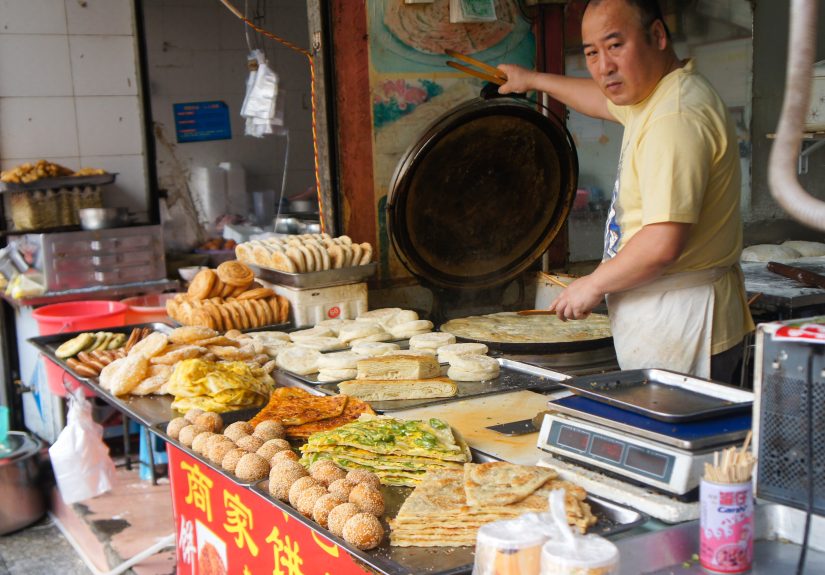
For a more everyday Shenzhen food experience, markets and street-side stalls matter just as much as polished dining districts. This is where the city feels immediate: buns, noodles, breakfast pastries, produce, herbs, preserved meats, tea, and quick meals grabbed in the middle of errands. The vibe is not glamorous. That is precisely the point.
Hackers, makers, and serial neighborhood wanderers tend to appreciate food that arrives as part of movement. Shenzhen is great for that. A breakfast stop near a market, a noodle lunch between galleries, a tea break after browsing art supplies, and a late dinner in Shekou can build a more memorable day than any “top ten restaurants” checklist ever could.
Mingxiang Tea Market: Not a Meal, Still Essential
Tea culture deserves its own mention because it slows Shenzhen down in the best way. At Mingxiang Tea Market, the experience is not simply transactional. It is conversational, sensory, and social. You sit. You drink. You compare. You learn. That makes it the perfect reset between more visually intense parts of the city.
If your idea of travel pleasure includes discovering the texture of a place through something as simple as how people pour tea and talk over it, then add this stop to your list. Shenzhen may move fast, but it still knows how to pause with purpose.
The Music Side: Shenzhen Has a Better Soundtrack Than You Think
Shenzhen Musical Instrument City
This place is a gift for anyone who believes cities reveal themselves through specialist markets. Shenzhen Musical Instrument City is exactly the sort of spot that makes a themed guide worthwhile. The building has long been known for its huge concentration of instruments, from Western strings and brass to traditional Chinese instruments like the erhu and zheng. Even better, it is not just retail. There is repair work, modification, craftsmanship, and a lived-in musician culture inside.
That matters because Shenzhen is often described in purely digital terms. Instrument City reminds you that analog skill still has a pulse here. A violin being adjusted by hand or a shop owner casually playing in the downtime tells you more about the city than another skyline photo ever will.
Jazz, Festivals, and the City’s Expanding Cultural Calendar
Music in Shenzhen is not confined to one shopping complex. OCT-LOFT has become especially important for live performance culture, and its jazz programming has helped prove that the city is interested in more than background ambience. It wants serious performance energy. Recent festival activity and broader cultural programming suggest that Shenzhen’s identity is continuing to widen, especially as design events, art fairs, and music festivals gain more attention.
That is part of the city’s appeal right now. Shenzhen does not feel culturally finished. It feels in motion. For travelers, that creates a special kind of excitement. You are not just visiting a place with an established scene. You are watching a scene keep building itself.
How to Explore Shenzhen Like a Hacker, Not a Checklist Tourist
First, walk more than you think you need to. Shenzhen’s creative neighborhoods reward drift. Second, split your days by texture instead of category. Pair a high-energy market with a calm gallery district. Follow a design-heavy morning with a tea stop. Let dinner turn into music. Third, pay attention to process. In Shenzhen, the magic is often not the final object but the ecosystem around it: the making, the modifying, the displaying, the bargaining, the improvising.
Also, plan practically. China is highly digital in everyday transactions, public transport is often the smartest way to move around, and being prepared with your phone, payments, and translation tools will make the whole experience smoother. Shenzhen is easy to love when you arrive ready to participate instead of standing around like your map app personally betrayed you.
Conclusion
Shenzhen is one of the most misunderstood creative cities in Asia. Its tech reputation is so strong that many travelers overlook the art villages, craft markets, music spaces, tea culture, and food neighborhoods that make the city feel human, layered, and surprisingly soulful. But once you know where to look, Shenzhen becomes a dream destination for anyone who loves process, design, subculture, browsing, and the little thrill of discovering that the city in front of you is more interesting than the cliché you arrived with.
A true hacker’s guide to Shenzhen is not about escaping the city’s identity. It is about expanding it. Shenzhen is not only where things are manufactured. It is where ideas become objects, neighborhoods become cultural laboratories, and a simple day out can turn into a crash course in how creativity works when it is plugged directly into daily life. Come for the circuitry if you must. Stay for the canvases, textiles, tea, noodles, jazz posters, and one very dangerous urge to commission custom everything.
Extended Experience: What a Creative Day in Shenzhen Actually Feels Like
The best way to understand this topic is to imagine what a full creative day in Shenzhen feels like from the inside. You start in a city that already seems switched on before breakfast. The sidewalks are moving, the metro is efficient, and the skyline looks like someone challenged an architect to design the future using only confidence and glass. Then, almost without warning, the city begins to soften.
You leave the high-speed, businesslike parts behind and enter a neighborhood like Dafen. Suddenly the pace changes. Studio doors are open. Paintings lean against walls. Frames are stacked like ingredients waiting for the next idea. Someone is working in a corner with the concentration of a surgeon and the paint-splattered apron of a person who gave up worrying about laundry a long time ago. A few steps later, you pass a café with a tiny terrace and realize this is not a side note to Shenzhen. It is one of the main stories.
By midday, the city starts to reveal its favorite trick: contrast. You can move from oil painting to printmaking, from an old Hakka village to a repurposed factory district, from handmade textures to sleek architecture, and none of it feels forced. In Guanlan, the streets are calmer, the trees seem more patient, and the art feels rooted in time. In OCT-LOFT, the mood flips again. Now it is all design-forward storefronts, exhibition posters, cafés, music flyers, and that delicious sense that creativity here is not an event, it is a habitat.
Then food enters the picture, which in Shenzhen usually means momentum. Maybe it is a quick bowl of noodles after a gallery stop. Maybe it is a market snack grabbed between neighborhoods. Maybe it is dinner in Sea World, where the city gets a little theatrical after dark and the mix of Chinese and international flavors mirrors the mix of cultures that built modern Shenzhen in the first place. There is a special pleasure in eating in a city that does not ask you to treat dinner as a formal ceremony every single time. Sometimes the best meal is simply the right one between two memorable walks.
Music completes the loop. In Shenzhen, that might mean browsing instruments instead of hearing a symphony first, and honestly that feels perfectly on brand. You see rows of violins, traditional Chinese instruments, repair benches, and shops that suggest music here is still tactile. It still lives in wood, strings, brass, and careful hands. Later, maybe that energy turns into a live set, a jazz event, or a performance space tucked inside a larger cultural district. The point is not only what you hear. It is what the city sounds like when you pay attention.
By the end of the day, Shenzhen no longer feels like a stereotype. It feels like a system of creative worlds connected by metro lines, appetite, curiosity, and restless invention. That is why this guide matters. Shenzhen is not merely a place to visit. It is a place to decode. And once you start decoding it through arts, crafts, food, and music, the city becomes less intimidating, more surprising, and far more unforgettable.