Table of Contents >> Show >> Hide
- What Happened In The Viral "Micro-Cheating" Story?
- What Micro-Cheating Actually Means And Why The Term Gets Messy Fast
- Why Pre-Relationship Behavior Is Not The Same As Cheating
- When Hurt Is Really About Insecurity, Not Infidelity
- How Couples Should Define Exclusivity Before The Internet Does It For Them
- What This Story Really Says About Trust In Relationships
- Experiences Related To This Topic That Many People Quietly Recognize
- Conclusion
Modern dating has somehow invented a truly exhausting sport: arguing over rules nobody actually said out loud. One minute you are scrolling your camera roll. The next minute you are apparently standing trial for a crime committed before the relationship even existed. That, in a nutshell, is why this viral story about a guy accusing his girlfriend of “micro-cheating” hit such a nerve online.
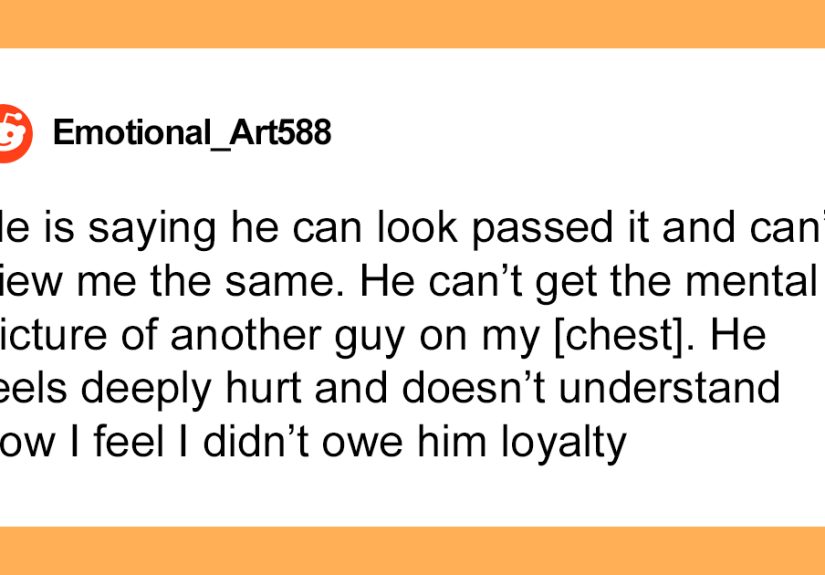
The headline-worthy conflict sounds almost too absurd to be real, which is probably why so many people instantly had opinions. A boyfriend found an old photo on his girlfriend’s phone, got stuck on the image, and treated it like a betrayal. Her defense was brutally simple and, frankly, hard to argue with: they were not together at the time. No exclusivity talk. No official label. No loyalty contract signed in blood under a full moon. Yet he still reacted as if she had violated relationship boundaries that had not even been created yet.
And that is where this conversation gets interesting. Because the story is not really just about one old photo. It is about how people define micro-cheating, how often couples skip the “what are we?” talk, and how quickly insecurity can dress itself up as moral outrage. If there is one lesson here, it is this: you cannot retroactively apply boyfriend rules to pre-boyfriend behavior and call it emotional treason.
What Happened In The Viral "Micro-Cheating" Story?
The online drama centered on a woman whose boyfriend of about a year found an old image from before they were officially together. Instead of treating it like ancient history, he interpreted it as evidence of “micro-cheating.” That accusation turned an ordinary relic of someone’s past into a present-day relationship crisis.
It is easy to see why the internet latched onto the debate. On one side, you have a partner saying, “I feel hurt.” On the other, you have the much sharper question: hurt by what, exactly? By deception? By secrecy? By a real boundary violation? Or by the emotional discomfort of realizing your partner had a life before you showed up?
Those are not the same thing. Feeling rattled by a partner’s past is human. Declaring their past behavior “cheating” when you were not even in a committed relationship is a whole different beast. One is an emotional reaction. The other is a rewrite of the timeline.
That distinction matters because relationships do not run on assumptions forever. At some point, the line between “we’re vibing” and “we are exclusive” has to be spoken, not imagined. If that line was never drawn, then calling earlier behavior a betrayal becomes less about fidelity and more about frustration, jealousy, or control.
What Micro-Cheating Actually Means And Why The Term Gets Messy Fast
Micro-cheating is one of those modern dating terms that sounds precise until you ask five people to define it and get seven answers. Broadly, it refers to small, emotionally charged, or secretive behaviors that do not look like full-blown cheating but still feel off. Think flirtatious DMs, hiding conversations, keeping a dating app active, or sharing intimate attention outside the relationship while pretending it is harmless.
The important word there is relationship. Most experts agree that whether something counts as micro-cheating depends on the agreement between the people involved. That is why the concept lives in a giant gray zone. What one couple shrugs off as playful behavior, another couple sees as a major trust violation. In other words, the label does not come from the internet. It comes from the boundaries the couple creates.
That is also why this viral case feels so lopsided. A behavior from before exclusivity is not just a gray-area issue. It belongs to a completely different chapter. If the couple had not agreed to be exclusive, then there was no shared standard for romantic loyalty yet. You cannot call someone disloyal to a promise they never made.
Of course, people often use “micro-cheating” as shorthand for something else: discomfort. The term can become a tidy little box where people dump everything that feels threatening, ambiguous, or emotionally itchy. A lingering ex. A suspicious follow. A private joke. A coworker who texts too late. A photo from the past. Suddenly, every awkward feeling gets upgraded into a courtroom exhibit.
That is exactly why healthy conversations matter more than trendy labels. A couple that relies on buzzwords instead of direct communication ends up fighting over definitions instead of dealing with the real issue underneath them.
Why Pre-Relationship Behavior Is Not The Same As Cheating
This is the part people keep trying to skip, perhaps because it ruins the drama. Cheating requires some form of understood commitment. Maybe that commitment is marriage. Maybe it is monogamous dating. Maybe it is an explicitly exclusive but not-yet-labeled relationship. But there has to be some agreement, spoken or clearly mutual, that certain behaviors are off-limits.
If there was no exclusivity talk, no defined commitment, and no understanding that both people were already acting as partners, then pre-relationship behavior does not magically become cheating just because someone feels bad about it later. Pain does not rewrite chronology.
That does not mean the boyfriend’s feelings are fake. Feelings are real. They are just not always accurate judges. A person can feel hurt, threatened, embarrassed, or insecure without that automatically proving the other person did something wrong. Sometimes the real conflict is not infidelity. It is retroactive jealousy: distress about a partner’s romantic or sexual past.
Retroactive jealousy can be especially intense because the “evidence” cannot be changed. The past just sits there, being annoyingly permanent. An old photo, a story from college, an ex’s name, a memory you wish had never existed. But the solution to retroactive jealousy is not to accuse your partner of cheating backward through time like some kind of emotional time traveler. The solution is to separate the discomfort from the accusation.
In plain English: “This bothers me” is a valid feeling. “Therefore you betrayed me before we were together” is not solid logic.
When Hurt Is Really About Insecurity, Not Infidelity
Here is where the story gets less sensational and more useful. A lot of dating conflicts that get labeled as micro-cheating are really collisions between insecurity and ambiguity. One partner feels threatened. The other feels unfairly accused. Both get defensive. Nobody actually talks about the real fear.
Maybe the boyfriend in this story was not truly angry about “micro-cheating.” Maybe he was overwhelmed by the mental image of his girlfriend being intimate with someone else, even if it happened before him. Maybe he feared comparison. Maybe he wanted reassurance. Maybe he panicked because the relationship felt fragile. Those are all human reactions.
But human reactions still need grown-up handling. Turning insecurity into prosecution rarely goes well. When one person starts policing harmless or historical behavior, the other person often ends up walking on eggshells, apologizing for things that are not actually violations, and shrinking their normal social life just to keep the peace. That does not build trust. It builds resentment with a side of emotional exhaustion.
The healthier move is to name the real problem. Not “You micro-cheated on me.” More like: “I saw something that triggered jealousy, and I’m struggling with it.” That version is less dramatic, yes. It is also far more honest and a lot more repairable.
How Couples Should Define Exclusivity Before The Internet Does It For Them
If this story proves anything, it is that exclusivity should never be left to vibes, astrology, or telepathy. If you want monogamy, say so. If you think following exes is a problem, say so. If you do not care about old photos but do care about present-day flirting, say so. Relationship boundaries work best when they are clear, specific, and mutually agreed upon.
Start with timing
There is no magical day when exclusivity becomes obvious to both people at once. One person may think, “We have been talking for months, obviously we are serious.” The other may think, “We are still figuring this out.” That gap is how people end up in completely different relationships without realizing it.
Get specific, not poetic
“I want commitment” sounds nice, but it is not specific enough. Does commitment mean deleting dating apps? No flirting in DMs? No one-on-one dinners with an ex? No romantic texting with coworkers? Old-school relationship fights were hard enough; modern ones come with read receipts and algorithmic chaos. The clearer the rules, the less room there is for interpretive dance.
Revisit the rules
Boundaries are not museum pieces. Couples change. Comfort levels change. Social media habits change. What felt harmless early on can feel different later, and vice versa. Good couples do not just set boundaries once and disappear into the fog. They revisit them, refine them, and make sure both people still feel heard.
What This Story Really Says About Trust In Relationships
The strongest takeaway from this whole mess is that trust is not created by forcing a partner to erase their past. It is created by building something steady in the present. If a relationship is healthy, an old image should not carry more weight than the actual behavior happening now. If a relationship is shaky, even a harmless memory can become a symbolic grenade.
That is why the big question is not “Was this micro-cheating?” The better question is “What does this reaction reveal about the relationship?” Is there poor communication? Unspoken expectations? Unresolved jealousy? A need for reassurance? A pattern of overreaction? Sometimes the conflict is not about the object that triggered it. It is about the weakness it exposed.
So no, she did not owe him loyalty before they were together. What they owed each other once they were together was clarity, honesty, and a shared definition of what loyalty meant from that point forward.
Experiences Related To This Topic That Many People Quietly Recognize
One reason this story resonated so strongly is because versions of it happen all the time. Maybe not with the exact same photo, but with the same emotional formula: one partner discovers something old, something vague, or something harmless-looking, then reacts as if it reveals a hidden betrayal. Suddenly the argument is not about what happened. It is about what that discovery now seems to mean.
A common example is the old camera-roll landmine. Someone is casually looking for a vacation picture and stumbles onto screenshots, flirty messages, or cozy photos from the pre-exclusive era. The partner who finds them is often not upset because the timeline is unclear. They are upset because the images make the past feel immediate. In their mind, “before us” stops feeling like history and starts feeling like competition. That emotional punch can be real even when the accusation is unfair.
Another familiar experience involves the situationship phase. Two people spend months texting every day, sleeping over, meeting friends, and acting emotionally attached, but they never actually define the relationship. Then one person finds out the other was still talking to or seeing other people during that period. The betrayed person says, “How could you do that to me?” The other says, “We never said we were exclusive.” Both technically have a point, which is exactly why situationships produce such messy heartbreak. They create emotional expectations without the protective structure of an agreement.
There is also the social media version, which may be the most 2020s relationship problem imaginable. People fight over likes, reactions, follows, archived photos, old comments, and suspiciously enthusiastic emojis as if these were state secrets. Sometimes those digital behaviors genuinely cross a line, especially when there is secrecy or flirtation involved. But sometimes they are just modern clutter that couples attach meaning to because they have not discussed boundaries directly. The app becomes the villain when the real issue is uncertainty.
Many people also recognize the exhaustion of being accused in vague terms. Not full cheating. Not even emotional cheating in the classic sense. Just that slippery phrase: “micro-cheating.” The accusation is powerful because it is hard to disprove. If the behavior is tiny, subjective, and loosely defined, the accused person can end up apologizing simply to end the conflict. Over time, that creates a relationship where one person feels morally superior and the other feels permanently on defense. That is not trust. That is surveillance wearing a relationship costume.
Then there are the people who identify more with the boyfriend’s side, even if they do not agree with how he handled it. They know what it is like to be unexpectedly rattled by a partner’s history. They know the ugly little spiral that starts with “Who was that?” and ends three hours later with “Why am I feeling weird about someone she dated before she met me?” That experience is embarrassing precisely because it feels irrational. But it is also common. Jealousy about a partner’s past does not make someone evil. It just means they need to process the feeling without turning it into an indictment.
What ties all these experiences together is the same lesson: relationships suffer when assumptions take the wheel. People need explicit conversations about exclusivity, digital boundaries, emotional intimacy, and what counts as disrespect. Otherwise, the past becomes a weapon, the present becomes a guessing game, and every awkward feeling risks being promoted into a full-blown scandal.
Conclusion
The internet loves a dramatic relationship label, but this story cuts through the noise with a very simple truth. Micro-cheating only makes sense when there is an actual relationship boundary to cross. If two people were not together, then loyalty was not yet owed in the romantic sense, no matter how uncomfortable that fact feels in hindsight.
That does not make jealousy fake or make hurt irrelevant. It just means feelings should be handled honestly instead of being turned into retroactive accusations. Healthy couples do not build trust by rewriting each other’s pasts. They build it by clearly defining the present, agreeing on the future, and talking like adults before a random old photo launches a courtroom drama in the living room.