Table of Contents >> Show >> Hide
- Before You Start: The French Dessert “Starter Pack”
- The 17 Authentic French Desserts
- 1) Crème Brûlée
- 2) Clafoutis (Cherry is the classic)
- 3) Tarte Tatin
- 4) Tarte au Citron (French Lemon Tart)
- 5) Mousse au Chocolat
- 6) Madeleines
- 7) Financiers
- 8) Canelés de Bordeaux
- 9) Crêpes (the base you’ll reuse forever)
- 10) Crêpes Suzette (without the risky part)
- 11) Profiteroles
- 12) Éclairs
- 13) Paris–Brest
- 14) Mille-Feuille
- 15) Flan Pâtissier (Parisian Flan)
- 16) Île Flottante (Floating Island)
- 17) Chocolate Soufflé
- Technique Shortcuts That Still Taste Authentically French
- How to Choose Your First Dessert (So You Actually Finish It)
- Real-Kitchen Experiences: What Learning French Desserts at Home Feels Like (500+ Words)
- Conclusion
French desserts have a reputation for being impossibly elegantlike they’re born wearing a tiny scarf and judging your mixing technique. But here’s the secret: a lot of classic French sweets are method more than mystery. Once you learn a few core moves (custard, meringue, choux, pastry cream, and caramel that doesn’t turn into a panic attack), you can make authentic French desserts at home that look patisserie-worthy… even if your kitchen playlist is pure chaos.
This guide breaks down 17 traditional French desserts you can realistically master in a normal home kitchen. Some are weeknight-friendly. Some are “invite people over so you have witnesses.” All of them teach techniques you’ll reuse again and againmeaning each dessert makes the next one easier.
Before You Start: The French Dessert “Starter Pack”
You don’t need a culinary degree. You do need a few practical habits that French pastry quietly insists on:
- Use a kitchen scale if you can. French baking loves precision. Cups work, but grams work better.
- Read the recipe once before you begin. This is not a vibe; it’s survival.
- Choose good basics. Butter, vanilla, chocolate, and eggs do heavy lifting in classic French dessert recipes.
- Chill is a technique. Many French pastries get better with resting timebatter, dough, custard, all of it.
The 17 Authentic French Desserts
1) Crème Brûlée
Why it’s iconic: Silky vanilla custard under a glassy caramel lid that cracks like thin ice.
Skill level: Beginner-friendly, as long as you don’t rush the bake.
Home-kitchen win: You can make the custards ahead, chill, and caramelize right before servingperfect for entertaining.
Pro tip: Bake gently in a water bath so the custard sets without turning into sweet scrambled eggs.
2) Clafoutis (Cherry is the classic)
Why it’s iconic: A rustic, custardy baked dessert that lives somewhere between pancake and flanvery French, very forgiving.
Skill level: Easy.
Make it authentic: Traditional versions often bake cherries with pits for extra almond-like aroma, but you can pit them for easier eating.
Flavor ideas: Swap cherries for plums, apricots, or berries; add a whisper of almond extract for that patisserie vibe.
3) Tarte Tatin
Why it’s iconic: Caramelized apples baked under pastry, then flipped into a glossy, dramatic masterpiece.
Skill level: Intermediate (caramel + flipping = excitement).
Shortcut that still feels legit: Use quality store-bought puff pastry so you can focus on caramel and apple texture.
Common mistake: Undercooking the apples before baking, so they shrink later and leave gaps like missing teeth.
4) Tarte au Citron (French Lemon Tart)
Why it’s iconic: Bright, sharp lemon filling in a sweet, buttery tart shellsimple, bold, and not shy about it.
Skill level: Intermediate.
What makes it “French”: A crisp sweet crust (often pâte sucrée) and a filling that’s tangy, smooth, and clean-tastingnot lemon-pudding sweet.
Serving move: Add lightly sweetened whipped cream (Chantilly) to balance the tartness.
5) Mousse au Chocolat
Why it’s iconic: Deep chocolate flavor with a cloud-like textureFrench bistro dessert energy at its finest.
Skill level: Beginner to intermediate (folding technique matters).
Best practice: Use good chocolate. With a recipe this minimal, cheap chocolate will loudly announce itself.
Texture tip: Fold gently so you keep the air that gives mousse its lift.
6) Madeleines
Why it’s iconic: Little shell-shaped tea cakes with a tender crumb and that classic “hump.” Fancy-looking, secretly snacky.
Skill level: Easy to intermediate.
What makes them work: Aerated eggs and a rested batter help create the signature shape and delicate texture.
Flavor ideas: Lemon zest + vanilla is classic; orange blossom is very French; browned butter makes them taste like a bakery.
7) Financiers
Why it’s iconic: Small almond cakes made with egg whites and nutty browned buttersimple, rich, and wildly underrated.
Skill level: Easy.
Why bakers love them: They’re a smart way to use leftover egg whites from custards (hello, crème brûlée).
Upgrade move: Press a raspberry or blueberry into each one before baking.
8) Canelés de Bordeaux
Why it’s iconic: Deep caramelized crust on the outside, tender custardy center insidebasically a dessert plot twist.
Skill level: Intermediate.
Key to success: Time. The batter typically rests a full day (or longer) so the flavor develops and the texture bakes correctly.
Authentic-ish without drama: Traditional copper molds are amazing, but a silicone canelé mold is a practical way to learn the method first.
Note for teens/families: Rum is traditional, but you can skip it or use rum extract for the same aromatic direction.
9) Crêpes (the base you’ll reuse forever)
Why it’s iconic: Thin, tender crêpes are a building block dessertfolded, stacked, filled, sauced, or simply sugared.
Skill level: Easy with practice.
Make-ahead win: Batter can rest in the fridge; cooked crêpes stack and reheat beautifully.
Classic serving: Butter + sugar + a squeeze of lemon. Minimal effort, maximum French café energy.
10) Crêpes Suzette (without the risky part)
Why it’s iconic: Crêpes in an orange-butter sauce that tastes like dessert wearing perfume.
Skill level: Easy to intermediate.
Safety-first approach: Traditional versions may include flambé. At homeespecially for teensskip open flames. Just simmer the orange sauce until glossy, then coat the crêpes.
Flavor tip: Rubbing citrus zest into sugar before mixing helps pull out fragrant oils and boosts flavor.
11) Profiteroles
Why it’s iconic: Crisp choux puffs filled with cream (or ice cream) and topped with warm chocolate sauce. It’s the dessert version of fireworks.
Skill level: Intermediate.
Core technique: Pâte à chouxstovetop dough that puffs dramatically in the oven.
Best beginner move: Focus on baking the shells until fully set and crisp so they don’t collapse.
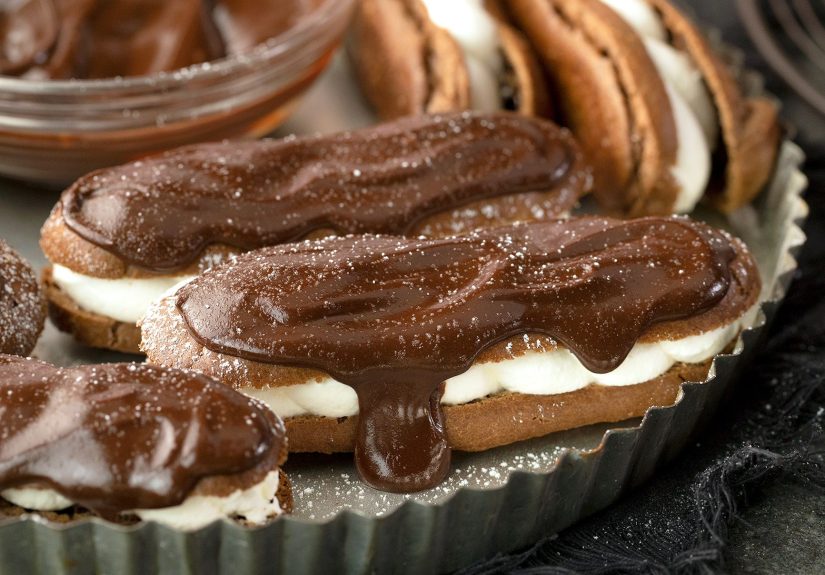
12) Éclairs
Why it’s iconic: Long choux pastries filled with pastry cream and finished with glossy icing.
Skill level: Intermediate.
Make it manageable: Use one filling (vanilla pastry cream) and one topping (simple chocolate glaze) the first time. You can get fancy later.
Pro tip: Chill the filled éclairs briefly so the topping sets neatly instead of sliding around like it’s late for something.
13) Paris–Brest
Why it’s iconic: A ring of choux pastry filled with praline creamnutty, rich, and show-stopping.
Skill level: Intermediate to advanced (but totally learnable).
What to practice first: Make a successful batch of choux puffs. Then graduate to the ring shape.
Flavor shortcut: Use a good praline paste (or make a quick nut caramel and blend) for that signature taste.
14) Mille-Feuille
Why it’s iconic: Shatter-crisp layers of puff pastry stacked with pastry cream“Napoleon” vibes, French name, dramatic crunch.
Skill level: Intermediate.
Smart shortcut: Use store-bought puff pastry and focus on baking it flat, crisp, and evenly browned.
Assembly tip: Chill the pastry cream so it holds shape; slice with a serrated knife for cleaner layers.
15) Flan Pâtissier (Parisian Flan)
Why it’s iconic: A thick vanilla custard tart with a glossy tophumble bakery staple in France, total comfort dessert anywhere.
Skill level: Intermediate.
Why it’s a great “level up” dessert: It teaches you pastry cream, baking custard to the right set, and getting clean slices.
Flavor idea: Vanilla bean is classic; a little orange zest makes it taste extra “patisserie window.”
16) Île Flottante (Floating Island)
Why it’s iconic: Soft meringue “islands” floating on crème anglaise (pouring custard). Elegant, whimsical, and secretly a technique flex.
Skill level: Intermediate.
What you learn: Two foundational skillsmeringue and custard sauce. Master these and half of France unlocks.
Finish like a pro: A drizzle of caramel and a sprinkle of toasted almonds or pistachios.
17) Chocolate Soufflé
Why it’s iconic: The ultimate “wow” dessert: airy rise, rich chocolate center, and exactly five minutes of glory.
Skill level: Intermediate (timing + egg whites).
Reality check: Soufflés don’t “fail” so much as they “return to Earth.” Serve immediately, and everyone will still be thrilled.
Best beginner strategy: Prep everything firstramekins buttered/sugared, chocolate base readythen whip whites close to bake time.
Technique Shortcuts That Still Taste Authentically French
- Use great store-bought puff pastry. You’ll still get crisp layers in mille-feuille and galette-style desserts without laminating dough for two days.
- Learn one custard, then reuse it. Pastry cream shows up everywhere: éclairs, mille-feuille, and flan pâtissier.
- Master choux once. Profiteroles, éclairs, and Paris–Brest all spring from pâte à choux.
- Respect resting time. From crêpe batter to canelé batter, patience is often the “secret ingredient” nobody wants to talk about.
How to Choose Your First Dessert (So You Actually Finish It)
If you want quick wins, start with clafoutis, financiers, chocolate mousse, or basic crêpes. If you want to build “French pastry skills” fast, go for crème brûlée (custard), profiteroles (choux), and tarte au citron (tart technique). And if you want the bragging rights dessert? Mille-feuille or soufflé will do the jobjust don’t schedule them on a day when your brain is already tired.
Real-Kitchen Experiences: What Learning French Desserts at Home Feels Like (500+ Words)
Here’s the part no one tells you when you fall in love with French desserts online: the learning curve is real, but it’s also weirdly funbecause the “mistakes” are usually still delicious. A cracked crème brûlée is still crème brûlée. A slightly lopsided tart still tastes like butter and caramelized fruit. The goal isn’t perfection; it’s building a feel for timing, texture, and temperature.
The first time you make a custard, you’ll understand why French pastry loves low heat. Custards reward patience more than talent. When you bake crème brûlée or cook crème anglaise, you start noticing small cues: how the mixture thickens, how bubbles at the edge can mean “too hot,” and how chilling transforms something soft into something sliceable and elegant. Once you learn to stop the heat before it looks “done,” you’ll suddenly feel like you’ve gained a superpower.
Choux pastry feels like magic the first time it works. You stir a dough on the stovetop, add eggs, pipe it, and thensomehowit inflates into hollow puffs. The first batch might come out a little soft because you pulled them early. That’s normal. The second batch, you’ll bake a few minutes longer, and the shells will dry out properly and hold their shape. That moment is huge because it unlocks a whole category of French pastries: éclairs, profiteroles, Paris–Brest. It’s not a “one dessert” skill; it’s a “new level” skill.
Macarons teach you to pay attention like a scientist. Not in an intimidating waymore like, “Oh, humidity is a character in this story.” Your first attempt may be slightly uneven or lack perfect feet. But you’ll learn the rhythm: whipping a stable meringue, folding until the batter flows, and giving the shells time to rest. Even imperfect macarons can taste fantastic, especially with a simple ganache filling and a day in the fridge to mature.
Puff pastry desserts are a lesson in choosing your battles. Homemade laminated dough is incredible, but store-bought puff pastry is also a gift to home bakers with jobs, homework, orlet’s be honestany life at all. The real technique becomes baking: keeping it flat for mille-feuille, getting deep golden color, and letting it cool completely so it stays crisp. You’ll also learn a sneaky truth: assembly is half the skill. Chilled pastry cream + crisp pastry + confident slicing makes people think you trained in Paris, even if you trained in sweatpants.
Most importantly, you’ll build a personal French dessert “system.” You’ll start saving egg whites for financiers, using leftover pastry cream in a quick trifle-style cup, and turning extra crêpes into a next-day breakfast. French pastry stops being a special occasion and becomes a set of repeatable habits. And that’s the real mastery: not making one perfect dessert once, but making great desserts whenever you wantbecause you understand the technique behind the charm.
Conclusion
French desserts aren’t about complicated ingredientsthey’re about learning a few foundational techniques and repeating them with confidence. Start with one dessert that feels doable, master it, and then “recycle” the skill into the next recipe. Soon you’ll have a rotation of authentic French sweets you can make at homeno plane ticket required, and absolutely no need to pretend you always cook like this.