Table of Contents >> Show >> Hide
- Why Cheap DIY Shoe Storage Works So Well
- 18 Budget-Friendly DIY Shoe Storage Ideas
- 1. Stack Wooden Crates Into a Shoe Tower
- 2. Build Simple Open Shelves From Scrap Wood
- 3. Turn a Bench Into Shoe Storage
- 4. Use an Over-the-Door Organizer
- 5. Make a PVC Pipe Shoe Rack
- 6. Repurpose a Bookshelf
- 7. Slide Shoes Into Under-Bed Storage
- 8. Add Tension Rods for Heels
- 9. Hang a Grid Panel for Dress Shoes
- 10. Use Shoe Boxes as Drawer-Style Storage
- 11. Turn Shoeboxes Into Dividers for Accessories
- 12. Create a Rolling Drawer from an Old Dresser Drawer
- 13. Build Slanted Shelves for Better Visibility
- 14. Use Baskets for Family Shoe Drop Zones
- 15. Convert an Old Cabinet Into a Shoe Station
- 16. Make a Narrow Ladder Rack
- 17. Build a Mudroom-Style Cubbies Unit
- 18. Try a DIY Tilt-Out Shoe Cabinet
- How to Choose the Right DIY Shoe Storage Idea
- Budget Materials That Work Best
- Common DIY Shoe Storage Mistakes to Avoid
- Final Thoughts
- Real-Life Experiences With Cheap DIY Shoe Storage
If your shoes have formed a tiny, rebellious nation by the front door, welcome. You are among friends. One day it is “just a couple of sneakers,” and the next day your hallway looks like a clearance aisle after a tornado. The good news is that you do not need a custom mudroom, a luxury closet system, or a trust fund to fix it. You just need a few smart materials, a little patience, and the willingness to look at old crates, leftover wood, and cardboard boxes with the hopeful eyes of a budget-minded genius.
These cheap shoe storage ideas DIY homeowners love are practical, flexible, and actually realistic for normal houses, apartments, dorms, and small entryways. Some are weekend projects. Some take less than 20 minutes. A few are so easy they barely qualify as “DIY,” which is honestly the dream. Below are 18 low-cost ways to build a better shoe storage system without making your wallet cry.
Why Cheap DIY Shoe Storage Works So Well
The best DIY shoe storage is not always the fanciest. It is the setup that matches your space, your habits, and your actual shoe collection. If you own six pairs, you need something simple. If you own 36 pairs and somehow still say, “I really only wear the same three,” you need something with levels, labels, and maybe a gentle intervention.
Budget shoe storage ideas work because they solve the real problem: shoes spread out horizontally when they should be stored vertically, tucked underneath something, or grouped by purpose. Once you stop asking the floor to do all the work, your home instantly feels calmer and more organized.
18 Budget-Friendly DIY Shoe Storage Ideas
1. Stack Wooden Crates Into a Shoe Tower
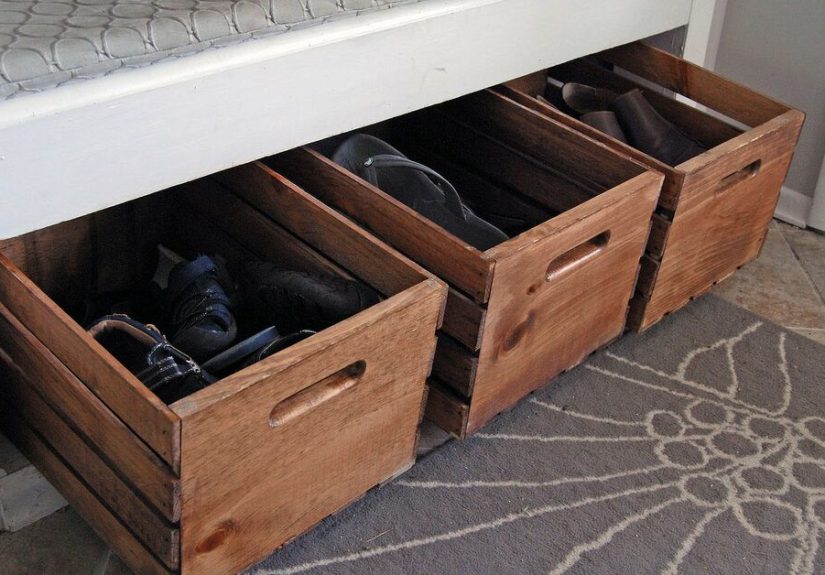
Wooden crates are the unofficial mascot of cheap DIY organization. Stack them vertically for a narrow shoe tower, or place them side by side for a lower entryway unit. You can paint them, stain them, or leave them rough for a casual look. This is one of the best cheap shoe storage ideas DIY fans use because it is easy to customize for boots, flats, or kids’ shoes.
2. Build Simple Open Shelves From Scrap Wood
If you have leftover boards in the garage, congratulations: you are halfway to a shoe rack. Basic open shelves mounted in a closet, laundry room, or entry nook can hold a surprising number of shoes. Keep the depth narrow so pairs do not disappear into the back like they entered another dimension.
3. Turn a Bench Into Shoe Storage
A shoe bench pulls double duty. It gives you a place to sit while you put on shoes and also creates storage underneath. You can build one from plywood and inexpensive legs, or repurpose an old bench by adding baskets below. This is especially helpful in an entryway where people need a landing zone for everyday shoes.
4. Use an Over-the-Door Organizer
It may not sound glamorous, but it works. An over-the-door organizer is one of the fastest small-space shoe storage solutions out there. It uses vertical space that usually goes ignored, and it is perfect for flats, sandals, kids’ shoes, or light sneakers. For apartments and dorms, this one is basically a superhero wearing hooks.
5. Make a PVC Pipe Shoe Rack
This idea is clever, inexpensive, and a little delightfully weird. Cut wide PVC pipes into matching lengths, then glue or stack them into a honeycomb-style rack. Each round cubby holds one pair or one shoe depending on size. It looks modern, keeps shoes off the floor, and turns plumbing supplies into decor. Honestly, that is range.
6. Repurpose a Bookshelf
A basic bookshelf can become a shoe cabinet without much effort. Short shelves work well for sandals and flats, while taller adjustable shelves can hold sneakers and ankle boots. If the shelf looks too “bookish,” add baskets on some levels or paint it to match the room. This is an easy win for bedroom closet organization.
7. Slide Shoes Into Under-Bed Storage
Not every shoe deserves front-row seating. Off-season boots, special occasion heels, and backup sneakers can all move under the bed. Use rolling bins, shallow trays, or divided organizers. This keeps dust down and frees up prime closet space for the pairs you actually wear every week.
8. Add Tension Rods for Heels
If you own several pairs of heels, tension rods can create a surprisingly elegant storage system. Install rods inside a closet or narrow nook so heels hook over them neatly. It looks boutique-like without boutique pricing, and it uses vertical wall space in a very efficient way.
9. Hang a Grid Panel for Dress Shoes
A metal grid panel mounted on the wall is a minimalist and inexpensive solution for heels and lightweight shoes. The shoes hang by the heel and become part storage, part display. It is ideal for a bedroom corner, dressing room, or closet wall that needs to work harder.
10. Use Shoe Boxes as Drawer-Style Storage
Old shoe boxes still have some life left in them. Wrap them in matching paper, add labels, and stack them on shelves. You can even cut a half-moon opening in the front so you can pull pairs out quickly. This is one of the cheapest DIY shoe organizer ideas because the materials may already be sitting in your house right now.
11. Turn Shoeboxes Into Dividers for Accessories
This idea is not for the shoes themselves but for the chaos around them. Cut old shoe boxes into smaller sections and use them as dividers for laces, insoles, polish, socks, or shoe-cleaning supplies. A better shoe storage system is not just about where shoes go. It is also about where the little stuff lives.
12. Create a Rolling Drawer from an Old Dresser Drawer
Have a lonely dresser drawer from a broken piece of furniture? Add casters and a coat of paint, then slide it under a bench, bed, or console table. This works beautifully for everyday shoes in an entryway and gives old furniture a second career.
13. Build Slanted Shelves for Better Visibility
Flat shelves are good. Slanted shelves are smarter when you want to see every pair quickly. A slight angle lets shoes face outward, which makes getting dressed faster and prevents the “I forgot I owned these” problem. This setup works especially well in closets or narrow hallways.
14. Use Baskets for Family Shoe Drop Zones
If you live with other people, individual baskets can save your sanity. Assign one basket per person under a bench or console table. It is not a museum display, but it is fast, tidy, and realistic. Sometimes the best organization system is the one people will actually use instead of respectfully ignoring.
15. Convert an Old Cabinet Into a Shoe Station
An outdated cabinet can become excellent hidden shoe storage. Add shallow shelves, sliding trays, or small cubbies inside. The beauty of this idea is that shoes disappear behind doors, which makes the room look cleaner immediately. It is a great choice if you hate visual clutter.
16. Make a Narrow Ladder Rack
A ladder-style rack leans against the wall and takes up very little floor space. You can store shoes on the lower rungs or add slim wood planks across the frame for more stable shelving. It is simple, stylish, and perfect for renters who want a lighter visual footprint.
17. Build a Mudroom-Style Cubbies Unit
If your household has enough shoes to qualify as a sporting goods store, cubbies are worth it. A simple plywood cubby unit gives each family member a designated spot. Even a small freestanding version can transform an entryway by replacing random floor piles with clear structure.
18. Try a DIY Tilt-Out Shoe Cabinet
For very tight spaces, a tilt-out cabinet is a smart solution. It is shallow, compact, and hides shoes neatly behind fronts that tip open. This project takes more work than stacking crates, but it looks polished and can fit in slim hallways where traditional shoe racks would stick out too far.
How to Choose the Right DIY Shoe Storage Idea
Before you start building, count how many pairs you really need to store in that area. Not all shoes belong by the front door. Keep daily pairs near the entrance, move seasonal footwear under the bed or into bins, and store special occasion shoes in bedroom or closet zones.
Also think about your habits. If you know your family tosses shoes the second they walk in, an open basket or crate system may work better than a fussy labeled shelf. If you love clean lines and hate clutter, closed cabinets or lidded bins will make you happier. The best DIY shoe storage project is the one that matches real life, not fantasy life.
Budget Materials That Work Best
Cheap shoe storage ideas DIY projects usually rely on a few affordable materials: plywood, pine boards, wood crates, PVC pipe, tension rods, baskets, casters, and leftover paint. Thrift stores, flea markets, home centers, and even curbside finds can help you source materials for less. One old bookshelf or cabinet can save you from buying a brand-new organizer that costs far more and fits your space far less well.
Do not overlook simple finishing touches either. Paint, labels, matching bins, and small hooks can make a low-cost project feel intentional instead of temporary. Sometimes the difference between “smart DIY” and “college move-out leftovers” is just one coat of paint and five extra minutes of effort.
Common DIY Shoe Storage Mistakes to Avoid
First, do not make shelves too deep. Deep shelves invite messy stacking and wasted space. Second, do not build for your dream wardrobe instead of your current habits. If everyone kicks off shoes by the door, put storage there. Third, avoid making everything closed if you know nobody will bother opening it. Convenience matters.
Another mistake is ignoring boot height. Tall boots need vertical clearance or they end up folded over sadly like abandoned pool noodles. Finally, do not keep every single pair in prime real estate. Store everyday shoes where they are easiest to grab, and move the rest elsewhere.
Final Thoughts
You do not need expensive closet systems to get organized. With a little creativity, cheap DIY shoe storage can look good, work hard, and keep your floors from disappearing beneath a layer of sneakers, sandals, and mystery single shoes. From stacked crates and wall-mounted grids to under-bed bins and tilt-out cabinets, the smartest solutions are often the most affordable.
The trick is not building the fanciest shoe rack on the internet. The trick is building the one you will actually use every day. That is the real glow-up.
Real-Life Experiences With Cheap DIY Shoe Storage
What usually surprises people after trying these budget shoe storage ideas is how quickly the house feels different. Not bigger, exactly, but calmer. When shoes stop collecting in random places, the entire entryway feels more intentional. You stop stepping over sneakers while carrying groceries. You stop hunting for the missing left sandal five minutes before leaving. You stop asking, “Why are there three shoes in the kitchen?” which is a question no adult should have to say out loud as often as they do.
One of the most common experiences with DIY shoe storage is learning that easy beats perfect. A beautifully labeled shelf system might look amazing online, but if your family naturally kicks shoes off at the door, a basket under a bench may outperform it every single day. People often start with the idea that they need something custom and impressive, then discover that a crate wall, a repurposed bookshelf, or a simple rack from scrap wood solves 90 percent of the problem for a fraction of the cost.
Another real lesson is that visibility changes behavior. When shoes are lined up on open shelves or slanted racks, people actually wear more of what they own. Pairs stop getting buried in dark corners. Off-season shoes become easier to rotate. Kids can find their own shoes faster. Even small DIY upgrades, like adding labels or assigning one basket per person, tend to reduce daily clutter because the storage system makes sense at a glance.
People also find that the “cheap” part is not a drawback. It is often the reason the project gets done in the first place. Expensive organization systems can lead to endless research, second-guessing, and abandoned shopping carts. Cheap DIY projects invite experimentation. If a crate rack is not quite right, you can restack it. If a bench needs more room underneath, you can swap baskets. If a cabinet is too dark inside, you can repaint it. Low-cost materials make adjustment easier, and that flexibility is a big reason DIY storage tends to stick.
Of course, there are a few honest frustrations. Cardboard boxes can look messy if they are not covered or labeled. Open storage collects dust faster. Under-bed bins are helpful, but only if you remember what is inside them. And if you build shelves without measuring your bulkiest boots, those boots will absolutely return the favor by refusing to fit. Still, these are manageable problems, and most people say the trade-off is worth it because the home becomes easier to maintain.
In the end, the best experience with shoe storage is not admiring the rack itself. It is the tiny daily relief it creates. Leaving the house becomes smoother. Cleaning the floor takes less time. The entryway stops feeling like a battlefield. That is why cheap shoe storage ideas DIY projects are so satisfying: they solve a boring, annoying problem in a way that feels practical, creative, and weirdly triumphant.