Table of Contents >> Show >> Hide
- Layout ideas that make meals feel effortless
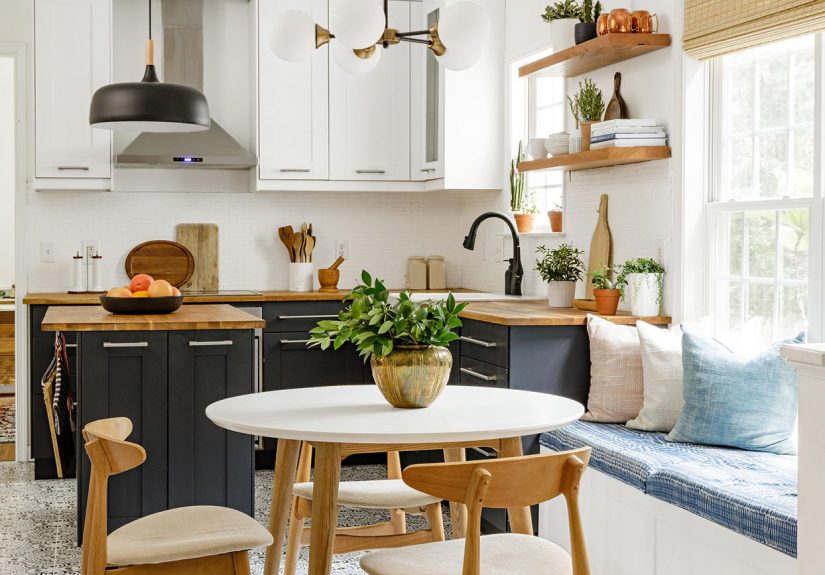
- 1) Build a classic corner banquette (the “why didn’t we do this sooner?” move)
- 2) Put the nook under a window for instant “favorite seat” energy
- 3) Choose a round pedestal table to improve traffic flow
- 4) Try a “one-side bench, one-side chairs” setup for flexibility
- 5) Turn a peninsula into a family dining perch
- 6) Extend the island into table-height seating (more comfortable than stools)
- 7) Add a built-in booth for maximum “everyone fits” capacity
- 8) Use a wall-mounted drop-leaf table for tiny kitchens
- 9) Install a pull-out table or slide-out counter when space is tight
- 10) Use a banquette to “solve” an odd corner or angled wall
- Seating that survives real family life
- 11) Prioritize comfort: add a backrest, not just a bench
- 12) Use performance fabric (because life is basically a sauce test)
- 13) Build storage into the banquette (your kitchen will thank you)
- 14) Pick chairs that are easy to clean and hard to destroy
- 15) Use a mix of stool styles to fit different ages
- 16) Leave enough elbow room (your future self will be grateful)
- 17) Plan for knee space and overhang at counter seating
- Make the eat-in zone feel intentional (not accidental)
- 18) Define the dining area with lighting (one pendant can do a lot)
- 19) Add dimmers so breakfast and late-night snacks both look good
- 20) Use paint, wallpaper, or paneling to “zone” the nook
- 21) Hang art at eye level for seated views (your nook deserves a personality)
- 22) Use a washable rug to soften the space and reduce noise
- 23) Add a small sideboard or built-in shelf near the table
- 24) Create a “beverage + breakfast” station close to seating
- 25) Double-purpose the nook as a homework/craft hubwith built-in power
- Conclusion: Design for the life you actually live
- Real-World Eat-In Kitchen Experience (500+ Words of What Families Actually Notice)
An eat-in kitchen is where real life happens: cereal negotiations, “just one more bite” debates, late-night
leftovers, and the occasional science project that definitely should not be near an open flame. The best
eat-in kitchens don’t just look welcomingthey’re designed to handle homework, snacks, guests,
and Tuesday-level chaos without making you feel like you’re dining inside a storage closet.
Below are 25 practical, family-friendly ideasorganized for readability, packed with specific design moves,
and written with one guiding principle: your kitchen seating should make daily meals easier, not become
another thing you have to manage.
Layout ideas that make meals feel effortless
1) Build a classic corner banquette (the “why didn’t we do this sooner?” move)
A corner banquette turns awkward square footage into a high-capacity dining zone. It’s especially effective
in kitchens where a freestanding table would block circulation. Go L-shaped for most rooms, or add a third
side if you want a booth vibe (and you don’t mind becoming the family’s designated “please scoot in” referee).
- Best for: busy families, small-to-medium kitchens, frequent casual hosting
- Smart add-on: hinged bench lids or drawer bases for hidden storage
2) Put the nook under a window for instant “favorite seat” energy
Natural light makes even weekday toast feel like a lifestyle choice. A window-backed bench also creates a
visual boundary for the dining zone without walls. Add washable cushions and you’ve got a spot that works
for breakfast, crafts, and the “I’m just going to sit here for a second” moments that last 45 minutes.
3) Choose a round pedestal table to improve traffic flow
Round tables are the unsung heroes of tight kitchens: no sharp corners, fewer hip bruises, and better
circulation around chairs. A pedestal base helps toomore legroom, fewer table legs to dodge, and less
chair-scrape drama.
4) Try a “one-side bench, one-side chairs” setup for flexibility
Pairing a bench on the wall side with chairs on the open side gives you the best of both worlds: the
space-efficiency of built-in seating plus the easy pull-out access of chairs. It’s also a great compromise
if not everyone in the household enjoys sliding into a banquette like they’re entering a booth at a diner.
5) Turn a peninsula into a family dining perch
If your kitchen has a peninsula, you already have the bones of an eat-in zone. Add comfortable stools,
plan for enough knee space, and make sure there’s a clear path behind the seated area so the cook isn’t
trapped like they’re running a one-person restaurant.
6) Extend the island into table-height seating (more comfortable than stools)
Table-height seating (around standard dining height) is often easier for kids, grandparents, and anyone
who’s not trying to do a daily calf workout by climbing onto tall stools. This can be done as an island
extension, a perpendicular “T” shape, or a lowered tier built into the island.
7) Add a built-in booth for maximum “everyone fits” capacity
Booth seating feels cozy, hides chair clutter, and can seat more people than a traditional table-and-chairs
setup in the same footprint. Keep the table size proportional, and don’t forget: upholstered seating is
basically a magnet for crumbs, so plan for cleanable finishes.
8) Use a wall-mounted drop-leaf table for tiny kitchens
A drop-leaf table gives you an eat-in kitchen without permanently sacrificing floor space. Fold it down
when you need room to cook; pop it up for breakfast or a quick dinner. Add two lightweight chairs that can
tuck away easily, and you’ve created a dining zone that behaves like a polite houseguest.
9) Install a pull-out table or slide-out counter when space is tight
Pull-out dining surfaces can hide inside an island, base cabinet, or pantry-style unit. This is especially
useful in galley kitchens where a permanent table would block a walkway. Choose durable hardware and a
surface that can handle hot plates, notebooks, and the occasional dramatic elbow.
10) Use a banquette to “solve” an odd corner or angled wall
Weird corners love banquettes. If your kitchen has a bump-out, angled wall, or leftover space near a bay
window, custom or semi-custom bench seating can turn “architectural shrug” into a functional dining spot.
Seating that survives real family life
11) Prioritize comfort: add a backrest, not just a bench
A backless bench is fine for quick snacks. For actual mealsand especially for lingeringadd a backrest or
use supportive chair-style seating on at least one side. Comfort is what turns “we have a table” into “we
actually eat here.”
12) Use performance fabric (because life is basically a sauce test)
Family dining involves spills. Plan accordingly. Performance fabrics or wipeable upholstery options can
make the difference between “cute nook” and “I’m buying a new cushion every season.” If you want the soft
look, choose tight weaves and stain-resistant finishes.
13) Build storage into the banquette (your kitchen will thank you)
Bench seating is a storage opportunity wearing a disguise. Use drawer bases for easy access to lunch boxes,
kids’ art supplies, board games, or extra napkins. Hinged lids can work toojust keep the contents
organized, unless you enjoy excavating a casserole dish like an archaeologist.
14) Pick chairs that are easy to clean and hard to destroy
The right dining chair is basically a tool. Look for durable finishes, simple silhouettes, and materials
that wipe clean. If your family uses chairs as jungle gyms (no judgment), avoid delicate cane and anything
that’s emotionally sensitive.
15) Use a mix of stool styles to fit different ages
Counter seating works best when stools fit the people using them. Consider at least one lower, more stable
option for younger kids (or add a dedicated kid chair nearby). Comfort and safety beat matching sets every
single day.
16) Leave enough elbow room (your future self will be grateful)
Crowded seating turns family dinner into competitive sport. Plan a sensible width per person, and don’t
try to squeeze “just one more seat” if it means everyone eats with their shoulders in their ears.
17) Plan for knee space and overhang at counter seating
Kitchen island seating works when legs have somewhere to go. A shallow overhang forces awkward perching.
Too deep without support can become a wobble risk. The sweet spot depends on counter height and stool type,
so plan this earlyideally before your cabinetry is installed and your contractor starts speaking only in sighs.
Make the eat-in zone feel intentional (not accidental)
18) Define the dining area with lighting (one pendant can do a lot)
A pendant or small chandelier above the table instantly tells your brain, “this is a place to sit.” It also
adds warmth at night and makes the nook feel like a destination instead of a parking spot for mail.
19) Add dimmers so breakfast and late-night snacks both look good
Dimmers aren’t flashy, but they are life-changing. Bright light for homework and chopping; softer light for
dinner, dessert, and decompressing. If your kitchen is the home’s command center, lighting should have
multiple settingslike your family’s group chat.
20) Use paint, wallpaper, or paneling to “zone” the nook
Give the eat-in area a distinct identity with a color block, wallpaper, beadboard, or a simple accent wall.
This helps open-plan kitchens feel organized, and it makes the dining zone look designed on purpose.
21) Hang art at eye level for seated views (your nook deserves a personality)
People spend more time at an eat-in table than they expectmeals, crafts, emails, life. Put something
pleasant in their line of sight: framed prints, family photos, or a small gallery wall. Bonus: it draws the
eye away from the one chair that never seems to get pushed in.
22) Use a washable rug to soften the space and reduce noise
Rugs add comfort and absorb sound in hard-surfaced kitchens. Choose low-pile, washable, or easy-clean
styles, and make sure chairs can slide without catching. If you have a crumb-heavy household, consider a
rug pattern that won’t tattletale.
23) Add a small sideboard or built-in shelf near the table
The eat-in zone works better when it has support: a place for napkins, placemats, kids’ cups, or serving
pieces. A slim sideboard, floating shelf, or built-in niche reduces trips across the kitchen and keeps the
table from becoming the default storage unit for everything you touched today.
24) Create a “beverage + breakfast” station close to seating
A coffee bar, toaster zone, or beverage drawer near the table keeps traffic from bottlenecking at the main
prep area. It also empowers kids and guests to help themselvesmeaning you get to sit down occasionally,
which is a bold and exciting concept.
25) Double-purpose the nook as a homework/craft hubwith built-in power
In many homes, the eat-in table is where school forms get signed and projects get assembled. Lean into it:
add a charging drawer, a discreet outlet, and storage for pencils, paper, and scissors. The goal is simple:
dinner can happen without first clearing a full art exhibit.
Conclusion: Design for the life you actually live
The best eat-in kitchens don’t chase perfectionthey chase usability. If your seating is comfortable, your
clearances make sense, and your materials can handle real meals (not just magazine-photo meals), you’ll use
the space constantly. And when a kitchen becomes the place where everyone naturally gathers, that’s not
just good designit’s the whole point.
Real-World Eat-In Kitchen Experience (500+ Words of What Families Actually Notice)
If you’ve never lived with an eat-in kitchen, here’s the biggest surprise: the table becomes a “life surface.”
It’s where someone eats breakfast, someone else answers emails, a kid builds a Lego spaceship, and a parent
tries to remember why they walked into the room in the first place. That’s not a flawit’s the magic. But it
does mean your design choices get tested daily in ways show kitchens never experience.
One of the most common “wish we’d known” moments is traffic flow. When stools or chairs sit
right in a major walkway, the kitchen feels crowded even if it’s technically spacious. Families notice this
immediately during the school-week rush: backpacks swing through, lunch boxes open, the fridge gets hit
repeatedly, and suddenly the island seating is a speed bump. The fix is usually simplebetter spacing, fewer
seats, or shifting seating to a nook where people can sit without blocking the cook’s route.
Another real-life lesson is comfort beats trendiness. Sleek stools look great online, but if
they’re uncomfortable, nobody sits there longer than it takes to inhale a snack. Families who actually eat at
the counter tend to prefer supportive seats, footrests at the right height, and enough knee space so people
aren’t doing that awkward half-perch. And for many households, table-height seating turns out to be
the hidden championespecially for younger kids and older relatives who don’t love climbing.
Cleanability is where experience really speaks. Upholstered banquettes are beloved, but only
when the fabric can handle spills. In real homes, the cute cream cushion either becomes a performance-fabric
superstar or a constant source of anxiety. Many families end up happiest with removable cushion covers,
wipeable materials, or patterns that hide minor stains between deep cleans. And if you’re deciding between an
easy-to-wipe table and a delicate finish, choose the surface that won’t make you flinch every time someone
sets down a glass.
Families also notice the value of “support zones” around the table. When there’s no nearby
landing spot for placemats, napkins, or homework supplies, those items migrate to the tabletop permanently.
But when the nook includes a slim shelf, drawer, or cabinetsuddenly the table clears faster, meals feel
calmer, and you don’t spend your evenings relocating piles like it’s your side hustle.
Finally, there’s an emotional piece people don’t expect: an eat-in kitchen often becomes the home’s most
reliable gathering place. The nook is where people chat while someone cooks, where friends linger with tea,
where kids do homework “near you” instead of isolated in a bedroom. If you design the space with warmth
(good lighting, comfortable seating, a pleasant view, and a little personality on the walls), you’ll feel that
payoff daily. It’s not about having a perfect kitchen. It’s about creating a spot where everyday meals and
everyday conversations happen naturallywithout anyone needing a reservation.