Table of Contents >> Show >> Hide
- Why Rolled Posters and Maps Refuse to Behave
- Method 1: Let It Rest Flat Under Clean, Even Weight
- Method 2: Use a Gentle Counter-Roll
- Method 3: Try Controlled Humidity, Then Flatten Under Weight
- How to Keep a Flattened Poster or Map Flat
- Mistakes That Can Ruin a Map or Poster Fast
- Experience-Based Lessons From Flattening Rolled Maps and Posters
- Final Thoughts
A rolled map or poster always looks so innocent in the tube. Then you take it out, and suddenly it behaves like a rebellious cinnamon roll with trust issues. One edge flips up, the center arches like a bridge, and the corners act like they have legal immunity. The good news is that you can usually flatten a rolled map or poster without turning it into a wrinkled regret. The trick is choosing the right method for the kind of paper you have in front of you.
If your poster is modern and sturdy, you can often flatten it with patience, clean weight, and a little strategy. If it is extra curly but still flexible, a gentle counter-roll may help. If the paper has been tightly rolled for ages and refuses to cooperate, controlled humidity followed by careful flattening is often the best route. That said, not every rolled item is a DIY project. Vintage posters, brittle maps, photographs, tracing paper, pastel artwork, pieces with tape, water-sensitive inks, or anything with tears and flaking should be treated like fragile royalty. In those cases, a paper conservator is the smarter move.
Below are three practical ways to flatten a rolled map or poster, plus the mistakes to avoid and the storage habits that keep it flat after the drama is over.
Why Rolled Posters and Maps Refuse to Behave
Paper remembers. When a map or poster spends weeks, months, or years wrapped around a tube, the fibers adapt to that curve. That is why simply tossing it on a table and glaring at it rarely works. Some pieces relax quickly. Others cling to that rolled shape like it is their entire personality.
The paper type matters too. A glossy movie poster behaves differently from an old school wall map. A laminated map reacts differently from an uncoated art print. Thick paper may resist flattening longer, while brittle paper can crack if forced too quickly. That is why “just weigh it down” is great advice for some posters and terrible advice for others.
Before you start, inspect the item under good light. Look for cracked folds, torn edges, loose media, old tape, water stains, mold, or surfaces that look powdery, chalky, or fragile. If you see any of that, pause the home project. Flattening should make your poster happier, not turn it into an accidental archaeology site.
Method 1: Let It Rest Flat Under Clean, Even Weight
Best for newer posters, sturdy maps, and paper that unrolls without resistance
This is the safest and easiest method for most modern rolled posters. It is also the least dramatic, which is good news because paper usually prefers calm over heroics. If your map or poster opens without fighting you, start here.
What you need
A large, clean, flat surface; smooth protective sheets such as clean unprinted paper or acid-free tissue; and flat weight such as books, boards, or evenly distributed heavy objects. The key word is evenly. A dumbbell on one corner is a workout plan, not a flattening plan.
How to do it
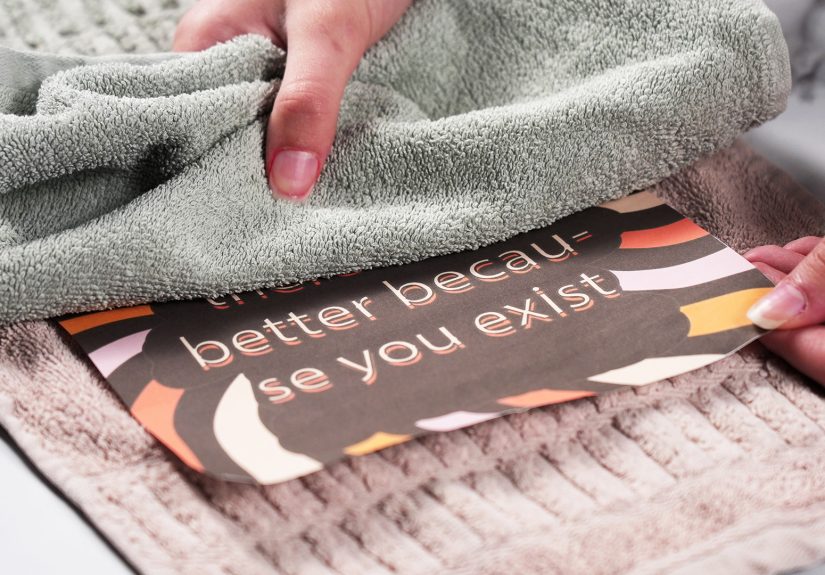
First, let the poster acclimate to the room. Do not take it from a hot delivery truck, a cold basement, or a damp garage straight into battle. Set it on a clean surface and gently unroll it. If it wants to lie almost flat on its own, great. Place a clean protective layer above and below it if needed, then add broad, even weight across the surface. Flat boards topped with books work well because they spread pressure more evenly than random heavy objects.
Leave it alone for several hours, then check progress. For mildly curled pieces, overnight may be enough. For more stubborn posters, give it a day or two. Patience is doing most of the work here. You are not “forcing” the fibers so much as persuading them to remember a better life.
Why it works
This method slowly encourages the paper to settle into a flat position without introducing moisture, heat, or stress. It is especially effective when the roll memory is mild and the paper is flexible enough to relax on its own.
Common mistakes
Do not shove the poster flat with your hands if it is resisting. Do not trap it under textured cardboard, dirty paper, newspaper, or anything that can transfer color or leave marks. Do not use tape on the corners “just for a minute.” Tape has a magical ability to become permanent at the exact moment you did not want that.
Example: A recently purchased art poster that arrived in a mailing tube usually responds well to this method. If it unrolls smoothly and the paper still feels supple, clean weight and time are often all you need.
Method 2: Use a Gentle Counter-Roll
Best for modern posters, laminated maps, and flexible paper with stubborn curl
If your poster springs right back into a tube shape after Method 1, a gentle counter-roll may help. This means rolling the piece loosely in the opposite direction so the paper can relax against its old curl memory. The word gentle is doing a lot of work here. You are not trying to create a second problem to solve the first one.
How to do it
Start by unrolling the poster on a clean table. If it seems flexible and stable, loosely roll it the opposite way around a larger, smooth tube or support. A larger diameter is important because tight counter-rolling can create new creases or edge stress. Secure it lightly with soft ties or broad bands placed over a protective outer layer, never directly pinching the paper.
Let it sit for a few hours, then unroll it and place it flat under even weight. Some pieces improve after one round. Others need repeated short sessions rather than one long, aggressive one. Think “coax” rather than “conquer.”
Why it works
Counter-rolling helps interrupt the memory of the original curl. Conservators sometimes use related approaches for certain stable materials, especially when humidification is unnecessary or risky. For everyday home use, this method is most appropriate for newer, strong paper rather than old, brittle, or damaged items.
When not to use it
Skip this method if the poster cracks when gently moved, has fragile media, has old repairs, or shows tears near the edges. A brittle vintage map is not the time to get ambitious. Also avoid counter-rolling photographs or delicate specialty papers unless you really know what you are doing.
Helpful tip
If the poster starts to flatten but still lifts at the ends, pair this method with Method 1. In real life, many flat results come from a combination of techniques rather than one magical move.
Example: A laminated classroom map that spent years rolled in a closet may respond better to loose counter-rolling than to plain weighting alone. The lamination gives it a bit more structural confidence, though you still want to avoid forcing it.
Method 3: Try Controlled Humidity, Then Flatten Under Weight
Best for stubborn curl in otherwise stable paper
This is the most effective method for a seriously rolled poster or map, and also the one that deserves the most caution. Controlled humidity can relax paper fibers so the sheet opens more safely and evenly. The important phrase here is controlled humidity. Not steam. Not a hot iron. Not spraying the poster like a houseplant. Definitely not soaking it in water and hoping for character growth.
When this method makes sense
Use it only if the item is in good condition, has no water-sensitive inks or colors, and does not contain fragile media such as chalk, charcoal, pastel, photographic material, tracing paper, or brittle, torn, or embrittled paper. If the piece is valuable or historic, consult a conservator instead of improvising.
A safer home approach
The goal is to expose the paper to moisture in the air, not to direct water. One practical approach is to create a simple humidification setup where damp material sits below a barrier and the rolled object rests above that barrier without touching liquid water. Once the paper becomes more pliable and starts to relax, it can be transferred carefully to a flattening stack made of clean absorbent layers and broad, even weight.
Work slowly. Check the paper regularly. The moment it can open without resistance, stop trying to “improve” it by pushing further. Once relaxed, flatten it between smooth protective layers and absorbent support under even weight. Do not let freshly humidified paper air-dry on its own, because it can curl and distort again.
What to avoid
Avoid steam irons, hair dryers, direct misting, bathroom steam blasts, and soaking. Those methods sound wonderfully quick right up until the paper buckles, the ink shifts, the surface gets glossy in the wrong places, or you invent a new wrinkle pattern nobody asked for. Heat and uncontrolled moisture are famous for turning a flattening job into a restoration story.
Why this method works
Paper fibers relax when they absorb controlled moisture from the air. Once relaxed, careful weighted drying can help the sheet set into a flatter configuration. Museums and conservation labs use carefully managed humidification and flattening procedures for this reason. Home users should borrow only the caution, not the overconfidence.
Example: A sturdy vintage travel poster that has been tightly rolled for years might still resist a dry flattening attempt. If it is stable, with no friable media and no cracking, controlled humidity followed by weighted drying can be more successful than dry pressure alone. If there is any doubt, stop and seek professional help.
How to Keep a Flattened Poster or Map Flat
Once you have done the hard part, do not send your poster back to Curl Academy. Flat storage is generally better than rolled storage whenever size allows. That means storing the piece in a large drawer, a flat archival folder, or between rigid clean supports.
If you plan to display it, frame it properly. Use a mat or spacers so the glazing does not touch the paper. UV-filtering glazing is smart for long-term protection. Avoid pressing the paper directly against glass or acrylic without room to breathe. Also avoid hanging framed paper on damp exterior walls or in steamy areas, because moisture and paper are dramatic together.
If the item is valuable, consider using corner supports or reversible mounting methods instead of casual adhesives. The future version of you will appreciate not having to explain why there is mystery tape on a vintage map of Yosemite.
Mistakes That Can Ruin a Map or Poster Fast
Using heat
Irons and hair dryers may seem clever, but they can distort paper, affect coatings, and damage media. Quick fixes are often just quicker mistakes.
Using direct water
Misting, splashing, or soaking can create stains, cockling, tidelines, and media damage. Paper likes controlled moisture, not surprise weather.
Forcing it open
If the piece resists movement, that resistance is information. Listen to it. Cracking sounds are not motivational speeches.
Using tape or glue to hold corners down
Even so-called archival tapes can create future conservation problems. Holding a poster flat with adhesive is like fixing a squeaky door with fireworks.
Ignoring storage after flattening
You can do everything right and still lose if you re-roll the piece tightly or store it in heat, humidity, or sunlight. Flattening is only half the story; storage is the sequel.
Experience-Based Lessons From Flattening Rolled Maps and Posters
People usually learn the same lessons after flattening a few rolled posters, and the first one is wonderfully humbling: paper has a longer memory than you do. A new poster from an online shop may relax in one night under weight, which makes you feel like a genius. Then an older map comes along, fights every step, and suddenly you are standing over a table whispering, “Why are you like this?” The answer is simple. Different papers react differently, and flattening is never one-size-fits-all.
One common experience is discovering that the safest method is often the slowest one. Many people expect a dramatic before-and-after in twenty minutes. In reality, the best results often come after several calm checks over a day or two. A movie poster that seemed hopeless at noon can look nearly frame-ready the next morning just because it had steady, even support and time to settle. That feels boring until you realize boring is exactly what preservation likes.
Another lesson is that edges tell the truth. A poster may look almost flat in the center while the corners keep lifting like tiny protest signs. That usually means the paper still remembers the tube and needs either longer weighted rest or a gentle counter-roll before going back under weight. Beginners often press harder on the corners, which can create dents or edge stress. Experienced handlers learn that broad support beats brute force every time.
There is also the moment when people realize that “clean enough” is not always clean enough. A perfectly flattenable poster can pick up marks from textured cardboard, dusty tabletops, printed packing paper, or the faint grime on a reused board. That is why smooth, clean barriers matter. The poster does not care that the board was only “a little dusty.” It will document your laziness like a tiny paper detective.
Many people also learn, sometimes the hard way, that humidity is useful only when it is controlled. Gentle humidity can help a stubborn map relax, but uncontrolled moisture creates a brand-new list of problems. The experienced approach is cautious: introduce moisture indirectly, monitor the response, and move to weighted drying as soon as the paper becomes pliable. The inexperienced approach is often, “I used steam because the internet said it was fast,” followed by silence and regret.
Finally, the biggest experience-based lesson is that flattening and storing are part of the same job. People are thrilled when the poster lies flat, then they slide it back into the original tube because they have not bought a frame yet. A week later, the curl is back, and the poster is smirking. The smarter move is to have the next step ready: flat storage, a proper portfolio, or a frame with spacing and support. In other words, finishing the flattening job means giving the paper a better future, not just a better afternoon.
Final Thoughts
If you are trying to flatten a rolled map or poster, the best method depends on how stiff, old, valuable, and fragile the paper is. Start with the least invasive option: flat rest under clean, even weight. Move to a gentle counter-roll if the curl is stubborn but the paper is still flexible. Reserve controlled humidity for pieces that truly need it, and only when the materials are stable enough for that approach.
The golden rule is simple: never force paper to do something it is resisting. Slow, careful flattening usually works better than clever shortcuts. And when the piece is rare, brittle, historic, or emotionally priceless, the smartest DIY move is knowing when not to DIY.