Table of Contents >> Show >> Hide
- Before You Start: Figure Out What Kind of Scratch You Have
- Way 1: Buff Away Light Surface Scratches and Scuff Marks
- Way 2: Fill and Camouflage a Visible Scratch With a Repair Pen, Wax, or Putty
- Way 3: Refinish the Countertop When Scratches Are Everywhere
- What Not to Do on a Scratched Laminate Countertop
- How to Prevent Future Scratches
- When to Repair, Refinish, or Replace
- Experience and Real-Life Lessons From Scratched Laminate Countertops
- Conclusion
A scratch on a laminate countertop has a special talent: it can look enormous even when it is technically tiny. One minute your counter is minding its own business, and the next minute a dragged toaster, a gritty mug, or one overly confident knife leaves behind a mark that catches the light like it is auditioning for a drama series.
The good news is that laminate countertop scratch repair is often very doable. The slightly less glamorous news is that not every scratch can be truly “removed.” Some can be buffed away, some can be filled and disguised so well that only you will know where they were, and some widespread damage is best handled by refinishing the surface. That is not bad news. It is just honest home-improvement news, which tends to wear practical shoes.
If you are trying to figure out how to fix a scratched laminate countertop without making it worse, this guide walks you through the three smartest DIY options. We will cover what works for light surface marks, what helps with deeper visible scratches, and when a resurfacing product makes more sense than spot repair. We will also cover what not to do, because nothing turns one scratch into five quite like an enthusiastic but misguided scrub session.
Before You Start: Figure Out What Kind of Scratch You Have
Not all countertop scratches are the same, and laminate is a layered material with a thin decorative top. That means your repair method should match the depth of the damage.
Light surface marks
These are the faint scuffs and hairline scratches you mostly notice when sunlight hits the counter just right. Sometimes they are not true scratches at all. They may be transfer marks from metal, pans, gritty debris, or something rubbed across the surface.
Visible scratches
These are real scratches in the finish that you can see easily and may feel slightly with a fingernail. They usually do not require a full countertop replacement, but they often need a filler, repair pen, or color-matched product to blend them back in.
Deep gouges or widespread wear
If the scratch is deep, chipped, dark at the center, near a seam, or one of many scratches across a tired countertop, spot repair may not deliver a satisfying finish. In that case, a coating or refinishing approach is often the smarter move. And if the laminate is swelling, lifting, or delaminating, you may be beyond DIY cosmetics and into replacement territory.
Way 1: Buff Away Light Surface Scratches and Scuff Marks
This is the least dramatic fix and often the most satisfying. If the damage is superficial, you may not need a repair kit at all. A gentle cleaning and light buffing session can reduce or remove the mark, especially when the “scratch” is really a scuff or surface abrasion.
Best for
- Hairline scratches
- Light scuffs
- Marks left by dishes, cookware, or dragged objects
- Small dull-looking spots on matte laminate
What you need
- Mild dish soap or a gentle household cleaner
- Warm water
- A soft, nonabrasive microfiber or cotton cloth
- Baking soda
- A soft-bristled brush or soft sponge
How to do it
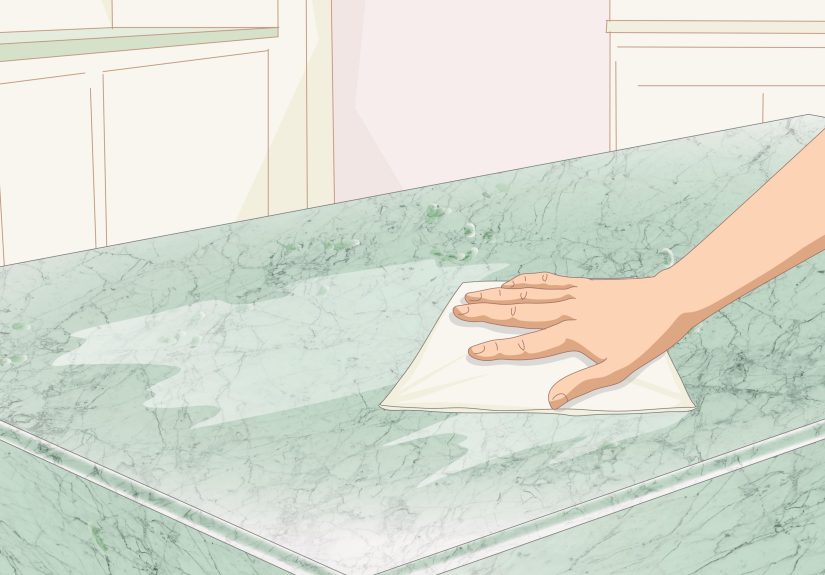
Start by cleaning the area well. Use a damp, nonabrasive cloth with a little mild detergent, then rinse with clean water and dry the surface. This matters more than people think. Dirt and grease can make a shallow scratch look deeper, and gritty debris can create new scratches while you are trying to remove the old one.
If the mark is still visible, make a simple baking soda paste with a small amount of water. Apply it to the scratched area and rub very gently with a soft cloth, sponge, or soft-bristled brush. Keep the motion light and controlled. This is a countertop, not a cast-iron skillet after chili night. Gentle pressure is the whole point.
Wipe the area clean, rinse again, and dry it completely. Repeat once if needed, but resist the temptation to scrub like you are trying to erase your past. Laminate can handle normal use well, but harsh abrasion can dull or damage the decorative surface, especially on glossier finishes.
Why this works
Light marks often sit at or near the surface. A mild cleaner removes residue, and a baking soda paste can help polish away transfer marks and very fine abrasions. On certain matte laminates, a white melamine foam may also help with minor surface marks, but always test it in an inconspicuous spot first because it can alter sheen.
When to stop
If the scratch still catches your fingernail or remains clearly visible after a careful cleaning and one or two gentle passes, move on to the next method. That means you are no longer dealing with a simple scuff. You are dealing with a scratch that wants a little cosmetic surgery.
Way 2: Fill and Camouflage a Visible Scratch With a Repair Pen, Wax, or Putty
This is the go-to method when you have a real scratch in the laminate finish. The goal here is not to sand the scratch away. On laminate, that is usually a bad idea. The goal is to make the scratch visually disappear by filling it and color-matching it so the eye stops noticing it.
Best for
- Moderate scratches you can see easily
- Thin scratches that expose a lighter or darker line
- Small nicks and minor gouges
- Patterned laminate where color blending matters
What you need
- A laminate repair kit, repair pen, wax pencil, or quick-repair putty
- A plastic putty knife or old gift card
- A clean cloth
- Rubbing alcohol or gentle cleaner for prep
How to do it
First, clean the scratched area and let it dry completely. Any grease, moisture, or crumbs left behind can interfere with adhesion and make the repair look patchy.
Next, choose the closest possible color match. This part is worth slowing down for. A slightly imperfect repair in the right color usually looks better than a smooth repair in the wrong color. If your laminate has a speckled, stone-look, or marbled pattern, blend colors if your kit allows it. Many repair kits for laminate, wood, and vinyl include multiple tones for exactly this reason.
Apply the repair product directly into the scratch. For pens or markers, use short controlled strokes. For wax or putty, press the filler into the scratch, then level the excess with a plastic scraper or the edge of a card. Wipe away extra material before it hardens on the surrounding surface.
Let it dry or set according to the product instructions. Then inspect the repair in natural light. If needed, add a second thin layer rather than one thick blob. Thick repairs tend to look obvious, and obvious was not the vibe we were going for.
Why this works
Most visible scratches become noticeable because they interrupt the color and sheen of the laminate. A filler or repair pen restores that visual continuity. It does not magically make the scratch cease to exist at the molecular level, but it can make it far less noticeable in everyday use.
Best tips for better results
- Test the color on scrap material or an unseen edge first.
- Use thin layers for better blending.
- Do not overfill unless you can level it neatly.
- Avoid metal tools that can create fresh scratches while you work.
- For patterned counters, dab, feather, and blend rather than drawing one solid line.
What this method cannot do
If the laminate is chipped away, swollen from water, or peeling near an edge or seam, a pen or putty can only do so much. It may improve the look, but it will not rebuild a failing countertop. In other words, great for cosmetic touch-ups, less great for existential countertop crises.
Way 3: Refinish the Countertop When Scratches Are Everywhere
Sometimes the problem is not one scratch. It is twenty-seven scratches, a few dull patches, one mystery stain, and the general feeling that your countertop has seen some things. In that case, spot-repairing each scratch can feel like trying to detail a car with a cotton swab. A resurfacing or countertop coating kit may be the better answer.
Best for
- Multiple scratches across the countertop
- Older laminate that looks worn overall
- Cosmetic damage spread over a large area
- Homeowners who want a fresh look without full replacement
What you need
- A countertop refinishing or resurfacing kit made for laminate
- Painter’s tape
- Cleaner or degreaser
- Rollers or applicators included with the kit
- Patience, ventilation, and the ability to leave the counter alone while it cures
How to do it
Clean and degrease the countertop thoroughly. Tape off sinks, walls, appliances, and anything else you would prefer not to decorate accidentally. If the kit calls for patching chips or deeper scratches before coating, do that first and make sure the repair is smooth and cured.
Then apply the coating exactly as directed by the manufacturer. Some newer countertop coating systems are designed specifically to bond to laminate and provide a durable finish with minimal prep. Others involve more steps, including base coats and topcoats. Either way, this is the moment to become a person who reads instructions with real emotional commitment.
Let the countertop cure fully before regular use. Not “looks dry” dry. Actual cured dry. The finish may resist daily wear, stains, and moisture well once it is ready, but rushing it can leave marks, dents, or adhesion issues that undo all your effort.
Why this works
A refinishing system does not remove individual scratches. It covers the entire worn surface with a new finish, which is often the cleanest visual solution when damage is widespread. It can be especially useful if your laminate is structurally sound but cosmetically tired.
When resurfacing is not enough
If the substrate beneath the laminate has swollen from water, the seams are lifting, or the countertop is cracked or delaminating, coating over the problem is usually just expensive optimism. In that case, replacement or a more substantial repair makes more sense.
What Not to Do on a Scratched Laminate Countertop
Some scratch-removal advice floating around the internet sounds brave but is not very laminate-friendly. Avoid these classic mistakes:
- Do not use steel wool or harsh abrasive pads. They can dull or scratch the finish further.
- Do not flood the surface with water. Moisture can seep into seams and cause the substrate to swell.
- Do not aggressively sand standard laminate. The decorative layer is thin, and once you grind through it, there is no charming comeback montage.
- Do not use random fillers without color testing. A bad color match often stands out more than the scratch.
- Do not cut directly on the countertop. Laminate is scratch-resistant, not scratch-proof.
How to Prevent Future Scratches
Once you repair a scratch, protecting the counter becomes much easier than doing the repair all over again.
- Use cutting boards for all food prep.
- Place felt pads or soft bumpers under countertop appliances that get moved around.
- Lift heavy objects instead of dragging them.
- Wipe up grit, sugar, salt, and crumbs before sliding anything across the surface.
- Use trivets and mats so heat and friction do not team up against your countertop.
- Stick with nonabrasive cleaners and soft cloths for routine care.
When to Repair, Refinish, or Replace
If you are still unsure which route to take, here is the simple version:
- Use a gentle buffing method for faint surface marks and light scratches.
- Use a repair pen, wax, or putty for visible isolated scratches and nicks.
- Use a refinishing kit when the entire laminate countertop looks scratched, dull, or dated.
- Consider replacement when you see swelling, peeling, major chips, deep gouges, or seam failure.
The right fix depends less on your enthusiasm level and more on the actual condition of the laminate. A careful five-minute diagnosis can save you hours of repair regret.
Experience and Real-Life Lessons From Scratched Laminate Countertops
If you talk to enough homeowners, renters, landlords, or weekend DIY heroes, a funny pattern appears: almost everyone remembers the first scratch on a laminate countertop. It usually happens during something completely ordinary. A blender gets nudged. A ceramic planter gets rotated. A bag of groceries with a rogue can inside gets dropped a little too enthusiastically. Nobody plans it. The scratch simply arrives, uninvited, like a group text at 6:12 a.m.
What people usually learn first is that laminate is more forgiving than it looks, but not in the way they expected. A fresh scratch can look terrible when the light hits it, especially on dark counters or smooth, flat finishes. Yet once the area is cleaned properly, a surprising number of “disasters” shrink down into minor cosmetic annoyances. Grease, dust, soap film, and transferred metal marks often exaggerate the problem. That is why the simplest repair step, cleaning the surface carefully before doing anything else, feels almost too basic until it works.
Another common experience is the temptation to overcorrect. People see a scratch and immediately reach for whatever is nearby: a rough scrub pad, a powdered cleanser, an all-purpose abrasive cream, or the legendary “I saw this trick online” method. This is where many countertops get their sequel damage. Laminate rewards gentle, targeted fixes. It punishes wild improvisation. A homeowner trying to erase one thin line can easily create a wider dull patch that is harder to hide than the original scratch. The lesson is simple: on laminate, force is rarely the hero.
Then there is the color-matching adventure, which can be both maddening and oddly satisfying. Anyone who has used a repair pen or putty on a speckled beige or stone-look laminate knows that one color is rarely enough. Real success often comes from blending tones, dabbing instead of drawing, and stepping back every minute or so to check the repair from normal standing height. Up close, almost every fix looks suspicious. From three feet away, many look excellent. That is an important real-world standard because countertops are usually viewed while standing, cooking, cleaning, or walking through the kitchen, not while crouched over them with a flashlight and a detective’s commitment to truth.
People also discover that location matters. A repaired scratch beside the sink needs more caution because seams and water exposure can turn a cosmetic issue into a structural one. A scratch near a prep zone may need a sturdier fix because it will keep getting traffic. And a countertop covered in many scratches often feels worse emotionally than it is financially. Instead of replacing the entire thing right away, many homeowners find that a resurfacing kit gives them a strong middle option: not perfect, not brand new, but dramatically better and much easier on the budget.
The biggest takeaway from real-life experience is that success comes from matching the repair to the damage. Light marks respond to cleaning and gentle buffing. Visible scratches respond to color and filler. Worn-out counters respond to resurfacing. The people happiest with the result are usually not the ones chasing perfection. They are the ones chasing “clean, blended, and no longer screaming for attention.” In home care, that is often the real win.
Conclusion
If you need to remove a scratch from a laminate countertop, start with the gentlest method that fits the damage. Light scuffs may buff out with careful cleaning and a mild paste. Visible scratches usually need a repair pen, wax, or putty to blend them back in. And when the whole surface looks worn, a countertop refinishing kit can give tired laminate a convincing second act. The key is to work gently, match the repair to the depth, and know when a scratch is really a signal that the countertop needs more than a touch-up.