Table of Contents >> Show >> Hide
- Before You Start: 4 Rules That Save Clothes (and Your Mood)
- Easy Way #1: Dish Soap Degrease (Perfect for Oil-Based Concealer)
- Easy Way #2: Liquid Laundry Detergent Pre-Treat (The “Reliable Adult” Method)
- Easy Way #3: Rubbing Alcohol (or Hand Sanitizer) for Stubborn, Long-Wear Concealer
- Easy Way #4: Micellar Water or Oil-Free Makeup Remover (Gentle and Surprisingly Effective)
- Easy Way #5: Color-Free Shaving Cream (Yes, Really)
- Easy Way #6: Oxygen Bleach Soak (For Set-In Stains Without the Drama)
- Troubleshooting: What If the Stain Won’t Budge?
- How to Prevent Concealer From Decorating Your Clothes Next Time
- Real-World Experiences: What These Concealer Fixes Look Like in Daily Life (Extra )
- Conclusion
Concealer is a magician. It makes dark circles disappear… and then reappears on your favorite shirt collar like it pays rent.
The good news: most concealer stains (even the “full-coverage, waterproof, never-leaves-your-face” kind) can be removed at home
with a few smart steps and the right helperdish soap, detergent, alcohol, micellar water, shaving cream, or an oxygen-bleach soak.
The trick is matching the method to the stain. Concealers often contain oils, waxes, silicones, and pigmentsso if you treat every
concealer stain like it’s plain dirt, you’ll end up pushing it deeper. Let’s fix that.
Before You Start: 4 Rules That Save Clothes (and Your Mood)
- Don’t rub. Blot. Rubbing grinds pigment into fibers and turns a small smudge into modern art.
- Scrape off excess first. Use a spoon edge or a dull knife to lift the blob without smearing.
- Use cool water first. Heat can “set” makeup pigments and make the stain harder to budge.
- Skip the dryer until the stain is gone. Dryer heat can lock in leftover color permanently.
Quick “Choose Your Weapon” Cheat Sheet
| What you’re dealing with | Best first move | Backup plan |
|---|---|---|
| Fresh, creamy concealer (most common) | Dish soap + cool rinse | Liquid detergent pre-treat |
| Long-wear / waterproof / silicone-heavy formulas | Rubbing alcohol blot | Shaving cream + rinse |
| Stain on delicate fabric (silk, wool blends) | Micellar water blot (gentle) | Professional dry cleaner |
| Set-in stain (washed/dried or older) | Detergent pre-treat + rewash | Oxygen bleach soak |
Easy Way #1: Dish Soap Degrease (Perfect for Oil-Based Concealer)
Many concealers contain oils or waxy ingredients. Dish soap is made to break down greaseso it’s often the fastest, easiest fix,
especially on cotton tees, shirt collars, and hoodie necklines.
How to do it
- Scrape: Lift off any excess concealer.
- Blot: Press a clean paper towel or cloth onto the stain to absorb what you can.
- Apply dish soap: Add a few drops directly to the stain (front and back of the fabric if possible).
- Gently work it in: Use your fingertips or a soft toothbrush with feather-light pressure.
- Wait 10–15 minutes: Keep it dampdon’t let the soap dry out like a face mask.
- Rinse from the back: Flush with cool running water so you push the stain out, not deeper in.
- Launder: Wash according to the care label. Air dry and check before using heat.
Example: A beige concealer ring on a white crewneck collar? Dish soap pre-treat + cool back-rinse usually lifts it before it becomes a “signature design choice.”
Easy Way #2: Liquid Laundry Detergent Pre-Treat (The “Reliable Adult” Method)
If dish soap is your fun friend, liquid laundry detergent is your dependable friend who shows up with snacks and a plan.
Heavy-duty detergents and stain-removing detergents are especially good for pigment-heavy makeup.
How to do it
- Rinse quickly (optional but helpful): If the stain is fresh, rinse from the back with cool water for 10–20 seconds.
- Apply detergent: Use a small dab directly on the stain.
- Massage gently: Work it into the fibers with your fingers (or a soft brush for sturdy fabrics).
- Let it sit 10–15 minutes: This “dwell time” helps break the bond between pigment and fabric.
- Wash: Use the warmest water that’s safe for the fabric (check the label). Use a normal amount of detergent in the machine, too.
- Inspect before drying: If you still see a shadow, repeat pre-treat + wash.
Best for: cotton, denim, polyester blends, athletic wear.
Be cautious on: silk, wool, “dry clean only,” and anything labeled “do not spot clean.”
Easy Way #3: Rubbing Alcohol (or Hand Sanitizer) for Stubborn, Long-Wear Concealer
Long-wear concealers often rely on film-formers and silicones to stay put. That’s great for your under-eyes, less great for your sweater.
Rubbing alcohol can help dissolve and lift those tenacious pigmentsespecially when the stain laughs at soap.
How to do it (without wrecking your fabric)
- Patch test first: Dab alcohol on an inside seam. If dye transfers or the fabric changes, stop.
- Build a blotting station: Place paper towels under the stain (inside the garment) to catch what lifts out.
- Dab, don’t pour: Moisten a cotton ball or clean cloth with rubbing alcohol.
- Blot from the outside in: Press and lift. Rotate to a clean area often so you’re not re-stamping the stain.
- Rinse: Flush with cool water.
- Follow with detergent: Pre-treat with liquid detergent, then wash.
No alcohol? A small amount of clear, gel hand sanitizer (with alcohol) can work similarly. Use it sparingly, blot gently,
then rinse and wash.
Easy Way #4: Micellar Water or Oil-Free Makeup Remover (Gentle and Surprisingly Effective)
Micellar water is designed to lift makeup without aggressive scrubbing. That makes it a smart option for delicate fabrics, quick touch-ups,
and “I’m not ready to commit to a full laundry cycle yet” moments.
How to do it
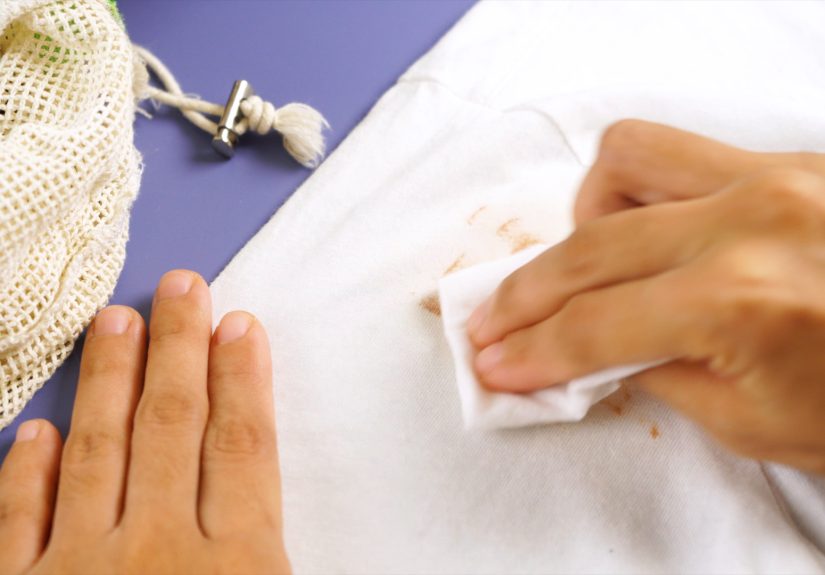
- Blot excess concealer with a dry cloth.
- Saturate a cotton pad with micellar water (or an oil-free makeup remover).
- Press and hold on the stain for 30–60 seconds to let it loosen pigment.
- Dab upward gently. Don’t scrub.
- Rinse with cool water.
- Wash as usual, especially if any residue remains.
Pro tip: If you’re treating a blazer, coat, or delicate knit you don’t wash often, do the micellar step first. If the stain persists,
move on to detergent pre-treatgently.
Easy Way #5: Color-Free Shaving Cream (Yes, Really)
Shaving cream can help lift liquid makeup because it contains surfactants and emulsifiersingredients that help break up oily, pigmented messes.
The key is to use plain, white, non-gel shaving cream (no dyes, no glitter, no “Arctic Volcano Blast” additives).
How to do it
- Scrape off excess concealer.
- Apply a dollop of shaving cream to the stain.
- Let it sit for 5–10 minutes.
- Work it gently with your fingers or a soft brush.
- Rinse with cool water from the back of the fabric.
- Launder and air dry to confirm success.
When it shines: collar stains, necklines, and thicker fabrics where concealer sits on the surface before sinking in.
Easy Way #6: Oxygen Bleach Soak (For Set-In Stains Without the Drama)
If the concealer stain has been sitting awhileor it went through a wash and still looks like a faint beige ghostan oxygen bleach soak can help.
This is the “slow and steady wins the stain race” method, and it’s generally safer for colors than chlorine bleach (still: read labels).
How to do it
- Check fabric type: Avoid oxygen bleach soaks on wool, silk, leather, or “dry clean only” items unless the product label says it’s safe.
- Mix a soak: In a basin, dissolve oxygen bleach powder (or use a color-safe stain remover additive per label instructions) in warm water.
- Submerge the stained area: Let it soak 1–6 hours depending on severity.
- Rinse and wash: Launder with detergent using the warmest water safe for the garment.
- Air dry and inspect: Repeat if needed before any heat drying.
Tip for bright whites: If the garment is white and colorfast, an oxygen bleach soak is often the final step that removes the last hint of pigment.
Troubleshooting: What If the Stain Won’t Budge?
If the stain is spreading
- Stop rubbing and switch to blotting with clean sections of cloth.
- Rinse from the back of the fabric to push pigment out.
- Use paper towels underneath to absorb what lifts.
If the garment is “dry clean only”
- Blot gently to remove excess and avoid water-saturating the fabric.
- Try micellar water sparingly on an inside seam first.
- If it’s silk, wool, structured tailoring, or an expensive piece, a professional cleaner is often the safest bet.
If you accidentally used warm/hot water
Don’t panic. Re-treat with detergent (Easy Way #2), then try the alcohol blot (Easy Way #3) or oxygen bleach soak (Easy Way #6). The key is repetition
without heat drying between attempts.
How to Prevent Concealer From Decorating Your Clothes Next Time
- Dress last: Put on tops after makeup whenever possible.
- Use a “makeup robe”: An old button-down shirt works great as a sacrificial barrier.
- Shield necklines: A clean towel over your head while pulling on a sweater can prevent collar stains.
- Set it: Light powder or setting spray can reduce transfer while you’re getting ready.
- Keep a mini kit: Travel micellar pads or a stain-remover pen can save outfits on the go.
Real-World Experiences: What These Concealer Fixes Look Like in Daily Life (Extra )
Methods are great on paper, but concealer stains happen in the chaotic momentsfive minutes late, one shoe on, mascara wand missing, and the universe
offering you a bonus blob of concealer directly onto your shirt. Here are a few common scenarios people run into, plus the approaches that tend to work best.
1) The Classic Collar Stamp
You finish your makeup, pull on a white tee, and the neckline immediately collects a beige crescent like it’s trying to contour itself.
This one usually responds beautifully to dish soap (Easy Way #1) because collar stains often involve oils and pigments sitting right on the surface.
The biggest mistake people make is scrubbing fast and furiouspanic-scrubbing basically invites pigment to move in permanently.
A calmer approach works better: scrape any thicker spots, apply dish soap, wait 10–15 minutes, and rinse from the back.
If there’s still a shadow, pre-treat with detergent and rewash before any dryer heat.
2) The “Long-Wear Means Long-Wear” Disaster
Some concealers are built like tiny waterproof shields. Great for a humid day. Less great when a dot lands on your black hoodie.
In these cases, soap alone can struggle because the formula is designed to resist water and friction.
A gentle rubbing alcohol blot (Easy Way #3) can make a dramatic differenceespecially if you put paper towels behind the stain
and blot slowly until you see pigment transferring out. Then follow with detergent and a normal wash.
The key is patience: multiple light blots beat one aggressive scrub every time.
3) The Delicate Sweater Situation
Concealer on a knit can feel terrifying because rubbing can fuzz the fibers and make the spot more noticeable than the stain.
Many people have better luck starting with micellar water (Easy Way #4) because it’s designed to lift makeup gently.
Press a saturated cotton pad for a minute, dab, and repeat with fresh pads. If the sweater can be washed, follow with a tiny amount of detergent,
then rinse carefully. If it’s truly delicate or “dry clean only,” it’s often smarter to do minimal at-home blotting and let a cleaner handle it.
4) The “I Was Already in the Car” Emergency
You notice the stain in the rearview mirror. Of course you do. If you’re on the go, quick options matter:
a stain-remover pen, a wipe, or even micellar water can keep the concealer from setting in. The goal isn’t perfectionit’s prevention.
Blot, don’t smear, and avoid adding too much water (which can spread pigment). When you get home, do the full treatment:
detergent pre-treat, then wash, then air dry to confirm you’ve won.
5) The Set-In “Why Is It Still There?” Mystery
The most frustrating experience is when you wash the garment and the stain becomes a faint outline that refuses to leave.
This is where people often give up too earlyor worse, they toss it in the dryer and unknowingly “bake” it into the fibers.
A better path: re-treat with detergent, rewash, and if that outline remains, use an oxygen bleach soak (Easy Way #6).
It’s not the fastest method, but it’s one of the most reliable for that lingering tint, especially on whites and colorfast fabrics.
Conclusion
Concealer stains are annoying, but they’re not destiny. Start by scraping and blotting, then choose a method that matches the formula:
dish soap for oily stains, detergent for dependable pre-treating, alcohol for long-wear pigments, micellar water for gentle lifting,
shaving cream for a quick emulsifying boost, and oxygen bleach soaks for stubborn, set-in leftovers. And remember the golden laundry rule:
don’t let the dryer decide your outfit’s future until you’ve confirmed the stain is gone.