Table of Contents >> Show >> Hide
- Why Before-And-After Illustration Posts Hit So Hard
- What Two Years Of Illustration Practice Really Changes
- Why Practice Actually Works
- The Habits Behind The Glow-Up
- What This Means For Beginner And Intermediate Artists
- Specific Lessons From A Two-Year Redraw
- Experience: What Two Years Of Practice Feels Like From The Inside
- Final Thoughts
Every artist has at least one old drawing hidden somewhere like a haunted yearbook photo. You know the one. The eyes are a little too surprised, the hands look like confused starfish, and the shading suggests the character lives under three suns. Then one day, you redraw that same subject and realize something magical has happened: your work no longer looks like it was created during a caffeine storm. It looks intentional. Confident, even.
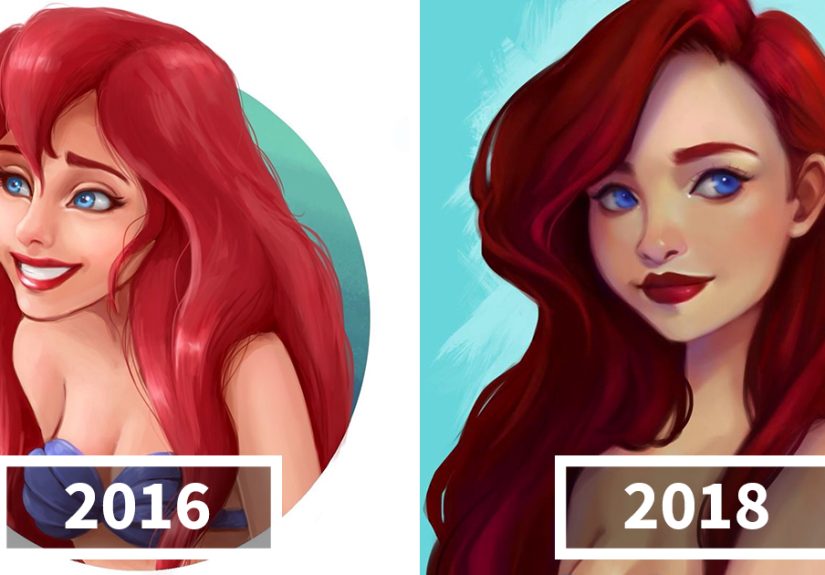
That is exactly why the internet loves a good before-and-after art comparison. In one widely shared example, an illustrator revisited earlier princess illustrations and placed the new versions beside the originals, showing what two years of steady practice had changed. The transformation was not just “better coloring” or “nicer hair.” It was a full upgrade in observation, control, style, and storytelling. In other words, it was the visual proof every creative person secretly hopes for: practice is not a myth invented by annoying motivational posters.
This article looks at why that kind of artistic glow-up happens, what really changes over two years of drawing practice, and what aspiring illustrators can learn from it. Because the leap from “pretty decent” to “wow, that looks professional” rarely comes from talent descending from the heavens on a glittery cloud. It usually comes from repetition, feedback, better habits, and a willingness to make a lot of ugly sketches before the good ones arrive fashionably late.
Why Before-And-After Illustration Posts Hit So Hard
People love visible progress. In art, progress is especially satisfying because it can be dramatic. One image can reveal months of improved line control, stronger anatomy, better lighting, clearer composition, and more thoughtful character design. When an artist compares older work with newer illustrations, viewers are not just looking at two drawings. They are looking at time made visible.
That is powerful because illustration is one of those fields where improvement often feels slow from the inside. Artists may spend months muttering, “I think my noses are less tragic now,” without realizing just how much has changed. Side-by-side comparisons solve that problem. They create evidence. Suddenly the growth is obvious. The old drawing may have charm, but the new one has structure, confidence, and an understanding of how faces, fabric, color, and mood actually work together.
There is another reason these comparisons resonate: they are hopeful. A two-year progress post tells beginners that artistic skill is not reserved for a mystical club of pencil sorcerers. It can be built. You do not need to be born sketching masterpiece-level cheekbones in kindergarten. You need time, practice, and enough patience to survive your “why does this hand look like a bag of spaghetti?” phase.
What Two Years Of Illustration Practice Really Changes
1. Line Confidence Stops Acting Shy
One of the first things that improves with regular practice is line quality. Early drawings often look hesitant, as though the artist and the pencil are in a trust exercise that is not going well. Lines get scratchy. Outlines are repeated over and over. The drawing looks like it is apologizing for existing.
After sustained practice, lines become more decisive. Artists learn where to commit, where to soften, and where to let shapes breathe instead of strangling them with outlines. In illustration, that matters because line is not just a border. It is personality. A clean, confident line can make a character feel elegant, bold, playful, or dramatic before color even enters the room.
2. Anatomy And Proportion Start Behaving
Another major leap over two years is the artist’s sense of proportion. Faces begin to sit properly on heads. Eyes stop drifting apart like feuding siblings. Necks connect to shoulders with logic. Hands remain challenging because hands enjoy chaos, but even they begin to look less cursed with practice.
Illustrators often improve by drawing from observation, studying gesture, and repeating difficult forms until they become familiar. That is why so many art programs emphasize foundational drawing. Before style can shine, structure has to hold the whole thing up. Strong anatomy does not make work less expressive. It gives expression a sturdy set of bones.
3. Color And Light Stop Guessing
In weaker early work, color is often chosen for vibes alone. And listen, vibes are important. But if every shadow is gray and every highlight is white, the image can feel flat. As artists improve, they begin to understand value, temperature, contrast, and how light affects form. Skin tones gain subtle variation. Fabric folds read more clearly. Backgrounds stop fighting the character for attention like they are trying to audition for their own spin-off.
This is where newer illustrations often feel more polished than older ones. The artist is no longer just coloring inside the lines. They are using color to guide the eye, create mood, and make the image feel dimensional. That is a huge jump, and viewers notice it instantly even if they cannot explain why.
4. Details Become Smarter, Not Just Busier
Beginning artists often assume improvement means adding more details. Sometimes it does. But more often, improvement means adding better details. The folds in a dress make sense. Hair has weight and rhythm. Accessories support the design rather than piling on like a craft-store explosion. The best growth is not random complexity. It is intentionality.
That is one reason redraws are so useful. They show whether an artist has learned to edit. Mature illustration is not merely “more stuff on the page.” It is clearer decision-making. Every shape has a job. Every texture supports the image. Every choice earns its rent.
5. Style Begins To Look Like A Choice
Early style is often just a collection of habits. Mature style is a system. Over time, artists begin to understand what they exaggerate, what they simplify, and what they want viewers to feel. Their influences become integrated rather than copied. They stop chasing every aesthetic they see online and start building a visual language that feels like their own.
That is where progress becomes especially exciting. The newer illustration does not merely look “better drawn.” It looks more authored. You can sense the artist’s taste, priorities, and visual identity. That is the moment a drawing stops feeling like practice and starts feeling like a point of view.
Why Practice Actually Works
The phrase “practice makes perfect” is catchy, but it also oversimplifies the process. Repetition alone does not guarantee growth. Drawing the same mistakes a hundred times just turns those mistakes into roommates. What works is deliberate practice: focused repetition with feedback, reflection, and targeted goals.
That is why artists who improve quickly tend to do more than draw a lot. They study what is not working. They compare their work with references. They seek critiques. They isolate weak areas such as perspective, facial structure, color harmony, or composition. Then they attack those issues one at a time instead of hoping the art fairy handles it overnight.
There is also a brain-level reason improvement happens. Learning and repetition help strengthen pathways related to perception, decision-making, and motor control. Over time, artists become better at seeing shapes accurately, simplifying forms, and translating what they imagine into marks on a page or screen. The process still takes effort, of course. Nobody wakes up one morning and casually paints hands like a Renaissance master because Mercury is in a helpful mood. But the brain and body do adapt to repeated, meaningful practice.
The Habits Behind The Glow-Up
Two years sounds impressive, but the real story is what happened inside those two years. Improvement usually comes from habits that look boring on paper and miraculous in hindsight.
Sketchbook Consistency
Artists who keep sketchbooks or digital practice folders build a record of experimentation. Quick studies, color tests, anatomy drills, loose concept sketches, and failed ideas all matter. These are not glamorous, but they are where growth sneaks in. A sketchbook is basically a laboratory in which bad drawings die so stronger drawings can live.
Observation Over Assumption
One of the biggest changes in an improving illustrator is the shift from drawing symbols to drawing what is actually there. Instead of drawing “an eye” from memory, they study the shape of that specific eye. Instead of drawing generic folds, they observe how fabric hangs. This sounds obvious until you try it and realize your brain has been lying to you about ears for years.
Critique Without Drama
Feedback speeds up progress. Artists who learn to separate “this proportion is off” from “my soul has been rejected” usually grow faster. Constructive critique helps identify recurring weaknesses that the artist may no longer notice. It also provides direction, which is helpful when you are trying to improve and your current plan is just “draw harder.”
Studying Fundamentals Without Becoming Boring
Yes, fundamentals matter. Gesture, perspective, values, shape design, anatomy, composition, and color theory all help. But the smartest artists do not study fundamentals in a way that drains all joy from the process. They apply them to subjects they care about: characters, fashion, fantasy portraits, comics, creatures, fan art, or environments. That balance between discipline and delight is often what keeps practice sustainable.
What This Means For Beginner And Intermediate Artists
If you are looking at a two-year comparison and feeling inspired, good. If you are looking at it and feeling personally attacked by your 2026 sketchbook, also understandable. But the main lesson is not that you should compare yourself harshly with other artists. It is that long-term progress is real.
Art improvement rarely arrives in a straight line. Some weeks, everything clicks. Other weeks, every face looks like it was assembled during an earthquake. That is normal. Growth often appears uneven up close and obvious only in retrospect. This is why saving old work matters. It gives you proof when your confidence conveniently forgets the truth.
It is also worth noting that progress does not mean abandoning all your earlier instincts. Sometimes older drawings have spontaneity, charm, or stylization that newer work risks smoothing out. The goal is not to become technically polished and emotionally bland. The sweet spot is combining stronger skill with the spark that made you want to draw in the first place.
Specific Lessons From A Two-Year Redraw
When an artist revisits earlier illustrations, the comparison often reveals a few practical lessons. First, choose familiar subjects. Redrawing a similar pose, character, or concept makes progress easier to measure. Second, keep your old work. Do not rage-delete it. Future you will need receipts. Third, review your patterns. Are your older drawings weak in values? Expression? Proportion? Fabric? Background design? Those repeated issues point directly to what deserves focused study.
Most important, learn to value mileage. Great illustrators are not built from a single masterpiece. They are built from hundreds of attempts, studies, false starts, revisions, and redraws. The polished image that gets posted online is usually the glamorous tip of a very messy iceberg.
Experience: What Two Years Of Practice Feels Like From The Inside
From the outside, a two-year art transformation looks neat and dramatic. You place the old illustration beside the new one, and the difference is obvious. Cue the likes, the compliments, and the comments from strangers saying, “Wow, practice really works.” From the inside, though, the experience is much less cinematic. It is a patchwork of tiny frustrations, accidental breakthroughs, abandoned experiments, surprising wins, and the occasional urge to launch your sketchbook into low orbit.
In the beginning, practice often feels awkward because your taste develops faster than your skills. You know what good art looks like, but your hand cannot quite catch up. This gap can be discouraging. Many artists spend months feeling like they are failing when they are actually training their eyes. They are learning what strong work looks like, even before they can produce it consistently. That stage is uncomfortable, but it is useful. It means your standards are getting sharper.
Then comes the strange middle phase. You improve enough to notice specific problems, which is both empowering and rude. Suddenly you are not just thinking, “This drawing looks off.” You are thinking, “The jaw angle is wrong, the values are muddy, the pose is stiff, and the left hand appears to be made of warm bread.” Oddly enough, this is progress. Precision in self-critique is a sign that your visual judgment is maturing.
Over time, practice changes your relationship with mistakes. Early on, mistakes can feel personal. Later, they start to feel informational. A bad drawing no longer proves you are untalented. It simply reveals what needs work next. That mindset shift is one of the most important changes an artist can experience. It turns frustration into fuel.
Two years of practice also teaches patience in a very unglamorous way. You learn that some skills improve quickly, while others behave like stubborn house cats. Maybe your color sense levels up fast, but perspective remains dramatic. Maybe portraits improve while full-body poses continue to fight back. The point is not perfect balance. The point is staying in the game long enough for weak areas to catch up.
And perhaps the most rewarding part of the experience is this: one day, without fanfare, you notice that drawing feels different. You make choices more confidently. You recover from mistakes faster. You understand why an image works, not just that it does. The process still challenges you, but it no longer feels like guesswork with accessories. It feels like a craft you are actually learning.
That is what two years of practice can do. It does not just improve the illustrations. It changes the illustrator.
Final Thoughts
The beauty of an artist comparing her illustrations across two years is that the images tell two stories at once. One story is about improved technique: cleaner lines, better anatomy, smarter color, stronger structure, and more confident character design. The other story is about perseverance. Behind every polished redraw is a long trail of studies, revisions, experiments, critiques, and stubborn returns to the page.
That is why these progress comparisons matter. They remind us that good art is not a lightning strike. It is a practice. And for anyone in the middle of their own messy, uncertain, highly caffeinated creative journey, that is excellent news. Keep the old drawings. Make the new ones. Then come back in two years and surprise yourself.