Table of Contents >> Show >> Hide
- Why This Zucchini Linguine Recipe Works
- Ingredients You Will Need
- How To Make Zucchini Linguine
- What Zucchini Linguine Should Taste Like
- Best Tips for Perfect Zucchini Linguine Every Time
- Easy Variations to Try
- What To Serve With Zucchini Linguine
- How To Store and Reheat Leftovers
- Common Mistakes to Avoid
- Kitchen Experiences: What Happens When You Make Zucchini Linguine More Than Once
- Final Thoughts
- SEO Tags
If summer had a favorite pasta, it would probably be zucchini linguine. It is bright, garlicky, lemony, and just fancy enough to make a Tuesday night feel like it has a soundtrack. Better yet, it solves that annual garden problem: you bought two zucchini for “one healthy dinner” and somehow came home with enough squash to start a roadside stand.
This version keeps the best parts of several popular zucchini pasta styles and turns them into one easy, flavorful recipe. You get real linguine for satisfying bite, zucchini for freshness, Parmesan for salty richness, lemon for sparkle, and a smart cooking method that avoids the number one zucchini crime: soggy sadness. The result is a silky bowl of pasta that feels light but still tastes like dinner, not a compromise.
If you have been wondering how to make zucchini linguine that tastes restaurant-worthy without requiring a culinary degree or a dramatic speech over a skillet, you are in the right place.
Why This Zucchini Linguine Recipe Works
The best zucchini linguine recipe balances two things that do not always get along: moisture and texture. Zucchini is full of water, which is great for hydration and terrible for a watery pasta sauce. The trick is to grate it, let it release some liquid, and then either cook it down or fold it into hot pasta at the right moment.
This recipe takes the middle road in the best possible way. Some of the zucchini softens into the sauce, giving the dish body and a subtle buttery feel without using a ton of cream. The rest keeps a little bite, so the pasta does not taste like it was boiled into a nap. That balance is what makes this dish feel special.
It is also flexible. You can keep it vegetarian, add shrimp or chicken, toss in fresh herbs, or make it spicier if your soul was clearly designed for red pepper flakes. Zucchini linguine is forgiving, quick, and surprisingly elegant for something that starts with a box grater.
Ingredients You Will Need
For the zucchini linguine
- 12 ounces linguine
- 2 large zucchini, coarsely grated
- 1 small shallot, finely chopped
- 4 garlic cloves, thinly sliced
- 1/4 cup extra-virgin olive oil
- 1 tablespoon butter
- 1/2 teaspoon red pepper flakes, plus more to taste
- Zest of 1 lemon
- 2 to 3 tablespoons fresh lemon juice
- 3/4 cup finely grated Parmesan, plus more for serving
- 1/2 to 3/4 cup reserved pasta water
- 1/2 teaspoon kosher salt, plus more for the pasta water
- Freshly ground black pepper
- 1/4 cup torn basil, mint, or a mix of both
Optional finishing touches
- Microgreens or extra herbs
- Toasted walnuts or pistachios
- Burrata or ricotta for a creamier finish
- Grilled shrimp, rotisserie chicken, or white beans
This ingredient list keeps the dish simple and fresh. Lemon, garlic, Parmesan, and herbs all play very nicely with zucchini, which is excellent news because zucchini on its own can be a little too polite. It needs friends.
How To Make Zucchini Linguine
1. Prep the zucchini
Grate the zucchini on the large holes of a box grater. Place it in a clean kitchen towel or a colander lined with paper towels. Sprinkle lightly with salt and let it sit while you boil the pasta water. After about 10 minutes, squeeze or press out as much moisture as you can. Do not skip this step unless you enjoy soup with noodles and calling it pasta.
2. Cook the linguine
Bring a large pot of generously salted water to a boil. Cook the linguine until just shy of al dente according to package directions. Before draining, reserve at least 3/4 cup of the pasta water. That cloudy water is liquid gold for your sauce.
3. Build the flavor base
While the pasta cooks, heat the olive oil and butter in a large skillet over medium heat. Add the shallot and cook for 2 minutes until softened. Stir in the garlic and red pepper flakes, then cook for about 1 minute more. You want the garlic fragrant and lightly golden, not dark brown and plotting revenge.
4. Cook the zucchini
Add the squeezed zucchini to the skillet. Season with black pepper and a pinch of salt. Cook for 4 to 6 minutes, stirring often, until the zucchini softens and part of it turns jammy. You do not want it browned to oblivion, but you do want it to lose its raw edge and begin clinging together like a proper sauce component.
5. Turn it into a silky sauce
Add the drained linguine directly to the skillet. Toss everything together, then add about 1/4 cup of the reserved pasta water, the lemon zest, and the Parmesan. Toss again. Add more pasta water a splash at a time until the sauce loosens and coats the noodles evenly. Finish with lemon juice and taste. Add more salt, pepper, lemon, or cheese until it tastes bright, savory, and just a little addictive.
6. Finish like you know what you are doing
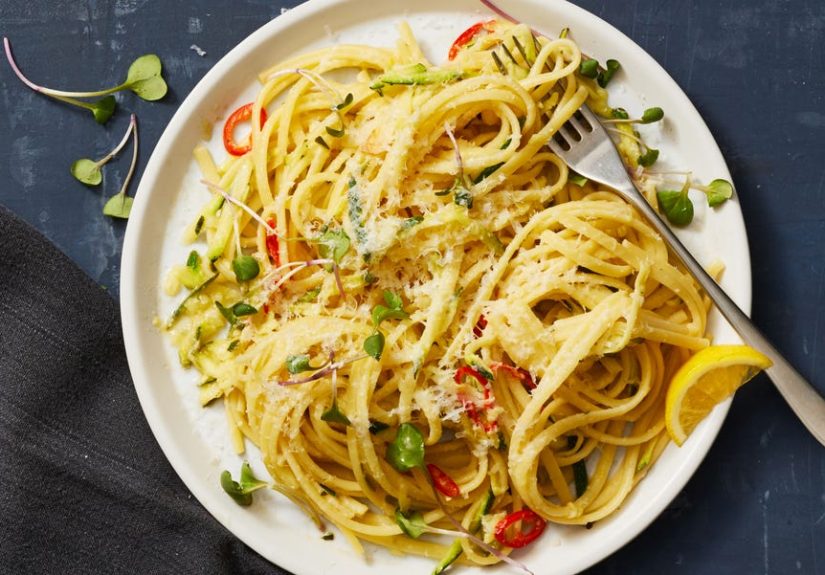
Turn off the heat and fold in the fresh basil or mint. Twirl into bowls and top with more Parmesan, extra lemon zest, and microgreens or nuts if you like. Serve immediately, preferably to people who will say things like, “Wait, zucchini can do this?”
What Zucchini Linguine Should Taste Like
A great zucchini linguine recipe should taste fresh, savory, and balanced. The zucchini should not disappear completely, but it also should not feel watery or raw. The lemon should wake up the dish, not punch it in the face. The Parmesan should add salty depth. Garlic should be noticeable, but not so strong that it follows you into tomorrow’s meetings.
Texture matters just as much as flavor. The noodles should be coated, not drowned. The zucchini should feel tender with a little body. If the finished dish seems tight, add a splash of warm pasta water. If it seems loose, toss it over low heat for another minute. Pasta is not high drama if you adjust as you go.
Best Tips for Perfect Zucchini Linguine Every Time
- Squeeze the zucchini well. Excess moisture is the fastest route to a bland, watery sauce.
- Do not overcook the pasta. It will finish in the skillet, where it absorbs flavor and sauce.
- Use real Parmesan if possible. Freshly grated cheese melts better and tastes sharper.
- Save more pasta water than you think you need. It helps the sauce turn glossy and clingy.
- Finish with acid at the end. Lemon juice added too early can fade; added at the end, it keeps the dish lively.
- Serve right away. Zucchini pasta is at its best when hot, fresh, and just tossed.
Easy Variations to Try
Creamy zucchini linguine
Add 2 tablespoons of heavy cream or a spoonful of ricotta near the end for a richer finish. Keep the lemon so the dish stays bright and not sleepy.
Zucchini linguine with tomatoes
Toss in a handful of blistered cherry tomatoes. They add sweetness, color, and that “I definitely planned this” look.
Protein-packed zucchini linguine
Top the pasta with grilled shrimp, sliced chicken breast, or white beans. This turns a light pasta into a more filling main course without changing the flavor profile too much.
All-zucchini noodle version
If you want to skip traditional pasta, spiralize zucchini into zoodles and cook them for only 1 to 2 minutes. A warm sauce is enough to soften them. Go longer and you enter mush territory.
Spicy zucchini linguine
Increase the red pepper flakes, add Calabrian chile paste, or finish with chili crisp. This is not mandatory, but it is delightful.
What To Serve With Zucchini Linguine
This pasta works beautifully with simple sides. Try it with a crisp green salad, roasted asparagus, garlicky green beans, or good bread for mopping up any extra sauce left in the bowl. If you are making it for guests, pair it with grilled chicken or salmon and a chilled white wine.
For a casual summer dinner, serve zucchini linguine with tomato salad and sparkling water with lemon. For date night, add candles and pretend you always zest citrus directly over plated pasta like a person who owns linen napkins.
How To Store and Reheat Leftovers
Store leftovers in an airtight container in the refrigerator for up to 3 days. Reheat gently in a skillet with a splash of water or broth. The goal is to wake the pasta back up, not punish it.
Microwaving works in a pinch, but do it in short bursts and stir between each one. Zucchini can soften further as it sits, so leftovers will be a little more tender than the original dish. Still delicious, just less runway-ready.
Common Mistakes to Avoid
Not removing moisture
Zucchini contains a lot of water. If you toss it into the pan dripping wet, the sauce will thin out fast and lose flavor.
Burning the garlic
Garlic goes from golden and fragrant to bitter in what feels like half a sneeze. Watch it closely.
Adding all the lemon at once
Start with less and add more to taste. Lemons vary, and so do people’s relationships with acidity.
Forgetting texture
The best zucchini linguine is not baby food. Keep some bite in the noodles and some body in the zucchini.
Kitchen Experiences: What Happens When You Make Zucchini Linguine More Than Once
The first time you make zucchini linguine, you are probably just hoping it turns out edible. You grate the zucchini, question whether you bought enough Parmesan, and look suspiciously at the puddle of liquid coming out of the squash like it has personally offended you. Then dinner happens, and suddenly you understand why this style of pasta keeps showing up every summer. It is easy, it tastes fresh, and it somehow feels both healthy and indulgent at the same time.
By the second or third round, you start noticing little patterns. You realize that zucchini size matters more than people admit. Large zucchini can be watery and seedy, while smaller ones tend to be sweeter and firmer. You notice that fresh lemon makes the whole bowl taste brighter, and bottled juice just does not bring the same energy. You learn that pre-grated Parmesan is fine in an emergency, but freshly grated cheese melts into the sauce with far less drama.
You also get more confident about texture. At first, it is tempting to cook the zucchini longer because it looks like a mountain in the pan. Then, almost magically, it melts down. Too little cooking and it stays watery. Too much and it turns sleepy. After a few tries, you learn the sweet spot: softened, glossy, slightly jammy, still alive. That is when zucchini linguine goes from “pretty good vegetable pasta” to “I might make this again tomorrow.”
Another thing that happens with experience is customization. One night you add basil because it is in the fridge. Another night you use mint and suddenly dinner tastes like summer vacation. You toss in shrimp when you want something more substantial or cherry tomatoes when the garden is overflowing. Maybe you add toasted pistachios and feel wildly accomplished. Maybe you throw in extra red pepper flakes because the day was long and you deserve excitement. The recipe becomes less of a script and more of a very tasty framework.
There is also the practical side. Zucchini linguine teaches you to trust a quick dinner. It does not need hours. It does not need a sink full of dishes. It is the kind of meal you can make on a weeknight and still sit down before you get too hungry and start foraging for crackers. That alone makes it a repeat recipe in many kitchens.
And then there is the reaction from other people. Even the zucchini skeptics usually come around. Someone always says they were expecting it to be bland. Someone asks for the recipe. Someone else says, “I did not think zucchini pasta would actually taste like pasta.” To which the correct response is a calm smile, because now you know the secret: it is not trying to impersonate a heavy cream Alfredo or a baked ziti. It is doing its own thing, and it does it very well.
Over time, this dish becomes one of those recipes you make without pulling out the full instructions. You know when the garlic smells ready. You know how much pasta water to save. You know that extra lemon zest on top makes the bowl look brighter and taste smarter. That is when a recipe stops being a one-time success and becomes part of your actual cooking life. And for a humble pile of zucchini and linguine, that is a pretty impressive career arc.
Final Thoughts
If you want a pasta dinner that feels fresh, comforting, and a little bit clever, this is it. The best zucchini linguine recipe is not complicated. It just respects the ingredients. Dry the zucchini, season confidently, use your pasta water wisely, and finish with lemon and cheese like you mean it.
Once you learn how to make zucchini linguine properly, it becomes the kind of recipe you keep in your back pocket all season long. It is quick enough for weeknights, pretty enough for guests, and flexible enough to survive whatever your fridge is trying to tell you. In other words, it is the pasta equivalent of a white shirt that always looks expensive.