Table of Contents >> Show >> Hide
- Who Is Olga Kamenetskaya?
- What Makes Her Realistic Doll Repaints So Fascinating?
- How the Doll Repainting Process Works
- Why Realistic Dolls Feel So Emotional
- The Beauty Standard Conversation Behind the Art
- OOAK Dolls: Why Collectors Love One-of-a-Kind Creations
- The Role of Makeup Skills in Doll Repainting
- Specific Examples of Her Artistic Style
- Why the Internet Loves Before-and-After Doll Transformations
- Lessons Artists Can Learn From Kamenetskaya’s Doll Repaints
- Experience Section: What This Art Teaches Us About Seeing Beauty Differently
- Conclusion
Some artists begin with a blank canvas. Ukrainian doll artist Olga Kamenetskaya begins with a face that already has enormous eyes, dramatic lashes, glittery lips, and the kind of factory-applied blush that says, “I have never experienced a single pore in my life.” Then she removes it all.
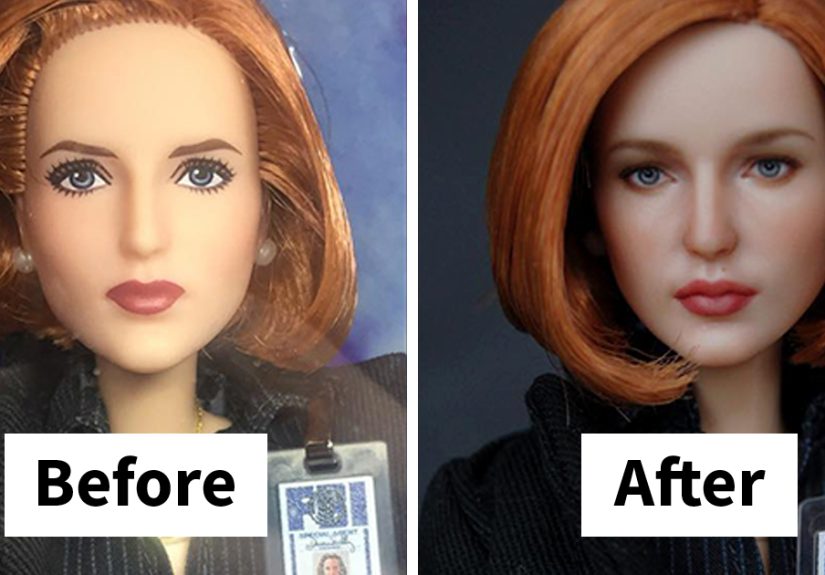
Known online as Oli.Krolik, Kamenetskaya has become widely recognized for transforming mass-produced dolls into realistic, soulful, one-of-a-kind art pieces. Her work is not simply “makeup correction” for toys. It is a full artistic rebirth. A doll that once looked like it was heading to a cartoon prom might return as a thoughtful woman with freckles, soft under-eye shadows, delicate wrinkles, a believable gaze, and the quiet expression of someone who has definitely paid rent.
The title sounds almost magical: a Ukrainian artist removes makeup from dolls and repaints them in a very realistic way. But the appeal is not only in the before-and-after shock. It is in the message. In a world of filters, symmetrical faces, and plastic perfection, her dolls suggest that realism is not the enemy of beauty. Sometimes, realism is where beauty finally shows up, takes off its uncomfortable heels, and stays for tea.
Who Is Olga Kamenetskaya?
Olga Kamenetskaya is a Ukrainian artist known for doll repainting, doll modification, wigs, body blushing, and highly detailed custom art dolls. Her creative identity is closely tied to the name Oli.Krolik, under which she has shared her work across social media, art communities, and online marketplaces.
Her artistic journey began with repainting Monster High dolls as a hobby. Over time, that hobby evolved into professional work. Today, her name is associated with realistic OOAK dolls, a term that means “one of a kind.” In practical terms, it means each piece is not just customized but reborn as an individual character with its own face, mood, and visual story.
Kamenetskaya has worked with many kinds of dolls, including Monster High, Barbie, Blythe, BJD, and other collectible or fashion doll bases. Instead of accepting the original factory face, she treats the doll as raw material. The original paint is removed, the features are reconsidered, and the doll’s personality is built again from the tiniest brushstrokes.
What Makes Her Realistic Doll Repaints So Fascinating?
The first reason is obvious: the transformation is dramatic. The original doll may have oversized eyes, exaggerated makeup, and a fantasy-like expression. After Kamenetskaya’s repaint, the same doll may look like a miniature person captured in a thoughtful pause. The result can be beautiful, eerie, tender, or strangely familiar. Sometimes it feels as if the doll is about to ask why you left the lights on in the kitchen.
The second reason is more meaningful. Kamenetskaya’s work pushes against the idea that dolls must look perfect to be appealing. Her repainted dolls often include freckles, faint lines, asymmetry, softer facial proportions, textured skin tones, natural brows, and expressions that feel emotionally specific. These details are small, but they matter. They turn a toy face into a human face.
The Power of Imperfection
Many fashion dolls are designed around polished fantasy. Their faces are often symmetrical, their makeup is bold, and their features are highly stylized. Kamenetskaya goes in the opposite direction. She gives her dolls character through the kinds of imperfections people usually try to hide in selfies: a mark here, a shadow there, a line that suggests a life beyond the display shelf.
That is why her dolls often feel more alive than “perfect” dolls. Perfection can be visually impressive, but it can also feel cold. A slightly uneven smile or a thoughtful gaze can create emotional warmth. In Kamenetskaya’s hands, a tiny flaw is not a mistake. It is the secret ingredient.
How the Doll Repainting Process Works
While every doll artist has a personal method, realistic doll repainting generally begins with removing the factory face paint. This creates a clean surface and allows the artist to reimagine the doll completely. For Kamenetskaya, the repaint is only one part of the transformation. Her work may also include changing proportions, adding body blushing, creating or styling wigs, adjusting facial structure, and designing a complete look.
The process requires patience, steady hands, and a deep understanding of human features. A realistic face is not created by drawing “more details” everywhere. In fact, too much detail can make a small doll face look muddy. The magic is in restraint: a soft eyelid crease, a barely visible lip tone, a natural brow shape, a tiny freckle placed exactly where it makes sense.
From Factory Face to Fine Art
The original factory makeup on mass-produced dolls is made to be bold, readable, and instantly recognizable. It must survive packaging, branding requirements, and the toy aisle’s visual noise. Custom repainting has a different goal. It does not need to shout from a shelf. It can whisper.
Kamenetskaya’s repaints often reduce the exaggerated features and replace them with proportion, softness, and realism. The eyes become less cartoonish. The lips become less candy-colored. Skin becomes dimensional rather than flat. The final doll may look older, wiser, calmer, more expressive, or simply more human.
Why Realistic Dolls Feel So Emotional
There is something oddly powerful about seeing a familiar doll transformed into a realistic figure. The viewer recognizes the original toy shape, but the new face changes everything. It creates a strange little emotional puzzle: Is this still a doll, or has it become a portrait?
That tension is part of the appeal. Realistic doll repainting sits between craft, portraiture, sculpture, fashion design, and storytelling. It is small-scale art with big emotional impact. A repainted doll may be only a few inches tall, but a skilled artist can make it carry the mood of a film still.
For collectors, these dolls are not just decorative objects. They can feel like characters. Some appear shy. Some look confident. Some seem mysterious. Some look like they know your browser history but are too polite to mention it.
The Beauty Standard Conversation Behind the Art
Kamenetskaya’s work also connects to a wider conversation about beauty standards. Fashion dolls have long been criticized for presenting exaggerated ideals of body shape, facial symmetry, and glamour. Research on doll play and body image has explored how ultra-thin dolls and unrealistic proportions may influence young children’s ideas about beauty and body size.
This does not mean every stylized doll is harmful or every realistic doll is automatically virtuous. Toys can be fantasy, fashion, nostalgia, and fun. But Kamenetskaya’s work adds an important counterpoint. It asks a simple question: What if a doll looked less like an impossible ideal and more like someone you might actually meet?
The answer is surprisingly moving. Her realistic dolls do not lose beauty when they gain flaws. They gain presence. They become memorable because they stop trying to look flawless.
OOAK Dolls: Why Collectors Love One-of-a-Kind Creations
OOAK dolls occupy a special corner of the art and collecting world. Unlike standard retail dolls, a one-of-a-kind doll cannot be replaced by buying another box from the same shelf. The artist’s hand is visible in every decision. That uniqueness gives the doll both artistic and emotional value.
Collectors often look for originality, technique, story, and personality. A successful OOAK doll does not merely look “pretty.” It feels complete. The face, wig, clothing, skin tone, posture, and tiny finishing details should all appear to belong to the same character. Kamenetskaya’s work is admired because her dolls often achieve that sense of wholeness.
Why Handmade Details Matter
In an age of mass production, handmade details feel luxurious. A tiny painted eyebrow can carry more individuality than an entire plastic accessory pack. A custom wig can change the mood of a doll completely. Subtle body blushing can make plastic or resin feel warmer and more lifelike.
The difference is attention. A factory doll is designed for scale. An art doll is designed for specificity. That specificity is what makes viewers stop scrolling.
The Role of Makeup Skills in Doll Repainting
One of the most interesting aspects of Kamenetskaya’s work is how closely doll repainting overlaps with real makeup artistry. Human makeup is about proportion, shadow, color theory, skin tone, and expression. Doll repainting uses many of the same visual principles, but on a much smaller and less forgiving surface.
On a human face, a soft shadow can be blended with a brush. On a doll, that same effect may need to be built gradually with delicate layers. A single heavy line can ruin the illusion. Realistic repainting requires the artist to understand not just what a face looks like, but how a face appears under light.
This is why Kamenetskaya’s dolls can look so natural. The realism is not random. It is carefully constructed through proportion, softness, and the intelligent use of imperfection.
Specific Examples of Her Artistic Style
Kamenetskaya’s celebrity-inspired pieces and portrait-like dolls demonstrate her ability to translate recognizable human qualities into miniature form. Her work has included dolls that evoke famous faces, but the strongest part of her style is not imitation. It is atmosphere.
Some dolls look cinematic, as if they belong in a quiet European drama. Others feel contemporary, stylish, and editorial. Some carry a fantasy edge, especially when the original base comes from Monster High or similar lines. Yet even when the doll is unusual, the face often remains grounded in believable human detail.
The effect is a balance between realism and imagination. She does not erase the doll’s identity completely. Instead, she guides it into a new form where fantasy and humanity meet.
Why the Internet Loves Before-and-After Doll Transformations
Before-and-after art is practically built for the internet. It gives viewers instant satisfaction: here is the ordinary object, and here is what an artist saw inside it. With doll repainting, the transformation feels especially dramatic because faces are emotionally powerful. Humans are wired to read expressions, even when the face belongs to a piece of plastic.
That is why Kamenetskaya’s work spreads so well online. The viewer does not need an art degree to understand the transformation. The original doll says, “I came from a factory.” The finished doll says, “I have a complicated inner life and possibly a favorite jazz album.”
Social media also allows artists like Kamenetskaya to reach collectors and fans around the world. A small handmade doll can become globally visible through a single image. For niche crafts, that visibility is powerful.
Lessons Artists Can Learn From Kamenetskaya’s Doll Repaints
There are several useful lessons in Kamenetskaya’s work, even for people who never plan to repaint a doll.
1. Start With What Already Exists
Creativity does not always require inventing from nothing. Sometimes the best work begins by looking at an existing object and asking, “What else could this become?” Kamenetskaya’s art proves that transformation can be just as creative as original construction.
2. Details Create Personality
A freckle, a softer brow, or a slightly tired eye can change everything. Good art often lives in the tiny decisions. The smallest detail can carry the largest emotional weight.
3. Beauty Does Not Need to Be Perfect
Her dolls are beautiful because they are specific, not because they are flawless. That is a lesson worth applying far beyond dolls. In design, writing, photography, and even personal style, a little individuality is usually more memorable than polished sameness.
Experience Section: What This Art Teaches Us About Seeing Beauty Differently
Spending time with the idea of realistic doll repainting changes the way you look at everyday objects. At first, a mass-produced doll seems finished. It has a face, hair, clothing, and a personality assigned by its brand. But Kamenetskaya’s work reminds us that “finished” is sometimes just another word for “waiting for a second imagination.” The doll already exists, but the artist sees another life inside it.
That experience feels familiar to anyone who has ever restored an old chair, repainted a room, tailored a jacket, edited a photograph, or rewritten a sentence until it finally sounds alive. The object does not need to be thrown away. It needs to be understood differently. A doll with cartoon makeup becomes a realistic portrait. A plastic toy becomes an art object. A face designed for mass appeal becomes a face with character.
There is also something comforting about the way her art treats imperfection. Many people spend years trying to smooth, hide, brighten, lift, filter, and correct themselves into acceptability. Then along comes a tiny doll with freckles and asymmetry, and suddenly those so-called flaws look charming. The doll is not apologizing for its lines. It is not asking for a better angle. It simply exists, and that quiet confidence is oddly refreshing.
For artists and hobbyists, Kamenetskaya’s process also offers a practical lesson in patience. Realistic work rarely happens in one heroic burst of inspiration. It happens through layers. Remove the old paint. Study the face. Build shadows. Add color slowly. Step back. Adjust. Try again. The finished doll may look effortless, but it carries hours of careful decisions. That is true of most worthwhile creative work. The final result gets the applause, but the process does the heavy lifting.
For collectors, the experience is different but equally meaningful. Owning or admiring an OOAK doll is not like buying a standard toy. It is closer to encountering a character. The doll has a presence that cannot be duplicated exactly. That uniqueness can create a strong emotional connection, especially in a world where so many objects are designed to be identical.
Most importantly, this art encourages viewers to slow down. The internet trains us to swipe quickly, judge instantly, and move on. Kamenetskaya’s dolls reward a slower look. The longer you study them, the more details appear: the softness around the eyes, the natural skin tone, the expression that seems to change depending on the angle. That is the real magic. Not that a doll looks human, but that it makes us more human in the way we look at it.
Conclusion
Olga Kamenetskaya’s realistic doll repaints are more than clever transformations. They are tiny arguments in favor of individuality. By removing the original makeup from mass-produced dolls and repainting them with natural features, emotional expressions, and deliberate imperfections, she turns plastic perfection into handmade personality.
Her work stands out because it combines technical skill with a thoughtful message. These dolls do not simply look more realistic; they feel more honest. They remind us that beauty can live in freckles, wrinkles, unevenness, softness, and subtle expression. In a world obsessed with polishing every surface, that is a surprisingly powerful thing for a doll to say.
Note: This article is written as original SEO content based on publicly available information about Olga Kamenetskaya, realistic doll repainting, OOAK doll art, and broader discussions about beauty standards in fashion dolls.