Table of Contents >> Show >> Hide
If your kitchen sounds like a drum solo every time someone grabs a snack, it’s probably not the kidsit’s your cabinet doors.
Soft-close cabinet hinges are the small but mighty upgrade that turns slams into gentle whispers, protects your cabinets, and makes your kitchen feel a lot more “custom” and a lot less “college dorm.”
Inspired by testing-based guides like Bob Vila’s soft-close hinge picks and other expert hardware resources, this guide walks you
through how soft-close hinges work, what to look for when buying them, and the best types and brands for different cabinet styles.
Whether you’re finishing a full kitchen remodel or just tired of hearing doors bang shut during late-night fridge raids,
the right soft-close hinges can make your cabinets quieter, safer, and longer-lastingand they’re surprisingly DIY-friendly.
What Are Soft-Close Cabinet Hinges?
Soft-close cabinet hinges are specialty hinges with an integrated damping mechanism that slows the door during the last few inches of travel,
so it closes gently instead of slamming into the frame. Most designs combine traditional concealed “European-style” hinges with a small hydraulic
or pneumatic damper hidden inside the hinge arm or cup.
How the Soft-Close Mechanism Works
While different brands have their own twists, most soft-close hinges go through three basic phases:
- Free-swing phase: You open and close the door normally. The hinge offers almost no resistance.
- Engagement phase: In the last couple of inches, a cam engages the damper built into the hinge.
- Damping phase: A hydraulic, pneumatic, mechanical, or even magnetic system slows the motion and brings the door to a soft, controlled stop.
Many soft-close hinges are also self-closing, meaning a small spring will pull the door shut once it’s near the frame.
That’s why a gentle push is usually enoughyou don’t have to shove the door and hope it doesn’t ricochet.
Key Buying Considerations for Soft-Close Hinges
Before you toss a random 60-pack into your online shopping cart because the price looks good, pause for a second.
The “best” soft-close hinge depends heavily on your cabinet style, door overlay, and how much adjustability you need.
1. Cabinet Type: Face-Frame vs. Frameless
The first big question: are your cabinets face-frame or frameless?
-
Face-frame cabinets have a 1- to 1.5-inch-wide frame around the front opening. Hinges either mount to that frame
or to a mounting plate attached to it. - Frameless cabinets (often called “European-style”) don’t have that front frame, so hinges mount directly inside the cabinet box.
Many hinges are specifically labeled for face-frame or frameless use, and the wrong combination can leave you with doors that don’t line up,
rub, or simply refuse to close properly. Guides from hinge manufacturers and woodworking retailers emphasize starting with cabinet style
before worrying about anything else.
2. Overlay vs. Inset Doors
Next, figure out how your doors sit relative to the cabinet opening:
- Full overlay: The door mostly covers the face of the cabinet.
- Half overlay: Two doors share a center partition or face-frame rail.
- Inset: The door sits flush inside the cabinet opening like a picture in a frame.
Overlay hinges are designed so the door covers part or all of the opening, while inset hinges keep the door within the frame.
They’re not interchangeable, so match your hinges to your door style.
3. Hinge Style and Adjustability
Most modern soft-close hinges are 35mm concealed cup hinges with clip-on mounting plates.
The best options feature:
- 3-way or 6-way adjustment (up/down, left/right, in/out) for perfect reveals.
- Clip-on design that lets you detach doors without a screwdriverhandy during painting or big clean-ups.
- Opening angles from 95° to 120° depending on your layout and corner clearances.
Higher-end systems, like Blum’s BLUMOTION hinges, are known for precise adjustability and long-term durability,
which matters if your kitchen gets heavy daily use.
4. Durability and Cycle Ratings
Soft-close hinges work hard: they compress a damper every time someone closes a door.
Top brands test hinges to tens of thousands of open/close cycles to ensure they still operate smoothly years down the line.
For busy households, look for:
- Steel construction with corrosion-resistant finishes.
- Certified cycle ratings from major hardware manufacturers.
- Decent warrantiesespecially if you’re buying a big pack.
5. Installation Practicalities
Finally, think about how much work you want to do:
- If your doors already have 35mm hinge cups drilled, you can often swap old hinges for soft-close versions with minimal drilling.
- If you’re starting from scratch, a hinge jig and Forstner bit make drilling consistent, clean cup holes much easier.
- Check that your new hinges use the same screw pattern, overlay, and plate height as your old onesor be prepared for some fine-tuning.
The Best Soft-Close Cabinet Hinges – Picks Inspired by Bob Vila
Bob Vila–style product roundups typically focus on real-world performance, ease of installation, and value, with choices for different cabinet types and budgets.
Based on that same logicand cross-referencing several U.S.-based hardware guides and manufacturer specshere are the soft-close hinge categories
most homeowners should consider.
Best Overall: Multi-Pack Concealed Soft-Close Hinges
For a full-kitchen makeover, a large pack of 10 to 60 concealed soft-close hinges is usually the sweet spot.
Many Bob Vila–style top picks highlight packs similar to Furniware or Ravinte sets: 105° opening angle, 35mm cup,
easy clip-on plates, and adjustable mounting screws.
Why they’re great:
- Excellent price per hinge when buying in bulk.
- Compatible with most standard face-frame or frameless cabinets (depending on model).
- Soft-close motion that feels surprisingly “luxury” for the cost.
Best for: Homeowners upgrading an entire kitchen, bathroom, or laundry room at once.
Best Budget Option: 1/2-Inch Overlay Soft-Close Hinges
For many North American face-frame cabinets with 1/2-inch overlay doors, budget-friendly packs like Ravinte or Decobasics–style soft-close hinges
hit the sweet spot of low price, easy install, and decent durability.
What you usually get:
- Soft-close dampers integrated into the hinge arm.
- Basic three-way adjustment for good alignment.
- Hardware (screws) included in the box.
They may not feel quite as “buttery” as high-end European hinges, but for a basic kitchen refresh, they’re a massive upgrade over old squeaky hardware.
Best Premium Option: European Soft-Close Hinges (Blum-Style)
If you want that high-end cabinet feel, look at premium European hinges like Blum CLIP top BLUMOTION or similar systems from major hardware brands.
Why they stand out:
- Exceptionally smooth, consistent soft-close action.
- Highly adjustable mounting plates for perfect reveals.
- Excellent long-term durability and robust cycle testing.
Best for: New custom cabinets, high-traffic kitchens, or homeowners who notice every little creak and rattle.
Best for Face-Frame Cabinets: Compact Soft-Close Hinges
Face-frame cabinets benefit from compact soft-close hinges that mount directly to the frame, sometimes without an additional plate.
Sets modeled after Blum COMPACT BLUMOTION and similar designs are ideal in this category.
Highlights:
- Designed to fit the frame depth and typical overlays of North American cabinets.
- Clean look with no visible hardware when doors are closed.
- Often available with different overlays (1/2″, 5/8″, 3/4″).
Best for Specialty Doors: Inset, Corner, and Glass Hinges
Got an awkward corner cabinet, glass-front door, or inset shaker masterpiece? You’ll want hinges specifically labeled for:
- Inset soft-close hinges for doors that sit flush inside the frame.
- Angled or corner soft-close hinges for those tricky diagonal cabinets.
- Glass-door hinges with pads and clamps instead of screw holes in the door.
These specialized hinges cost more per piece, but they solve layout-specific headaches and help keep glass doors from rattling or chipping.
Installation and Adjustment Tips
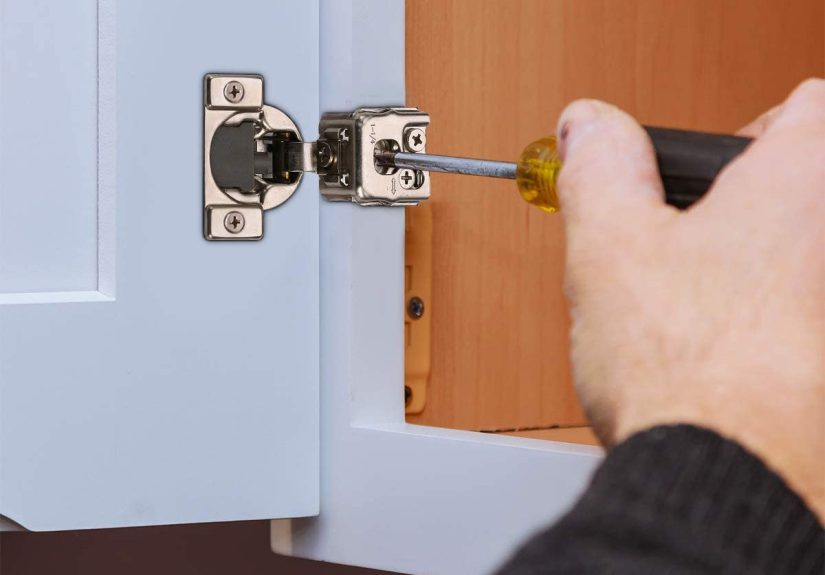
Installing soft-close hinges isn’t as scary as it looksespecially if your doors are already bored with 35mm cup holes.
Think of it as high-precision Lego with sharper tools.
Basic Installation Steps
- Check the existing setup: Note your current overlay, hinge type, and screw hole positions.
- Swap one door first: Replace hardware on a single door as a test before doing the entire kitchen.
-
Use a hinge jig if drilling new cups: A jig keeps cup holes the same distance from door edges and at consistent depth,
just as woodworking guides suggest. - Attach the mounting plates: For face-frame cabinets, plates screw to the frame; for frameless, they go inside the cabinet box.
- Clip on the doors: Most modern hinges snap onto the plates, allowing easy fine-tuning.
- Adjust in three directions: Use the adjustment screws to tweak gaps, alignment, and depth until everything looks straight.
If you’re upgrading older cabinets, many pro tips recommend tackling upper cabinets first (they’re more visible) and working in small sections so you’re not buried in loose doors and hardware.
Dialing in the Soft-Close Action
Some hinges have an adjustment switch or screw for the damping strength. If your doors close too slowly, reduce the damping on one of the hinges.
If they still tap the frame a bit too hard, increase the damping or add another soft-close hinge to wider doors.
Troubleshooting Common Soft-Close Hinge Problems
Even the best soft-close hinges can misbehave if they’re installed or adjusted incorrectly. Common issues include:
- Door slams instead of soft-closing: Check that the damper is on the correct side and engaged, and verify the adjustment tab is set to “high” damping if available.
- Door won’t fully close: The hinge may be out of alignment, the overlay may not match, or something inside the cabinet is obstructing the door.
- Uneven closing speed: On wide or heavy doors, both hinges need working dampers. If one damper fails, the door may twist as it closes.
Hardware troubleshooting guides point out that dampers mounted at the wrong angle or misaligned plates are frequent culpritsso double-check mounting positions if the soft-close function feels inconsistent.
Real-World Lessons From Installing Soft-Close Hinges
Reading specs is useful, but nothing teaches you about soft-close hinges like actually living with them.
Here are some practical, experience-based insights that don’t always make it onto the box.
The “One-Door Test” Is Your Best Friend
If you’re unsure which hinges to buy, don’t start with a 60-pack. Start with one or two doors in a heavy-use area, like above the dishwasher or near the fridge.
These doors get opened and closed constantly, so they’re a perfect test case.
After a week, ask yourself:
- Do they close smoothly every time, or do you notice a lag or “sticky” feel?
- Do the doors stay aligned, or are you constantly tweaking screws?
- Does the finish match or complement your other hardware?
If those test doors feel great, thenand only thenhit “order” on the full pack.
Plan for Heavy Doors and Corner Cabinets
Experience also teaches that not all doors are created equal. A tall pantry door or a door with a spice rack mounted inside acts very differently from a small upper cabinet.
Heavier doors may need two full soft-close hinges (with active dampers) or a combination of a soft-close hinge and a separate soft-close adapter to close consistently.
Corner cabinets can be extra quirky. The geometry means that standard hinges may cause the door to hit handles or neighboring doors.
This is where specialty angled soft-close hinges shine: they’re designed to open and close within tight clearances while still delivering a gentle close.
Soft-Close Hinges Change How You Use Your Kitchen
Once soft-close hinges are installed, most people unconsciously change how they interact with their cabinets.
You stop “catching” doors and start letting them glide. Family members become less anxious about accidentally slamming doors late at night.
And if you have kids, the reduction in finger-pinching incidents alone is worth the upgrade.
Many homeowners report that after a few weeks, the kitchen simply feels calmer. The absence of sharp banging sounds
makes the room feel more upscale, even when the cabinets themselves are basic builder-grade boxes.
Maintenance Makes a Big Difference Over Time
Another real-world lesson: soft-close hinges are low-maintenance, not no-maintenance.
A yearly check-uptightening loose screws, wiping away grease and dust, and verifying that dampers are still engagingkeeps them feeling
like new. In kitchens that see a lot of humidity or grease (looking at you, stovetop neighbors), a quick clean can dramatically improve
the soft-close motion.
If one door suddenly stops soft-closing while others still work, don’t panic. Often, the damper is just clogged or the adjustment switch got bumped.
A little troubleshooting usually fixes the problem without replacing the entire hinge.
Budget vs. Premium: Where Experience Really Shows
After living with both budget and premium soft-close hinges, many DIYers notice a few key differences:
- Consistency: Premium hinges tend to close at the same speed across all doors, even after years of use.
- Fine-tuning: Higher-end models offer more precise adjustment, which matters if your cabinets are slightly out of square.
- Feel: The “buttery” closing action that designers rave about is more common in the top-tier hinges.
That said, well-chosen budget hinges can still deliver a huge quality-of-life upgrade over old, squeaky hardware.
For many homeowners, the best strategy is to use affordable soft-close hinges for most doors and reserve premium hinges for
high-visibility, heavy-use areas like large pantry doors or upper cabinets around the range.
In short, soft-close hinges are one of those rare home upgrades that are relatively inexpensive, DIY-friendly, and immediately noticeable in daily life.
Choose hinges that match your cabinet style, install one or two test doors first, and you’ll quickly see why they’re a favorite pick in so many
Bob Vila–style renovation guides.