Table of Contents >> Show >> Hide
- What “Bleeding Into the Skin” Actually Means
- Common Causes of Bleeding Into the Skin
- 1) Everyday Mechanical Causes
- 2) Medications That Raise Bleeding Risk
- 3) Low Platelets (Thrombocytopenia)
- 4) Immune Thrombocytopenia (ITP)
- 5) Vascular Fragility and Age-Related Purpura
- 6) Vasculitis and Autoimmune Conditions
- 7) Infections and Critical Illness
- 8) Clotting Disorders, Liver Disease, and Blood Disorders
- When to Seek Urgent or Emergency Care
- How Doctors Diagnose Bleeding Into the Skin
- Treatment Options: What Actually Helps
- Practical Self-Advocacy Tips at Your Appointment
- Conclusion
- Experience Section (Extended): Real-World Stories and Lessons
One day your skin looks normal. The next day, it looks like a tiny paint-splatter project happened under the surface.
Those red, purple, or brown spots can be alarmingand they should never be ignored. “Bleeding into the skin” is not
one single diagnosis. It’s a visible clue that blood has leaked from small vessels into skin tissue. Sometimes the cause
is minor, like a hard gym session or a medication side effect. Other times, it’s your body waving a giant “please get
checked” flag for platelet disorders, clotting issues, infections, autoimmune disease, or blood cancers.
This guide breaks the topic down in plain American English with a little personality (because panic-googling is stressful
enough). We’ll cover what these spots mean, the most common and serious causes, how doctors investigate the issue, and
what treatment can look like in real life. The goal: help you move from “What is happening to my skin?!” to “I know what
to do next.”
What “Bleeding Into the Skin” Actually Means
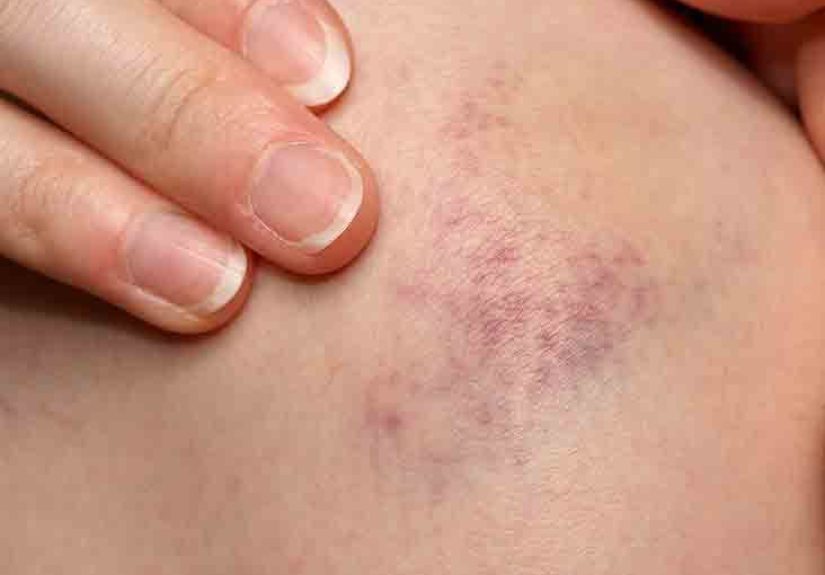
Bleeding into the skin happens when tiny blood vessels break or leak under the skin. You’ll usually hear these terms:
Petechiae
Pinpoint spots, often clustered. They can look like a rash, but unlike an inflammation rash, they usually do
not blanch (turn pale) when you press them.
Purpura
Larger flat patches from leaked blood under the skin. Think “more than tiny dots, less than a classic big bruise.”
Ecchymosis
Bigger bruised areaswhat many people casually call a bruise. Not every bruise is dangerous, but unexplained or repeated
bruising deserves evaluation.
In short: same process (blood leaking), different spot sizes. Your skin is basically giving clinicians a visual clue about
what may be going on with vessels, platelets, clotting factors, or all three.
Common Causes of Bleeding Into the Skin
1) Everyday Mechanical Causes
Sometimes the cause is simple. Heavy lifting, intense coughing, forceful vomiting, or labor/delivery can increase pressure
in tiny capillaries and trigger petechiaeoften around the face, neck, or chest. Trauma and minor bumps can also cause
ecchymoses (bruises), especially if you bruise easily.
Translation: your capillaries are tiny, hardworking pipes. Push pressure high enough and they may leak.
2) Medications That Raise Bleeding Risk
Certain medications can make skin bleeding more likely by affecting platelets or clotting pathways. Common examples include:
- Anticoagulants (blood thinners)
- Antiplatelet drugs
- Some antibiotics
- Certain seizure medicines
- Steroids (long-term use can increase skin/vessel fragility)
- Heparin in some cases (drug-induced thrombocytopenia)
Medication-related bruising isn’t automatically an emergencybut don’t self-adjust prescriptions. Let your clinician make the
decision safely.
3) Low Platelets (Thrombocytopenia)
Platelets are the blood cells that help form clots. When platelet counts drop, skin bleeding signs can appear first:
petechiae, purpura, easy bruising, gum bleeding, and nosebleeds.
Causes of thrombocytopenia generally fall into three buckets:
- Too little production (bone marrow issues, nutrient deficiencies, chemotherapy, leukemia)
- Too much destruction (immune causes like ITP, infections, some medications)
- Too much sequestration (platelets trapped in an enlarged spleen/liver)
This is why a complete blood count (CBC) is often one of the first tests ordered.
4) Immune Thrombocytopenia (ITP)
In ITP, the immune system mistakenly attacks platelets. People can develop petechiae, purpura, and mucosal bleeding.
Children and adults may show different disease patterns: childhood cases often improve spontaneously, while adult cases can
be more persistent.
ITP is one of the classic examples of “the skin is showing the blood count.” If platelet counts fall very low, serious bleeding
risk rises and treatment becomes more urgent.
5) Vascular Fragility and Age-Related Purpura
As skin ages, connective tissue and vessel support weaken. Add sun damage and sometimes steroid exposure, and you get
fragile vessels that bruise easilyespecially on forearms and hands. This is often called senile (or actinic) purpura.
Good news: this pattern is commonly benign. Less-good news: it can look dramatic enough to send anyone into a late-night
search spiral.
6) Vasculitis and Autoimmune Conditions
Inflammation of blood vessels (vasculitis) can cause palpable purpura, often with other symptoms such as joint pain, abdominal
pain, kidney findings, or fatigue. One important subtype is IgA vasculitis (formerly HSP), especially in children.
When purpura comes with systemic symptoms, clinicians move quickly to evaluate organsnot just skin.
7) Infections and Critical Illness
Some infections can trigger petechial or purpuric rashes. A key emergency example is meningococcal bloodstream infection,
which can progress rapidly and become life-threatening. If rash appears alongside fever, severe illness, confusion, neck pain,
or shock-like symptoms, seek emergency care immediately.
8) Clotting Disorders, Liver Disease, and Blood Disorders
Not all bleeding signs are “platelet-only.” Disorders of clotting factors (including those linked to liver disease), bone marrow
disease, and thrombotic microangiopathies can present with skin bleeding patterns. That’s why diagnosis should never rely on
appearance alone.
When to Seek Urgent or Emergency Care
Call urgent care or your doctor quickly if you develop unexplained widespread petechiae or purpura. Go to the ER now if any
of these happen:
- Bleeding that won’t stop with pressure
- Rapidly spreading dark purple rash with high fever
- Dizziness, fainting, confusion, severe headache, or breathing trouble
- Blood in stool, urine, or vomit
- Very heavy menstrual bleeding with weakness/paleness
- Head injury in someone known to have very low platelets
A practical rule: if skin bleeding comes with “whole-body sick” symptoms, treat it as urgent until proven otherwise.
How Doctors Diagnose Bleeding Into the Skin
Step 1: Clinical History
The workup starts with timing and pattern:
- When did spots start? Sudden or gradual?
- Any recent infection, fever, or new medication?
- Any family history of bleeding disorders?
- Any gum bleeding, nosebleeds, heavy periods, or internal bleeding symptoms?
- Any alcohol overuse, liver disease, autoimmune history, or cancer treatment?
Step 2: Focused Physical Exam
Clinicians assess lesion size (petechiae/purpura/ecchymosis), location, blanching behavior, mucosal bleeding, and signs of
systemic illness (fever, enlarged spleen, neurologic changes, dehydration, etc.).
Step 3: Initial Lab Panel
Common first-line tests include:
- CBC (platelet, red cell, white cell counts)
- Peripheral blood smear (platelet appearance and cell morphology)
- PT and PTT (clotting pathways)
- Liver and kidney panels (because organ dysfunction can drive bleeding patterns)
- Urinalysis in selected cases (especially vasculitis concerns)
If thrombocytopenia appears, clinicians may first rule out lab artifact (pseudothrombocytopenia) by repeating counts with a
different collection tube. This small step prevents big diagnostic mistakes.
Step 4: Targeted Testing Based on Suspicion
Depending on your case, additional tests can include platelet function studies, von Willebrand workup, infection testing, autoimmune
panels, imaging, or occasionally bone marrow evaluation. Skin biopsy may be used when vasculitis or other dermatologic causes are unclear.
Bottom line: diagnosis is detective work. Skin findings start the story, but labs and context finish it.
Treatment Options: What Actually Helps
Treat the Cause, Not Just the Color
There is no one-size-fits-all cream for “blood spots.” The correct treatment depends on why bleeding occurred.
1) Observation and Monitoring
Mild, stable casesespecially when tied to minor trauma or age-related vessel fragilitymay need reassurance, prevention strategies,
and follow-up rather than aggressive treatment.
2) Medication Review and Adjustment
If a medication is contributing, clinicians may adjust dosing, switch therapies, or add protective strategies. Never stop anticoagulants
or prescription drugs without medical guidance.
3) Platelet-Focused Therapies
For significant thrombocytopenia or ITP, treatment may include:
- Corticosteroids
- IVIG (intravenous immunoglobulin)
- Immunosuppressive or targeted agents
- Thrombopoietin receptor agonists (to stimulate platelet production)
- Platelet transfusion in severe bleeding scenarios
- Splenectomy in selected persistent cases
4) Infection-Specific Therapy
Bacterial sepsis patterns with purpuric rash are emergencies. Rapid antibiotics and hospital-level care can be lifesaving.
5) Supportive and Preventive Care
- Avoid high-impact injury risk when platelets are low
- Use soft toothbrushes and gentle oral care if mucosal bleeding is present
- Limit alcohol if advised (can worsen platelet issues)
- Address nutrition deficits (e.g., vitamin deficiency) if identified
- Use sun protection for fragile, age-related purpura-prone skin
Think of treatment as two layers: fix what’s causing bleeding and reduce opportunities for new bleeding while recovery happens.
Practical Self-Advocacy Tips at Your Appointment
- Bring a full medication/supplement list (including over-the-counter products).
- Take photos of skin spots over time in consistent lighting.
- Write down bleeding events (nosebleeds, gum bleeding, bruises, menstrual changes).
- Ask what platelet count means for your daily activity level.
- Ask for clear red-flag instructions before going home.
You don’t need to become your own hematologist overnightbut organized information helps clinicians help you faster.
Conclusion
Bleeding into the skin is a symptom, not a final diagnosis. In many people, the cause is manageable and sometimes benign. In others, it can
signal urgent conditions that need rapid intervention. The smartest move is not panic and not denialit’s prompt evaluation, accurate testing,
and cause-specific treatment.
If there’s one takeaway, let it be this: your skin can be an early warning dashboard. When it flashes unfamiliar red-purple signs, don’t just
cover themdecode them.
Experience Section (Extended): Real-World Stories and Lessons
Experience 1: “I thought it was just stress.”
A 29-year-old teacher noticed tiny dots around her ankles after a week of standing all day during exam season. She assumed she was overtired,
ignored them, and moved on. A few days later, she developed frequent gum bleeding when brushing and several unexplained bruises on her thighs.
Her CBC showed low platelets. Further evaluation suggested immune thrombocytopenia. She started treatment and saw platelet counts rise over
the following weeks. Her biggest lesson: minor skin clues can be early signs of blood-count changes. Her second lesson: bring photos to your
appointment. She had taken daily images, which helped her clinician confirm progression rather than random bruising.
Experience 2: “My dad bruised by just bumping a grocery bag.”
A family became worried when their 72-year-old father developed dark purple patches on his forearms after very small bumps. They feared a
hidden cancer. His evaluation showed normal platelet counts and no major clotting abnormality. Diagnosis: age-related vascular fragility
(senile/actinic purpura), likely worsened by years of sun exposure and chronic steroid cream use. Management focused on sun protection,
skin barrier care, and avoiding trauma. The emotional shift was huge: from fear of catastrophic illness to practical prevention.
Their takeaway was simple but powerfuldramatic-looking bruises are not always dangerous, but unexplained changes still deserve a proper check.
Experience 3: “The medication connection nobody noticed at first.”
A college athlete developed recurrent petechiae after starting a new medication regimen that included an antibiotic and occasional NSAID use.
Initial concern centered on diet and overtraining. Her clinician performed a detailed medication review, repeated platelet tests, and checked
coagulation labs. The likely trigger turned out to be medication-related platelet dysfunction layered on top of heavy training stress. After a
supervised medication adjustment and short recovery period, the spots gradually resolved. Her lesson: always disclose every pill, powder,
supplement, and “just once in a while” medicine. In bleeding evaluations, the details you consider boring can be the clues your doctor needs.
Experience 4: “The rash that couldn’t wait.”
A teenager developed fever, body aches, vomiting, and a fast-spreading dark rash. Family members initially thought it was a viral flu with a
weird skin reaction. In the ER, clinicians recognized a possible meningococcal pattern and started immediate emergency care. The patient was
hospitalized and treated rapidly. Recovery took time, but early action likely prevented worse outcomes. The family now shares one rule with
everyone they know: if a purplish rash appears with severe systemic symptoms, don’t watch and wait. Get urgent care. The key lesson from this
story is not fearit’s speed. Minutes matter in certain causes of skin bleeding.
Across these experiences, one pattern repeats: people do best when they treat unexplained bleeding signs as information, not embarrassment.
Track symptoms, seek timely care, and follow through with labs and follow-up. Whether the diagnosis is mild fragility, medication effect,
ITP, vasculitis, or infection, the pathway to better outcomes starts with the same move: take the sign seriously, then let evidence guide
the next step.