Table of Contents >> Show >> Hide
- What Is a Sales Development Process?
- Why Your Sales Development Process Matters
- Step 1: Define Your Ideal Customer Profile
- Step 2: Map the Buying Committee
- Step 3: Build a Prospecting List That Does Not Embarrass You
- Step 4: Create a Clear Value Proposition
- Step 5: Design a Multi-Channel Outreach Cadence
- Step 6: Write Outreach That Starts Conversations
- Step 7: Qualify Leads With a Practical Framework
- Step 8: Build a Smooth SDR-to-AE Handoff
- Step 9: Measure the Metrics That Actually Matter
- Step 10: Create Feedback Loops With Sales and Marketing
- Step 11: Document Your Sales Development Playbook
- Step 12: Improve the Process Every Month
- Common Mistakes to Avoid
- Hands-on Experience: What Building a Sales Development Process Feels Like in the Real World
- Conclusion
Building a sales development process sounds like something that requires a whiteboard, six executives, three consultants, and at least one person saying “synergy” too confidently. In reality, a strong sales development process is much simpler: it is a repeatable system for finding the right prospects, starting helpful conversations, qualifying real opportunities, and handing those opportunities to sales in a way that does not make everyone silently scream into their coffee.
Whether you are launching your first sales development representative team, refining an existing outbound motion, or trying to stop your pipeline from behaving like a leaky garden hose, this guide gives you a practical framework. We will cover how to define your ideal customer profile, build prospect lists, create outreach cadences, qualify leads, measure performance, and improve the process over time.
The best part? You do not need a giant sales department to start. A founder, a solo SDR, or a small revenue team can build a clean sales development system by focusing on clarity, consistency, and useful buyer conversations. The goal is not to annoy strangers at scale. The goal is to help the right people discover a solution when the timing, problem, and business value actually make sense.
What Is a Sales Development Process?
A sales development process is the structured set of steps used to identify, contact, qualify, and prepare potential buyers before they enter the core sales cycle. It usually sits between marketing and closing sales. In many B2B companies, sales development representatives, also called SDRs or BDRs, focus on top-of-funnel work: researching accounts, reaching out to prospects, starting conversations, qualifying interest, and booking meetings for account executives.
Think of the sales development process as the kitchen prep station of revenue growth. The account executive may cook the final dish, but if the ingredients are messy, mislabeled, or dropped on the floor, dinner is going to be weird. A good process makes sure the right accounts are selected, the right contacts are approached, the right message is used, and only qualified opportunities move forward.
Why Your Sales Development Process Matters
Modern B2B buyers are busy, informed, and allergic to generic outreach. Many already research solutions online before speaking with a seller. They compare vendors, read reviews, talk to peers, and quietly build a shortlist before your SDR ever says hello. That means your sales development process cannot depend on “just checking in” emails and mystery-meat cold calls.
A strong process helps your team do four important things. First, it targets better-fit accounts instead of chasing every company with a website and a pulse. Second, it creates consistent outreach without making every message sound like it was assembled by a robot wearing a sales hoodie. Third, it gives managers clean data for coaching and forecasting. Fourth, it improves the handoff between SDRs and account executives, which protects the buyer experience and keeps pipeline quality high.
Step 1: Define Your Ideal Customer Profile
Your ideal customer profile, or ICP, is the foundation of your sales development process. Without it, your team will waste time selling enterprise software to companies that need a spreadsheet, or pitching premium services to buyers who are still arguing about whether they need a budget at all.
An ICP describes the type of company most likely to benefit from your product and become a profitable, long-term customer. Start with firmographic details such as industry, company size, revenue range, geography, and business model. Then add operational signals: what tools they use, how fast they are growing, whether they recently hired key roles, and what pain points typically appear before they buy.
Example ICP
Suppose you sell sales enablement software. A strong ICP might be: U.S.-based B2B software companies with 50 to 500 employees, a growing sales team, a defined onboarding program, and a need to reduce ramp time for new reps. A weak ICP would be: “companies that want more sales.” That description is so broad it could include a lemonade stand with ambition.
Once your ICP is defined, rank accounts by fit. Use three tiers: Tier 1 for high-value strategic accounts, Tier 2 for solid mid-market opportunities, and Tier 3 for lower-priority accounts that may still convert but should not consume premium research time.
Step 2: Map the Buying Committee
In B2B sales, one person rarely makes the entire decision alone. A sales development process should identify the buying committee, not just a single contact. Depending on your offer, the committee may include an economic buyer, technical evaluator, daily user, executive sponsor, finance reviewer, and legal approver.
For each target account, build a contact map. Identify who owns the business problem, who feels the daily pain, who controls budget, and who can block the deal. If you sell cybersecurity software, the chief information security officer may care about risk, the IT operations manager may care about implementation, and the chief financial officer may care about cost. Your SDR messaging should speak to each role differently.
Step 3: Build a Prospecting List That Does Not Embarrass You
Prospecting lists are where many sales development processes wobble. Bad data creates bad calls, bounced emails, awkward personalization, and CRM chaos. Before launching outreach, define the data fields your team must collect: company name, website, industry, employee count, contact name, job title, email, phone, LinkedIn profile, account tier, pain hypothesis, source, and last verified date.
Use trusted data providers, professional networks, company websites, job postings, funding announcements, technology signals, and intent data where available. But do not treat any database as gospel. People change jobs, companies rename departments, and job titles sometimes sound like they were generated during a brainstorming retreat. Always verify important accounts before outreach.
Simple List Quality Checklist
- Does the account match the ICP?
- Is the contact likely involved in the problem your product solves?
- Is the email address verified?
- Is there a clear reason to reach out now?
- Can the SDR personalize the message in under two minutes?
Step 4: Create a Clear Value Proposition
Your sales development message should not begin with a long company biography. Buyers do not wake up thinking, “I hope a stranger tells me about their award-winning platform today.” They care about their problem, their goals, their risk, and their time.
A useful value proposition connects a buyer pain to a measurable outcome. Instead of saying, “We provide an innovative revenue intelligence platform,” say, “We help sales leaders identify stalled deals earlier so managers can coach reps before the forecast slips.” The second version gives the buyer a business reason to care.
Build messaging around three layers: the problem, the impact, and the proof. The problem might be slow onboarding. The impact might be missed quota and longer ramp time. The proof might be a customer story, benchmark, or specific result. Keep the wording human. If your email sounds like a brochure swallowed a thesaurus, simplify it.
Step 5: Design a Multi-Channel Outreach Cadence
A sales cadence is a planned sequence of touches across channels such as email, phone, LinkedIn, voicemail, and sometimes direct mail or event follow-up. The point is not to chase people like a caffeinated squirrel. The point is to create enough thoughtful contact points to earn attention while respecting the buyer’s time.
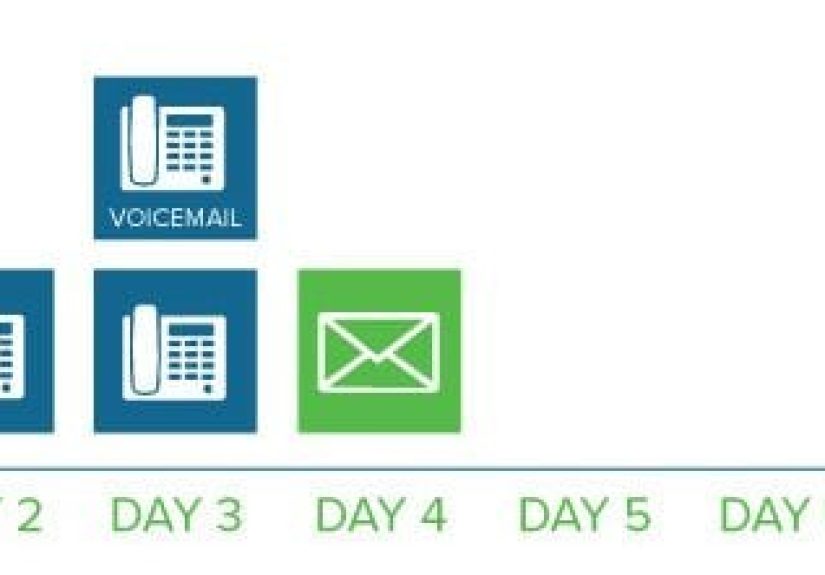
A practical outbound cadence might run for 10 to 15 business days and include 8 to 12 touches. For example:
- Day 1: Personalized email with a relevant business trigger.
- Day 2: Call and voicemail if appropriate.
- Day 4: LinkedIn profile view or connection request with no pitch dump.
- Day 6: Follow-up email with a short insight or useful resource.
- Day 8: Call referencing the original reason for outreach.
- Day 11: Role-specific message addressing a likely objection.
- Day 14: Breakup email that politely offers to close the loop.
The cadence should vary by account tier. Tier 1 accounts deserve deeper research, more personalization, and coordinated outreach from sales and marketing. Tier 3 accounts can use lighter personalization and more automation. Automation is useful, but it should not remove judgment. A sequence tool can send emails; it cannot understand a buyer’s mood after a rough Monday meeting.
Step 6: Write Outreach That Starts Conversations
Good SDR outreach is short, specific, and buyer-centered. It gives the prospect a reason to respond without forcing them to decode a paragraph of product jargon. Use a simple structure: observation, problem hypothesis, value, and clear next step.
Cold Email Example
Subject: Reducing sales ramp time at Acme
Hi Jordan, I noticed Acme is hiring several new account executives this quarter. When teams scale quickly, managers often struggle to keep onboarding consistent while still coaching active deals.
We help B2B sales teams shorten rep ramp time by centralizing playbooks, call examples, and coaching workflows. Would it be worth a quick conversation next week to compare what is working in your onboarding process?
This works because it is specific, relevant, and easy to understand. It does not pretend the SDR has been “following Acme’s journey with great admiration” unless that is actually true. Fake enthusiasm is not personalization; it is confetti with a quota.
Step 7: Qualify Leads With a Practical Framework
Qualification keeps your pipeline from filling with meetings that look nice on a dashboard but go nowhere. Common frameworks include BANT, MEDDIC, CHAMP, and GPCT. You do not need to worship one framework like it is carved into a mountain. Choose the criteria that fit your sales motion.
At minimum, qualify for fit, pain, authority, timing, and next step. Fit asks whether the company matches your ICP. Pain asks whether there is a meaningful business problem. Authority identifies who is involved in the decision. Timing clarifies urgency. Next step confirms whether the prospect agreed to a specific action.
Discovery Questions SDRs Can Use
- What prompted you to look at this now?
- How are you handling this process today?
- What happens if nothing changes in the next six months?
- Who else is usually involved in evaluating this type of solution?
- What would make a follow-up conversation useful for your team?
The SDR should not interrogate the buyer like a detective in a low-budget crime drama. The best qualification calls feel like useful business conversations. Listen for urgency, business impact, and clarity. If there is no pain, no fit, and no next step, do not force the lead forward just to make the calendar look busy.
Step 8: Build a Smooth SDR-to-AE Handoff
A poor handoff can ruin a good first conversation. The buyer repeats everything, the account executive asks questions already answered, and the SDR wonders why the opportunity later disappears into the pipeline swamp.
Create a handoff checklist. Before booking the meeting, the SDR should capture account fit, contact role, pain points, current process, urgency, buying committee notes, competitors mentioned, objections, and the agreed reason for the meeting. The account executive should review the notes before the call and start from context, not from zero.
A strong handoff note might say: “Jordan, VP of Sales at Acme, is hiring 12 AEs this quarter and is concerned that inconsistent onboarding is extending ramp time. Current process uses shared docs and manager-led shadowing. Interested in seeing how structured playbooks and call coaching can improve ramp consistency. CFO may be involved if pricing exceeds department budget.”
That note is useful. “Good call, interested” is not a note. It is a fortune cookie with a CRM login.
Step 9: Measure the Metrics That Actually Matter
Sales development teams often track activity because it is easy. Dials, emails, and LinkedIn touches matter, but they are only leading indicators. The real question is whether those activities create qualified conversations and revenue opportunities.
Track a balanced set of metrics:
- Activity metrics: calls, emails, social touches, completed tasks.
- Engagement metrics: email reply rate, call connect rate, positive response rate.
- Conversion metrics: meetings booked, meetings held, sales accepted opportunities.
- Quality metrics: opportunity conversion rate, pipeline generated, closed-won revenue influenced.
- Process metrics: CRM hygiene, cadence compliance, speed to lead, handoff completeness.
Do not manage SDRs only by volume. If one rep sends fewer emails but books better-qualified meetings, study their approach. If another rep crushes activity targets but produces weak opportunities, the issue may be targeting, messaging, coaching, or list quality. Data should start better conversations, not become a digital whip.
Step 10: Create Feedback Loops With Sales and Marketing
Sales development works best when SDRs, account executives, marketing, and revenue operations share feedback regularly. Marketing needs to know which content helps prospects respond. Account executives need to know which SDR-sourced meetings convert. SDRs need to know which objections appear in later stages. Revenue operations needs to know where data breaks.
Schedule a weekly pipeline quality review. Look at meetings booked, meetings held, accepted opportunities, disqualification reasons, lost reasons, and message performance. Ask practical questions: Which industries responded best? Which personas ignored us? Which trigger events worked? Which objections appeared repeatedly? Which handoffs lacked context?
This feedback loop turns the sales development process into a learning system. Without it, teams keep repeating old plays because “that is how we have always done it,” which is also how offices end up with 14 unused software subscriptions and a printer everyone fears.
Step 11: Document Your Sales Development Playbook
A process that lives only in someone’s head is not a process; it is a hostage situation. Document your sales development playbook so new hires can ramp faster and managers can coach consistently.
Your playbook should include the ICP, account tiers, buyer personas, qualification criteria, approved messaging, cadence examples, objection handling, CRM rules, handoff requirements, meeting booking standards, and performance expectations. Keep it short enough that people actually use it. A 90-page PDF may look impressive, but if it takes longer to read than a tax manual, reps will ignore it.
Step 12: Improve the Process Every Month
Your first sales development process will not be perfect. That is fine. The goal is to launch a clear version, collect data, and improve it. Review your process monthly. Retire weak messaging. Refresh prospecting lists. Update ICP assumptions. Test new subject lines. Improve call coaching. Remove unnecessary CRM fields. Add better examples to the playbook.
Small improvements compound. A better list improves connect rates. Better messaging improves replies. Better qualification improves pipeline quality. Better handoffs improve close rates. Eventually, the process becomes more than a set of tasks. It becomes a revenue engine with fewer surprises and less panic disguised as urgency.
Common Mistakes to Avoid
The first mistake is confusing activity with progress. More emails do not automatically mean more pipeline. If the message is weak or the target is wrong, higher volume simply creates more silence at scale.
The second mistake is over-automating. Automation should remove repetitive work, not human relevance. Buyers can smell generic sequences from across the internet.
The third mistake is skipping qualification. Booking every mildly curious person may feel productive, but it wastes account executive time and damages trust between teams.
The fourth mistake is ignoring buyer context. A CFO, operations leader, and end user may all care about the same solution for different reasons. One message will not fit everyone.
The fifth mistake is failing to coach from real calls and emails. Sales development improves fastest when managers review actual conversations, not just dashboards.
Hands-on Experience: What Building a Sales Development Process Feels Like in the Real World
In real life, creating a sales development process is less like building a machine and more like training a team to play jazz with spreadsheets. You need structure, but you also need room for judgment. The first version usually starts messy. Someone has a list of accounts in a spreadsheet. Someone else has email templates saved in a notes app. The CRM has duplicate contacts. One rep is using a beautiful cadence, another is “winging it,” and somehow both claim their method is the secret sauce.
The most useful experience is to start small and observe what actually happens. Choose one segment, one persona, one clear pain point, and one simple cadence. For example, target operations leaders at mid-sized logistics companies that recently opened new locations. Build 100 accounts, verify the contacts, write two email variations, create a call script, and run the campaign for two weeks. Then review the results honestly. Did people reply? Did they object to timing, budget, relevance, or trust? Did meetings convert into real opportunities? The market will give feedback, but it rarely whispers sweetly. Sometimes it says, “No thanks,” 47 times in a row.
One practical lesson is that personalization does not need to be dramatic. SDRs do not need to write a biography of the prospect’s career. A useful trigger is enough: a hiring push, new funding, a product launch, a regulatory change, a technology migration, or a public leadership priority. The best outreach often says, “I understand why this might matter now,” not “I spent 30 minutes reading your entire digital footprint.”
Another lesson is that the handoff determines whether SDR work earns respect. When account executives receive vague meetings, they start doubting the SDR team. When they receive clear context, they trust the process. A strong handoff note can change the entire relationship between sales development and closing sales. It says, “This is not just a calendar invite. This is a business conversation with a reason.”
Coaching also matters more than most teams expect. A rep may struggle not because they lack effort, but because their opening line creates resistance. Another rep may book meetings because they ask better follow-up questions. Reviewing real emails and call recordings helps managers identify these patterns. The fix is often small: a clearer first sentence, a better pause after the opener, or a stronger question about business impact.
Finally, expect the process to evolve. Your ICP will sharpen. Your best-performing persona may surprise you. A message everyone loved internally may flop externally. A simple email written in plain English may outperform the “strategic narrative” that took three meetings to approve. That is the beauty of sales development. It rewards teams that stay curious, test quickly, and treat prospects like people instead of entries in a sequence.
Conclusion
Creating your own sales development process is not about copying another company’s playbook word for word. It is about building a system that matches your buyers, your market, your sales cycle, and your revenue goals. Start with a clear ICP, map the buying committee, build clean lists, write relevant messaging, design thoughtful cadences, qualify with discipline, and measure the metrics that connect activity to pipeline quality.
The strongest sales development teams are consistent without becoming robotic. They use data without forgetting common sense. They automate tasks without automating empathy. Most importantly, they learn from every campaign, every objection, every booked meeting, and every deal that does or does not close.
If your current pipeline feels unpredictable, your answer may not be “hire more reps” or “send more emails.” It may be to build a better process. And once that process is working, sales development stops feeling like random outreach and starts becoming what it should be: a reliable path from the right prospect to the right conversation at the right time.