Table of Contents >> Show >> Hide
- From an Ordinary Walk to an Extraordinary Discovery
- Why 1,469 Roman Coins Matter So Much
- What Exactly Is a Roman Denarius?
- Why Were the Coins Buried?
- What the Find Reveals About Roman History in Romania
- What Happens After a Discovery Like This?
- Lessons for Metal Detectorists, Collectors, and History Fans
- The Experience of Finding a Roman Hoard
- Final Thoughts
Most weekend walks end with muddy shoes, a little fresh air, and maybe a strong opinion about mosquitoes. This one ended with the Roman Empire popping out of the ground.
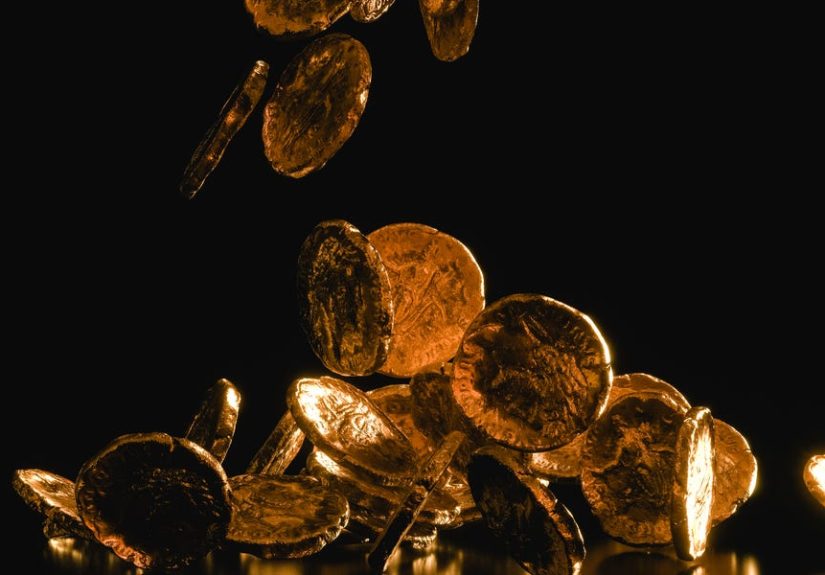
In southern Romania, hobby metal detectorist Marius Mangeac made the kind of discovery that sends archaeologists, history buffs, and coin lovers into immediate keyboard-smashing excitement: a hoard of 1,469 Roman silver coins. That is not a typo. Not 14. Not 149. A full 1,469 silver denarii, discovered after his detector gave off a promising signal in a field near Letca Veche. He later turned the find over to local authorities after carefully documenting it, proving that sometimes the real treasure is not just what you find, but what you do next.
The discovery quickly caught attention because it combines everything people love about ancient history: buried wealth, imperial drama, unanswered questions, and enough silver to make a pirate briefly jealous. But beyond the headline appeal, this Roman coin hoard matters for a deeper reason. Finds like this can help researchers understand how money moved, how people saved, and how communities connected to the wider Roman world nearly 2,000 years ago.
This is not simply a story about a lucky day in a field. It is a story about Roman economics, frontier history, archaeological responsibility, and the strange magic of holding an object that last mattered deeply to someone who lived in antiquity.
From an Ordinary Walk to an Extraordinary Discovery
According to reports about the find, Mangeac was out with his metal detector on April 19, 2025, near Letca Veche in Giurgiu County, not expecting his day to become a chapter in local history. Then the machine picked up a strong signal. He dug, and what emerged was the dream scenario every detectorist imagines but almost nobody experiences: coin after coin after coin.
The final count came to 1,469 Roman silver denarii. Even more impressive, the hoard appears to have been buried in a ceramic vessel, with fragments of the container found alongside the coins. That detail matters. A pile of old coins is exciting. A deliberately buried hoard in a container is historical evidence. It suggests planning, protection, urgency, or fear. Somebody put these coins away for a reason.
Mangeac reportedly spent two days photographing the coins before turning them over to local officials. That choice may not sound dramatic, but in archaeology, context is everything. A responsible discovery preserves far more knowledge than a secretive one. The coins can now be studied as a group, not just admired as shiny survivors from the ancient world.
There is also something wonderfully human about his reaction. He described feeling like he was face to face with history and said he hoped to one day take his child to a museum and explain that he was lucky enough to discover a page from the history of his people. That line lands because it captures the emotional core of the story. This was not just a lucky hobby outing. It was a collision between ordinary life and deep time.
Why 1,469 Roman Coins Matter So Much
A hoard is more than a big pile of money
To the average reader, a Roman coin hoard may sound like a jackpot with great branding. To archaeologists, it is something even better: data. Hoards can reveal patterns of saving, trade, insecurity, military movement, and local response to political upheaval. In the ancient world, when there were no modern banks and no password-protected savings accounts, burying wealth was often a practical strategy. If the owner died, fled, or simply could not return, the stash stayed underground until modern luck or archaeology brought it back to light.
That is why this find is so valuable. It offers a closed group of coins deposited together, not a random scatter collected over time. In plain English, this is the ancient equivalent of discovering a sealed financial snapshot. Researchers can study the date range, the coin types, the emperors represented, the wear patterns, and the silver content to build a clearer picture of when and why the hoard was assembled.
The emperors on the coins tell a long story
Reports indicate that the coins span roughly a century of Roman history, from Nero to Marcus Aurelius. That is a lineup with no shortage of personality. Nero is remembered for excess, political turmoil, and a legacy wrapped in scandal. Marcus Aurelius, by contrast, remains famous as the philosopher emperor, the stoic ruler who somehow found time to reflect on virtue while running an empire that insisted on being very complicated.
When a hoard includes coins from multiple rulers, it tells us that ancient money was durable and circulated for a long time. Coins were not minted, spent once, and politely retired. They passed from hand to hand, town to town, and generation to generation. A single hoard can contain decades of economic life, which is one reason numismatics, the study of coins, is so important to archaeology.
In this case, the hoard reportedly includes depictions tied to 11 emperors and empresses. That gives scholars a compact portrait gallery of Roman authority in silver. Roman coins were currency, yes, but they were also mass media. They carried faces, symbols, messages, and political identity across the empire. Every transaction could quietly remind the user who ruled the world, or at least who wanted credit for ruling it.
What Exactly Is a Roman Denarius?
The denarius was the standard Roman silver coin for centuries and one of the most recognizable pieces of ancient money. Introduced in the Roman Republic and later used throughout the imperial period, it became a backbone of Roman economic life. If Rome had a financial celebrity, the denarius would have been it.
That matters because the Letca Veche hoard was not a random mix of oddments. These were silver denarii, a serious form of value in the Roman world. The coin’s importance came from both metal and meaning. Silver carried intrinsic worth, while the state-backed image on the coin added trust, political messaging, and consistency across wide distances.
Roman silver coins were also closely tied to conquest and state power. Soldiers were paid in them. Trade was lubricated by them. Imperial imagery traveled on them. A denarius could function as salary, savings, propaganda, and portable wealth all at once. In other words, it was a tiny silver multitool for empire.
That is part of what makes this hoard so fascinating. A buried stash of denarii is not just a collection of old coins. It is frozen evidence of Roman money in action. Each coin once bought something, paid someone, rewarded service, or symbolized authority. Together, they become a chorus rather than a solo.
Why Were the Coins Buried?
This is the question that makes every coin hoard irresistible.
Was it a merchant’s savings? A veteran’s nest egg? A local elite’s emergency reserve? Payment set aside during a crisis? Wealth hidden during unrest and never recovered? We do not know yet, and that mystery is half the story’s appeal. But archaeology gives us smart ways to think about the possibilities without leaping into movie-level fantasy.
In the Greco-Roman world, buried hoards often represented stored wealth kept safe in uncertain times. If danger loomed, hiding coins in a ceramic vessel could be a rational move. If travel was risky, if conflict threatened, or if political conditions were unstable, the ground became a vault. A very low-tech vault, yes, but still a vault.
The fact that the coins seem to have been buried together in a vessel suggests intention, not accident. Somebody gathered them, counted them, and concealed them. The fact that they stayed there for centuries suggests that person never came back. That final detail is what gives hoards their quiet sadness. Every buried treasure is also an unfinished plan.
And because the latest coins in a hoard can help estimate when it was deposited, the group offers a timeline clue. Even if the earliest coins were already old when buried, their presence shows long circulation. That makes hoards valuable for understanding both chronology and lived experience. Ancient people were not handling museum pieces. They were handling money that had a life before reaching them.
What the Find Reveals About Roman History in Romania
Roman history is deeply woven into the story of modern Romania through the ancient region of Dacia. Rome conquered Dacia under Trajan in the early second century, and the province became important for its resources, strategic position, and connection to imperial expansion. That larger background matters whenever Roman material appears in Romania, because it shows how thoroughly Roman power, economy, and culture shaped the region.
The emperors represented in the hoard also fit neatly into a major era of imperial history. Nero ruled at the end of the Julio-Claudian dynasty. The empire then moved through upheaval, consolidation, and expansion before reaching the age of the so-called adoptive emperors, including Trajan and Marcus Aurelius. That means this coin group touches a period when Rome was growing, projecting strength, and spreading both military and monetary influence far beyond Italy.
Even for readers who are not ancient-history obsessives, there is a simple way to understand the significance: money shows where systems reach. When Roman silver appears in large quantities, it reflects networks of power, trade, taxation, payment, and social value. Coins are among the most portable fingerprints empires leave behind.
That is why this discovery is not merely a Romanian curiosity or a social-media-friendly treasure story. It contributes to a much larger conversation about how Roman wealth moved and how imperial structures touched local lives. A field today can still hold evidence of that enormous historical machinery.
What Happens After a Discovery Like This?
Contrary to what adventure movies would have you believe, the next step after finding a hoard is not sprinting home with a sack over your shoulder while dramatic music plays. The proper next step is documentation, reporting, conservation, and study.
That is exactly why Mangeac’s response drew praise. By turning the coins over to local authorities, he helped preserve the discovery’s research value. Reports indicate that the hoard was inventoried and transferred into the official heritage process for evaluation and future display. There is also strong interest in further archaeological work around the site, which makes sense. A hoard can be an isolated deposit, but it can also point researchers toward broader activity in the area.
This is where archaeology becomes wonderfully patient. Coins are cleaned, cataloged, weighed, photographed, identified, and compared. Scholars study inscriptions, portrait types, minting details, and wear. They look at the latest issues in the group, the range of rulers represented, and whether the mix suggests steady accumulation or a sudden concentration of wealth. A hoard may look like one object to the public, but to specialists it is hundreds of questions stacked together in silver.
And yes, there is also the museum factor, which matters more than people sometimes realize. When finds like this reach public collections, they stop being only a private thrill and become shared history. The detectorist gets a remarkable story. The community gets heritage. The public gets access. Scholars get evidence. That is a pretty good deal all around.
Lessons for Metal Detectorists, Collectors, and History Fans
This story carries a few useful lessons beyond its obvious headline sparkle.
First, context matters as much as the object. A coin with no findspot is interesting. A coin in a documented hoard is evidence. That difference is enormous.
Second, responsible reporting protects the past. History is not improved by stuffing artifacts into a drawer and hoping nobody asks questions. Discoveries gain meaning when professionals can study them properly.
Third, ancient coins are not only collector items or pretty relics. They are historical documents. They record rulers, messages, metals, movement, and memory in a form small enough to fit in a pocket.
Finally, this story is a reminder that the ground still has surprises left. For all our satellites, scanning tools, and digital maps, one of the most thrilling truths in archaeology is that the next major discovery may begin with a human being walking slowly, listening carefully, and deciding to dig where a strange signal says, “Try here.”
The Experience of Finding a Roman Hoard
It is easy to focus on the numbers in a story like this: 1,469 coins, about a century of emperors, nearly 2,000 years of history. But the emotional experience is what makes the story linger. What does it actually feel like to uncover a Roman hoard?
Start with the ordinary rhythm of the day. A detectorist walks a field. The machine hums and chirps. Most signals lead to forgettable objects: scrap metal, modern coins, farming debris, rusty junk that makes your heart rise for half a second and then fall like a rock. That routine is part of the hobby. It teaches patience, and it also teaches humility. The earth is full of false alarms.
Then comes the different signal. Stronger. Cleaner. Oddly promising. You dig a little, then a little more, and suddenly there is silver in the soil. Not one piece. More. Then more again. In that moment, time becomes slippery. Your hands are in the present, but your brain is sprinting backward through centuries. You are still standing in a field, yet you are also standing at the edge of someone else’s vanished emergency, fortune, or secret.
That is why many detectorists describe these moments in emotional rather than technical language. Their pulse changes. Their breathing changes. The world narrows to dirt, light, metal, and disbelief. It is not just excitement about value. In fact, the emotional charge often has little to do with money. It comes from contact. A buried hoard creates a physical connection between strangers separated by nearly two millennia. Somebody hid those coins with intention. Somebody expected to return. Somebody never did. And now, by pure chance mixed with persistence, another human being completes the story.
There is also a strange burden in that thrill. Once you realize you are looking at something important, fun gives way to responsibility. You stop thinking like a hobbyist for a moment and start thinking like a caretaker. Photograph it. Mark the place. Preserve the evidence. Report it correctly. The discovery becomes bigger than the discoverer.
That may be the most compelling part of the Letca Veche story. The experience was not just a rush of luck. It was followed by care, documentation, and the decision to hand the hoard into the heritage process. That transforms a private adrenaline spike into public knowledge.
And maybe that is why stories like this resonate so strongly online. People are not only fascinated by treasure. They are fascinated by the possibility that an ordinary person, on an ordinary day, can suddenly touch the ancient world without warning. One beep in a field, and history is no longer abstract. It is in your hands, covered in dirt, heavy with mystery, and very real.
Final Thoughts
A metal detectorist stumbling upon nearly 1,500 Roman coins sounds like the setup to a historical adventure novel. In this case, it is real, and that is exactly why it is so compelling. The Letca Veche hoard delivers the drama of buried treasure, but it also delivers something better: evidence. These silver denarii can help scholars study Roman money, local history, and the human instinct to protect wealth in uncertain times.
It is tempting to call the discovery lucky, and of course it was. But luck alone did not make the story meaningful. What made it meaningful was the chain that followed: careful documentation, official reporting, archaeological interest, and the possibility of public display. That is how a remarkable find becomes lasting history.
So yes, the headline is irresistible. Nearly 1,500 Roman coins found in a field. But the real story is richer. It is about how the ancient world still surfaces when we least expect it, how a tiny silver coin can carry an empire on its face, and how one person with a detector can briefly reopen a chapter that seemed closed forever.