Table of Contents >> Show >> Hide
- What Is the Ceramic Chef’s Knife from Pigeon Toe Ceramics?
- Why This Kitchen Accessory Stands Out
- Ceramic Knife vs. Ceramic Knife Decor: Know the Difference
- The Appeal of Unglazed Porcelain
- Where to Display a Decorative Ceramic Chef’s Knife
- Styling Ideas for Different Kitchen Aesthetics
- How to Care for a Decorative Porcelain Kitchen Accessory
- Why Ceramic Materials Fascinate Kitchen Lovers
- Who Should Buy This Ceramic Chef’s Knife Accessory?
- Practical Buying Considerations
- The Broader Trend: Kitchens as Personal Galleries
- Experience Section: Living with a Ceramic Chef’s Knife Accessory
- Conclusion
Note: This article is based on verified public product information about Pigeon Toe Ceramics’ decorative ceramic chef’s knife and broader ceramic-knife care/material research from reputable design, kitchen, and ceramics sources.
A chef’s knife usually lives in the most serious corner of the kitchen: sharpened, respected, occasionally feared, and absolutely not used to open Amazon boxesat least not when anyone is watching. But the Ceramic Chef’s Knife from Pigeon Toe Ceramics takes that familiar kitchen icon and gives it a wink. This is not a blade made for chopping onions, filleting fish, or intimidating a butternut squash. It is a hand-sanded, unglazed porcelain wall accessory designed to bring humor, craft, and sculptural charm into the kitchen.
That distinction matters. While many people hear “ceramic chef’s knife” and immediately think of high-tech zirconia blades made for slicing tomatoes with suspiciously little effort, Pigeon Toe Ceramics’ version is closer to art than equipment. It was cast from a vintage Austrian stainless steel chef’s knife, then reimagined in porcelain as a decorative object. In other words, it has the soul of a kitchen tool but the job description of a conversation starter.
For homeowners, renters, cooks, collectors, and anyone who has ever believed a kitchen wall deserves more personality than a lonely calendar, this piece offers a fresh answer. It is minimal, clever, slightly edgy, and very much in the modern handmade-design lane: useful not because it cuts, but because it makes a room feel curated, lived-in, and fun.
What Is the Ceramic Chef’s Knife from Pigeon Toe Ceramics?
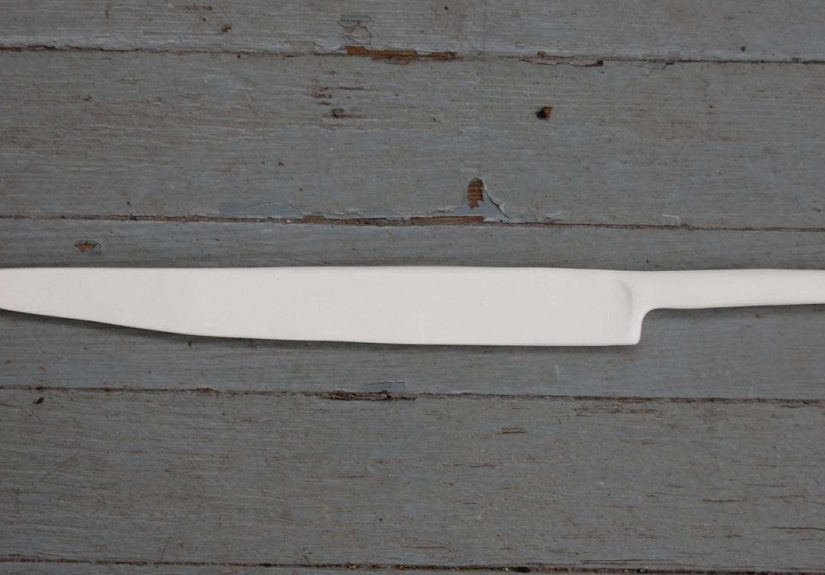
The Ceramic Chef’s Knife from Pigeon Toe Ceramics is a decorative kitchen accessory made from unglazed porcelain. According to product descriptions published by Remodelista, the piece was cast from a vintage Austrian stainless steel chef’s knife and rendered in hand-sanded porcelain. It can be mounted horizontally by resting it on two decorative nails, or it can be ordered with a small hole drilled into the handle for vertical hanging.
The most important detail: this ceramic knife is not intended for practical use. Its blade has been deliberately dulled and thickened for safe handling. So, no, this is not the knife to grab when your herbs need mincing. It is the knife to hang when your kitchen needs a little attitude.
Why This Kitchen Accessory Stands Out
It Turns a Familiar Tool into Wall Decor
Part of the charm is the object’s double take. From a distance, it reads like a chef’s knife. Up close, the material and finish reveal something softer, quieter, and more sculptural. That contrast is what gives the piece its personality. It borrows the shape of a working tool but removes the danger, the shine, and the utility. What remains is form, memory, and a little kitchen theater.
In a minimalist kitchen, it can break up clean lines without shouting. In a rustic kitchen, it adds a handmade note that feels intentional rather than precious. In a cook’s kitchen, it nods to the rituals of prep work without pretending to be another gadget in the drawer. And in a small apartment kitchen, it can provide the kind of compact visual interest that does not steal counter space, which is precious real estateright up there with rent-controlled units and the last good avocado.
It Reflects Pigeon Toe Ceramics’ Playful Design Language
Pigeon Toe Ceramics is a female-owned ceramic and home textile company based in Portland, Oregon. The brand has described its approach as playful and interdisciplinary, with products designed and manufactured from its North Portland studio since 2009. That background helps explain why this ceramic chef’s knife feels both crafted and mischievous. It is not merely a novelty object; it is a small example of how handcraft can make everyday spaces more expressive.
Many handmade home accessories lean heavily into softness: bowls, mugs, vases, trays, lamps, and textiles. Pigeon Toe’s ceramic chef’s knife does something a little different. It takes a sharp silhouette and renders it harmless. The result is witty without becoming gimmicky, which is a surprisingly hard balance to strike. Too much joke, and a piece becomes a party favor. Too much seriousness, and it loses the spark. This one sits comfortably in between.
Ceramic Knife vs. Ceramic Knife Decor: Know the Difference
Because the phrase ceramic chef’s knife can mean two very different things, it is worth separating the categories. A functional ceramic knife is usually made from advanced ceramic materials such as zirconia. These knives are known for being lightweight, rust-free, non-reactive, and capable of holding a sharp edge for a long time. Brands such as Kyocera have helped popularize this category for precise slicing tasks like fruits, vegetables, herbs, boneless meat, and fish.
Pigeon Toe Ceramics’ chef’s knife, however, is not a zirconia cutting tool. It is a porcelain decorative accessory. Its value comes from craft, shape, finish, and visual storytellingnot sharpness. Thinking of it as a knife would be like thinking of a ceramic banana as lunch. Charming? Yes. Nutritionally useful? Not unless your diet is very avant-garde.
The Appeal of Unglazed Porcelain
Unglazed porcelain has a distinctive presence. It is smooth but not glossy, refined but not flashy. Unlike a polished metal blade, which reflects light dramatically, unglazed porcelain absorbs light in a softer way. That matte quality makes the ceramic chef’s knife easier to style with natural materials such as wood, linen, stone, brass, or painted cabinetry.
The hand-sanded finish also gives the piece a tactile sense of care. Even when mounted on a wall, it communicates touch. You can almost feel the maker’s process: casting, refining, smoothing, and finishing. That is one reason handmade ceramic accessories continue to resonate in modern interiors. They bring visible human intention into rooms increasingly crowded with mass-produced convenience.
Where to Display a Decorative Ceramic Chef’s Knife
Above a Prep Station
One of the most natural places to hang a ceramic chef’s knife is above a kitchen prep area. It creates a playful visual link to the act of cooking, especially near cutting boards, spice shelves, or open storage. Because the piece is decorative, it should be placed where it will not be bumped, splashed heavily, or mistaken for a working tool during dinner chaos.
Near Open Shelving
Open shelves are a great setting for small sculptural pieces. A porcelain knife can sit visually alongside ceramic bowls, glass jars, cookbooks, and small framed prints. The trick is to avoid overcrowding. Let the piece have a little breathing room, otherwise it may disappear into the “I own many objects” zone.
In a Dining Nook
A dining nook is another excellent location. The chef’s knife shape subtly connects the eating area with the kitchen without feeling too literal. It can work especially well in a breakfast corner, café-style banquette, or small gallery wall that mixes food art, vintage utensils, and handmade ceramics.
As Part of a Gallery Wall
If your kitchen has a gallery wall, this accessory adds dimension. Most gallery walls rely on flat pieces: prints, photos, menus, recipe cards, or illustrations. A three-dimensional porcelain object interrupts that flatness in the best possible way. It gives the wall texture, shadow, and a little surprise.
Styling Ideas for Different Kitchen Aesthetics
Modern Minimalist Kitchen
In a minimalist kitchen, pair the ceramic chef’s knife with a simple peg rail, pale wood shelves, or matte white tile. Its clean silhouette will feel intentional rather than busy. Keep surrounding pieces neutral and let the shape do the work.
Farmhouse Kitchen
For a farmhouse look, place it near vintage cutting boards, woven baskets, or iron hooks. The porcelain finish keeps it from feeling too heavy, while the chef’s knife form adds a gentle nod to old-world kitchen utility.
Industrial Kitchen
In an industrial kitchen, the contrast becomes especially interesting. Think black metal shelving, concrete counters, exposed brick, and a white ceramic knife floating against it all. The object softens the space without making it sweet.
Eclectic Kitchen
If your kitchen already celebrates color, thrifted finds, and personality, the Pigeon Toe Ceramics knife fits right in. Hang it near a bold print, a vintage sign, or a row of mismatched mugs. It is strange enough to belong, but simple enough not to compete.
How to Care for a Decorative Porcelain Kitchen Accessory
Although this ceramic chef’s knife is not a functional blade, it still deserves careful handling. Porcelain is durable in many decorative contexts, but it can chip or break if dropped on a hard floor. When mounting it, use secure hardware and choose a location away from swinging cabinet doors, heavy traffic, or children’s reach.
For cleaning, a soft dry cloth is usually enough. If dust builds up, use a slightly damp cloth and dry the piece afterward. Avoid harsh scrubbing pads, abrasive cleaners, or soaking. Unglazed porcelain can be more receptive to marks than glazed ceramic, so gentle maintenance is the smartest approach.
Why Ceramic Materials Fascinate Kitchen Lovers
Ceramic has a long relationship with the kitchen. Plates, bowls, mugs, crocks, tiles, jars, and bakeware all rely on ceramic’s ability to be shaped, fired, and made beautiful. Functional ceramic knives add another layer to that story through advanced materials like zirconia, prized for hardness, corrosion resistance, and edge retention. Decorative porcelain objects, like Pigeon Toe’s chef’s knife, explore the same broader fascination from an artistic angle.
That is why this accessory works so well for food lovers. It is kitchen-related, but not kitchen-dependent. It celebrates the form of a tool without requiring maintenance like sharpening, oiling, or washing after every use. It is the rare knife that will never judge your chopping technique.
Who Should Buy This Ceramic Chef’s Knife Accessory?
The Foodie with a Sense of Humor
This is an ideal gift for someone who loves cooking but already owns enough actual knives. It says, “I understand your obsession with kitchen tools, but I also know you have drawer space issues.” That is friendship.
The Design Lover
For someone who appreciates handmade objects, this piece offers a clean form, interesting material, and strong backstory. It is small enough to fit into many spaces but distinctive enough to feel collected.
The New Homeowner or Apartment Decorator
Kitchen decor can be surprisingly difficult. Too many signs say “Eat,” as if anyone forgot why they entered the room. A porcelain chef’s knife is more original. It gives the kitchen character without relying on cliché.
The Collector of Unusual Ceramics
Ceramic collectors often enjoy pieces that stretch expectations. A porcelain knife does exactly that. It is neither bowl nor vase nor mug, yet it clearly belongs to the world of table, kitchen, and domestic craft.
Practical Buying Considerations
Before buying or styling a decorative ceramic chef’s knife, consider three factors: placement, mounting, and expectation. Placement should protect the piece from impact and moisture. Mounting should be secure and appropriate for the wall surface. Expectation is the big one: this is artful decor, not cookware.
If you want a real ceramic kitchen knife, look for a functional zirconia blade from a reputable cutlery maker and follow proper care rules: use wood, bamboo, or plastic cutting boards; avoid bones, frozen foods, hard rind produce, prying, twisting, and loose drawer storage. If you want a witty handmade object with culinary energy, Pigeon Toe Ceramics’ porcelain chef’s knife is the better match.
The Broader Trend: Kitchens as Personal Galleries
Modern kitchens are no longer only work zones. They are social spaces, backgrounds for video calls, coffee rituals, homework stations, late-night snack theaters, and occasionally places where actual cooking happens. As kitchens have become more visible, people have started treating them like personal galleries.
That shift explains the appeal of accessories like this one. A decorative ceramic chef’s knife communicates taste, but not in a stiff way. It shows that the owner enjoys food, design, and small moments of humor. It also proves that kitchen art does not have to be a framed lemon print, though lemons have done their best and deserve retirement benefits.
Experience Section: Living with a Ceramic Chef’s Knife Accessory
Imagine walking into a kitchen where everything is neatly arranged: the cutting boards lean in a tidy stack, the salt cellar waits by the stove, the coffee mugs line up like obedient little citizens, and thenthere it isa porcelain chef’s knife on the wall. The reaction is almost always the same: pause, smile, lean closer. That is the magic of this kind of accessory. It rewards attention.
In daily life, a decorative ceramic chef’s knife works best when treated as a small anchor point. It can become the object that ties a kitchen vignette together. For example, above a narrow butcher-block cart, it can visually connect the cooking tools below with the wall space above. Near a row of hanging utensils, it adds contrast because it looks like a tool but behaves like art. On a small blank wall beside the pantry, it can turn an awkward leftover space into something intentional.
The experience is also practical in an unexpected way: it creates personality without cluttering the counter. Many kitchen accessories promise charm but demand surface space. A fruit bowl needs filling. A utensil crock becomes a wooden-spoon traffic jam. A decorative tray somehow collects keys, receipts, and one mystery screw nobody wants to throw away. A wall-mounted porcelain knife, however, stays in its lane. It decorates vertically, leaving the precious counter free for meal prep or, realistically, unopened mail.
Another pleasure is how easily it starts conversations. Guests may ask whether it is real, whether it is sharp, or whether you have taken kitchen security to an artistic extreme. That gives you a natural opening to explain the piece: cast from a vintage chef’s knife, rendered in porcelain, made as decor, intentionally dulled and thickened. Suddenly, a small object becomes a story about craft, material, and humor.
It also changes how you notice other kitchen objects. Once a familiar tool becomes wall art, you begin seeing the beauty in everyday silhouettes: the curve of a ladle, the oval of a spoon rest, the geometry of a cutting board handle. That is one of the quiet benefits of handmade design. It trains the eye to slow down. Instead of treating the kitchen as a place of chores, it nudges you to see it as a room full of shapes, textures, and rituals.
For gift-giving, the experience is even better. A decorative ceramic chef’s knife is memorable without being oversized, personal without being overly intimate, and funny without being disposable. It suits housewarmings, weddings, birthdays, host gifts, and “you survived your kitchen renovation” celebrations. It is especially fitting for people who cook, collect ceramics, appreciate Portland-made design, or enjoy home accessories that do not take themselves too seriously.
The only real caution is placement. Because porcelain can break, it should not hang where elbows, cabinet doors, or swinging grocery bags can knock into it. It should also be clearly separate from actual knives to avoid confusion. Treat it like a small sculpture, not a spare tool. Once it is safely mounted, it requires very little effortjust occasional dusting and the discipline not to test it on a tomato.
In the end, living with a piece like this is about adding wit to function-heavy space. Kitchens are full of serious objects: hot pans, sharp blades, timers, bills stuck to the fridge, and the emotional suspense of whether the dishwasher is clean or dirty. A porcelain chef’s knife brings lightness. It says the kitchen can be hardworking and playful, practical and poetic, useful and a little absurd. And honestly, that may be the perfect recipe.
Conclusion
The Ceramic Chef’s Knife from Pigeon Toe Ceramics is not a knife in the traditional sense. It will not dice carrots, slice bread, or rescue you from a watermelon. What it will do is add wit, texture, and handmade character to the kitchen. Cast from a vintage Austrian chef’s knife and rendered in hand-sanded unglazed porcelain, it transforms a familiar culinary tool into a sculptural wall accessory.
For anyone searching for distinctive kitchen wall decor, a thoughtful gift for a food lover, or a small handmade object with personality, this piece makes a strong case for itself. It is clever without being loud, minimal without being boring, and culinary without needing a cutting board. In a world overflowing with practical kitchen gadgets, sometimes the most memorable accessory is the one that does absolutely no chopping at all.