Table of Contents >> Show >> Hide
- Who Was Akiko Yosano, Really?
- How Critics Rank Akiko Yosano Among Modern Japanese Poets
- Ranking Akiko Yosano’s Most Important Works
- How Modern Readers and Scholars View Akiko Yosano
- Akiko Yosano in Pop Culture: From Classical Poet to Anime Healer
- Where to Start Reading Akiko Yosano
- of Reader Experience: What It’s Like to Engage With Akiko Yosano Today
- Conclusion: Where Akiko Yosano Belongs in Our Literary Rankings
If literary history had a power ranking, Akiko Yosano would be one of those stars who never drops out of the top tier. A radical feminist voice, a tanka innovator, a pacifist who dared to criticize militarism, and an educator who fought for women’s rights, she packed several careers into one lifetime.
But how do modern readers rank Akiko Yosano – and which works deserve the most attention? In this guide, we’ll walk through her life, highlight her most important collections and poems, and explore how critics, scholars, and pop culture fans talk about her today. Think of it as a friendly, opinionated cheat sheet to one of Japan’s most influential modern poets.
Who Was Akiko Yosano, Really?
Akiko Yosano (1878–1942) was born Hō Shō in Sakai, near Osaka, into a prosperous confectionery family. While she helped run the family business from the age of 11, her real obsession was reading. Her father’s library gave her access to classical Japanese works and Chinese literature, and she devoured them.
As a teenager she began sending poems to the literary magazine Myōjō (“Bright Star”). The magazine’s editor, poet Tekkan Yosano, became both her mentor and eventually her husband. Their relationship was messy, modern, and a little scandalous for the timeperfectly in line with the emotional intensity of her work.
Over her career, Akiko Yosano:
- Published more than 20 poetry collections and numerous essays and critical works.
- Exploded onto the scene with Midaregami (Tangled Hair, 1901), a collection of intimate, sensual tanka that shocked conservative readers.
- Became a leading feminist voice, writing essays on women’s rights and critiques of gender inequality.
- Wrote the famous antiwar poem commonly translated as “Thou Shalt Not Die,” addressing her younger brother during the Russo-Japanese War and criticizing nationalist sacrifice.
- Helped found the Bunka Gakuin (Institute of Culture) in 1921, a coeducational school that promoted liberal, humanistic educationespecially for women.
So even before we get to rankings, she’s already checking multiple “all-time great” boxes: productivity, innovation, cultural impact, and political courage.
How Critics Rank Akiko Yosano Among Modern Japanese Poets
There’s no official global leaderboard for poets (imagine the arguments!), but scholars of modern Japanese literature consistently place Akiko Yosano in a very small group of defining voices of the Meiji, Taishō, and early Shōwa eras.
Here’s how she typically ranks in three key categories.
1. As a Tanka Innovator
Tanka poetry is a traditional five-line form with a 5-7-5-7-7 syllabic pattern. For centuries it was associated with refined emotion, restraint, and elegance. Akiko Yosano basically walked into that party, opened all the windows, and turned the volume up.
In Midaregami, she wrote tanka that were unapologetically sensual, openly addressing desire, jealousy, and the physical body. Critics note that this broke with long-standing taboos and helped modernize tanka for a new century.
Ranking: She’s widely considered one of the top modernizers of tanka, often mentioned alongside figures like Ishikawa Takuboku for shaking up the form.
2. As a Feminist and Social Critic
Akiko didn’t only write about love. She wrote fierce essays about women’s education, family structures, and the double standards that limited women’s lives. She argued that women needed economic and intellectual independence, and she lived that argument by working, publishing, and raising thirteen children.
Unlike some early feminists who limited their commentary to private life, Akiko connected the personal to broader social issues like nationalism, war, and state policy. That makes her a key transitional figure between classical women’s writing and modern feminist thought in Japan.
Ranking: Among early twentieth-century Japanese feminists, she regularly ranks near the top as a public intellectual who used both poetry and prose to argue for change.
3. As a Pacifist Voice
Her poem to her brother at the front of the Russo-Japanese War is one of the most famous antiwar texts in modern Japanese literature. It directly questioned why young men should give their lives for an emperor and rejected traditional Bushidō ideals that romanticized death in battle.
Publishing that poem in 1904 took real courage. Japan was riding a wave of wartime nationalism, and Akiko’s criticism risked both social backlash and censorship. Today, scholars often highlight her as a pioneering pacifist voice, especially among women writers.
Ranking: In the “most courageous antiwar poem” category, she’s comfortably in S-tier.
Ranking Akiko Yosano’s Most Important Works
Okay, let’s get more specific. If we had to make a ranked list of Akiko Yosano’s key works for a new reader, it might look something like this.
1. Midaregami (“Tangled Hair”, 1901)
This is the book that made her famousand infamous. Midaregami is full of first-person, emotionally intense love poems, many of them clearly inspired by her relationship with Tekkan. Critics at the time were shocked by the frankness of a woman openly voicing desire, while younger readers found it liberating.
Modern scholars still treat this collection as essential reading for understanding the birth of the modern female voice in Japanese poetry. It’s frequently the first Akiko book translated or excerpted in English-language anthologies.
Opinion: If you only read one book by Akiko Yosano, make it this one.
2. “Thou Shalt Not Die” (Kimi shinitamō koto nakare)
This single poem has an outsized influence. Written as a plea to her younger brother fighting in the Russo-Japanese War, it condemns the idea that glorious death for the emperor is a noble goal. It was controversial when published, became an antiwar anthem, and is still discussed in classrooms and scholarship today.
Opinion: In terms of cultural impact per line, this poem ranks near the top of early twentieth-century Japanese literature.
3. Later Tanka Collections
Critics note that while Midaregami hogs the spotlight, Akiko’s later collections explore themes like childbirth, aging, everyday domestic work, and political anxiety. Some scholars argue that these works are just as strong but have historically received less attention because they’re less sensational and more domestic.
Opinion: If Midaregami is her breakout album, the later collections are the underrated deep cuts fans brag about knowing.
4. Translations and Essays
Akiko spent years translating The Tale of Genji into modern Japanese, making it accessible to a broader audience. She also wrote essays and articles on women’s rights, education, and social issues, published in magazines and newspapers.
While these aren’t always as widely read outside Japan, they matter for her legacy. Her translation work shows her commitment to cultural continuity; her essays show her determination to reshape society.
Opinion: These works rank high when you evaluate her as a public intellectual, not just a poet.
How Modern Readers and Scholars View Akiko Yosano
So what do contemporary opinions look like? Looking across English-language essays, literary encyclopedias, and academic papers, several common themes emerge.
1. A “Giant” of Modern Japanese Literature
Modern critics often describe Akiko as a “giant” or “towering figure” in Japanese poetry. They emphasize how her voice transformed the image of women in literaturefrom passive objects of male lyric admiration to active narrators of their own desires, doubts, and anger.
2. A Contradictory but Fascinating Figure
Biographical profiles sometimes highlight the contradictions in her life: she was both domestic and radical, sensual and intellectual, a mother of thirteen who also wrote against limiting women to motherhood.
Many scholars argue that these tensions make her work richer. Her poems often balance romantic passion with frustration, or deep affection with criticism of social norms.
3. A “Forgotten Feminist” – But Not Forever
Some commentators describe Akiko as a “forgotten feminist” because, after her death in 1942, World War II and postwar reconstruction overshadowed her reputation. Over the last few decades, however, there’s been a revival of interest in her life and work, especially in feminist literary studies and global poetry anthologies.
English-language blogs, academic studies, and personal essays now recommend her alongside other major women poets, arguing that more translations and popular editions are overdue.
Akiko Yosano in Pop Culture: From Classical Poet to Anime Healer
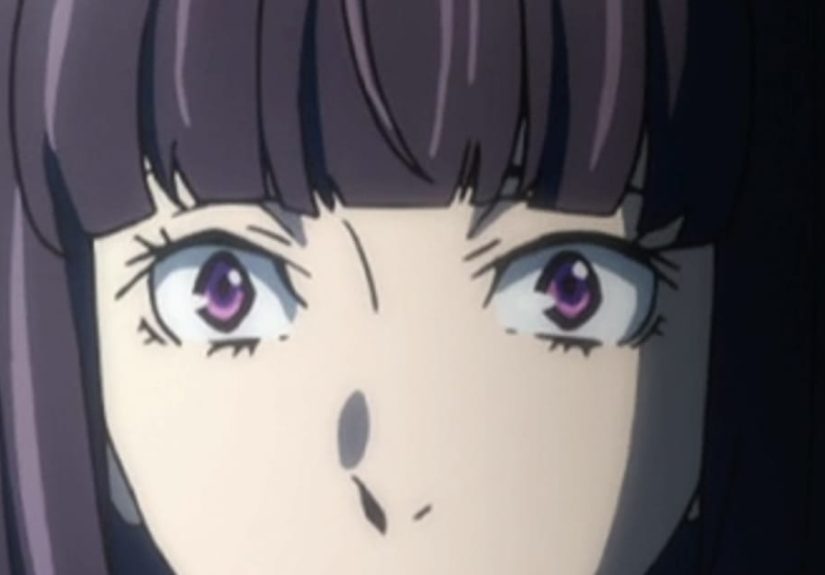
One fun twist in Akiko Yosano’s modern “ranking” is her appearance in pop culture, especially in the anime and manga franchise Bungo Stray Dogs. In the series, a character named Akiko Yosano is modeled on the real poet: she’s a doctor with a dangerous healing ability and a sharp tongue, complete with a nod to her historical nickname “Angel” among soldiers.
This fictional Akiko is not historically accurate, of course, but the character keeps the poet’s name alive for younger audiences. Curious fans often search for the real Yosano afterward and discover her poetry, giving her a second life in the age of fandom and streaming anime.
Opinion: In the grand ranking of “cool ways to get teens to read poetry,” being adapted into a stylish anime character scores very high.
Where to Start Reading Akiko Yosano
If you’re new to her work, here’s a practical reading order based on both critical rankings and reader-friendliness:
- Read a small selection of tanka from Midaregami. Start with translations that keep the bold, sensual tone. Even a handful of poems will show you why the book caused such a stir.
- Move on to the antiwar poem “Thou Shalt Not Die.” Think about how personal it is (a sister to a brother) and how directly it pushes back against patriotic rhetoric.
- Explore later tanka on motherhood, daily life, and aging. These reveal a more mature, reflective side and highlight how she kept writing through changing times.
- Look up excerpts from her essays on women’s education. These pieces connect her poetic voice to her activism and school-building work at Bunka Gakuin.
As you read, it’s helpful to remember the historical context: Meiji-era modernization, growing nationalism, shifting gender roles, and debates over what “modern” Japanese literature should look like. Akiko is right in the middle of all those changes.
of Reader Experience: What It’s Like to Engage With Akiko Yosano Today
Reading Akiko Yosano in the twenty-first century can feel like discovering a friend who somehow slipped through the cracks of your literary education. You might open a collection expecting distant, classical verse and instead find a voice that sounds startlingly directsomeone confessing late-night anxieties, tangled relationships, and politically risky thoughts.
One of the first things modern readers often notice is how physically present her poems are. In many translations of her tanka, the body is not some abstract symbol; it’s vivid and specific. She writes about hair, hands, closeness, and the way desire changes how you move through the world. For readers used to reserved, almost minimalist haiku, Akiko’s tanka feel lush and emotionally saturated.
Another repeated experience is a sense of time collapse. The world she inhabitedkimonos, arranged marriages, imperial politics, early industrial Japanseems distant on paper. But the feelings in her poems are uncomfortably familiar. Jealousy over a partner’s wandering attention, frustration with rigid gender expectations, anger at leaders who treat young people as expendablenone of that has gone out of style. Her work sits at that strange crossroads where you’re learning history and reading your own diary at the same time.
For English-speaking readers, there is also the experience of navigating translation. Because tanka rely on rhythm, brevity, and layers of cultural reference, no single translation can capture everything. When you compare two translations of the same poem, you might feel like you’re sitting at a table with two different friends, each explaining what they hear in her lines. Academic articles that dissect her religious symbolism, her use of Buddhist or Shinto imagery, and her framing of love and death offer an extra layer for readers who enjoy digging deeper.
Encountering her antiwar poem is often a turning point. Many readers start with the love poetry, then come to this direct plea to her brother not to die in battle. Suddenly, the emotional stakes of her writing soar. It’s one thing to talk about passion in the abstract; it’s another to watch a poet question a government’s moral authority at a time when dissent could be dangerous. That mix of sibling tenderness and political defiance leaves a strong impression, especially for readers who have lived through their own era’s wars and conflicts.
Fans who first meet her through anime experience something slightly different. They might come for the stylish doctor with the terrifying scalpel in Bungo Stray Dogs and stay for the real woman whose life inspired the name. That transitionfrom fandom curiosity to genuine literary interestis increasingly common as pop culture continues to borrow from historical writers. For those readers, ranking Akiko Yosano isn’t just about placing her in a critical hierarchy; it’s about comparing the character they love with the writer they’re now discovering.
Ultimately, spending time with Akiko Yosano reshapes how you think about “classic” literature. She’s not just a footnote under “early Japanese feminism” or “modern tanka reform.” She feels like a contemporary voice who just happens to be writing from more than a century ago. When readers are asked to rank her, they often end up ranking their own assumptions insteadabout who gets remembered, whose voices get translated, and how much boldness we’re willing to recognize in the past.
Conclusion: Where Akiko Yosano Belongs in Our Literary Rankings
If you put together all the evidenceher groundbreaking love poetry, her feminist essays, her antiwar stance, her educational work, and her continuing presence in both scholarship and pop cultureit’s hard not to rank Akiko Yosano among the most important modern Japanese writers.
She changed what tanka could talk about, insisted that women’s inner lives and intellectual ambitions mattered, and challenged the idea that patriotic death was the highest virtue. Along the way, she raised a huge family, helped found a school, and left behind a body of work that still feels sharp and relevant.
So yes, in the ongoing game of “Akiko Yosano rankings and opinions,” she lands near the top of almost any list that values courage, innovation, and emotional honesty. The real question isn’t whether she belongs there; it’s how quickly the rest of the world catches up and reads her.