Table of Contents >> Show >> Hide
- What the Model A is trying to be (and why that’s so unusual)
- The paperwork mountain: aviation rules + road rules
- Physics is undefeated: batteries, weight, range, and payload
- Do you need a pilot’s license? The rules are getting clearerand stricter
- The business challenge: building “car-meets-aircraft” at scale
- So will Alef’s Model A succeed?
- Experiences: What living with a flying car might actually feel like (the unglamorous edition)
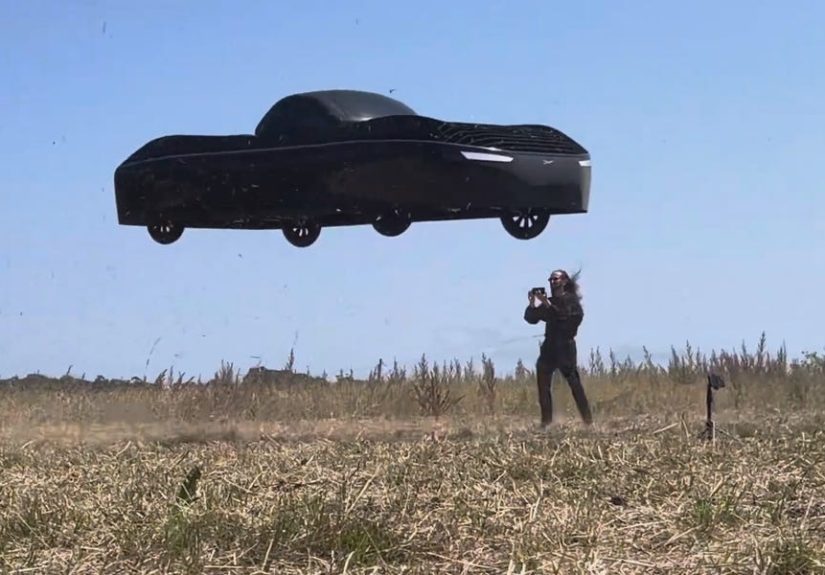
The flying car has been “almost here” for so long that it’s basically old enough to pay for its own parking. And yet, every few years, a new contender rolls up and says, No, reallythis time it’s happening. Alef Aeronautics’ Model A is one of the boldest entries in that long-running sci-fi-to-traffic-jam pipeline: a fully electric vehicle that’s meant to drive on roads, take off vertically, and fly over congestion. It’s a brilliant pitchespecially if your commute regularly feels like a slow-motion documentary about human patience.
But the same thing that makes the Model A exciting is what makes it brutally hard to bring to everyday life. Alef isn’t just trying to build an EV. It’s also trying to build an aircraft. And it has to survive the laws of physics, the laws of the land, the laws of the sky, andperhaps the most unforgiving force of allreal customers with real expectations and very real insurance policies.
What the Model A is trying to be (and why that’s so unusual)
The pitch: a car when you want it, a flying machine when you need it
Alef’s core promise is simple to understand: drive like a normal vehicle for most of the trip, then lift off to bypass a problem areastalled traffic, a bottleneck, or an accidentand continue onward. Unlike many “flying car” concepts that are basically aircraft with a car costume, Alef aims for something that still functions as a road vehicle and fits into familiar spaces like lanes and parking spots.
The Model A’s flight concept is also unusual. In earlier descriptions and demos, the cabin is designed to stay level while the vehicle’s body rotates for forward flightan approach that makes the vehicle look less like a helicopter and more like a car that learned a new party trick.
The headline specs sound futuristicuntil you read the fine print
Alef has listed an “expected price” around $299,999, with early reservation deposits and a separate priority queue option. The company has also described a driving range in the neighborhood of 200 miles and a flight range around 110 miles. On paper, that puts the Model A in the “jaw-dropping demo” category. In practice, those numbers immediately raise questions about weight, payload, charging time, maintenance, and how often a typical owner would realistically fly versus simply… drive.
There’s another big asterisk: the Model A is often discussed as a low-speed vehicle for road usemeaning it would be limited to roughly 25 mph on certain streets (not highways). That design decision helps it fit into an existing regulatory box, but it also reshapes the whole “daily driver” narrative. If your car tops out at golf-cart speeds on the road, you’ll be strongly motivated to use the flying featureassuming you’re allowed to fly where you are, when you are, and under the conditions you’re facing.
The paperwork mountain: aviation rules + road rules
A Special Airworthiness Certificate is not a golden ticket
One of Alef’s most-cited milestones is receiving an FAA Special Airworthiness Certificate for a prototype aircraft. That’s important but it’s also frequently misunderstood online. A special airworthiness certificate can allow an aircraft to operate for limited purposes (like research, development, exhibition, or compliance work), not as a blanket approval for everyday consumer flying in any location at any time.
Think of it less like “you’re cleared for mass-market commuting” and more like “you can legally do controlled work that helps prove what this thing is, how it behaves, and what rules it should follow.” For a new category of vehicle that blurs lines, that’s progressbut it’s still early innings.
Road legality is its own battleand low-speed classification is a compromise
Even if aviation regulators are satisfied, the Model A still has to be acceptable for road use. A low-speed vehicle classification can reduce certain barriers, but it comes with real limitations: speed caps, restricted road types, and a different customer experience than most people associate with a six-figure “car.”
That creates a strange identity problem. If it’s primarily a road car, people will expect normal road-car performance, comfort, and safety cues. If it’s primarily an aircraft, people will accept more complexitybut then they’ll ask why they shouldn’t buy an established aircraft solution instead. Alef is trying to live in the overlap, and regulators don’t always love overlaps.
Two rulebooks also means two kinds of risk
Building anything that moves people involves safety and liability. Building something that moves people through the air turns that dial up to eleven. If a typical car problem happens on the road, it’s already serious. If a flight problem happens midair, the margin for “we’ll fix it in the next software update” is basically zero. The Model A has to satisfy customer expectations shaped by cars (push-button convenience) while meeting aviation expectations (checklists, inspections, redundancy, and conservative design choices).
Physics is undefeated: batteries, weight, range, and payload
Flying costs energy in a way driving usually doesn’t
EVs are great at converting stored energy into motion on the ground. But vertical takeoff and hovering-like behavior are energy-hungry. That’s one reason many electric aircraft concepts are so focused on short routes: it’s not that engineers lack imaginationit’s that batteries are heavy, and flight demands a lot from them.
The Model A’s claimed air range may sound substantial, but it’s modest compared with what many conventional small aircraft can achieve. That doesn’t automatically mean it’s useless; it just means the “replace your commute forever” story becomes more situational: short hops, carefully planned routes, and less spontaneous “I’ll just fly home” energy.
Weight and payload: the quiet deal-breaker hiding in plain sight
In aviation, weight isn’t just a numberit’s the whole conversation. More weight generally means longer takeoff needs, reduced climb performance, shorter range, and narrower safety margins. A roadable aircraft faces a brutal tradeoff: every comfort feature you add for “car life” competes directly with what you need for “aircraft life.”
That’s why early descriptions of the Model A lean toward a lightweight, mesh-like body structure and a minimal, single- or two-occupant setup. It’s also why payload realities matter. A vehicle can technically “seat two,” but the real question becomes: seat two who, with what, under which conditions, with what battery reserve, at what altitude, with what wind? Suddenly your flying car starts sounding less like a commuter appliance and more like a small aircraftbecause it is one.
The neighbor test: noise, wind, and “please don’t do that here”
Even if the Model A solves propulsion and control, there’s the social reality of vertical flight in populated spaces. VTOL aircraft create noise and downwash. People who tolerate a passing motorcycle might not tolerate repeated vertical takeoffs near homes, schools, or offices. So the “take off from anywhere” fantasy tends to become “take off from approved places,” at least for a long while.
In other words: you may be buying a vehicle that can fly, while living in a world that’s still negotiating where flying is allowed.
Do you need a pilot’s license? The rules are getting clearerand stricter
Powered-lift regulation is evolving fast
The FAA has been actively building a framework for “powered-lift” aircraftvehicles that blend helicopter-like vertical capabilities with airplane-like forward flight. That’s hugely relevant to the broader eVTOL ecosystem and to anything that looks like a roadable VTOL concept. The result is a regulatory environment that’s becoming more defined, not less: expectations for pilot qualifications, training, and operating rules are crystallizing as advanced air mobility gets closer to reality.
That trend matters for Alef because one of the biggest selling points of a flying car is accessibility. If the practical outcome is “most owners need significant training and certification,” the market narrows. Not necessarily to zerobut to a smaller, wealthier, more aviation-friendly slice of buyers.
Training time, cost, and the “aircraft ownership lifestyle” factor
Getting licensed (or otherwise qualified) is not just about money; it’s also about time, scheduling, and mindset. Even traditional private pilot training involves minimum hour requirements, and many people take more than the minimum to become proficient. Add a new aircraft category, unique handling characteristics, and emerging operational rulesand you’re looking at a commitment, not a casual add-on.
Then there’s maintenance culture. Aircraft ownership typically involves inspections, logs, parts traceability, and strict procedures. If Alef tries to make the Model A feel like a car, owners may underestimate the discipline required. If Alef leans fully into aircraft norms, casual buyers may bounce. Either way, the product must teach customers how to use it safely without turning every commute into a preflight exam.
The business challenge: building “car-meets-aircraft” at scale
Manufacturing aircraft-grade hardware is not the same as building cars
Alef has signaled interest in scaling through aerospace manufacturing partnerships and aviation-grade components. That’s a smart movebecause if this vehicle is going to be treated as an aircraft in meaningful ways, it needs aerospace-level quality systems.
The catch is that aerospace manufacturing tends to be expensive and slower than automotive mass production. Parts traceability, certification pathways, and inspection requirements aren’t designed for “build hundreds of thousands quickly.” They’re designed for “build safely, consistently, and provably.” That’s great for safety, rough for price targets, and brutal for timelines.
Preorders make headlines; deliveries make history
Alef has reported thousands of reservations and significant preorder interest over time, with deposits structured to put customers in line. That’s a meaningful signal that the idea resonates. But preorder enthusiasm doesn’t automatically translate to successful high-volume productionespecially when the product category is new, regulation is evolving, and the first units are likely to be hand-built or limited-run.
A realistic early phase for a vehicle like this is “select customers, controlled operations, lots of learning, lots of iteration.” That can still be a winso long as expectations are set correctly. If the public expects a Jetsons-style consumer rollout by a fixed calendar date, disappointment becomes a business risk all by itself.
Competition isn’t just other flying carsit’s everything that already works
The Model A doesn’t only compete with sci-fi dreams. It competes with: reliable EVs, commuter rail, rideshare, motorcycles, helicopters, small airplanes, and even remote work. For $300,000-ish money, buyers can access proven transportation options that already have established training pipelines, service networks, and regulatory clarity.
So Alef’s real competitive advantage has to be more than “it flies.” It has to be “it flies and fits into your actual life.” That’s the standard that will decide whether the Model A is a niche marvel or the start of a new category.
So will Alef’s Model A succeed?
The Model A is a genuine swing at a hard problem, and the milestones around certification and testing are not nothing. But “steep challenges” is the right framing: the hardest parts are not the viral video moments. The hardest parts are the boring onescertification pathways, operational limits, pilot qualification, manufacturing quality systems, and the simple reality that flying is less forgiving than driving.
In the near term, the most plausible outcome is not “everyone replaces their sedan,” but “a small number of early adopters help prove what’s possible.” If that phase goes well, the long-term opportunity is real: better batteries, clearer rules, smarter infrastructure, and more practical designs. If it goes poorly, the flying car remains what it has often been: a thrilling prototype that spends more time in headlines than in driveways.
Experiences: What living with a flying car might actually feel like (the unglamorous edition)
Let’s talk about the part that glossy renders never show: the lived experience. Not the “I’m hovering over traffic like a superhero” momentthe Tuesday moments. The moments where you’re late, tired, and just want transportation to behave like an appliance.
Week one: the excitement is realand so are the checklists
Early adopters of anything complicated tend to become part customer, part tester, part unpaid ambassador. With a flying car, that effect multiplies. The first week would likely feel like owning a brand-new type of machine that demands attention: learning the interface, understanding what the vehicle considers “safe to fly,” and figuring out how conservative the system is when weather, battery state, or location doesn’t look ideal.
Even small practical questions get interesting fast. Where do you charge it? Where do you park it so that a potential flight operation doesn’t turn into a neighborhood meeting? How do you store it securely if it’s both a vehicle and an aircraft? And how do you explain to friends that “yes, it’s real,” without immediately becoming the person everyone asks to “just show it flying” at family gatherings?
The first “nope” moment: weather and rules don’t care about your schedule
At some point, you’d have a day where flying would be the perfect solutionexcept it’s windy, visibility is marginal, or the area you’re in is not approved for the kind of takeoff and landing you want. This is where the romance meets reality: aviation is full of “not today” decisions, and safe operators learn to respect them. The psychological adjustment is real. In a car, bad weather is an inconvenience. In flight, bad weather can be a hard stop.
That’s also when the low-speed vehicle reality becomes loud. If your road mode is limited, you’ll feel pressure to fly when you’re allowedand frustration when you’re not. The experience could oscillate between “this is the future” and “why am I creeping along like a fancy neighborhood cart?”
The “aha” moment: short hops that actually save time
The most believable sweet spot for a vehicle like the Model A is not a 110-mile epic journey. It’s a short, strategic hopgetting over a bottleneck, reaching an area that’s difficult by road, or shaving time off a specific recurring route. In those scenarios, the Model A’s value could feel concrete, not conceptual.
Owners would probably develop habits around it. They’d learn which locations are most practical, which times of day are calmest, and how to plan battery reserves. They’d also likely become more weather-aware than the average driver, because the sky has opinions, and it shares them freely.
Month three: you discover the true product is “time + planning”
Over time, the novelty would wear off and the real product would emerge: a system that trades spontaneity for capability. You gain a new dimension of mobility, but you pay for it with planning, training, and operational discipline.
That doesn’t mean it’s not worth it. Some people happily maintain boats, motorcycles, classic cars, or private aircraft because the experience is the point. For a certain type of buyer, a flying car could become the ultimate “enthusiast commuter” machineequal parts transportation tool and personal project. The challenge for Alef is that the marketing dream is mass-market convenience, while the day-to-day reality may look more like aircraft ownership with a license plate.
If Alef can make that reality safer, simpler, and more predictable, it has a shot at expanding beyond novelty. If not, the Model A may still succeed but as a niche marvel for early adopters who love cutting-edge tech and don’t mind living with a machine that occasionally says, “Not today, buddy.”