Table of Contents >> Show >> Hide
- What Is Chinese Fringe Tree?
- Why Gardeners Love Chinese Fringe Tree
- How Big Does Chinese Fringe Tree Get?
- Season-by-Season Appeal
- Best Growing Conditions for Chinese Fringe Tree
- Where It Works Best in the Landscape
- How to Plant and Care for Chinese Fringe Tree
- Common Problems and What to Watch For
- Chinese Fringe Tree vs. American Fringe Tree
- Real-World Experiences With Chinese Fringe Tree
- Final Thoughts
If you have ever wanted a small flowering tree that looks elegant without acting dramatic, the Chinese fringe tree may be your new landscape crush. Chionanthus retusus is one of those rare ornamentals that manages to be showy, refined, and surprisingly easygoing all at once. In spring, it erupts in airy white blooms that look like someone fluffed a pile of lace and gently tossed it into the branches. The rest of the year, it keeps the performance going with glossy green leaves, attractive bark, and, on female plants, dark bluish-purple fruit that birds appreciate.
In other words, this is not a one-hit-wonder tree. It is a four-season supporting actor that occasionally steals the whole movie.
Whether you are designing a small front yard, upgrading a patio planting, or hunting for a flowering specimen that does not scream for constant maintenance, Chinese fringe tree deserves a serious look. Here is what makes it special, how to grow it well, and why gardeners keep falling for it even when flashier trees try to hog the spotlight.
What Is Chinese Fringe Tree?
Chinese fringe tree is a deciduous shrub or small ornamental tree in the olive family, Oleaceae. It is native to parts of China, Korea, Taiwan, and Japan, but it has become a beloved landscape plant in many parts of the United States because of its graceful shape, fragrant spring flowers, and adaptable habit.
You may see it sold as a large multi-stemmed shrub, a multi-trunk tree, or a single-trunk small tree. That flexibility is part of its charm. It can look loose and natural in a woodland-style border, or crisp and architectural when trained into a specimen tree near an entry walk.
The botanical name is worth a quick nerdy detour. Chionanthus comes from Greek roots meaning “snow flower,” which is honestly a pretty good marketing slogan. The species name retusus refers to the slightly notched leaf tip. So yes, even the name sounds like it belongs in a fancy garden catalog.
Why Gardeners Love Chinese Fringe Tree
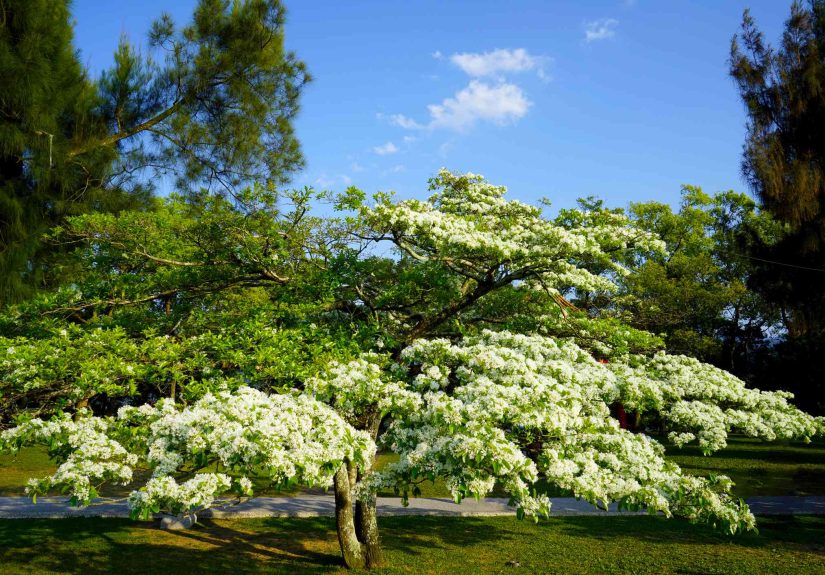
The biggest reason is simple: bloom season. In late spring, Chinese fringe tree produces clusters of white flowers with narrow, strap-like petals that create a soft, fringed look. The flowers are mildly fragrant and often appear after the leaves emerge, which gives them a dark green background and makes the display pop even more.
Unlike some spring bloomers that give you one glorious week and then spend the rest of the season looking forgettable, this tree keeps earning its square footage. The foliage is lustrous and leathery, the branching can be beautiful in winter, and mature trunks often develop exfoliating gray-brown bark that adds texture when the leaves are gone.
It also fills a sweet spot in landscape design. It is larger and more substantial than a shrub, but smaller and more manageable than a full-size shade tree. That makes it useful in residential landscapes where space is valuable and overhead wires, patios, or neighboring foundations limit what you can plant.
How Big Does Chinese Fringe Tree Get?
Most Chinese fringe trees mature somewhere around 15 to 25 feet tall and about as wide, though some stay closer to 10 to 20 feet and exceptional specimens can grow larger over time. In the landscape, expect a rounded to spreading form, especially with multi-trunk plants. Some selections are denser and more upright, while others take on a broader, more picturesque silhouette.
If you want a more vertical look, a cultivar such as ‘Tokyo Tower’ is worth noting. It is known for a narrower, more upright branching habit, which can be handy in tighter beds or where you want a strong vertical accent without planting something stiff and gloomy.
Season-by-Season Appeal
Spring: The Main Event
This is the season that made Chinese fringe tree famous. The flowers appear in terminal clusters and can nearly smother the canopy when conditions are right. The petals are long, narrow, and ribbon-like, giving the bloom a fleecy, cloudlike texture. The effect is less “look at me” than a magnolia and more “accidentally elegant,” which may be even better.
In many regions, it flowers a bit later than the native American fringe tree, and that timing can be a bonus. By blooming after the leaves appear, the white blossoms stand out against glossy foliage instead of hovering alone on bare branches.
Summer: Glossy Leaves and Fruit
Once the flowers fade, the tree settles into rich green foliage. Leaves are opposite, leathery, and usually elliptic to ovate. On young plants, the margins can be slightly serrated. Female trees can produce olive-like drupes that ripen to dark blue, purple, or bluish-black. The fruit is ornamental, but it is also useful to birds and small wildlife.
Not every plant fruits heavily, and flower sex can be a little quirky, so think of the fruit as a welcome bonus rather than a guaranteed headline act.
Fall and Winter: Quiet, Classy, and Underrated
Fall color is usually yellow to soft gold rather than blazing orange-red fireworks, but it is still attractive. In colder regions, the color often shows better. Winter is when mature plants reveal another underrated feature: bark. Older trunks can develop attractive ridges, furrows, and exfoliating patches that give the tree texture even when it is leafless.
Translation: this tree does not disappear when the flowers clock out.
Best Growing Conditions for Chinese Fringe Tree
Light
Chinese fringe tree grows in full sun to partial shade. Full sun generally produces the strongest flower show, while light shade can help the foliage look especially lush in hotter climates. If you want maximum bloom, lean sunny. If you live where summers can feel like nature is using a hair dryer on high, a bit of filtered afternoon shade is often welcome.
Soil
This tree prefers moist, well-drained, reasonably rich soil and is especially happy in slightly acidic conditions. That said, one reason it is so popular is that it adapts to a range of soils better than many garden divas. Clay, loam, and mixed garden soils can all work, provided drainage is decent.
It is not the plant to throw into a soggy trouble spot and then forget. A rain garden edge may be fine, but chronically waterlogged soil is not the same thing as evenly moist soil. Chinese fringe tree likes balance, which is a very mature attitude for a plant.
Water
Regular moisture is most important during establishment. Once settled in, the tree can handle ordinary garden conditions, but it is not one of the toughest drought champions on the block. In prolonged dry periods, supplemental watering helps preserve foliage quality and reduces stress that can invite minor pest issues.
Hardiness
Chinese fringe tree is generally hardy across a broad range, commonly from USDA Zones 5 through 8, and in some references into Zone 9 depending on site and selection. That makes it useful in much of the United States, though local performance always depends on heat, humidity, soil, and winter extremes.
Where It Works Best in the Landscape
This tree is a natural fit for small- to medium-sized residential spaces. Because it stays relatively compact, it works well as:
- a specimen near patios, porches, and entry walks,
- a flowering accent in mixed shrub borders,
- an understory tree near larger canopy trees,
- a focal point against dark evergreen backdrops,
- a multi-season feature in Asian-inspired or woodland-style gardens.
It also looks especially good where you can appreciate the details up close. This is not just a “drive-by pretty” tree. The bark, leaves, flowers, and branching structure reward slower viewing. Put it where people actually walk past it, sit near it, or glance at it from a window with coffee in hand.
How to Plant and Care for Chinese Fringe Tree
Planting Tips
Choose a site with enough room for the mature spread. This is not a plant you want to wedge three feet off a foundation and then act shocked when it starts behaving like a tree. Dig a broad planting hole, avoid burying the trunk flare, and mulch the root zone to help retain soil moisture and moderate temperature swings.
Keep mulch away from direct contact with the trunk. Volcano mulching may be popular in parking lots, but trees do not enjoy being dressed like frosted cupcakes.
Pruning
Chinese fringe tree rarely needs heavy pruning. Light shaping, structural training, or lower-limb removal can help create a tree form if that is your goal. The best time to prune is right after flowering, since next year’s buds need time to develop. Aggressive pruning at the wrong time can reduce the next bloom display, and that would be like buying concert tickets and then unplugging the speakers.
Maintenance
Once established, maintenance is refreshingly low. A yearly layer of mulch, occasional watering during drought, and a quick inspection for stress or damage are usually enough. Many gardeners value it precisely because it offers ornamental beauty without requiring an elaborate care ritual involving special tonics, whispered encouragement, and a PhD in horticulture.
Common Problems and What to Watch For
Chinese fringe tree is generally considered easy to grow and relatively trouble-free. Serious insect and disease problems are uncommon. That said, no landscape plant is completely immune from annoyance.
Occasional issues may include leaf spot, canker, powdery mildew, mites, scale, or borers, especially if the tree is stressed by drought or poor site conditions. Deer browsing can also be a real frustration in some regions. Good siting, consistent moisture during dry spells, and overall plant health go a long way toward prevention.
One smart move is to check local extension guidance before planting. Even excellent ornamental trees can behave differently depending on region, climate, and local ecological concerns. A tree that is celebrated in one state may deserve a second look in another.
Chinese Fringe Tree vs. American Fringe Tree
Gardeners often compare Chionanthus retusus with Chionanthus virginicus, the native American fringe tree. Both are beautiful, fragrant, spring-flowering members of the same genus, but there are some practical differences.
Chinese fringe tree often has a denser, more tree-like form, darker and glossier leaves, and a bloom display that stands out dramatically against emerged foliage. American fringe tree can have a looser, more open habit and is prized for its native status and soft, shaggy floral look.
So which is better? That depends on your goals. If you want a more polished ornamental tree with lustrous foliage and handsome bark, Chinese fringe tree is a strong pick. If supporting native plantings is your top priority, American fringe tree may be the better choice. Fortunately, this is one of those rare garden decisions where there is not really a bad answer.
Real-World Experiences With Chinese Fringe Tree
Ask gardeners about Chinese fringe tree, and the first response is usually some version of: “I did not expect it to be that beautiful in bloom.” The flowers are hard to explain until you see a mature specimen loaded with white clusters. Pictures are helpful, but they still tend to undersell the effect. In real landscapes, the tree often looks lighter, softer, and more luminous than photographs suggest, especially in morning or late afternoon light.
A common experience is that the tree seems modest for most of the year and then suddenly becomes the star of the entire yard for a couple of weeks in spring. Gardeners who plant one near a porch, driveway, or front walk often say the bloom season changes how they use that space. People pause. Neighbors ask questions. Delivery drivers suddenly become amateur botanists. It has that kind of presence.
Another repeated observation is how well the tree fits into ordinary suburban spaces. Many flowering trees are either too large, too messy, too fragile, or too fussy. Chinese fringe tree tends to feel more manageable. It grows slowly enough that homeowners do not feel ambushed, but not so slowly that it becomes a lifetime waiting game. A young plant may look quiet at first, then gradually settle into a rounded, graceful shape that feels like it has always belonged there.
Gardeners also notice that placement matters. When planted against a backdrop of dark evergreens, the flowers look brighter and the bark stands out more in winter. When placed in wide-open lawn with nothing behind it, the plant can still be beautiful, but it may not show off quite as dramatically. This is one of those trees that rewards a little design thinking. It likes a supporting cast.
There are practical lessons, too. People in hotter climates often report better-looking foliage when the tree gets some relief from scorching late-day sun. Gardeners in drier areas notice that the tree is happier when watered consistently during long summer dry spells. Those who try to over-prune it usually regret it, while those who mostly leave it alone tend to get the most natural form and best bloom display.
One especially interesting experience is how Chinese fringe tree matures. Young plants can look slightly different from one another depending on genetics, training, and nursery production. Some become beautifully multi-trunked and sculptural. Others develop a more distinct single trunk and feel more formal. That means buying in person, when possible, is worth it. You are not just picking a species; you are choosing a personality.
Long-term growers often say the bark becomes one of the pleasant surprises. They planted it for flowers, then years later realized the winter silhouette and textured trunk were part of the appeal too. That kind of layered value is why this tree earns loyalty. It does not burn brightly and vanish. It quietly gets better, which is a pretty admirable trait in both plants and people.
Final Thoughts
Chinese fringe tree is one of the finest small ornamental trees for gardeners who want elegance without endless maintenance. It offers fragrant white spring flowers, glossy green leaves, attractive bark, wildlife value, and a scale that suits many home landscapes. It can be grown as a shrub, a multi-trunk specimen, or a small tree, which gives it unusual design flexibility.
If your landscape needs a plant that can deliver beauty in spring and hold its own in every other season, Chionanthus retusus is absolutely worth consideration. It is graceful, adaptable, and memorable without being needy. Frankly, that is a pretty unbeatable combination.