Table of Contents >> Show >> Hide
- What Is the American Modern Tumbler?
- Why the American Modern Tumbler Still Feels So Fresh
- The Design History Behind the Piece
- Ceramic Tumbler vs. Glass Tumbler: Same Spirit, Different Material
- How to Recognize an American Modern Tumbler
- Why Collectors, Stylists, and Homeowners Still Love It
- How to Use an American Modern Tumbler Today
- Buying Tips Before You Bring One Home
- Experiences With the American Modern Tumbler
- Final Thoughts
If you hear the word tumbler and immediately picture a giant stainless-steel cup riding shotgun in an SUV cup holder, fair enough. But the American Modern Tumbler belongs to a much earlier chapter of American design history, back when “modern” meant sculptural shapes, clever utility, and the radical idea that everyday people deserved beautiful things on their tables. Imagine that: good design for actual humans, not just for intimidating showrooms and people who say “hors d’oeuvres” too confidently.
The American Modern Tumbler is tied to the iconic American Modern line by industrial designer Russel Wright, one of the biggest names in twentieth-century American housewares. Designed in the late 1930s, the line helped reshape how Americans thought about dinnerware, entertaining, and casual living. It was colorful without being fussy, artistic without being precious, and practical enough for daily use. In other words, it managed the near-impossible feat of being both stylish and not annoying.
Today, the American Modern Tumbler still turns heads because it feels surprisingly current. Its appeal sits at the sweet spot where mid-century modern design, collectible pottery, and real-life usability all overlap. Whether you are a design nerd, a casual vintage shopper, or someone who just likes drinkware with more personality than a blank cylinder, this piece has staying power.
What Is the American Modern Tumbler?
At its core, the American Modern Tumbler is a drink vessel from Russel Wright’s American Modern collection, a line that became one of the most influential and commercially successful tableware designs in American history. The original ceramic American Modern pieces were designed in 1937 and brought to market by Steubenville Pottery starting in 1939. The collection included plates, bowls, pitchers, teapots, serving pieces, and tumblers, all united by softly rounded, organic forms and a relaxed approach to the table.
That last point matters. Before American Modern, a lot of tableware still leaned formal, decorative, and heavily tied to old European dining rituals. Wright went in the opposite direction. He created pieces that looked at home in a more casual American setting, where people mixed serving styles, entertained informally, and wanted objects that felt friendly rather than ceremonial. The tumbler fit neatly into that philosophy. It was simple, sturdy, sculptural, and refreshingly unpretentious.
There is also a useful distinction to make: some references to the American Modern Tumbler point to the ceramic earthenware tumbler made with the dinnerware line, while others connect the name to later American Modern glassware associated with Morgantown. So, depending on the piece, an “American Modern tumbler” may be ceramic or glass. Either way, the design DNA is unmistakable: soft geometry, clean silhouettes, and a modern-but-warm personality.
Why the American Modern Tumbler Still Feels So Fresh
1. The shape is simple, but not boring
The best modern objects usually look easy, but only because someone did the hard thinking first. The American Modern Tumbler does not scream for attention with ornate detail. Instead, it relies on proportion, curve, and surface. The form has a gentle, almost biomorphic softness that gives it warmth. It is minimalist, but not cold. Streamlined, but not sterile. Basically, it is what a lot of modern products wish they were when they slap the word “clean” into the marketing copy seventeen times.
2. The colors do real work
One of the line’s enduring strengths is its color palette. American Modern became famous for glazes such as Chartreuse, Seafoam, Coral, Granite Gray, White, and Bean Brown, with other shades appearing later in the line’s evolution and in reproductions. These colors were not random. They were designed to feel modern, natural, and easy to mix. A tumbler in one of these shades acts almost like a small sculpture on the table, adding visual interest without turning dinner into a theme park ride.
3. It was designed for modern living, not museum-only living
Yes, American Modern appears in major museums. But it was also designed to be affordable, useful, and mass-produced. That combination is a huge part of its charm. The tumbler is not beloved only because it is historic; it is beloved because the original idea was so democratic. Wright understood that beautiful objects become even more meaningful when they are woven into daily routines.
The Design History Behind the Piece
Russel Wright was not just designing dishes. He was helping define a modern American lifestyle. His American Modern line emerged during a period when the United States was rethinking domestic design, industrial production, and the relationship between beauty and utility. Wright’s work stood out because it translated modernist ideas into objects that ordinary households could actually buy and use.
The line’s forms were distinctly different from the restrained, formal dinner services that had dominated earlier table settings. Wright favored rounded, sculptural profiles and a coordinated but flexible system of pieces. Museums and design historians often point out that American Modern succeeded because it was both affordable earthenware and visually innovative. That is a powerful combination. Plenty of objects are pretty. Plenty are useful. Far fewer manage to be both at scale.
Another key innovation was the way the collection was sold. Rather than forcing buyers into a rigid all-or-nothing formal set, American Modern was marketed in a way that allowed people to start small and build over time. That was smart retail strategy, but it was also smart design thinking. It recognized that real households evolve. You buy what you need, add what you love, and slowly create a table that feels like yours.
Ceramic Tumbler vs. Glass Tumbler: Same Spirit, Different Material
When people search for “American Modern Tumbler,” they are often looking for one of two related objects.
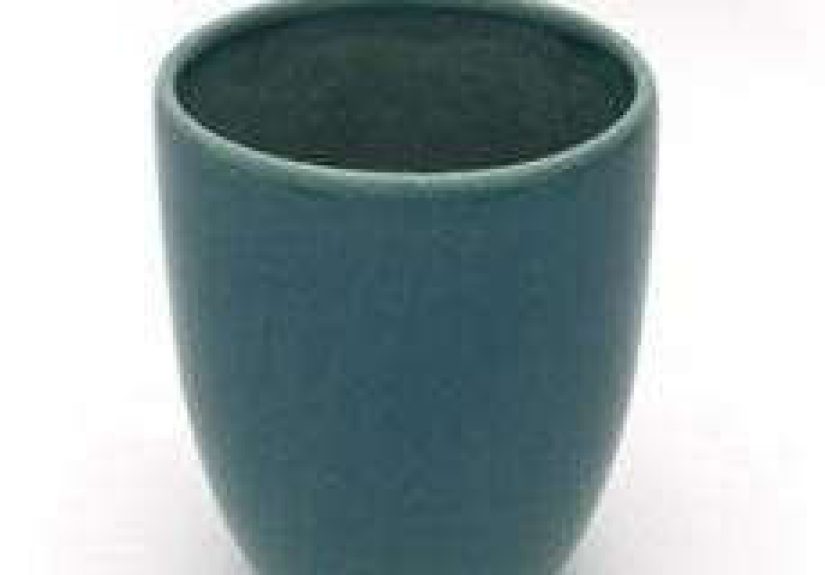
The first is the ceramic tumbler associated with the original Steubenville earthenware line. This version feels slightly unexpected to modern eyes because ceramic tumblers are less common today as everyday drinkware. That surprise is part of the fun. A ceramic tumbler brings weight, softness, and a tactile quality that glass does not. It feels grounded and handmade, even when industrially produced.
The second is the glass tumbler or luncheon glass associated with American Modern glassware, often linked to Morgantown Glassware Guild around the early 1950s. These pieces carried the same modern sensibility into transparent or tinted glass. They tend to look a bit lighter and more overtly “barware adjacent,” but they still share the line’s elegant restraint.
In practical terms, the ceramic version feels cozy and sculptural, while the glass version feels airy and cocktail-hour ready. Neither is more “correct” in the broader American Modern story. They simply show how the design language extended across materials.
How to Recognize an American Modern Tumbler
Look for the silhouette
The form should feel soft, rounded, and balanced. American Modern pieces rarely look stiff. Even when they are geometrically simple, they have an organic ease to them.
Pay attention to the glaze or tint
Vintage ceramic examples often come in those classic mid-century colors collectors love to chase. If you find a tumbler in Seafoam, Coral, Granite Gray, Bean Brown, or Chartreuse, your pulse may speed up a little. That is normal. That is the vintage-tableware equivalent of finding concert tickets in your jacket pocket.
Check the material and proportions
The ceramic tumbler is usually compact, weighty, and comfortable in the hand. Museum examples show modest dimensions that make the object feel intimate rather than oversized. The later glass versions often read a bit taller and lighter.
Know the reproduction story
Modern reproductions of Russel Wright American Modern pottery have also been made, most notably through Bauer Pottery. That is not a bad thing. Reproductions can be wonderful for people who want the look and spirit of the original without the anxiety of babying fragile vintage pieces. But if you are buying for collecting purposes, it helps to know whether a piece is vintage Steubenville, later glassware, or a newer Bauer reproduction.
Why Collectors, Stylists, and Homeowners Still Love It
The American Modern Tumbler works in at least three different lanes at once.
First, it is a collectible design object. Russel Wright’s work is well documented, museum-recognized, and deeply tied to American mid-century design. That gives even humble pieces real historical interest.
Second, it is decoratively flexible. Put one on open shelving and it looks intentional. Mix several on a table and they add color without chaos. Pair a ceramic tumbler with plain white plates and it becomes the star. Pair it with other American Modern pieces and suddenly your dining area looks like it has opinions.
Third, it is emotionally approachable. Some vintage objects feel like they are silently judging you for serving tacos on them. The American Modern Tumbler does not have that problem. It has personality, but not snobbery. It fits a weekday lunch just as easily as a styled dinner party.
How to Use an American Modern Tumbler Today
If you own one, the obvious use is beverages. Water, juice, iced coffee, maybe a very dramatic single flower if you are in a mood. But its value goes beyond strict category rules. Plenty of people use vintage tumblers as desk cups, bathroom organizers, tiny planters, or shelf accents. Because the form is so clean, it adapts well.
If you are using a vintage ceramic tumbler regularly, inspect it for chips, cracks, crazing, and glaze wear before putting it into heavy rotation. Reproduction pieces may offer more peace of mind for everyday use. Bauer has noted that its Russel Wright American Modern glazes are created through a low-fire process and may be more prone to chipping than high-fired pottery, which is worth remembering if you are hard on your dishes or live with a dishwasher that seems personally offended by ceramics.
For styling, American Modern looks excellent with wood, linen, matte metals, and other mid-century-inspired materials. It also plays nicely with contemporary minimal interiors because the forms are spare and the colors are still sophisticated. That is one reason the line has remained relevant: it does not feel trapped in a single decorating trend.
Buying Tips Before You Bring One Home
Check condition carefully
Vintage earthenware can chip, and glaze wear can show up around rims and edges. Small signs of age may be acceptable depending on your goals, but structural damage is a different story.
Decide whether you want vintage or reproduction
If you want history, patina, and collector value, vintage may be the better fit. If you want the look with less stress, reproduction pieces are often the smarter everyday choice.
Study color names
American Modern color names can help you identify patterns, date ranges, and relative scarcity. Some later colors and reproductions complicate the story, so a little homework goes a long way.
Think beyond the single tumbler
One tumbler is charming. A small group is even better. Because American Modern was designed as a coordinated system, the tumbler becomes more compelling when seen beside plates, bowls, pitchers, or glassware from the same design world.
Experiences With the American Modern Tumbler
Living with an American Modern Tumbler is one of those design experiences that sneaks up on you. At first, you notice the shape. Then you notice the color. Then, after a week or two, you start realizing that this little object is quietly improving the mood of your kitchen. It is not loud about it. It does not burst into the room waving a flag and yelling, “I am design history!” It just sits there being useful and extremely good-looking.
One of the most memorable things about the ceramic tumbler is how it feels in the hand. A stainless tumbler says, “I am on a mission.” A disposable cup says, “I was a last-minute decision.” An American Modern ceramic tumbler says, “Let us slow down for two seconds and pretend we have our lives together.” It has a reassuring weight, a soft rim, and a surface that makes even plain cold water feel slightly more civilized. That may sound dramatic for drinkware, but honestly, good objects earn their drama.
On open shelves, the tumbler does more than store itself. It performs. A Seafoam or Coral piece can break up a shelf full of white dishes in exactly the right way. A Granite Gray tumbler looks especially smart in a kitchen with wood cabinets, black accents, or stone counters. Even people who do not know Russel Wright from a random Tuesday will often ask about it. That is the magic of well-designed domestic objects: they invite conversation without begging for attention.
There is also the collector experience, which is equal parts delight and mild obsession. Finding an American Modern Tumbler in the wild can turn a normal thrift-store trip into a full emotional event. You spot the color first. Then the silhouette. Then you try to act calm while internally narrating your own documentary. “Here we see the vintage enthusiast pretending not to care, in order to avoid alerting nearby shoppers.” It rarely works. Your face gives you away.
Hosting with American Modern pieces is another pleasure altogether. The tumbler helps create a table that feels curated but not overstyled. Guests notice that something feels special, even if they cannot immediately say why. That is a big compliment to Wright’s design philosophy. The best tableware supports the moment instead of stealing it. It frames the meal, softens the atmosphere, and makes ordinary food feel a little more intentional. Sandwiches become lunch. Salad becomes a lunch situation. Sparkling water becomes “refreshments.”
Of course, using vintage pieces also comes with the tiny anxiety cloud every collector knows. You hand someone a beautiful tumbler and instantly become aware of every countertop edge in the room. But that tension is part of what makes reproduction pieces appealing. They let you enjoy the look and spirit of American Modern with a little less fear and a little more willingness to actually use the thing. Because, in the end, Wright designed for living. Not for locking everything in a cabinet and whispering, “Do not touch.”
Maybe that is why the American Modern Tumbler still resonates. It offers a rare combination of historical importance, visual charm, tactile pleasure, and real usefulness. It can be collected, displayed, and talked about. But it can also simply hold a drink and make your day look better while doing it. That is not a small achievement. For a humble tumbler, it is practically heroic.
Final Thoughts
The American Modern Tumbler endures because it captures the essence of what good home design should be: beautiful, accessible, functional, and quietly memorable. Russel Wright did not create it as a novelty. He created it as part of a broader vision for modern American living, one where everyday objects could feel artful without becoming precious.
That vision still works. Whether you are collecting vintage Steubenville earthenware, hunting down Morgantown glass, or buying a modern reproduction, the American Modern Tumbler offers more than retro charm. It tells a bigger story about how design can shape daily life in small, satisfying ways. And that is probably why it still feels so modern. Great design ages. Good design lasts. This one, very annoyingly for lesser tumblers everywhere, does both.