Table of Contents >> Show >> Hide
- What the Army Actually Activated
- Why the Arctic Suddenly Feels Much Less Remote
- What Makes the Arctic Angels Different
- How the Unit Has Evolved Since Activation
- Why This Matters Beyond Alaska
- The Real Test: Can Identity Become Capability?
- Experiences From the Edge: What Life Around the Arctic Angels Really Feels Like
- Conclusion
- SEO Metadata
The U.S. Army has revived an old airborne name and dropped it into one of the harshest job sites on Earth: Alaska. The result is the 11th Airborne Division, better known as the “Arctic Angels,” a formation built to fight, move, and survive in extreme cold while staying relevant to the larger Indo-Pacific fight. That is not just a branding exercise with a dramatic patch and a cooler nickname. It is a strategic reset, a force-design experiment, and a blunt message that the Arctic is no longer the military world’s forgotten freezer drawer.
At first glance, the headline sounds almost too cinematic. Polar paratroopers? In Alaska? With a World War II lineage and a modern mission? Somewhere, a recruiting poster is doing push-ups. But behind the swagger is a serious story about geography, logistics, deterrence, and the uncomfortable truth that modern armies do not magically become Arctic-ready by posting one scenic snow photo on social media and calling it doctrine.
The activation of the Arctic Angels matters because the Army is trying to solve a very real problem: how to field a force that can operate in brutal cold, mountainous terrain, long stretches of darkness, and a region increasingly shaped by Russian military activity, Chinese strategic interest, new shipping routes, and a broader competition across the far north. In plain English, this is the Army admitting that the Arctic is not just for scientists, icebreakers, and people who own very serious parkas.
What the Army Actually Activated
When the Army activated the 11th Airborne Division in Alaska, it pulled former U.S. Army Alaska headquarters and two Alaska-based brigade combat teams under a single historic banner. The redesignation turned the former 1st and 4th Brigade Combat Teams of the 25th Infantry Division into the 1st and 2nd Brigade Combat Teams of the 11th Airborne Division. That gave the Army a clear organizational identity for roughly 12,000 Alaska-based soldiers and a mission set built around Arctic capability and expeditionary response.
That identity piece matters more than outsiders may think. Armies run on equipment, training, and logistics, but they also run on symbols, culture, and shared purpose. Army leaders openly argued that Alaska-based forces needed more than administrative tidiness. They needed a mission that fit the place, and a patch that meant something beyond, “Congratulations, you now freeze in a different command structure.” Reviving the 11th Airborne offered a combat-proven name with Pacific roots, airborne credibility, and enough historical muscle to give soldiers a sharper sense of who they are supposed to be.
The result was a division built around two different but complementary flavors of mobility. One brigade retained airborne identity. The other moved away from a Stryker-centered model and toward a lighter, more cold-weather-friendly concept better suited to Alaska’s terrain. In short, the Army decided that forcing wheeled systems to behave like Arctic natives was not a great long-term plan. Snow, ice, distance, and mountain routes are famously bad at respecting PowerPoint promises.
Why the Arctic Suddenly Feels Much Less Remote
The Army did not wake up one morning, see a snowflake, and become inspired. The 11th Airborne activation was tied directly to the Army’s broader Arctic strategy, which framed the region as strategically important for homeland defense, competition, and access. As polar ice shifts and routes become more usable, the Arctic is becoming busier, more contested, and more economically interesting. That means military planners can no longer treat it like a blank white space at the top of the map.
Russia looms over nearly every serious Arctic discussion. Moscow has spent years expanding and modernizing its Arctic footprint, and U.S. planners have watched closely. China also factors into the picture, not because it is an Arctic nation in the traditional sense, but because it has shown long-term strategic interest in northern shipping, infrastructure, and polar access. Add in the Indo-Pacific focus of U.S. defense planning, and Alaska stops looking like a faraway outpost and starts looking like a front porch with a radar problem.
The Army’s answer is not to create a giant frozen fortress. It is to build a force that can deploy quickly, survive longer, and operate credibly in places where cold destroys batteries, punishes engines, complicates resupply, and humbles anyone who mistakes winter for scenery. The Arctic Angels are meant to help the Army regain lost cold-weather proficiency after decades in which Iraq and Afghanistan dominated training, force design, and military imagination. Sand was the main character for a long time. Now snow wants a speaking role.
What Makes the Arctic Angels Different
Airborne Identity With Arctic Purpose
The “Arctic Angels” nickname is not random flair. It links the division’s past and present. The 11th Airborne Division earned distinction in the Pacific during World War II, and that history gives the modern unit a heritage that matches its current theater alignment. But the new version is not a museum exhibit with better cold-weather boots. It is meant to be the Army’s Arctic-focused division and its only airborne division in the Indo-Pacific.
That combination is strategically useful. Airborne forces are designed for speed, surprise, and rapid insertion. Arctic warfare demands endurance, adaptation, and the ability to keep functioning when the environment itself seems personally offended by your existence. Together, those traits create a formation that aims to be lighter, quicker, and more expeditionary than a traditional heavy force, while still being tailored for one of the toughest operating environments on the planet.
Training That Respects the Cold
The Northern Warfare Training Center in Alaska is one of the division’s biggest advantages. This is where cold-weather competence gets built the hard way, not through inspirational slogans but through ski movement, snowshoe travel, route planning, survival skills, and leadership training in deep snow, wind, isolation, and long hours of darkness. The Army’s own course descriptions make clear that this is both physically and mentally demanding work. Translation: no one leaves thinking winter is cute.
That training matters because cold weather is not just an inconvenience layered on top of regular soldiering. It changes everything. Movement slows down. Maintenance becomes harder. Resupply becomes trickier. The risk of injury goes up. Sleep gets worse. Navigation changes. Small mistakes become bigger mistakes faster. The division’s effort is therefore not just about making soldiers tougher. It is about making them more competent in an environment that punishes improvised confidence.
Equipment That Has to Earn Its Keep
The Army has also been experimenting with equipment better suited to Arctic operations, including vehicles designed for snow and rugged terrain. That sounds obvious, but it is actually a quiet revolution. For years, the Army often asked formations in Alaska to make do with systems designed for somewhere warmer, flatter, and less determined to freeze lubricants into despair. The new approach recognizes that Arctic readiness is not only about grit. It is also about giving troops machines, clothing, communications, and sustainment systems that can survive the mission too.
Even with better equipment, logistics remains the real boss battle. Arctic operations stretch supply lines, reduce mechanical reliability, and demand more from everything, including fuel, food, medical support, and shelter. That is one reason the Army’s Arctic messaging keeps returning to sustainment. In the far north, the force that can stay functional often matters more than the force with the flashiest brochure.
How the Unit Has Evolved Since Activation
The activation ceremony in 2022 was only the beginning. Since then, the Arctic Angels have used major exercises and deployments to prove they are more than a patch swap in the snow. In 2024, soldiers from the division participated in Arctic Shock in Norway, an over-the-pole movement and combined training event with Norwegian forces focused on airborne interoperability and cold-weather capability. That matters because Arctic readiness is not a solo act. The region is full of allies, partners, overlapping interests, and very few shortcuts.
The division has also demonstrated force projection closer to home. In 2024, elements of the 11th Airborne deployed to remote Shemya Island in the Aleutians, moving troops and equipment with Air Force support to show they could respond quickly across Alaska’s vast distances. That operation was not just a travel flex. It signaled that the Army wants the Arctic Angels to be relevant across the wider Indo-Pacific and capable of moving fast when strategic conditions change.
The buildup continued with the activation of the division’s Arctic Aviation Command in 2024. That step added more structure to aviation support in Alaska and reinforced the idea that the 11th Airborne is becoming a more complete, regionally specialized formation rather than a temporary experiment dressed up in historical nostalgia. The Army is not merely reviving the 11th Airborne. It is building layers around it.
Why This Matters Beyond Alaska
The Army’s Arctic push is really about two connected theaters: the Arctic and the Indo-Pacific. The division’s official mission reflects both. That may sound broad, but Alaska sits in a strategic position that makes the overlap logical. Forces based there can support homeland defense, high-latitude operations, regional deterrence, and rapid movement into the Pacific. In that sense, the Arctic Angels are not just a northern curiosity. They are part of how the Army is trying to stay useful in a security environment shaped by range, speed, climate, and competition.
There is also a signaling effect. Allies can read the activation as proof that the United States is taking Arctic defense more seriously. Rivals can read it as a warning that the Army intends to compete in environments where it once allowed expertise to fade. And the Army itself can read it as a self-correction: a recognition that future conflict may not happen where the service spent the last twenty years fighting.
Of course, there are limits. A single division does not “solve” the Arctic. It does not erase maritime challenges, infrastructure gaps, communications problems, or the reality that the region is brutally difficult for every service branch. But it does give the Army something concrete: a formation built around cold-weather relevance instead of cold-weather aspiration.
The Real Test: Can Identity Become Capability?
This is the question hanging over every article, speech, exercise, and patch ceremony: can the Arctic Angels turn a compelling concept into lasting military capability? The signs are promising. The Army has aligned strategy, force structure, training, and regional mission more clearly than before. Soldiers in Alaska now belong to a division whose entire identity is tied to mastering cold-weather warfighting. Exercises in Alaska and Norway have put that mission into motion. Follow-on moves, including aviation integration and rapid deployment demonstrations, suggest the Army is still investing.
But Arctic warfare does not care about branding. The environment keeps score honestly. The division will have to keep proving that it can sustain readiness, modernize equipment, retain skilled leaders, train at scale, and translate cold-weather expertise into operational advantage. That is a long game, not a one-day activation story.
Still, the Army’s decision to activate the Arctic Angels looks smarter with time. It gave Alaska-based troops a clearer mission, tied the service to its Arctic strategy, and created a formation that feels built for the geography it inhabits. In military terms, that is sensible design. In plain terms, it means the Army finally stopped pretending that Arctic warfare is a niche hobby for people who enjoy misery and started treating it like serious business.
Experiences From the Edge: What Life Around the Arctic Angels Really Feels Like
To understand the Arctic Angels, it helps to move beyond organization charts and imagine the lived rhythm of an Arctic-capable unit. Not in a movie-trailer way, with dramatic music and a helicopter silhouetted against a glacier, but in the real, repetitive, exhausting way soldiers actually experience it. Arctic service is often less about cinematic heroics and more about doing ordinary military tasks in conditions that make every ordinary task weirdly difficult.
A morning in Alaska can begin with the kind of cold that changes how a person thinks. Metal feels hostile. Breath becomes visible immediately. Gear checks are not routine box-ticking; they are survival math. Gloves matter. Layering matters. Batteries matter. Boots matter. A forgotten strap, damp sock, or poorly packed pouch can become a small disaster by noon. In warmer climates, discomfort is annoying. In Arctic conditions, discomfort can become a mission problem very quickly.
Movement itself becomes an education. Snowshoes, skis, sleds, tracked support vehicles, and careful route planning are not exotic extras; they are practical tools. Distances feel longer. Time stretches. A march that looks manageable on paper may feel completely different when the wind picks up, daylight fades early, and every stop risks losing precious body heat. Even experienced troops have to relearn pacing, hydration, and energy management. The cold quietly taxes everything.
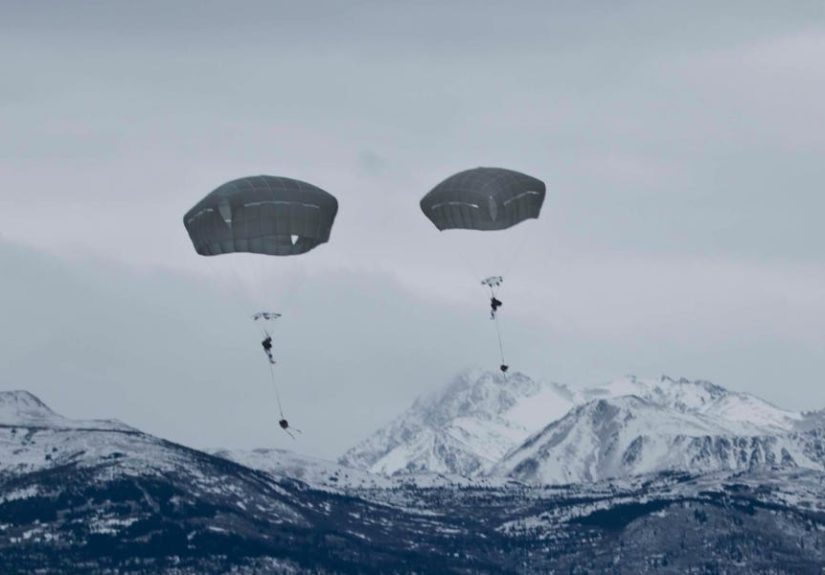
Then there is the airborne side of the Arctic Angels identity, which adds another layer of complexity. Paratroopers already manage heavy equipment, precise timing, and demanding rehearsals. Now add snow, ice, reduced visibility, and brutal temperatures. A jump into the north is not just about landing safely. It is about assembling fast, staying warm, maintaining communications, and moving with purpose before the environment starts chewing on morale. That is one reason team cohesion matters so much. In extreme cold, competence is contagious, but so is panic.
And yet the stories that come out of cold-weather units are not all grim. Humor survives where comfort does not. Soldiers joke about frozen eyelashes, stubborn engines, and the universal disappointment of opening a snack only to discover it has the texture of construction material. Shared hardship creates a strange kind of confidence. Troops learn that they can function in places that initially felt impossible. Leaders learn quickly who stays calm, who prepares well, and who can still think clearly when the environment starts acting like an uninvited enemy combatant.
That is the deeper experience behind the Arctic Angels story. It is not only about military posture or a revived division name. It is about building a force whose daily habits match its strategic mission. The real achievement is not that the Army created a unit with a memorable nickname. It is that it is trying to build soldiers and leaders who can endure the dark, the distance, the cold, and the friction of Arctic operations without losing effectiveness. That kind of expertise is earned one frozen morning at a time, and it is far more impressive than any patch, motto, or headline.
Conclusion
The activation of the Arctic Angels marks a rare alignment of strategy, geography, and military identity. The Army needed a force that could operate where extreme cold is not a side note but the central condition of warfighting. By reviving the 11th Airborne Division in Alaska, tying it to the 2021 Arctic strategy, and continuing to build out its training, deployments, and aviation support, the service made a bet that Arctic capability can be rebuilt through focus and repetition. It is a serious bet, and one that looks increasingly relevant as the far north becomes harder to ignore.
The headline may sound dramatic, but the real story is disciplined, deliberate, and very practical. The Arctic Angels exist because the Army wants troops who can move fast, endure harsh environments, reassure allies, and complicate any rival’s plans in the high north and beyond. In other words, this is not a novelty act in winter camouflage. It is the Army trying to become dangerous in the cold again.