Table of Contents >> Show >> Hide
- Why Roast Strawberries?
- The Best Roasted Strawberries Recipe
- Chef Tips That Make This the “Best” Version
- Flavor Variations (Pick Your Roasted Strawberry Personality)
- How to Use Roasted Strawberries (10 Quick Ideas)
- Storage, Freezing, and Make-Ahead
- Troubleshooting: Common Roasted Strawberry Problems
- Recipe Scaling (Because One Batch Is Never Enough)
- of Real-Life Roasted Strawberry Experience
- Conclusion
Fresh strawberries are great. But roasted strawberries? That’s when the berries stop being “fruit” and start acting like a dessert sauce with a driver’s license.
A quick roast concentrates flavor, caramelizes some sugars, and turns a carton of “meh, it’s December” berries into something you’ll spoon onto everything you own
yogurt, pancakes, ice cream, oatmeal, cheesecake, even a sneaky salad if you’re feeling sophisticated.
This guide gives you the best roasted strawberries recipe (reliable, flexible, and not fussy), plus variations, troubleshooting, and lots of ways to use
your new jammy obsession. If you’ve ever wondered how to make roasted strawberries without turning them into strawberry soup… you’re in the right kitchen.
Why Roast Strawberries?
Roasting is basically berry therapy: the heat drives off excess water, intensifies the strawberry flavor, and creates a glossy syrup that tastes like “summer, but louder.”
It also rescues berries that are under-ripe, slightly bland, or a day away from turning into science.
What changes in the oven
- Flavor concentrates: less water, more strawberry.
- Natural sweetness pops: sugars taste sweeter when fruit is warm and slightly caramelized.
- Texture turns spoonable: tender berries + thick syrup = instant topping.
The Best Roasted Strawberries Recipe
Roasted Strawberries (Jammy, Syrupy, Not Mushy)
Yield: About 2 cups (enough for ~6–8 servings as a topping)
Time: 10 minutes prep + 25–35 minutes roasting
Ingredients
- 1 1/2 pounds strawberries (about 6 cups), hulled (halve or quarter large berries)
- 3 to 5 tablespoons granulated sugar (adjust to sweetness of berries)
- 1 tablespoon lemon juice (plus optional 1/2 teaspoon lemon zest)
- 1/4 teaspoon kosher salt (yes, really)
- 1 teaspoon vanilla extract or 1/2 vanilla bean’s seeds (optional but excellent)
- Optional flavor booster: 1 to 2 teaspoons balsamic vinegar (or a drizzle of balsamic glaze after roasting)
Instructions
- Preheat the oven to 375°F. (This is the sweet spot: fast enough to concentrate, gentle enough to avoid scorched syrup.)
-
Add strawberries to a 9×13-inch baking dish (or a rimmed sheet pan for slightly faster evaporation). Sprinkle with sugar, lemon juice, and salt.
Toss gently until glossy and evenly coated. - Spread into a mostly single layer. A little overlap is fine, but avoid stacking the berries into a deep pile (that steams instead of roasts).
-
Roast for 25 minutes, then stir and lightly press a few berries against the side of the pan to release juice.
Roast 10 minutes more, or until the berries are tender and the juices look thicker and slightly bubbly at the edges. - Remove from the oven. Stir in vanilla (and balsamic, if using). Let cool for 10–15 minutesthe syrup thickens as it cools.
- Serve warm or chilled. For a more “sauce-like” texture, mash with a fork. For a chunkier topping, leave berries mostly intact.
What “done” looks like
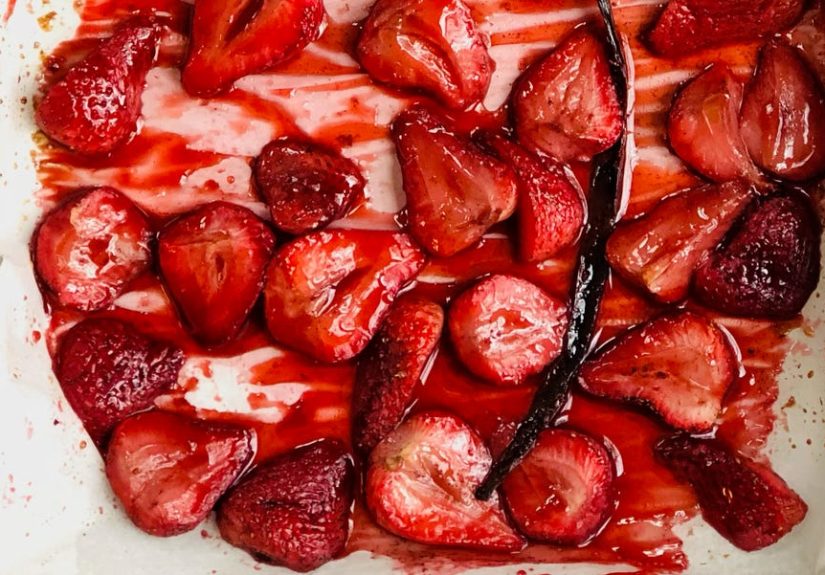
- Berries are soft and darker red, but not collapsed into total mush.
- Juices are glossy and beginning to thicken (they’ll thicken more after cooling).
- The kitchen smells like a strawberry candle that finally found its purpose.
Chef Tips That Make This the “Best” Version
1) Choose the right pan
A shallow baking dish gives you syrupy results with tender fruit. A sheet pan speeds up evaporation (thicker syrup, faster), but watch closely to prevent scorching.
If you want a more “compote” vibe, use a deeper dish; if you want concentrated syrup, go shallow.
2) Don’t skip salt
Salt doesn’t make it saltyit makes it taste more strawberry. Think of it like turning up the contrast on a photo.
3) Sweeten to the strawberry, not the recipe
Peak-season berries might only need 2–3 tablespoons sugar. Off-season berries might need 5 tablespoons plus the lemon zest to keep things bright.
Taste a berry first. Let the strawberry be your manager.
4) Add vanilla at the end
Vanilla extract can taste harsh if cooked too long. Stir it in right after roasting for a rounder, dessert-like aroma.
Flavor Variations (Pick Your Roasted Strawberry Personality)
Classic Vanilla-Lemon
Stick to the base recipe. Add lemon zest for extra brightness.
Balsamic (Restaurant Energy)
Add 1–2 teaspoons balsamic vinegar after roasting, or drizzle balsamic glaze right before serving.
This is phenomenal over vanilla ice cream, ricotta toast, or a cheese board situation that needs a glow-up.
Black Pepper (Trust Me)
Add 1/8 teaspoon freshly cracked black pepper with the sugar. It doesn’t taste “peppery”; it tastes… intriguing.
Like strawberries wearing a leather jacket.
Herby and Fancy
Add a few torn basil leaves after roasting (fresh mint is also great). This is the move for yogurt bowls, pavlova, and summer brunch bragging rights.
Slow-Roasted (Deep, Candy-Like)
Prefer a more concentrated, almost “strawberry candy” flavor? Roast at 250–300°F for a longer time (about 60–120 minutes depending on pan and berry size).
The berries shrink more and the syrup gets intensely fruity.
How to Use Roasted Strawberries (10 Quick Ideas)
- Yogurt + granola: instant café breakfast at home.
- Ice cream: vanilla, cheesecake, chocolatepick a lane, then break it.
- Pancakes/waffles/French toast: better than maple syrup (and I don’t say that lightly).
- Oatmeal: adds sweetness without tasting like a sad diet choice.
- Cheesecake topping: spoon over slices or swirl into batter as a variation.
- Shortcake: use instead of macerated berries for deeper flavor.
- PB toast: peanut butter + roasted strawberries = sweet-salty perfection.
- Salads: toss warm roasted berries into spinach with goat cheese and nuts.
- Mocktails: muddle roasted berries with sparkling water and a squeeze of lime.
- Sandwich cookies: spread on butter cookies or fold into whipped cream.
Storage, Freezing, and Make-Ahead
Refrigerator
Store roasted strawberries in a sealed container for up to 5 days. The syrup usually thickens over time (a win). Stir before using.
Freezer
Freeze in a freezer-safe container for up to 3 months. Thaw overnight in the fridge. Great for smoothies, sauces, and emergency “I need dessert” moments.
Troubleshooting: Common Roasted Strawberry Problems
“My strawberries are watery.”
They likely needed more time. Roast 5–10 minutes longer, or switch to a wider pan next time. Also: very juicy berries (or frozen berries) naturally release more liquid.
Cooling helps thicken, too.
“The syrup tastes too sweet.”
Add a squeeze more lemon juice and a pinch of salt. Acid + salt can balance sweetness without making it sour.
“The edges burned.”
Your pan was too shallow or your oven runs hot. Stir more often, reduce heat to 350°F, or use a baking dish instead of a sheet pan.
“They turned to mush.”
Over-roasted or cut too small. Next time: keep smaller berries whole, halve medium berries, and only quarter the giants.
Pull them when tender and glossycooling will do the rest.
Recipe Scaling (Because One Batch Is Never Enough)
This recipe doubles easilyjust use a larger pan (or two pans) so the berries still roast instead of steam. If you pile everything into a deep dish,
you’ll get a softer, more “compote” outcome. Delicious, but different.
of Real-Life Roasted Strawberry Experience
The first time I made roasted strawberries, it was not a romantic “farmers market at golden hour” situation. It was a “Why are these strawberries both expensive
and somehow flavorless?” situation. I’d bought them with optimism, the way people buy planners in January, and by day two they were headed toward mush.
Roasting felt like a last-ditch rescue missionlike calling in a strawberry therapist with an oven mitt.
Batch one was the classic approach: sugar, lemon, a pinch of salt. I used a baking dish and set the oven to 375°F, mostly because that’s where my confidence lives.
Halfway through, the kitchen started smelling like strawberry jam got accepted into an Ivy League school. When they came out, the berries were darker, softer,
and surrounded by a ruby syrup that looked suspiciously like it belonged on a brunch menu with a $6 coffee.
Then I did what any rational person would do: I put them on vanilla ice cream. The warm syrup hit the cold ice cream and instantly created that creamy,
strawberry-streaked “melt zone” that makes you eat faster like someone might take it away. That was the moment I realized roasted strawberries aren’t just a recipe
they’re a lifestyle choice. The next morning, I spooned them over Greek yogurt and granola and told myself I was being healthy, which is technically true if you
don’t look too closely at the part where I went back for “just one more spoonful” straight from the container.
After that, I started experimenting like a very low-stakes scientist. I tried balsamic vinegar, and the results were borderline unfair: the berries tasted deeper,
almost winey, like they’d matured emotionally. I tried black pepper, and it didn’t taste spicyit tasted complex, like strawberries with a plot twist. I tried
basil and mint added after roasting, and suddenly my Tuesday afternoon snack felt like it had a reservation.
My biggest lesson was that pan choice and timing matter more than fancy ingredients. On a sheet pan, the syrup thickened fast and the flavor was intense,
but it needed babysitting so the edges didn’t get too dark. In a baking dish, it was more forgiving and plush, with a sauce that stayed silky.
And every time, the cooling step was magic: fresh out of the oven, it looked loose; ten minutes later, it turned glossy and spoonable.
The second biggest lesson: roasted strawberries fix more than sad berries. They fix sad breakfasts. They fix boring desserts.
They even fix the mood of a random Wednesday when you need something sweet but don’t want to bake a whole cake. Make a batch once, and you’ll start finding
excuses to roast strawberries the way people find excuses to light candles: “It’s cozy.” “It smells nice.” “It makes life better.” All true.
Conclusion
If you want the best roasted strawberries recipe, focus on the fundamentals: a moderate oven, a little sugar, a hit of lemon, a pinch of salt,
and enough roasting time for the juices to turn glossy. From there, you can go classic, balsamic, peppery, herby, or slow-roastedyour strawberries,
your rules. Just don’t be surprised when this becomes your default move for “saving” fruit and upgrading everything you eat.