Table of Contents >> Show >> Hide
- What’s Different About Robot Lawn Mowers in 2025?
- Quick Picks at a Glance
- Best Robot Lawn Mowers of 2025: Tested Picks That Work
- 1) Best Wire-Free Robot Lawn Mower for Most Yards: Segway Navimow i110N
- 2) Best Premium Wire-Free System: Husqvarna Automower 450X EPOS / 410XE NERA
- 3) Best for Steep Slopes and Rough Terrain: Mammotion Luba 2 AWD
- 4) Best LiDAR-Forward “Modern Mapping” Choice: Ecovacs GOAT (A3000/A2500 RTK)
- 5) Best Budget Wire-Free Alternative: Anthbot Genie 3000
- 6) Best Value Boundary-Wire Mower: Worx Landroid (M/S Series)
- 7) Best “Just Works” Classic: Husqvarna Automower 415X (and 115H for Budget)
- 8) Best “Mow + Extra Yard Chores” Gadget Pick: EcoFlow Blade
- 9) Best Under-the-Radar Wire-Free Option: RoboUP T1200 Pro
- How to Choose the Right Robot Lawn Mower
- Installation Tips That Prevent 80% of Headaches
- Maintenance: The Surprisingly Boring Secret to a Great Lawn
- Safety and Wildlife-Friendly Settings
- FAQ: Real Questions People Ask After They Buy One
- Conclusion: The Best Robot Lawn Mower Is the One That Matches Your Yard
- Real-World Experiences: What It’s Like Living With a Robot Lawn Mower (500+ Words)
If mowing your lawn feels like a weekly appointment you never agreed to, 2025 is the year you finally get to cancel it. Robot lawn mowers have grown up: they’re quieter, smarter, better at navigating real yards (read: trees, toys, slopes, and that one mysteriously lumpy corner you swear wasn’t there last summer). The best part? Many of the standout models now skip the old-school boundary wire and map your lawn with RTK GPS, cameras, and even LiDARso setup is closer to “teach it your yard” than “recreate a tiny underground electrical grid.”
This guide pulls from hands-on testing and detailed evaluations published by trusted U.S. home, tech, and tool outlets to spotlight robotic mowers that actually work. You’ll also get a no-nonsense buying guide, setup tips, and a reality-check section at the endbecause “autonomous” doesn’t mean “magical.” It means “mostly autonomous, with occasional toddler-like decision-making.”
What’s Different About Robot Lawn Mowers in 2025?
The big shift is navigation. For years, most robotic lawn mowers relied on a boundary wire that tells the mower where not to escape. It works, but installation can be tedious, and a single broken wire can turn your “smart lawn care” plan into a weekend scavenger hunt.
In 2025, more brands are leaning into wire-free robot mowers that use some combo of RTK GPS (centimeter-level positioning), onboard cameras, and sensors to map and mow in clean lines. That means nicer-looking stripes, better zone control, and fewer “random pinball” patterns. The tradeoff? Wire-free models often need a good view of the sky for their RTK base station, and tricky yards with heavy tree cover can still be challenging.
Quick Picks at a Glance
| Pick | Best For | Yard Size (Typical) | Navigation | Why It Works | Watch-Out |
|---|---|---|---|---|---|
| Segway Navimow i110N | Most people who want wire-free | Up to ~1/4 acre | RTK + vision | Great mapping, clean lines, easy scheduling | Not built for steep, gnarly terrain |
| Husqvarna Automower 450X EPOS / 410XE NERA | Premium, big-lawn wire-free | Large lawns (model-dependent) | Satellite/EPOS | Pro-grade system, strong ecosystem | Price tag can make you blink twice |
| Mammotion Luba 2 AWD | Steep slopes, uneven yards | Medium to large | RTK + sensors | All-wheel drive traction, hill confidence | Needs thoughtful setup for best results |
| Ecovacs GOAT (A3000/A2500 RTK) | Fast mapping + LiDAR fans | Mid-size to large | LiDAR/RTK (model-dependent) | Modern navigation, strong testing results | Station protection/accessories add cost |
| Worx Landroid (M/S series) | Budget-friendly, proven boundary-wire | Small to mid-size | Boundary wire | Great value, mature platform | Wire install + occasional wire drama |
| Husqvarna Automower 415X / 115H | Reliable “set it and forget it” | Small to mid-size | Boundary wire + smart features | Strong cut quality, dependable | Wire install is still a thing |
| EcoFlow Blade | Big lawns + gadget lovers | Large (claimed high coverage) | GPS + sensors | Unique add-ons (like sweeping) | Software quirks reported in reviews |
| RoboUP T1200 Pro | Wire-free alternative option | Up to ~1/3 acre | Wire-free / AI navigation | Promising performance in tool-world testing | Smaller brand ecosystem |
Best Robot Lawn Mowers of 2025: Tested Picks That Work
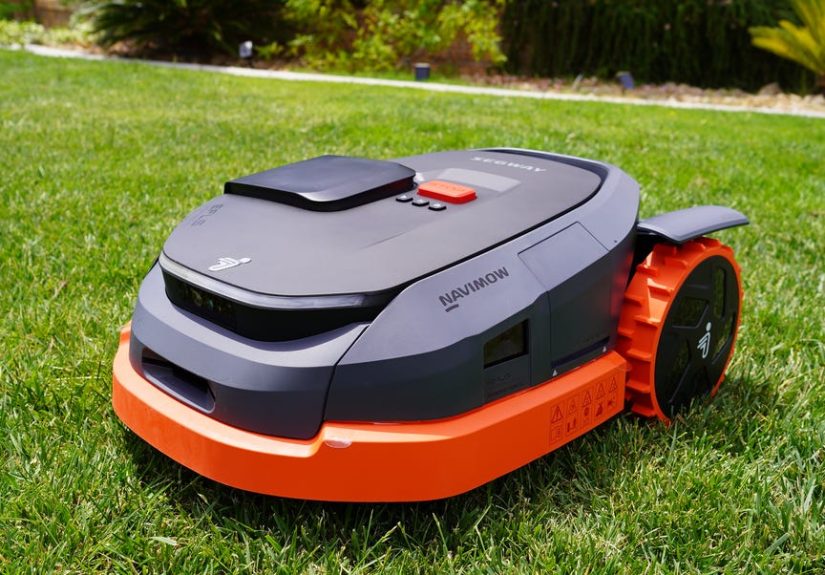
1) Best Wire-Free Robot Lawn Mower for Most Yards: Segway Navimow i110N
If you want the wire-free experience without jumping straight to luxury-car pricing, the Navimow i110N is one of 2025’s most consistently recommended choices. It’s designed for smaller lawns (roughly up to a quarter acre), but what it lacks in “mow a sports field” ambitions, it makes up for in navigation confidence and tidy mowing patterns.
- Why it works: RTK positioning plus vision-assisted navigation helps it map accurately and mow in straight lines, not random wandering.
- Who it’s for: Suburban lawns, simple-to-moderately complex layouts, people who want app control and zoning.
- Good to know: If your yard has steep grades or sharp drop-offs, you’ll want something with more traction and slope tolerance.
Also consider: The Navimow i105N if your lawn is smaller and you want to save money. Same vibe, less coverage.
2) Best Premium Wire-Free System: Husqvarna Automower 450X EPOS / 410XE NERA
Husqvarna has been doing robotic mowing long enough to have opinions about grass you didn’t know existed. In 2025, the brand’s wire-free premium models (EPOS / NERA lineup) are for people who want a polished ecosystem: app scheduling, multi-zone control, security features, and a “this feels engineered” experience.
- Why it works: Premium navigation paired with mature software and a brand with a long track record in robotic mowing.
- Who it’s for: Larger lawns, people who value reliability and support, and anyone who wants a higher-end mower that feels less like a beta test.
- Good to know: Wire-free satellite-based mowing still depends on good placement (antenna/base station) and yard conditions.
3) Best for Steep Slopes and Rough Terrain: Mammotion Luba 2 AWD
Some lawns are basically an obstacle course designed by a mischievous landscape architect: slopes, bumps, thick grass, weird transitions. The Mammotion Luba 2 AWD is built for that kind of yard energy. With all-wheel drive and a reputation for handling challenging terrain better than many lightweight bots, it’s a favorite for homeowners who don’t have “flat and easy” on the menu.
- Why it works: Traction and stability are the name of the game; it’s designed to keep moving where other mowers slip or stall.
- Who it’s for: Hilly properties, uneven ground, thicker turf types, and people tired of rescuing a mower from the same spot.
- Good to know: Any wire-free mower benefits from careful initial mapping and smart “no-go” zones around trouble spots.
4) Best LiDAR-Forward “Modern Mapping” Choice: Ecovacs GOAT (A3000/A2500 RTK)
Ecovacs is trying to do for lawns what robot vacuums did for floors: make it normal to delegate the job. Their GOAT series stands out in 2025 coverage for modern navigation options, including LiDAR-equipped models and wire-free mapping approaches. Testing-oriented outlets have highlighted strong performance, with the usual premium caveat: accessories and station protection can matter at this price tier.
- Why it works: Quick mapping, structured mowing, and advanced obstacle detection depending on model.
- Who it’s for: People who want a newer-school mower with mapping tech that feels closer to smart robotics than “random bump-and-turn.”
- Good to know: Consider a protective cover/placement for charging stations, especially in harsher climates.
5) Best Budget Wire-Free Alternative: Anthbot Genie 3000
The Anthbot Genie 3000 is one of the more talked-about wire-free contenders thanks to RTK GPS plus camera-based navigation. Reviewers generally like its mapping strengths and convenience, while noting it’s happiest on well-kept lawns (think maintained turf, not jungle mode).
- Why it works: Wire-free boundaries with modern navigation tech that reduces the pain of installation.
- Who it’s for: People who want wire-free without going ultra-premium, and who have relatively tidy yards.
- Good to know: As with many newer brands, software updates and app quirks can be part of ownership.
6) Best Value Boundary-Wire Mower: Worx Landroid (M/S Series)
Boundary wire isn’t glamorous, but it’s reliableand it’s often the most affordable way to get into robotic mowing with a known brand. The Worx Landroid line continues to earn praise for value: it keeps the lawn consistently trimmed, doesn’t need a PhD to operate, and has enough ecosystem support to feel established.
- Why it works: Great cost-to-performance ratio and mature scheduling/app control.
- Who it’s for: Smaller to mid-size lawns where installing perimeter wire is doable.
- Good to know: If you ever sever the boundary wire (with an edging tool, aerator, or pure chaos), you’ll be fixing it.
7) Best “Just Works” Classic: Husqvarna Automower 415X (and 115H for Budget)
For homeowners who want consistent cut quality and a mower that feels like it belongs in the “appliance” category (not the “kickstarter experiment” category), the Husqvarna Automower 415X often shows up as a top overall pick in mainstream testing roundups. If you want a more budget-friendly entry, the Automower 115H is frequently recommended as a strong bang-for-the-buck option.
- Why it works: Reliable operation, strong brand support, and tidy results from frequent micro-cuts.
- Who it’s for: People who value proven reliability over bleeding-edge features.
- Good to know: Still boundary-wire-based for most configurationsinstallation matters.
8) Best “Mow + Extra Yard Chores” Gadget Pick: EcoFlow Blade
The EcoFlow Blade is the sci-fi option: big, bold, and loaded with featuresplus optional add-ons like a sweeper kit. Reviews have praised its ambition and coverage claims, while also calling out software hiccups and real-world quirks. Translation: it can be great for the right person, but it’s not a “quiet, invisible helper” in the way simpler models can be.
- Why it works: High-tech feature set, large-lawn orientation, and unique accessories.
- Who it’s for: Tech-forward homeowners with bigger lawns who enjoy tinkering and updates.
- Good to know: If you want maximum reliability with minimum drama, stick with more established platforms.
9) Best Under-the-Radar Wire-Free Option: RoboUP T1200 Pro
Tool-focused reviewers have highlighted the RoboUP T1200 Pro as an interesting wire-free mower aimed at residential properties around the “up to one-third acre” range. It’s a good reminder that 2025 isn’t just about the big legacy brands; smaller companies are pushing features downmarket.
How to Choose the Right Robot Lawn Mower
1) Start with lawn size (then round up)
Robot mower area ratings are usually “best case.” If your lawn is near the top of a mower’s stated capacityor has lots of obstaclessize up. More capacity typically means fewer marathon mowing sessions and less chance the mower falls behind in peak growing season.
2) Decide: boundary wire vs. wire-free
Boundary wire: Usually cheaper and very dependable once installed. Great for simpler yards. Installation can be time-consuming.
Wire-free (RTK / vision / LiDAR): Faster setup and easier edits to zones. Often costs more and may need careful RTK base placement and stronger satellite reception.
3) Check slope rating and traction
If your yard has hills, don’t guess. Look for higher slope ratings and better wheel design. All-wheel drive models typically feel more confident on uneven ground and thicker grass.
4) Think about obstacles and “kid stuff”
Trampolines, toys, dog bones, pine cones, sticks… your yard is basically a testing lab for obstacle detection. If your lawn is “busy,” prioritize advanced obstacle avoidance and set smart no-go zones early.
5) Edge trimming reality check
Most robot mowers still leave some edge work. You’ll likely still use a string trimmer for fences, tight corners, and bordersjust less often. If “perfect edges” is your love language, budget time for occasional touch-ups.
Installation Tips That Prevent 80% of Headaches
Boundary-wire setup
The key is patience: keep wire placement consistent, avoid tight turns, and protect wire in areas where you’ll edge or dig. Once installed correctly, boundary-wire mowers can be extremely stable.
Wire-free setup (RTK / satellite)
Give the RTK antenna or reference station a strong, unobstructed view of the sky whenever possible. If your yard is surrounded by tall trees or buildings, you may need to experiment with placement or choose a model that pairs RTK with strong vision-based navigation.
Maintenance: The Surprisingly Boring Secret to a Great Lawn
- Blade swaps: Replace small razor blades on schedule (cheap part, big impact).
- Keep it clean: Grass buildup affects performance. Quick brushing after wet days helps.
- Firmware updates: Many navigation improvements arrive via software.
- Seasonal routine: In cold regions, store and clean the mower properly in the off-season.
Safety and Wildlife-Friendly Settings
Most quality robot mowers include lift/tilt sensors that stop blades quickly, but they’re still powered cutting machines. Keep kids and pets from treating it like a moving toy. Also consider scheduling: running at night can be risky for small wildlife in some areas, so daytime mowing is often the more responsible choice.
FAQ: Real Questions People Ask After They Buy One
Do robot mowers work on wet grass?
Some can handle light moisture, but many perform best when the lawn is dry. Wet clippings can clump and reduce cut quality. If your region is rainy, use weather scheduling features when available.
Will it replace my regular mower completely?
For most homeowners, yesyour push mower becomes the “rare emergency tool.” But you’ll still do occasional edge work, and you may need a first mow of the season or a post-storm cleanup mow if debris is heavy.
Do robot lawn mowers help grass health?
Often, yes. Frequent micro-cutting creates fine clippings that mulch back into the lawn, which can support healthier turf and reduce the need for bagging.
Conclusion: The Best Robot Lawn Mower Is the One That Matches Your Yard
In 2025, “best robot lawn mower” isn’t one modelit’s a category of machines that finally feel practical for normal homeowners. If you want wire-free convenience and clean mowing lines, start with the Navimow i110N. If your lawn has steep grades, the Luba 2 AWD is the type that doesn’t panic halfway up the hill. If you want mature reliability, Husqvarna’s lineup still sets the standard. And if you’re budget-minded, boundary-wire mowers like Worx Landroid can still deliver a consistently tidy lawn for a lot less money.
Pick the right tool for your yard, set it up thoughtfully, and you’ll get something close to the dream: a lawn that looks freshly cut… while you do literally anything else.
Real-World Experiences: What It’s Like Living With a Robot Lawn Mower (500+ Words)
Here’s the part nobody tells you in the glossy product photos: owning a robot lawn mower is less like hiring a professional landscaper and more like adopting a surprisingly competent pet that occasionally forgets where it left its shoes.
Week one is all optimism and app screens. You’ll walk the yard like a detective, noticing things you’ve ignored for years: the sprinkler head that sits 1/4 inch too tall, the rogue tree root that creates a speed bump, and the corner where the grass grows like it’s trying to win a bodybuilding contest. If you go wire-free, mapping feels delightfully moderndraw zones, set boundaries, maybe create a “no-go” patch around your flower bed so your tulips don’t develop trust issues. If you go boundary wire, installation is more “weekend project,” but it’s oddly satisfying in the same way organizing a garage can be satisfying: painful during, peaceful after.
Then comes the first real mow. The mower rolls out, does its little startup wiggle, and you feel a rush of pride you did not expect to feel for a machine with wheels. The lawn starts to look better almost immediatelynot because the mower cuts a ton at once, but because it cuts often. Robot mowers are basically the opposite of binge mowing. Instead of letting grass get shaggy and then scalping it on Saturday, they take tiny trims that keep things consistently neat. The result is a lawn that looks like you have your life together, even if you absolutely do not.
The first “oops” moment also arrives fast. Maybe it tries to nibble on a fallen twig. Maybe it gets confused by a narrow passage. Maybe it insists that the base station location you chose is “fine,” right up until the RTK signal gets moody under a dense tree canopy. This is where expectations matter: the best robot lawn mowers in 2025 are impressive, but they still operate in the real world, where squirrels exist and yards are rarely perfect rectangles. The fix is usually simple: adjust the schedule, add a no-go zone, trim back the lowest branches, or reposition the RTK antenna for a better sky view. Think of it as training, not troubleshooting.
By mid-season, you’ll notice how much time you’ve quietly gained back. The mower becomes background noiseliterally, because most are surprisingly quiet. Your routine shifts from “mow for an hour” to “spend five minutes doing a quick yard scan,” picking up kid toys and relocating anything that looks remotely chewable. You’ll also learn the robot-mower equivalent of “meal prep”: keep blades fresh, keep wheels clean, and don’t ask it to perform miracles in soaking wet grass.
And the weirdest perk? You start caring about lawn consistency in a new way. Because the mower runs frequently, you’ll spot lawn issues sooner: dry patches, uneven growth, or areas compacted by foot traffic. Instead of reacting with a dramatic mowing session, you make small adjustmentsraise the cutting height during heat, reduce frequency in slower growth periods, or split the yard into zones that get different schedules. It’s lawn care, but with strategy instead of sweat.
In the end, a good robot mower doesn’t just save you time. It changes the whole vibe of owning a lawn. You go from “I have to mow” to “the lawn is handled,” which is a subtle but glorious upgradelike having your future self quietly doing chores for you.