Table of Contents >> Show >> Hide
- What Is Blue Lotus Flower, Exactly?
- Why Blue Lotus Got Famous (3,000 Years Before TikTok)
- What’s In Blue Lotus? The Compounds Behind the Buzz
- Common Uses Today
- Potential Benefits: What People Claim vs. What Evidence Suggests
- What the Research Landscape Really Looks Like
- Safety: Side Effects, Risks, and the Big “It Depends”
- Drug and Substance Interactions: Where Things Get Risky Fast
- Who Should Avoid Blue Lotus?
- Quality and Purity: The Problem Nobody Puts on the Front Label
- Legal and Policy Notes in the United States
- If You’re Considering Trying It: A Safety-First Approach
- Conclusion
- Experiences With Blue Lotus: What People Report (and What It Might Mean)
Blue lotus flower has the kind of résumé that makes other plants jealous: ancient Egyptian art icon, alleged mood booster, modern
“wellness” darling, anddepending on who you askeither a soothing tea ingredient or a one-way ticket to an awkward conversation with
an emergency room nurse.
If you’ve seen “blue lotus” show up in teas, tinctures, resins, or vape liquids, you’re not alone. Interest has grown fast, and the claims
have grown even faster. The tricky part is separating what people say it does from what we actually knowand then deciding
what’s worth your time (and what’s worth leaving on the internet where it belongs).
This guide breaks down what blue lotus is, why it became popular, the benefits people chase, what the evidence can (and can’t) support,
and the safety issues you should take seriously before trying it.
What Is Blue Lotus Flower, Exactly?
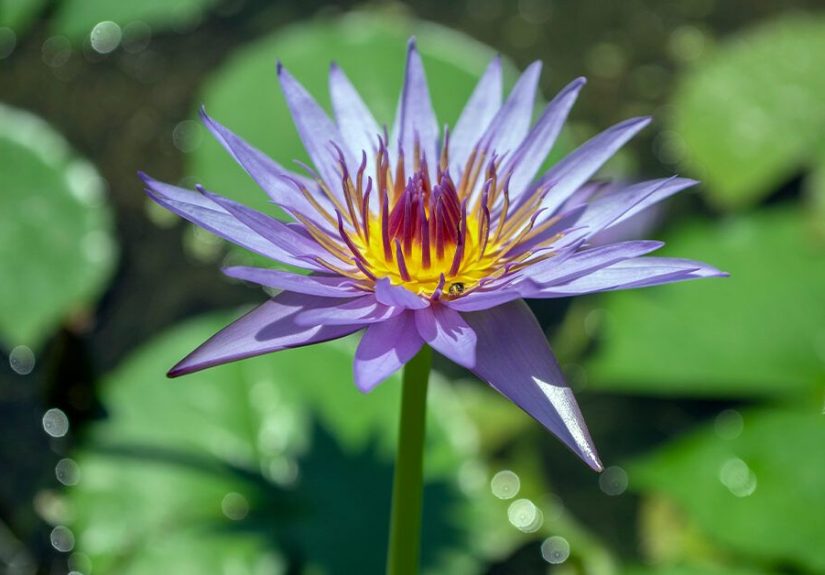
“Blue lotus” most commonly refers to Nymphaea caerulea, sometimes called blue Egyptian lotus or blue water lily. It’s an
aquatic plant with a long history in art and folklore. In modern wellness circles, it’s marketed as a relaxing botanical that may influence
mood, sleep, and sexual wellness.
Blue lotus vs. “lotus” (yes, it’s confusing)
Here’s where people get tripped up: “lotus” can also refer to Nelumbo nucifera (sacred lotus), which is a different plant.
If a product just says “lotus,” you can’t assume it’s blue lotus. For safety and quality, the label should clearly state
Nymphaea caerulea.
Why Blue Lotus Got Famous (3,000 Years Before TikTok)
Blue lotus appears throughout ancient Egyptian imageryoften associated with ritual, symbolism, and celebration. Modern researchers and
historians have discussed the possibility that preparations of the plant (including soaking in wine) may have produced noticeable mind and
body effects, helping explain why it shows up so often in cultural depictions.
In modern scientific and historical discussion, one theme keeps repeating: authentic Egyptian blue lotus may be harder to come by than many
people realize, which raises real questions about whether “blue lotus” products sold today reliably match the plant featured in history.
What’s In Blue Lotus? The Compounds Behind the Buzz
Two alkaloids show up frequently in discussions about blue lotus’ psychoactive reputation:
apomorphine and nuciferine. These compounds are discussed as potential contributors to effects on dopamine
and related brain signaling pathways.
Apomorphine: a reminder that “natural” can still be potent
Apomorphine is also the name of a prescription medication used in Parkinson’s disease for “off” episodes. In that medical context, it’s a
dopamine agonistmeaning it activates dopamine receptors in the brain. That’s relevant because dopamine signaling plays a
role in movement, reward, motivation, mood, and sexual function.
Important nuance: a blue lotus product is not the same as a standardized medication. Even if the plant contains apomorphine-related
activity, botanical products vary widely in content, dose, and purity.
Nuciferine: “calm” is the marketing word, “complex” is the reality
Nuciferine is often described in research discussions as having a complex interaction profile with brain receptors and transporters,
potentially contributing to calming or sedating effects. But most of what we know is not from large, high-quality human studies on blue lotus
products.
Common Uses Today
Modern blue lotus products are sold in a variety of forms, and the form matters because it changes how fast effects might occur and how hard
it is to control dose.
- Tea/infusion: dried petals or flower material steeped in water.
- Tinctures/extracts/resins: concentrated products, often marketed for stronger effects.
- “Infused” beverages: sometimes combined with alcohol (not a great idea).
- Vape liquids: often the riskiest category due to rapid delivery and adulteration concerns.
Many people try blue lotus for relaxation, sleep support, mood lift, or libido. Others are simply curious, which is a very human trait and
also the reason warning labels exist.
Potential Benefits: What People Claim vs. What Evidence Suggests
1) Relaxation and stress support
The most common reason people reach for blue lotus is to feel calmerlike a “soft exhale” at the end of the day. Mechanistically, that claim
is often tied to the plant’s alkaloids and their influence on dopamine and related pathways. Practically, the evidence is limited and not
strong enough to treat it like a proven anxiety remedy.
2) Sleep and winding down
Blue lotus is frequently marketed as a sleep aid or bedtime tea. Some people report drowsiness or a dreamy feeling. However, there’s no
standardized dosing, and there aren’t enough controlled human studies to say it reliably improves insomnia. Think of it as “possibly relaxing”
rather than “clinically validated.”
3) Mood lift and mild euphoria
Some users describe a gentle mood elevation. Others describe feeling “floaty,” spaced out, or perceptually different. That range is a red flag
for variability: effects may depend on product strength, how it’s used, whether it’s mixed with other substances, and whether the product is
truly what it claims to be.
4) Sexual wellness and libido
Historically, blue lotus has been linked to sensuality and celebration, and modern marketing leans hard into that. There’s a plausible
dopamine-related rationale for interest in sexual arousal and desire, but that does not equal proof. If a product promises “instant bedroom
magic,” treat that like a late-night infomercial claimentertaining, but not automatically true.
5) Parkinson’s disease and medical claims
You’ll see references to apomorphine and Parkinson’s because apomorphine is used medically as a dopamine agonist. But it’s a leap from “a
compound exists in a plant” to “the plant product treats Parkinson’s.” Parkinson’s treatment is medical territorydo not substitute blue lotus
for prescribed therapy.
What the Research Landscape Really Looks Like
The current state of evidence is best described as: interesting, incomplete, and not standardized.
Much of the discussion is based on chemistry, historical accounts, small studies, and case reportsnot large clinical trials with consistent
products and consistent dosing.
That’s not unusual for botanicals. But it does mean you should treat bold “benefit” claims as marketing until proven otherwise.
Safety: Side Effects, Risks, and the Big “It Depends”
Blue lotus can have psychoactive effects. And in real-world reports, especially with vaping or alcohol-infused use, people have shown up to
emergency departments with concerning symptoms.
Reported side effects (more likely with higher-dose products)
- Drowsiness, dizziness, confusion
- Nausea or vomiting
- Anxiety or panic-like feelings
- Rapid heart rate or chest discomfort
- Perceptual changes or hallucinations
- Slurred speech, “bizarre behavior,” reduced responsiveness
Emergency department case reports: why vaping raises eyebrows
A published case series described five active-duty patients who arrived at the emergency department with altered mental status after using
blue lotus productsfour after vaping and one after drinking an infused beverage. The good news: they improved with supportive care. The bad
news: “supportive care” is not a spa treatment, and nobody wants their relaxation ritual to end with hospital monitoring.
Seizure concerns
There are also reports and medical abstracts raising concern that blue lotus use may be associated with seizures in some situations. While
causality is difficult to prove from limited reports, the signal is serious enough to treat as a cautionespecially for anyone with a seizure
history or neurological vulnerabilities.
Drug and Substance Interactions: Where Things Get Risky Fast
If a botanical affects the brain, it can interact with other things that affect the brain. That’s not fearmongeringthat’s pharmacology.
Avoid mixing with:
- Alcohol: increases sedation, impairment, and unpredictable effects.
- Sleep meds, benzodiazepines, opioids: risk of excessive sedation and dangerous impairment.
- Cannabis or other psychoactives: unpredictable cognitive and anxiety effects.
- Mental health medications: especially those that affect dopamine/serotonin pathways (talk to a clinician first).
Also: if you have an upcoming procedure, pregnancy, breastfeeding, or a complex medical condition, it’s wise to treat blue lotus like any
other supplementsomething to discuss with a healthcare professional rather than a casual experiment.
Who Should Avoid Blue Lotus?
- Pregnant or breastfeeding people: safety data are insufficient.
- Children and teens: not appropriate due to unknown effects and dosing.
- People with psychosis-spectrum disorders or severe mood disorders: psychoactive effects may worsen symptoms.
- Anyone with seizure history: avoid unless a clinician specifically clears it.
- People taking sedatives or complex neuro/psychiatric meds: high interaction potential.
Quality and Purity: The Problem Nobody Puts on the Front Label
In the U.S., dietary supplements are regulated differently than prescription drugs. The FDA does not “pre-approve” dietary supplements before
they’re marketed, and manufacturers are generally responsible for ensuring safety and proper labeling. In plain English: you can’t assume every
product is consistent, accurately labeled, or contamination-free.
This matters a lot for blue lotus because reported effects vary wildlyand some warnings note that products marketed as plant-based ingredients
may be adulterated. If you’re thinking, “Wow, that’s unsettling,” congratulations: your risk assessment skills are working.
Practical quality tips
- Look for the full botanical name: Nymphaea caerulea.
- Prefer brands that provide third-party testing (COA) for identity and contaminants.
- Be cautious with vape liquids and ultra-concentrated extracts.
- Avoid products that make disease-treatment promises (that’s a red flag in supplement land).
Legal and Policy Notes in the United States
Blue lotus occupies a “mostly legal, but not universally” space. It is generally not listed as a federally controlled substance, which is why
it’s sold in many places. However, state laws can differ.
Louisiana
Louisiana law lists Nymphaea caerulea (blue lotus/Egyptian lotus) among “prohibited plant products.” If you’re in Louisiana,
you should assume the legal risk is real and verify current rules before purchasing or possessing it.
U.S. military (DoD policy)
For U.S. service members, blue lotus is prohibited for use under DoD guidance. Official safety messaging has also warned about adverse
reactions and the possibility of adulteration in some products.
Bottom line: before you buy, check your state rules, and if you’re subject to workplace or military substance policies, treat that as a hard
constraint.
If You’re Considering Trying It: A Safety-First Approach
This isn’t medical advice, but it is common-sense harm reduction:
- Talk to a clinician if you take medications or have mental health/neurological history.
- Don’t vape it. Faster delivery + product variability = higher risk.
- Don’t mix it with alcohol, cannabis, or sedatives.
- Plan for impairment: don’t drive, operate machinery, or “test it” on a work night.
- Start with the lowest labeled amount if you proceed, and stop if you feel unwell.
Conclusion
Blue lotus flower sits at the intersection of history, chemistry, and modern wellness culture. It may feel relaxing for some people, but the
evidence for consistent benefits in humans is limitedand the safety risks are not theoretical. Product quality varies, dosing isn’t
standardized, and certain forms (especially vaping) have been linked to emergency medical visits.
If you’re curious, be picky about product quality, conservative about use, and honest about your health context. The goal is calmnot chaos.
(Or at least not chaos that requires paperwork.)
Experiences With Blue Lotus: What People Report (and What It Might Mean)
Because blue lotus products are inconsistent, “experiences” are all over the map. Still, patterns show up in what people commonly report.
Think of the stories below as a field guide to expectationsuseful for context, not proof of effectiveness.
1) The “tea and a book” crowd
Some people describe blue lotus tea as a gentle wind-down ritual: a mild loosening of tension, a quieter mind, and a subtle body heaviness.
The experience is often compared to other calming teasexcept with a slightly more “dreamy” edge. In these reports, the biggest benefit may be
the routine itself: warm drink, dim lights, no scrolling, and a clear signal to the brain that the day is ending.
What this could mean: if someone experiences calmer feelings, it may be a mix of the ritual, expectation, and any real pharmacologic effect.
And if someone experiences nothing, that may reflect a low-potency product, a low dose, or simply that their body doesn’t respond strongly.
2) “I felt it fast… and I didn’t love it”
Another group reports a quicker, more pronounced shift: lightheadedness, spaciness, and a sense of altered perception. Sometimes it’s pleasant
(“floaty, relaxed”), and sometimes it’s uncomfortable (“why is my heart doing that?”). These reports are more common when people use
concentrated extracts or combine the plant with other substances.
What this could mean: stronger products may carry more risk, especially if dose control is unclear. Rapid onset can also suggest a delivery
method that hits harder than expected. If anxiety is part of your baseline, a “mind-altering” experience can easily tip into a bad time.
3) The libido experimenters
Because blue lotus is often marketed for sexual wellness, some people try it hoping for increased desire, more body sensitivity, or reduced
inhibitions. Reports here are mixed. Some describe feeling more “connected” or relaxed, which helps intimacy. Others say it made them too
sleepy to do anything besides negotiate pillow real estate.
What this could mean: relaxation can support libido for some peoplestress is a known mood-killer. But sedation can also be a romance
roadblock. The “benefit” depends on the person, the setting, and how strong the product is.
4) The meditation and creativity crowd
A smaller set of users report that blue lotus feels like an “introspective” companion: softer thinking, vivid mental imagery, and an easier
time settling into breathwork or meditation. These reports often come with careful, low-stimulation environmentsquiet music, journaling,
and no multitasking.
What this could mean: if blue lotus has mild psychoactive properties for certain users, it could amplify inner focus. But it could also simply
make someone drowsy. The line between “meditative” and “sleepy” is thin and frequently covered in a blanket.
5) The cautionary tales: vaping and “mystery products”
The most concerning experiences tend to involve vaping liquids or highly concentrated products bought from questionable sources. These stories
include panic, confusion, chest discomfort, and disorientationsometimes severe enough that people seek medical help.
What this could mean: faster delivery and unknown ingredients create a risk stack. Even if authentic blue lotus has certain effects, products
marketed as blue lotus may vary in content and, in worst cases, may be adulterated. If your “relaxation aid” feels like a sudden disaster
simulation, that’s your sign to stop.
The takeaway from real-world experiences is simple: variability is the rule. If you decide to experiment, do it like an adult:
don’t mix substances, don’t drive, choose quality-tested products, and treat unexpected effects as informationnot a challenge.