Table of Contents >> Show >> Hide
- What a breast ultrasound actually is
- Purpose: Why you might need a breast ultrasound
- What to expect during a breast ultrasound
- Understanding breast ultrasound results
- Next steps: What happens after different ultrasound outcomes
- Benefits, limitations, and what ultrasound can’t promise
- Questions to ask after a breast ultrasound
- FAQ: Quick answers to common breast ultrasound questions
- Experiences: What breast ultrasound feels like in real life (and what people often wish they’d known)
- Conclusion
A breast ultrasound can feel a little like a “behind-the-scenes” tour of your breast tissueminus the gift shop, plus some warm gel.
It’s a common imaging test that helps clinicians take a closer look at a specific concern (like a lump you can feel) or a finding that showed up on a mammogram.
And because ultrasound uses sound waves (not radiation), it’s also a go-to option in situations where mammograms are less helpful or less ideal.
If you’re here because you’ve been scheduled for a breast ultrasoundor you got a report full of mysterious numbers and the word “BI-RADS”take a breath.
This guide explains what breast ultrasound is for, how to interpret typical results, and what “next steps” usually look like in real life.
What a breast ultrasound actually is
How it works (in normal human language)
Ultrasound imaging uses high-frequency sound waves to create pictures of what’s happening inside the body.
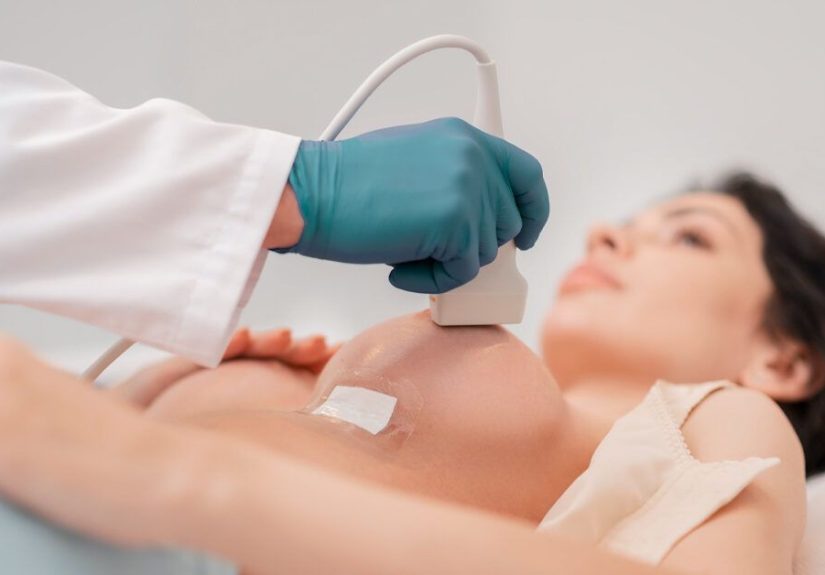
For a breast ultrasound, a technologist or clinician glides a handheld device (called a transducer) over the skin.
The transducer sends sound waves into the tissue and receives echoes back. Those echoes become images on a screenkind of like sonar, but for your breast.
Targeted vs. whole-breast ultrasound (and why the difference matters)
- Targeted breast ultrasound: Focuses on one specific spotlike the area where you feel a lump, where you have pain, or where a mammogram showed something unclear.
- Whole-breast ultrasound: Scans more broadly and may be used as supplemental screening in some people (often those with dense breast tissue), depending on risk factors and local practice.
- Automated breast ultrasound (ABUS): A type of whole-breast ultrasound that uses an automated scanner to capture standardized images across the breast. It’s sometimes offered as an add-on screening tool for dense breasts.
Ultrasound isn’t just for imagingit can guide procedures
One of ultrasound’s superpowers is that it provides real-time imaging. That’s why it’s often used to guide procedures like:
- Ultrasound-guided needle biopsy (to sample tissue from a suspicious area)
- Cyst aspiration (to drain fluid from a painful or bothersome cyst)
- Localization help before further evaluation or treatment
Purpose: Why you might need a breast ultrasound
1) To check a lump or symptom you (or your clinician) can feel
Many breast ultrasounds start with something very simple: “I felt something, and I’d like to know what it is.”
Ultrasound is especially useful for evaluating a palpable lump because it can often help determine whether the area is:
fluid-filled (like a benign cyst), solid (which can be benign or suspicious), or a mix of both.
Ultrasound may also be ordered for symptoms like focal breast pain, skin changes, nipple discharge, or a new area of thickeningespecially if the symptoms are on one side and persistent.
2) To take a closer look after an abnormal screening mammogram
Screening mammograms are excellent at finding early changes, but they don’t always tell the full story.
If a mammogram shows an area that needs a better look, a clinician may order a diagnostic mammogram, a targeted breast ultrasound, or both.
Ultrasound can help clarify whether a mammogram finding is a cyst, normal tissue, or something that needs more investigation.
3) To add information in people with dense breast tissue (select situations)
Dense breast tissue can make cancers harder to see on mammography because both dense tissue and many tumors look white on X-ray.
Some people with dense breasts may be offered supplemental imaging (like ultrasound or MRI), especially if they also have elevated risk factors.
Important nuance: major guideline groups don’t all agree on routine supplemental ultrasound for everyone with dense breasts.
The best plan depends on your personal risk, your age, your prior imaging history, and local standards of care.
Think “personalized strategy,” not “one-size-fits-all.”
4) During pregnancy or breastfeeding, when ultrasound is often first-line
If you’re pregnant or lactating and notice a lump, ultrasound is frequently used as the first imaging step.
It can evaluate common benign causes (like clogged ducts or lactational changes) while also checking for less common but important issues.
The key message: new breast concerns during pregnancy or breastfeeding shouldn’t be brushed off.
What to expect during a breast ultrasound
Before your appointment
- Wear a two-piece outfit so changing is easier (you’ll typically undress from the waist up).
- Skip lotions, powders, and creams on the breast and underarm area that day if you canthey can interfere with contact and image quality.
-
Deodorant? Many facilities are stricter about deodorant for mammograms, but some centers prefer you avoid it for ultrasound too,
especially if underarm imaging is planned. When in doubt, go fragrance-free and product-free for the morning. - No fasting is typically needed. You can usually eat, drink, and take medications normally.
During the exam (yes, the gel is real)
You’ll lie on an exam table. The technologist applies gel to your skin and moves the transducer over the area.
You may feel gentle pressureespecially if they’re pressing near a tender spotbut it shouldn’t be sharply painful.
A typical exam is often around 15–30 minutes, though it can be longer if multiple areas need evaluation.
After the exam
There’s no downtime. You wipe off the gel, get dressed, and go on with your day.
Results timing varies: sometimes a radiologist reviews images quickly, and other times the report is sent to your ordering clinician within a few days.
Understanding breast ultrasound results
What ultrasound can show well
- Simple cysts (typically benign fluid-filled sacs)
- Solid masses (which can be benign, like fibroadenomas, or suspicious)
- Mixed cystic-solid areas (which may require closer evaluation)
- Inflammation or abscess in certain settings
- Lymph nodes in the underarm region (axilla) and their general appearance
- Blood flow patterns (sometimes assessed with Doppler ultrasound)
What ultrasound does NOT do as well
Ultrasound is not the best tool for detecting microcalcifications (tiny calcium deposits) that can show up on mammography.
That’s one reason ultrasound typically complements mammography rather than replacing it.
BI-RADS: The “grading system” you’ll often see
Many breast imaging reports use BI-RADS (Breast Imaging Reporting and Data System), a standardized way to describe findings and recommended follow-up.
The exact wording can vary, but the categories are widely used across mammograms, breast ultrasound, and breast MRI.
| BI-RADS Category | What It Usually Means | Common Next Step |
|---|---|---|
| 0 | Incompleteneeds more imaging | Additional views or targeted ultrasound |
| 1 | Negative (no abnormal findings) | Routine screening as advised |
| 2 | Benign finding | Routine screening as advised |
| 3 | Probably benign (very low chance of cancer) | Short-interval follow-up imaging (often ~6 months) |
| 4 | Suspicious abnormality | Biopsy often recommended |
| 5 | Highly suggestive of malignancy | Biopsy and prompt evaluation |
| 6 | Known biopsy-proven malignancy | Treatment planning and monitoring |
BI-RADS is not a fortune-tellerit’s a communication tool. It helps radiologists and clinicians speak the same language and match findings with sensible next steps.
Next steps: What happens after different ultrasound outcomes
If the ultrasound is normal (or clearly benign)
If the exam shows normal tissue or a benign finding (like a simple cyst), the usual next step is reassurance and routine screening.
If you still feel a lump or symptoms persist, your clinician may correlate the imaging with a physical exam and consider additional evaluation.
Imaging is powerfulbut your body’s feedback still matters.
If the finding is “probably benign” (BI-RADS 3)
This is one of the most confusing categories because it sounds like a shrug.
In reality, it’s a structured plan: the finding is very likely benign, but radiology wants to confirm stability over time.
A common recommendation is repeat imaging in about 6 months (and sometimes again at later intervals) to confirm nothing is changing.
If more imaging is recommended (BI-RADS 0 or “needs correlation”)
Sometimes the radiologist needs more informationadditional ultrasound images, diagnostic mammogram views, or (in specific cases) breast MRI.
This doesn’t automatically mean “bad news.” It often means “we need a clearer angle.”
If a biopsy is recommended (often BI-RADS 4 or 5)
A biopsy recommendation can be scary, but here’s a steadying fact:
many biopsies come back benign.
A biopsy is how clinicians move from “imaging suggests…” to “we know what this is.”
If the area is visible on ultrasound, the most common approach is an ultrasound-guided core needle biopsy.
You’ll typically have:
- Local numbing medicine (the “pinch-and-burn” moment)
- Several tiny tissue samples taken through a small needle device
- A small marker clip placed (so the spot can be found later, even if it heals)
- Bandage and aftercare instructions (usually simple: keep it clean, avoid heavy strain briefly)
If the concern is mainly microcalcifications seen on mammogram, a different biopsy method (like stereotactic guidance) may be used instead,
because ultrasound may not visualize those calcifications reliably.
If the report mentions a “complex” cystic or mixed mass
Reports sometimes use terms like “complex cystic and solid” or “complex cyst.”
These findings don’t automatically mean cancer, but they often trigger closer follow-up or biopsy because mixed features can be harder to classify.
The recommendation will usually be based on specific imaging characteristics and the radiologist’s level of concern.
Benefits, limitations, and what ultrasound can’t promise
Benefits
- No ionizing radiation
- Real-time imaging (excellent for guiding biopsies and procedures)
- Great at distinguishing fluid vs. solid in many cases
- Widely available and generally well tolerated
- Useful in pregnancy and lactation for evaluating new symptoms
Limitations
- Not a complete replacement for mammography in routine screening
- Operator-dependent (image quality and interpretation can vary)
- False positives and false negatives happen, especially with broad “screening” ultrasound
- Not ideal for microcalcifications, which are often best seen on mammogram
The practical takeaway: ultrasound is incredibly useful, but it’s best viewed as one strong piece of the puzzlepaired with your history, exam findings,
and (when appropriate) mammography or MRI.
Questions to ask after a breast ultrasound
- Is this ultrasound targeted or whole-breast?
- What BI-RADS category was assigned, and what does it mean in my case?
- Do you recommend follow-up imaging? If yes, when and what type?
- If a biopsy is suggested, is it ultrasound-guided, and what should I expect for recovery?
- How does my breast density affect my screening plan?
- Based on my personal risk factors, do I need a risk assessment or genetic counseling discussion?
FAQ: Quick answers to common breast ultrasound questions
Does a breast ultrasound hurt?
Most people describe it as pressure and mild discomfort at mostespecially over a tender spotbut not truly painful.
If you’re sore or anxious, tell the technologist; they can often adjust positioning and pressure.
Is breast ultrasound safe?
Ultrasound is widely used in medical imaging and does not use ionizing radiation.
It’s generally considered safe, including in pregnancy, when clinically indicated.
Can ultrasound tell if a lump is cancer?
Ultrasound can describe features that look benign or suspicious, but imaging alone cannot always confirm cancer.
If a finding is suspicious, a biopsy is usually the step that provides a definitive diagnosis.
How long does it take to get results?
Timing varies by facility. Some centers provide same-day impressions, while others send a report to your clinician within a few business days.
If you haven’t heard back when you expected, it’s reasonable to call and ask when the report will be available.
Can I skip my mammogram and just get ultrasound?
For routine screening in average-risk adults, ultrasound is typically used as an add-on, not a replacement.
Mammography remains the primary screening tool because it detects certain early changes (like microcalcifications) better than ultrasound.
What about screening guidelines?
For average-risk adults, a major U.S. guideline recommends mammography every other year starting at age 40 through age 74.
If you’re higher-risk (family history, genetic mutations, prior chest radiation, and other factors), your plan may start earlier and include MRI or additional imaging.
Experiences: What breast ultrasound feels like in real life (and what people often wish they’d known)
If you ask ten people about their breast ultrasound experience, you’ll get ten different versions of “it was fine… but I was nervous.”
The most common emotional thread isn’t painit’s the waiting and the mental math. “They called me back. Does that mean something’s wrong?”
Here’s what many people describe, in a grounded, day-in-the-life kind of way.
First: the room is usually quiet, dim, and very “radiology calm.”
People often expect a big dramatic machine, but ultrasound equipment looks more like a fancy computer cart with a screen and a wand.
The technologist typically explains what they’re doing, but they may not be able to interpret results out loud (that’s usually the radiologist’s role).
That silence can feel awkwardlike you’re watching a movie where you don’t know if it’s a comedy or a thriller.
Second: the gel is a character in this story.
It’s usually water-based, and sometimes it’s warmed (bless those places).
The gel helps the transducer maintain contact so sound waves travel properly.
People often worry it will stain clothes, but it’s designed to wipe off easily.
The bigger surprise is the pressure: not painful for most, but you may feel a firm push to get a clear look near the chest wall or underarm.
If you’re tender, it’s completely fair to say, “That spot is sensitivecan we go slowly?”
Third: the most common “plot twist” is that the ultrasound answers a very simple question:
“Is this likely a cyst?” Many lumps turn out to be fluid-filled cysts, especially in people who are premenopausal or hormonally cycling.
In those situations, people often feel reliefand then mild annoyance that their body didn’t come with a clearer user manual.
When the finding is solid (like a fibroadenoma), the experience can still be reassuring if the features look benign and the plan is clear
(for example, follow-up imaging to confirm stability).
Fourth: when the plan is follow-up or biopsy, people often wish they’d heard this sentence sooner:
“A biopsy recommendation is commonand many biopsies are benign.”
The anxiety tends to spike in the gap between “recommended” and “completed.”
What helps is specificity: what type of biopsy, how it’s guided, how long it takes, what recovery is like, and when results typically return.
Having a concrete timeline turns the situation from a scary fog into a checklist.
Finally: many people say the best part was leaving with a plan.
Even if the plan is “come back in six months,” it’s a planand it’s based on how breast imaging works in the real world:
track stability, catch change early, and avoid overreacting to findings that look safely benign.
If there’s one practical tip people share, it’s this: write down your questions before the appointment, and ask for the BI-RADS category and the recommended next step in plain language.
You deserve clarity, not a scavenger hunt through medical vocabulary.
Conclusion
Breast ultrasound is a highly useful tool for answering specific questions: “What is this lump?” “Is that mammogram finding a cyst?” “Do we need a biopsy?”
It’s fast, radiation-free, and excellent at characterizing fluid vs. solid structures and guiding procedures in real time.
The most important part isn’t the gel or the screenit’s what comes after: a clear explanation of your results and a sensible next step.
If you’re unsure what your report means, focus on three things: the main finding, the BI-RADS category, and the recommended follow-up.
Then bring those points to your clinician so your imaging and your overall health plan match up.