Table of Contents >> Show >> Hide
- Why “Camper Revival” Is a Different Beast Than a Regular Renovation
- The Find: A Trailer With “Good Bones” (And Questionable Smells)
- Step 1: Make a Plan That Won’t Betray You Mid-Project
- Step 2: Demolition Without the Drama
- Step 3: The Leak-Stopping Phase That Makes Everything Else Worth It
- Step 4: Fix the “Soft Spot” FloorBecause Bouncy Floors Aren’t a Feature
- Step 5: Electrical Upgrades That Feel Modern (Without Becoming a Fire Story)
- Step 6: Propane, Ventilation, and Safety Gear You Should Not Skip
- Step 7: Insulation and Moisture Control (Because Condensation Is a Sneaky Villain)
- Step 8: Design a Showpiece Interior Without Making It Heavy
- Step 9: Storage That Doesn’t Look Like You’re Moving Every Day
- Step 10: The “Shakedown Trip” That Turns a Project Into a Real Camper
- Conclusion: From Shabby to Showpiece, One Smart Decision at a Time
- Extra : What It Feels Like to Camp in a Trailer You Revived Yourself
Every camper makeover story starts the same way: someone says, “It just needs a little love.”
And then you open a cabinet and an entire ecosystem blinks at you like, “Sup.”
Stillthere’s something wildly satisfying about taking a sad, sun-baked trailer with more leaks than a gossip group chat
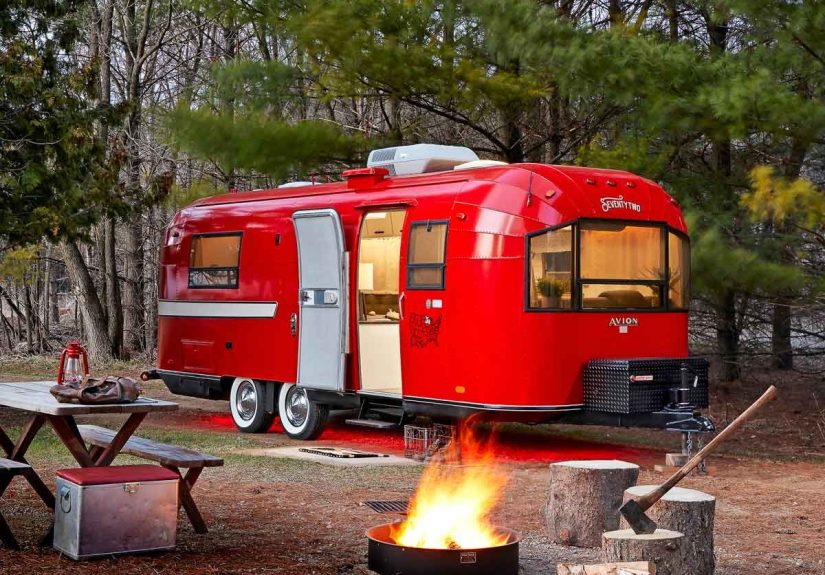
and turning it into a rolling showpiece that makes strangers point in the campground like you’re in a parade.
This is the story (and the playbook) of a full-on camper revival: the inspection, the unglamorous repairs,
the design decisions that keep it light, safe, and actually towableand the small touches that make a shabby trailer
look like a boutique getaway on wheels.
Why “Camper Revival” Is a Different Beast Than a Regular Renovation
Renovating a house is like remodeling a big ship docked in calm water. Renovating a travel trailer is like remodeling a canoe
while someone periodically splashes you with a hose and yells, “Also, it has to survive a hurricane at 65 mph!”
A travel trailer renovation has three non-negotiables:
- Moisture control: If you don’t stop water first, you’re just decorating a sponge.
- Weight control: Pretty upgrades are greatuntil your tongue weight says, “Absolutely not.”
- Safety systems: Propane, electrical, and ventilation aren’t “cute projects.” They’re “sleep at night” projects.
The Find: A Trailer With “Good Bones” (And Questionable Smells)
Our “before” trailer was the classic Craigslist special: faded exterior, brittle sealant, curtains that had seen things,
and a floor that squeaked like it was trying to communicate in Morse code.
But the frame looked straight, the shell wasn’t crushed, and the layout had potentialmeaning we could imagine it as a
DIY camper remodel instead of a cautionary documentary.
The quick reality-check inspection
Before you fall in love with vintage charm (or a low price), do a five-minute scan that can save you five months of regret:
- Roof and seams: Look for cracked sealant, gaps, bubbling membrane, or soft decking.
- Windows and corners: Press gently around frames and lower corners. Soft or spongy areas usually mean water got invited in and never left.
- Floor “soft spots”: Walk every inch, especially by the door, bathroom, and under windows.
- Cabinet bottoms: Open and look underneathwater damage loves hidden spots.
- Smell test: Musty odor isn’t “character.” It’s a symptom.
Step 1: Make a Plan That Won’t Betray You Mid-Project
The most common mistake in a trailer makeover is starting with paint and pillows.
The most successful makeovers start with a plan that’s half design board, half spreadsheet, and 100% realistic.
Build a simple scope in three layers
- Must-do: leaks, structural repairs, safety detectors, brakes/tires, critical wiring.
- Should-do: flooring, lighting, storage upgrades, improved ventilation, refreshed plumbing fixtures.
- Nice-to-have: fancy backsplash, custom cushions, premium hardware, mood lighting that makes you feel like you live in a music video.
Pro tip: set a “surprise fund.” Old campers always hide at least one plot twist.
If yours doesn’t, congratulationsyou found a unicorn, and it probably has a clean title too.
Step 2: Demolition Without the Drama
The goal isn’t to rip everything out like a reality show. It’s to remove what’s damaged, unsafe, or heavy,
while preserving what’s solid and saving your budget for the unsexy stuff (like sealant).
Smart demo rules
- Label everything: painter’s tape and a marker will save your sanity later.
- Take photos constantly: your phone becomes your “how it used to be wired” memory.
- Remove soft goods first: old cushions and curtains love to hold odors and moisture.
- Stop if you see mold: don’t aerosolize it by going full demolition derbycontain it and clean it correctly.
Step 3: The Leak-Stopping Phase That Makes Everything Else Worth It
If you do nothing else, do this: stop water intrusion. Most “shabby trailer” problems are really “water had a long-term lease”
problems. Seal the roof, reseal the windows, and address any penetrations (vents, caps, lights).
Roof seams and penetrations
Roofs fail at seams, edges, and openingsnot typically in the middle of a panel.
That’s why you focus on transitions: vents, skylights, front/rear caps, antenna mounts, and ladder brackets.
- Prep matters: clean the area thoroughly, remove loose/failed sealant, and make sure surfaces are dry.
- Use the right sealant: RV roofs and exteriors often need specialized products designed for movement, UV, and membrane compatibility.
- Don’t “finger-smooth” everything: some RV lap sealants are designed to self-levellet them do their thing.
- Inspect regularly: resealing is not a one-and-done lifetime vow. It’s more like skincare: consistency wins.
Windows and exterior fixtures
Leaky windows are sneaky because they can drip behind walls and quietly ruin framing. The common fix is removing the window,
cleaning old material, and reinstalling with proper putty/butyl tape so it compresses and fills gaps when tightened.
A little squeeze-out is normal; it’s basically the tape saying, “I’m doing my job.”
Step 4: Fix the “Soft Spot” FloorBecause Bouncy Floors Aren’t a Feature
If your floor feels like a trampoline in one spot, you can’t ignore it. Soft floors can come from rot, delamination,
or failing support underneath. The correct repair depends on what’s damaged: top layer only, subfloor, or framing.
A practical repair approach
- Find the source first: floor repairs fail if the leak that caused them still exists.
- Open carefully: remove flooring and inspect from above; where possible, check underneath too.
- Replace damaged wood: cut back to solid material; create new support so replacement plywood is fully backed.
- Use moisture-resistant materials wisely: choose products that resist future moisture, but keep weight in mind.
This is the point where people get tempted to “just cover it with luxury vinyl.”
That’s like putting cologne on a trash can. Fix the structure, then make it pretty.
Step 5: Electrical Upgrades That Feel Modern (Without Becoming a Fire Story)
Camper electrical is often a mix of 12V DC (lights, fans, water pump) and 120V AC (outlets, appliances on shore power).
If wiring looks hacked, brittle, or mysterious, treat it like a safety project, not a craft.
What “good” looks like
- Clean power distribution: labeled fuses/breakers so you’re not playing “guess that circuit” in the dark.
- Healthy battery charging: a quality converter/charger setup helps maintain the house battery correctly.
- GFCI where it matters: areas around sinks and bathrooms should have proper ground-fault protection.
- Strain relief and protection: wires secured, protected from sharp edges, and routed away from heat sources.
Optional: solar and inverter (a.k.a. “the off-grid glow-up”)
If your dream is boondocking with a coffee grinder and a phone at 100% by noon, solar can be a great upgradewhen designed properly.
The key is being honest about your usage, sizing components appropriately, and installing safely with correct fusing and wire gauge.
Step 6: Propane, Ventilation, and Safety Gear You Should Not Skip
A revived camper should be cute, yes. But also safe enough that you’re not sleeping next to a fuel source like it’s a hobby.
Propane systems, fuel-burning appliances, and enclosed spaces mean you should take detectors and ventilation seriously.
Minimum safety essentials
- Smoke alarm and carbon monoxide alarm rated/appropriate for RV use.
- Propane leak detector (especially important if you cook or heat with propane).
- Fire extinguisher in an easy-to-reach location (not buried behind decorative baskets).
- Fresh airflow: working roof vent or fan reduces moisture buildup and helps prevent condensation.
If anything in the propane system seems questionablecracked hoses, corrosion, unknown modificationsget it inspected by a qualified technician.
“I watched two videos” is not the same as “I pressure-tested the system.”
Step 7: Insulation and Moisture Control (Because Condensation Is a Sneaky Villain)
Campers are small boxes exposed to big temperature swings. That means condensation can happen fast, especially when cooking or heating.
Your goal is to reduce moisture, improve airflow, and use materials that handle humidity without turning into science projects.
Simple ways to stay drier
- Vent while cooking: yes, even when it’s cold. Crack a window if you must.
- Use a small dehumidifier when plugged in, or moisture-absorbing products for storage.
- Choose washable finishes: wipeable paint, sealed wood, and fabrics that can be cleaned easily.
- Replace moldy porous materials: if something is truly contaminated and can’t be cleaned, it’s often better to discard it.
Step 8: Design a Showpiece Interior Without Making It Heavy
Here’s where the vintage camper restoration dreams get real. The trick is to create “wow” with smart surface upgrades,
not by adding heavy materials that belong in a kitchen renovation show.
Lightweight design upgrades that deliver big impact
- Paint cabinets: a good degrease + scuff-sand + bonding primer can do wonders. Finish with a durable enamel.
- Peel-and-stick wallpaper (strategically): use it as an accent wall or inside cabinet backs for personality without commitment.
- Vinyl plank flooring: popular for durability and easy cleanupjust make sure the subfloor is solid and dry first.
- Lighting swap: warm LEDs and a couple of stylish fixtures make the space feel intentional, not “storage unit chic.”
- Hardware refresh: new pulls and latches are small but mighty for a trailer makeover.
Pick a color story and stick to it
A showpiece trailer looks cohesive. Pick:
one main color (walls/cabinets),
one wood tone (countertops/shelves),
and one accent color (textiles/decor).
That’s it. Any more and your camper starts to feel like a thrift store had a yard sale inside another thrift store.
Step 9: Storage That Doesn’t Look Like You’re Moving Every Day
The difference between “cute camper” and “showpiece” is often visual calm. That means hidden storage, consistent baskets,
and a system where everything has a home.
Practical storage upgrades
- Vertical organizers: hooks, rails, and slim shelves make use of wall space.
- Under-seat compartments: bench seating becomes storage gold with hinged lids or pull-out bins.
- Magnetic strips: great for small metal tools or spice tins (when mounted securely).
- Travel-friendly rules: anything that can fly during braking should be latched, strapped, or stored.
Step 10: The “Shakedown Trip” That Turns a Project Into a Real Camper
Before you book a week-long trip, do a one-night stay close to home. This is where you find the tiny issues:
a cabinet latch that pops open, a mystery drip, a light that flickers, or a water pump that sounds like it’s beatboxing.
Bring a small “first trip” kit
- basic tools, spare fuses, tape, sealant for minor fixes
- paper towels, flashlight/headlamp, nitrile gloves
- tire pressure gauge and a plan for roadside help
- notebook for “fix this later” notes (you’ll have a few)
After the shakedown, you’ll tighten, adjust, and tweak. That’s normal. A camper is basically a tiny house that experiences earthquakes for fun.
Conclusion: From Shabby to Showpiece, One Smart Decision at a Time
A camper revival isn’t just about making something prettyit’s about making it sound, safe, and joyful.
The best transformations happen when you respect the order of operations: stop leaks, fix structure, upgrade systems, then style it like a pro.
And when you finally pull into a campground and someone says, “Wow, that trailer is gorgeous,” you’ll smile politely
while silently remembering the day you found three screws, a dead battery, and a suspicious smell behind the fridge.
That’s the magic: you didn’t just remodel a camper. You resurrected it.
Extra : What It Feels Like to Camp in a Trailer You Revived Yourself
The first night in a restored trailer is equal parts romance and “please don’t break.” You’ll climb into bed,
turn off the lights, and suddenly hear every tiny sound the camper makesbecause now you know it personally.
That creak near the dinette? You remember the afternoon you added blocking under the floor.
That gentle hum? Your new fan doing its job. The place feels alive, like it’s proud of itself… or at least trying.
The biggest surprise is how much lighter camping feels when your space is set up exactly for you.
In a generic rental or an untouched older rig, you’re always adapting: “Where do we put the shoes?” “Why is the coffee stuff
in three different cabinets?” In your own revived showpiece, everything has a reason. The hooks are where your hands naturally reach.
The storage bins are sized for the things you actually bring. The lighting is warm enough that you don’t feel like you’re eating dinner
in a dentist’s office.
You also develop a weird little pride in boring tasks. Wiping down the counter feels satisfying because you chose a surface that cleans easily.
Checking seals becomes a ritual instead of a chorelike walking around your trailer with a cup of coffee, giving it a quick “you good?” inspection.
You’ll catch yourself pointing out details to people who didn’t ask, like, “See that trim? I resealed that.” Your friends will nod politely.
Your trailer will silently judge them for not understanding craftsmanship.
And then there’s the campground effect: a showpiece trailer is a conversation starter. People wave. Kids stare.
Someone will inevitably say, “My grandpa had one like that,” or “I’ve always wanted to restore one.”
You’ll swap stories, recommend products, and give the most honest advice of all: that the project was absolutely worth it,
but also that you now have a sixth sense for moisture and a deep respect for anything labeled “self-leveling.”
The most meaningful part, though, is the calm. When rain hits the roof at 2 a.m., you don’t panic and start doing mental math
about drywall damage. You listen. You trust your work. You know the seams were prepped correctly, the windows were resealed, and
the soft spots were repaired the right way. You fall asleep to the sound of rain on a roof you’ve earned.
That’s the real luxury of a camper revival: not just the “after” photos, but the peace of knowing your showpiece can handle real life.