Table of Contents >> Show >> Hide
- How these rankings work (so you can argue with them fairly)
- Quick visitor intel (your rankings are only as good as your logistics)
- Rankings: Best underground locations (the cave’s greatest hits)
- Rankings: Best above-ground locations (yes, the desert is part of the story)
- Rankings: Best nearby basecamp locations (where you regroup, refuel, and re-hydrate)
- School class rankings: The best Carlsbad Caverns experiences by grade band
- Field trip “teacher moves” that prevent chaos (ranked by usefulness)
- Mini lesson ideas you can run on-site (no fancy gear required)
- Experience Add-On: of “what it feels like” at Carlsbad Caverns
- Conclusion
Carlsbad Caverns National Park is the rare destination that can flex on both science nerds and “I just wanted a cool photo” peoplesometimes in the same five minutes.
One minute you’re in bright New Mexico sun; the next you’re 750 feet underground, staring at formations that look like the planet tried pottery and got obsessed.
To make the most of it (and avoid the classic “we drove all this way and forgot the one thing” moment), here’s a practical, opinionated, and classroom-friendly set of rankings.
How these rankings work (so you can argue with them fairly)
Each ranked item gets points for five real-life factors: Wow Factor, ease/accessibility, time efficiency,
learning value, and crowd resilience. Some spots are world-class but time-consuming; some are quick hits that still feel like magic.
For “school classes,” the rankings focus on grade-fit, hands-on potential, and how smoothly a group can move through the experience.
One big note: Carlsbad runs on real-world conditions (weather, staffing, wildlife needs, conservation rules). So consider these rankings a smart starting point,
then confirm the day’s details before you roll in.
Quick visitor intel (your rankings are only as good as your logistics)
- Timed entry is a thing. You’ll choose an entry time, then buy your entrance tickets when you arrive.
- Plan for cool temps underground. The caverns stay chilly year-round compared to the desert above. Bring a light layer.
- Know your “down” plan. The elevator is the smooth option; the Natural Entrance Trail is the “earn it” option.
- Bat Flight nights have rules. It’s one of the park’s greatest showsand it’s also one of the strictest “leave your devices alone” zones.
Rankings: Best underground locations (the cave’s greatest hits)
| Rank | Location | Best for | Time budget | Difficulty / access |
|---|---|---|---|---|
| #1 | The Big Room Trail | First-timers, families, “I want the wow without a helmet” visitors | 1–2 hours | Paved path; generally accessible via elevator area |
| #2 | Natural Entrance Trail | Adventurous hikers, history vibes, geology-in-motion | 1–1.5 hours (down only) + Big Room time | Steep descent; not recommended for some health conditions |
| #3 | Bat Flight Amphitheater (from the cave mouth) | Wildlife lovers, students, anyone who enjoys “nature’s special effects” | 30–60 minutes | Outdoor seating; accessible route available |
| #4 | Ranger-guided tours (seasonal/limited) | Deep learning, smaller groups, “show me the behind-the-scenes cave” energy | Varies | Ranges from moderate to strenuous; reservations required |
| #5 | Main Corridor highlights (between Entrance & Big Room) | Storytelling stops, named formations, “slow down and notice” moments | 30–60 minutes (built into your route) | Depends on route; often included on Natural Entrance descent |
| #6 | Quiet corners of the Big Room loop | Photography, reflection, “I can hear my own thoughts again” | 15–30 minutes | Easyjust keep moving and give others space |
| #7 | Lechuguilla Cave (honorable mention) | Science dreams | N/A | Not open to general visitation; research access only |
#1 The Big Room Trail (the undefeated champion)
If Carlsbad Caverns had a “Most Valuable Chamber” award, the Big Room would be walking to the stage every year like it owned the placebecause it kind of does.
The loop is famous for being massive, visually ridiculous in the best way, and friendly to a wide range of visitors.
It’s also perfect for school groups because it’s self-guided: you can stop for mini-lessons, quick sketches, and “formation detective” challenges without derailing a ranger schedule.
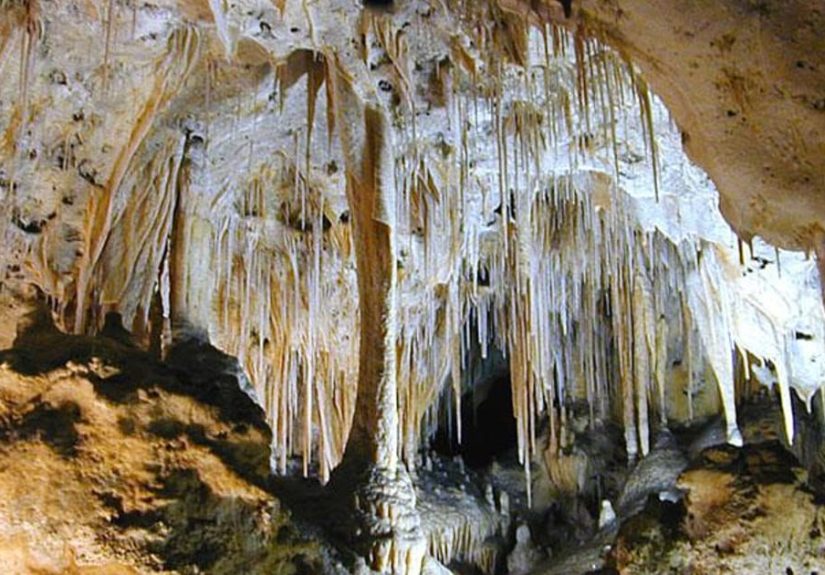
Classroom hook: have students “rank the formations” they see (stalactites, stalagmites, columns, draperies, flowstone) with a one-sentence claim and one piece of evidence.
Congratulationsyou just taught observation, argumentation, and patience in a cave. That’s basically a superhero origin story for a science teacher.
#2 Natural Entrance Trail (the legendary “down we go” route)
This is the historic way inthe dramatic portal where daylight fades and the cavern swallows the sky behind you.
It’s steep, it’s long enough to feel like an accomplishment, and it sets up the story of how early explorers experienced the cave before elevators existed.
For older students, it’s a living lesson in microclimates: notice temperature shifts, airflow, and how the cave feels different as you descend.
Teacher tip: if your group includes mixed abilities, consider the elevator for most students and reserve the Natural Entrance hike for a smaller “hike crew”
with a chaperone who can keep a consistent pace.
#3 Bat Flight Amphitheater (the best “class period” you’ll ever attend)
From Memorial Day weekend through October, the park hosts a free evening ranger talk about batsand then, if conditions cooperate, the outflight begins.
It’s one of those experiences that makes even jaded teenagers forget they’re holding a “too cool for this” face.
The program also comes with strict rules (including no electronics) to protect the bats, so it’s a great moment to teach stewardship without sounding preachy.
Nature does the convincing for you.
#4 Ranger-guided tours (for the “level up” crowd)
Guided tours can deliver the highest learning value because they’re curated, small-group, and often focused on specific cave areas or skills.
They’re also the most variable: offerings change with seasons, staffing, and conservation needs.
If you’re building an advanced field study (high school, college, club teams), this is the category that can turn a cool trip into a serious educational experience.
Rankings: Best above-ground locations (yes, the desert is part of the story)
#1 Rattlesnake Springs Picnic Area (the desert’s secret “green room”)
This spot is a lush oasis in the desert, complete with shade, picnic tables, and year-round birdwatching potential.
It’s also perfect for classes because it gives students a clear contrast: “Here’s what water does to life in a dry landscape.”
Build a quick ecology lesson around riparian habitat, migration, and why a patch of green can become an entire neighborhood for wildlife.
#2 Night sky programs (best “science after dinner” option)
Carlsbad’s night sky programming brings telescopes and ranger guidance to the kind of darkness that makes the Milky Way feel personal.
For school groups (or families), it’s an easy win: free, low-stress, and unexpectedly powerful.
Bonus: it pairs beautifully with cave lessons about darkness, adaptation, and why protecting natural night matters.
#3 Chihuahuan Desert nature stops (short, sweet, and teachable)
Above ground, the Chihuahuan Desert is your outdoor lab for adaptations: waxy leaves, water storage, heat management, and “how to live where the sun has opinions.”
For younger grades, turn it into a scavenger hunt (textures, shapes, seed strategies). For older grades, have students design a hypothetical “desert plant”
and justify each trait.
#4 Walnut Canyon Desert Drive (amazing… when it’s open)
This scenic drive is a strong contender for “best one-hour desert sampler,” with stops that highlight the region’s deep time and human stories.
But it has been closed due to flood damage, and reopening timing can be uncertainso rank it as a “check current conditions” experience rather than a guaranteed one.
Rankings: Best nearby basecamp locations (where you regroup, refuel, and re-hydrate)
#1 Carlsbad, New Mexico (the practical champion)
Carlsbad is the main hub for lodging, food, and “we forgot sunscreen” supply runs.
For school groups, it’s also a logistical advantage: more bus-friendly services, more meal options, and fewer “where do we even find…” surprises.
#2 White’s City (closest, simplest, most limited)
White’s City sits near the park turnoff and can be useful for convenience. Think of it as “proximity over variety.”
If your priority is early entry times and minimizing drive time, it can work wellespecially for short itineraries.
#3 Guadalupe Mountains National Park (the best two-park combo)
If your trip includes an extra day, pairing Carlsbad Caverns (underground geology and cave ecosystems) with Guadalupe Mountains (surface geology, desert-to-mountain transitions)
creates a “whole system” lesson. It’s also just a wildly satisfying before-and-after: caves below, peaks above.
School class rankings: The best Carlsbad Caverns experiences by grade band
“School classes” can mean two things here: (1) which grade levels get the best-fit learning experiences, and (2) which class formats
(ranger program, self-guided lab, junior ranger, astronomy night) work best for different groups. Let’s cover both.
Top grade-fit experiences (ranked)
-
Third grade: Bat biology & ecology ranger program
Best for: life science, ecosystems, adaptation, and “bats are actually heroes” messaging. -
Second grade: Fossils & paleontology ranger program
Best for: deep time, fossils, and hands-on learning that feels like discovery. -
Fourth grade: Habitats, formations, wildlife, and human history program
Best for: big-picture integrationgeology + biology + people + stewardship. -
Grades 5–8: Self-guided “Big Room as a science lab”
Best for: observation notebooks, claim-evidence reasoning, and systems thinking. -
Grades 9–12: Cave formation + conservation case studies
Best for: chemistry/earth science links, human impacts, and resource management debates. -
College/advanced groups: Karst science, cave management, and research ethics
Best for: connecting geology, ecology, policy, and real-world conservation constraints.
Best class formats (so your trip actually runs smoothly)
| Format | Best grades | Why it works | Pro tip |
|---|---|---|---|
| Ranger classroom program | 2–4 | Hands-on, standards-aligned, structured | Schedule well in advance and build a short pre-lesson at school. |
| Self-guided cavern lab | 5–12 | Flexible pacing, student-led inquiry | Assign roles: navigator, timekeeper, photographer (outside bat zones), note-taker. |
| Junior Ranger pathway | 2–7 | Gamified learning with stewardship baked in | Use it as a “choose your quest” menu rather than a worksheet marathon. |
| Bat Flight Program | All (with adult supervision) | High engagement, unforgettable wildlife learning | Prep students for the no-electronics rule so it feels like respect, not punishment. |
| Night sky program | All (kids with adults) | Easy, inspiring, cross-curricular (science + wonder) | Bring red-lens lights if you have them and keep headlights respectful. |
Field trip “teacher moves” that prevent chaos (ranked by usefulness)
- #1 Assign chaperone pods. Small groups move better, learn better, and lose fewer water bottles.
- #2 Set a cave pace. “Slow is fast” in a crowded cavernrushing creates bottlenecks and stress.
- #3 Make stewardship visible. One reminder: stay on trails, don’t touch formations, and keep snacks for outside.
- #4 Teach the why. Caves are food-poor ecosystemssmall disruptions can matter.
- #5 Use micro-lessons. 3 minutes at a stop beats 20 minutes of lecture that turns into a herd of wandering eyes.
Mini lesson ideas you can run on-site (no fancy gear required)
1) “Formation CSI” (Grades 3–8)
Students pick one formation type they see, sketch it, and answer: “What clues tell you how it formed?”
Finish with a quick share-out: two observations, one question.
2) “Cave climate check” (Grades 6–12)
Have students note how temperature and airflow feel at different points (entrance zone vs. deeper areas).
Discuss why stable cave climates matter for ecosystemsand why caves feel like natural time capsules.
3) “Bat math” (Grades 4–12)
Use the bat program as a launchpad: estimate how many insects a colony might eat, how far bats travel,
and what that means for local agriculture and ecosystems. It’s math with wingsliterally.
Experience Add-On: of “what it feels like” at Carlsbad Caverns
You pull into the park and the desert looks almost too normal, like the landscape is trying to keep a straight face. Scrubby plants. Bright sky.
A breeze that feels like it’s been practicing its dry humor. And then you walk toward the Natural Entrance, and the earth basically says,
“Oh, you wanted normal? That’s adorable.”
The opening is enormousless like a doorway, more like the planet forgot to install a lid. As you start down, the light changes in a way you can’t really
recreate in a classroom. It’s not just dim; it’s layered. The last sharp sunlight clings to the edge of the rock behind you, while the air ahead cools down
and thickens with silence. Every switchback feels like a page turn: you’re leaving weather behind and entering geology.
The first time you see a big chamber, your brain does that helpful thing where it tries to compare it to something familiarcathedral, stadium, spaceship hangar.
But then you realize the comparison is the problem. This place isn’t pretending to be anything else. It’s limestone, time, water chemistry, and gravity
all collaborating for a few million years without asking anyone’s opinion. Suddenly the word “formation” feels like an understatement. These aren’t decorations.
They’re receipts. Proof that the world has been quietly busy while we were up top inventing email.
On the Big Room Trail, you start to notice how everyone becomes a better version of themselves underground. People lower their voices. Kids stop sprinting
(okay, they stop sprinting as much). Even the most distracted student pauses to stare at a column or a drapery and whispers, “No way,” like they’ve
discovered a secret level in a video game. You can almost feel attention returning to the roombecause the room is the size of a small universe and it refuses
to be ignored.
If you stay for the Bat Flight Program, the vibe flips from “awe” to “anticipation.” Everyone faces the cave mouth at dusk like they’re waiting for a curtain to rise.
The ranger talk makes bats feel real and important, not just spooky silhouettes in old cartoons. And then it happens: a stream of motion pours out into the sky.
You don’t just watch ityou listen to it, because people around you are reacting in tiny bursts: laughter, gasps, the occasional “Whoa!” that escapes before
anyone can act cool again. And since electronics are off-limits, you’re not filming it. You’re actually there. Your eyes do the saving.
Later, back above ground, the desert feels different. Not because it changedbecause you did. You start noticing small things: how plants hold on to water,
how shadows stretch, how the night sky looks unfairly sharp. The best part is realizing Carlsbad Caverns isn’t just a cave trip. It’s a perspective trip.
It ranks high not only because it’s stunning, but because it makes you feel time in your bonesand then sends you home with stories that sound exaggerated,
until someone goes and sees it for themselves.
Conclusion
If you’re building your own “best of Carlsbad Caverns” list, start with the Big Room for maximum payoff, add the Natural Entrance if your legs (and lungs) are game,
and don’t sleep on the bat program if you’re visiting in season. For educators, the park shines as a living classroom: younger grades thrive with structured ranger programs,
older students thrive with inquiry-based cavern labs, and everyone benefits from learning how fragile cave ecosystems can be.
In short: Carlsbad Caverns ranks high because it’s not just a place you visitit’s a place that rearranges your sense of scale.