Table of Contents >> Show >> Hide
- Why Pork + Shiitake Is a Dumpling Power Couple
- Ingredients and Tools
- Recipe: Chinese Steamed Dumplings with Pork and Shiitake
- Technique Notes That Make a Big Difference
- Make-Ahead, Freezing, and Reheating
- Variations (Because Dumplings Love Creativity)
- FAQ
- Real-Life Dumpling Experiences (500+ Words of “Yes, I’ve Been There”)
- Conclusion
If you’ve ever sat at a dim sum table watching bamboo steamers stack up like delicious Jenga, you already know: steamed dumplings are basically edible joy. They’re warm, savory, a little fancy, and somehow still feel like comfort food you can eat in sweatpants. This recipe is my go-to “best of both worlds” dumpling: juicy ground pork plus deeply savory shiitake mushrooms, wrapped up in tender dough and steamed until the whole kitchen smells like you should be charging admission.
The goal here is simple: dumplings that taste like your favorite Chinese restaurant’s (or your best friend’s auntie’s), but made in your own kitchen without needing a culinary degreeor a dumpling-folding apprenticeship. We’ll keep it approachable, explain the “why” behind the steps, and give you options for wrappers, folding, and sauces so you can choose your own dumpling adventure.
Why Pork + Shiitake Is a Dumpling Power Couple
1) Shiitakes bring the umami (and dried shiitakes bring the microphone)
Shiitake mushrooms add a meaty, woodsy depth that makes pork filling taste more “complete.” Dried shiitakes are especially popular for dumplings because drying concentrates flavorso when you rehydrate them, you get that rich aroma plus a bonus ingredient: the soaking liquid (a.k.a. umami tea). Fresh shiitakes work too, but dried gives you that dim-sum-house vibe.
2) Pork stays juicy when you treat it like a tiny meat sponge
Great dumpling filling isn’t just “mix ingredients and hope.” The best versions are lightly emulsifiedmeaning the meat binds with seasonings and a little liquid so the bite is springy, cohesive, and juicy instead of crumbly. You’ll see this in many classic dumpling methods: mix in one direction, add liquid gradually, and stop when the filling turns sticky and uniform.
3) Steaming is gentle, forgiving, and very good at making you feel accomplished
Steaming cooks dumplings evenly without drying them out. It’s also the best choice if you want that soft, tender wrapper and plump filling (no crispy bottoms requiredthough I support crispy bottoms emotionally and spiritually).
Ingredients and Tools
Filling essentials
- Ground pork (aim for some fatjuicy dumplings are not built on “extra-lean” decisions)
- Dried shiitake mushrooms (or fresh as a backup plan)
- Green onions for freshness
- Soy sauce for salt + savoriness
- Ginger to cut richness and add zing
- Toasted sesame oil for that unmistakable dumpling aroma
- Cornstarch to help bind and keep the texture bouncy
Wrappers: store-bought or homemade
Store-bought round dumpling wrappers are the easiest path to happiness. If you want homemade wrappers, you can do it with flour and water (plus a little salt). Hot-water doughs tend to be pliable and friendly for steaming and pan-frying; cooler-water doughs are often used when you need a sturdier skin for boiling. Translation: there is no “one true wrapper,” only the wrapper that fits your plan and your patience.
Tools that help (but won’t judge you if you improvise)
- Bamboo steamer or metal steamer basket
- Parchment paper (or cabbage leaves) for lining
- Large skillet, wok, or pot to hold the steamer
- Mixing bowl, spoon, and a damp towel (dumpling skins dry out fastlike gossip)
Recipe: Chinese Steamed Dumplings with Pork and Shiitake
Yield: About 24–30 dumplings
Prep time: 45–60 minutes (faster with a dumpling buddy)
Cook time: 10–12 minutes per batch
Ingredients
For the pork and shiitake filling
- 8 dried shiitake mushrooms (about 1/2 oz)
- Warm water, for soaking
- 1 pound ground pork (80/20 is great; 70/30 is even juicier)
- 1/3 cup finely chopped green onions
- 2 tablespoons soy sauce
- 1 tablespoon Shaoxing wine (optional, but adds restaurant-style depth)
- 1 tablespoon toasted sesame oil
- 1 tablespoon neutral oil (optional, for silkier texture)
- 1 tablespoon finely grated fresh ginger
- 2 cloves garlic, minced (optional)
- 1 teaspoon sugar
- 1/2 teaspoon kosher salt (adjust to taste)
- 1/4 teaspoon white pepper (or black pepper in a pinch)
- 1 tablespoon cornstarch
- 1/4 cup mushroom soaking liquid (strained) or water/stock, plus up to 2 tablespoons more as needed
- Optional crunch: 1/4 cup finely diced water chestnuts
For the dumplings
- 24–30 round dumpling wrappers (about 3 1/2 inches)
- Small bowl of water (for sealing, especially if wrappers are dry)
- Parchment paper with holes (or cabbage leaves) for lining the steamer
Quick dumpling dipping sauce (classic)
- 2 tablespoons soy sauce
- 1 teaspoon rice vinegar
- 1 teaspoon chili oil (optional, but encouraged)
- 1 teaspoon minced garlic
- 1 teaspoon toasted sesame seeds
- 1/2 teaspoon sesame oil
- Pinch of sugar dissolved in 1 tablespoon hot water (optional but nice)
Optional peanut-chili dipping sauce (cozy and bold)
- 2 tablespoons soy sauce
- 1 tablespoon peanut butter
- 1 tablespoon chili oil
- 2 teaspoons rice vinegar
- 1 1/2 teaspoons sugar
- 1 teaspoon crushed red pepper
- Warm water, as needed to thin
Step-by-step instructions
- Soak the shiitakes. Put dried shiitakes in a bowl and cover with warm water. Soak 15–30 minutes until soft. Drain, squeeze out excess water, and finely chop the caps. Strain and save a bit of the soaking liquid for the filling.
- Build a juicy filling (the “mix with intention” step). In a large bowl, add the ground pork, salt, soy sauce, sugar, ginger, white pepper, sesame oil, and (if using) Shaoxing wine and garlic. Mix in one direction for about 30–45 seconds, until the meat looks slightly tacky. Add cornstarch and mix again until evenly distributed.
- Add shiitakes (and optional crunch). Fold in the chopped shiitakes (and water chestnuts, if using).
- Add liquid gradually. Drizzle in 1/4 cup strained mushroom soaking liquid (or water/stock) a little at a time while mixing in the same direction. The filling should look glossy and cohesivelike it could politely hold hands with itself. If it seems dry, add up to 2 more tablespoons liquid.
- Do a quick seasoning test. Cook a tiny spoonful of filling (microwave or pan) and taste. Adjust salt, soy, or ginger before you wrap 30 dumplings and regret nothing except the salt level.
- Set up your wrapping station. Keep wrappers covered with a slightly damp towel so they don’t dry out. Place a wrapper on your work surface and add about 1 heaping teaspoon filling in the center (up to 2 teaspoons if your wrappers are larger).
- Seal the dumpling (simple method). Lightly wet the edge if needed. Fold in half to make a half-moon, press to seal, and push out any air pockets. If you want pleats, pleat the front edge while keeping the back edge mostly smooth. No pleats? No problem. A tight seal beats a pretty seal every day of the week.
- Prep the steamer. Line steamer baskets with parchment paper punched with holes (or use cabbage leaves). Arrange dumplings at least 1 inch apart so they don’t glue themselves together like toddlers at a birthday party.
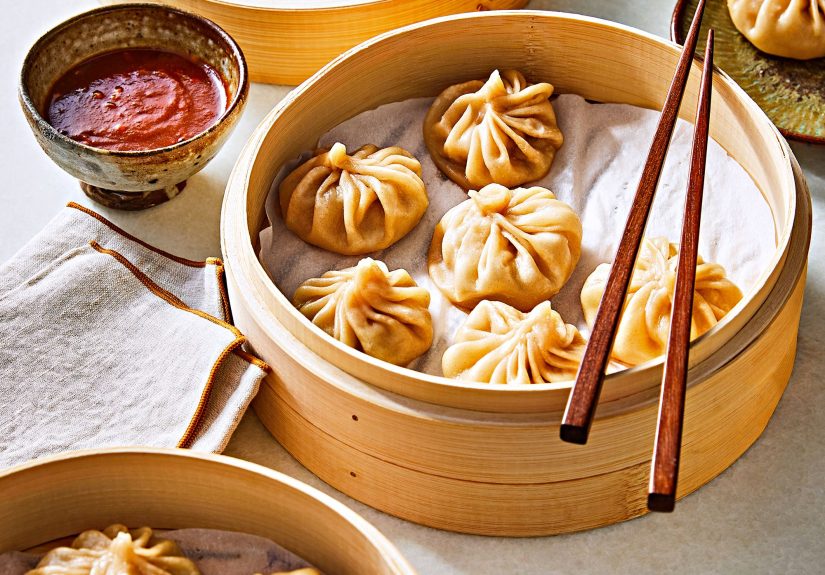
- Steam. Add about 1 inch of water to a skillet/wok/pot and bring to a steady boil. Place the steamer on top, cover, and steam:
- 10–12 minutes for fresh dumplings (typical)
- 12–14 minutes if wrappers are thicker, dumplings are larger, or you’re steaming multiple stacked baskets
- 12–14 minutes for frozen dumplings (no thawing)
For food safety, ground pork should reach 160°F in the center if you’re checking with a thermometer.
- Serve immediately. Dumplings are best hot and steamy. Once they cool, they’re still goodbut they stop being magical little pillows and start being… leftovers.
Make the dipping sauce
Classic sauce: Dissolve a pinch of sugar in a tablespoon of hot water (optional). Stir in soy sauce, rice vinegar, chili oil, garlic, sesame seeds, and sesame oil. Taste and adjust: more vinegar for brightness, more chili oil for drama.
Peanut-chili sauce: Whisk everything together. If it’s too thick, loosen with warm water until it’s dip-friendly. This one is especially good if you like a richer, “dim-sum-night-in” vibe.
Technique Notes That Make a Big Difference
Don’t fear the fat
A little fat in the pork is what makes steamed dumplings juicy instead of dry. If your pork is extremely lean, consider adding a teaspoon or two of neutral oilor mix in a small portion of slightly fattier ground pork. Some classic dim sum fillings even include extra pork fat for richness (the dumpling world is unapologetic like that).
Mixing direction is not superstition
Stirring in one direction helps the filling bind and stay cohesive, especially when you add liquid gradually. This is one of those “tiny habit, huge payoff” moves that makes homemade dumplings feel professionally made.
Prevent sticking like it’s your part-time job
- Line the steamer (parchment with holes is easy and clean).
- Leave space between dumplings.
- Don’t let the water touch the dumplingssteam is the goal, dumpling soup is not (unless you planned it).
Make-Ahead, Freezing, and Reheating
Make-ahead
You can mix the filling up to a day ahead and keep it covered in the fridge. It actually benefits from a little resting time because flavors meld and the mixture firms up, making wrapping easier.
Freezing (highly recommended)
Freeze dumplings uncooked on a parchment-lined tray until solid, then transfer to a freezer bag/container. Cook straight from frozenno thawingso they don’t get soggy or stick together.
Reheating cooked dumplings
The best way to reheat is steaming again for a few minutes. Microwave works in a pinch: sprinkle a few drops of water over them and cover loosely so they don’t dry out.
Variations (Because Dumplings Love Creativity)
- Dim sum-style open-top dumplings: Use wonton wrappers, place filling in the center, gather sides up, and leave the top open (shumai-style).
- Add shrimp: Finely chopped shrimp plus pork makes a classic restaurant-style filling.
- Add cabbage: Finely shred, salt, squeeze out moisture, then mix in for a lighter, slightly sweeter bite.
- Spice it up: Add a little chili crisp or chili garlic sauce to the filling for gentle heat.
FAQ
Can I use fresh shiitakes instead of dried?
Yes. Sauté them briefly to reduce moisture, cool, then chop and add. Dried shiitakes have a deeper, more concentrated flavor, but fresh still makes a great dumpling.
What if I don’t have a bamboo steamer?
A metal steamer basket works perfectly. Even a makeshift setup can work: a heat-safe plate on a rack inside a pot with a tight lid. Just keep water below the plate and maintain a steady boil.
How do I know they’re done without a thermometer?
Cut one dumpling open: the pork should be opaque and fully cooked through. A thermometer is the most reliable way, though, especially if dumplings vary in size.
Real-Life Dumpling Experiences (500+ Words of “Yes, I’ve Been There”)
The first time you make steamed dumplings at home, two things happen almost immediately: (1) you feel wildly competent, like you should get a certificate, and (2) you realize dumplings are basically a group project. Could you do it alone? Absolutely. Should you recruit someone and call it a dumpling party? Also absolutely. Because dumplings have a magical way of turning a normal evening into a tiny celebrationflour on the counter, wrappers under a damp towel, and everyone arguing (politely) about pleat aesthetics.
In my experience, pork-and-shiitake dumplings are the perfect “gateway dumpling.” They’re familiar enough that picky eaters don’t panic (“It’s pork! It’s mushrooms! Nothing weird!”), but flavorful enough that dumpling nerds get excited. Shiitakes do this sneaky thing where they don’t announce themselves loudly; they just make the pork taste more like itself, only better. Like adding a bass line to a songno one points at it, but everybody feels it.
The biggest rookie mistake I see (and have personally committed with enthusiasm) is overfilling. You look at that wrapper and think, “Surely you can handle more, little circle.” And the wrapper is like, “I am but a humble carbohydrate.” Overfilling leads to torn seams, filling escaping into the steamer, and dumplings that look like they lost a fight. The good news? Ugly dumplings are still delicious. The even better news? Once you learn the “right amount” (usually 1 heaping teaspoon for medium wrappers), your success rate skyrockets.
The second most common hiccup is drying wrappers. Dumpling skins wait for no one. You answer a text, get distracted, and suddenly your wrapper edges feel like paper. The fix is low-tech: keep wrappers covered with a slightly damp towel, and work in small batches. It’s not glamorous, but it saves you from that heartbreaking moment when you press to seal and the edge cracks like it’s offended by your life choices.
Flavor-wise, the turning point for my dumplings was learning to test the filling before wrapping everything. It feels dramatic to cook a tiny spoonful, but it’s the difference between “wow, these are incredible” and “huh… why are these kind of bland?” Dumpling filling should taste a little punchier than you think because the wrapper is going to mellow everything out. Once you nail the salt/soy balance and that ginger lift, the dumplings basically start selling themselves.
And finally: freezing dumplings is the ultimate future-you gift. There is nothing quite like opening your freezer, spotting a bag of homemade pork-and-shiitake dumplings, and realizing dinner can be “steam for 12 minutes” instead of “existential dread and cereal.” Cook them straight from frozen, make a quick sauce, and suddenly it’s a weeknight that feels like a win. Honestly, dumplings are not just foodthey’re a strategy.
Conclusion
Chinese steamed dumplings with pork and shiitake are one of those dishes that look impressive but are totally doable at home. Once you’ve made them once, you’ll realize the hardest part is not techniqueit’s stopping yourself from eating the first batch before the second batch is done. Make them for a cozy dinner, a weekend project, or a dumpling party where “perfect pleats” are optional but “good company” is mandatory.