Table of Contents >> Show >> Hide
- Why a Complete Backyard Renovation Starts With a Master Plan
- Fix the Functional Problems First
- Build the Backbone With Hardscape
- Create Outdoor Rooms That Make Sense
- Privacy, Shade, and Comfort Are Not Optional
- Landscaping That Looks Great Without Running Your Life
- Outdoor Lighting Makes the Renovation Feel Finished
- Budgeting a Complete Backyard Renovation Without Panic
- A Step-by-Step Backyard Renovation Roadmap
- Conclusion
- Backyard Renovation Experiences: What It Really Feels Like
- SEO Tags
A complete backyard renovation sounds glamorous until you’re standing in the grass with a tape measure, a Pinterest board, and a sinking suspicion that your “simple refresh” may now involve drainage, lighting, stonework, and at least one debate about whether a pergola counts as a necessity. Still, that is exactly why a full backyard makeover can be so satisfying. Done well, it turns an ignored patch of land into an outdoor space that feels like a real extension of your home.
The best backyard renovations are not just pretty. They are functional, comfortable, durable, and tailored to the way people actually live. Maybe you want room for grilling and summer dinners. Maybe you need a kid zone, dog-friendly landscaping, better privacy, or a place to sit outside without feeling like you’re on display for the whole block. A smart plan balances hardscape, plants, shade, lighting, storage, and circulation so the yard works during the day, after dark, and in every season that your climate allows.
If you are dreaming big, start with this good news: a complete backyard renovation does not mean throwing random upgrades at the lawn and hoping it all magically becomes a magazine spread. It means creating a master plan, solving the boring-but-important issues first, and building beauty on top of function. Translation: fix the soggy corner before you buy the string lights.
Why a Complete Backyard Renovation Starts With a Master Plan
The biggest mistake homeowners make is shopping before planning. It is easy to fall in love with a fire pit, an outdoor kitchen, or fancy patio furniture. It is much less exciting to map sun exposure, drainage flow, utility access, and walking paths. Unfortunately, the yard does not care what is exciting. It rewards planning.
Begin by treating your backyard like an outdoor floor plan. Measure the full space. Note slopes, low spots, existing trees, views you want to highlight, and views you would rather pretend do not exist. Track how the sun moves across the yard. Some areas may be perfect for a dining patio, while others are better for shade-loving plants or a quiet lounge spot.
From there, divide the yard into zones. One zone might be for entertaining, another for cooking, another for play, and another for planting. This does two helpful things at once: it makes the yard feel intentional, and it prevents the classic “everything shoved into one corner” problem. Even a small backyard can feel larger when it has distinct spaces connected by paths, plant beds, or subtle material changes.
Questions to Ask Before Designing Anything
- How do you actually want to use the yard every week?
- Do you need more shade, more privacy, or less maintenance?
- Will you host large groups or mostly use the space with family?
- Do kids, pets, or older adults need safer surfaces and clearer paths?
- What can stay, what should go, and what is worth saving?
A great renovation is not about adding every possible feature. It is about giving each square foot a job.
Fix the Functional Problems First
Before you choose pavers, paint colors, or outdoor sofas, deal with the problems that make the yard frustrating. These are the invisible upgrades that turn a backyard from “looks nice in photos” to “works beautifully in real life.”
Drainage
If water pools near the house, under the deck, or in the lawn after rain, that issue belongs at the top of the list. A beautiful backyard with bad drainage is like putting luxury wheels on a shopping cart. It may still wobble terribly. Grading, swales, French drains, permeable surfaces, and rain gardens can all help manage runoff. Patios also need the right slope so water moves away from the house rather than toward your foundation.
Soil and Irrigation
Healthy soil does more than help plants grow. It improves drainage, supports root health, and reduces how much water and maintenance your landscape needs. If you are adding planting beds, this is the time to improve soil, install drip irrigation, and group plants with similar water needs. That approach makes the yard easier to care for and far less wasteful.
Utilities and Access
Thinking about an outdoor kitchen, landscape lighting, a hot tub, or a built-in grill? Plan for electrical, gas, and water access early. It is much easier to run utility lines before hardscape goes in than after your new patio is finished and looking smugly expensive.
Build the Backbone With Hardscape
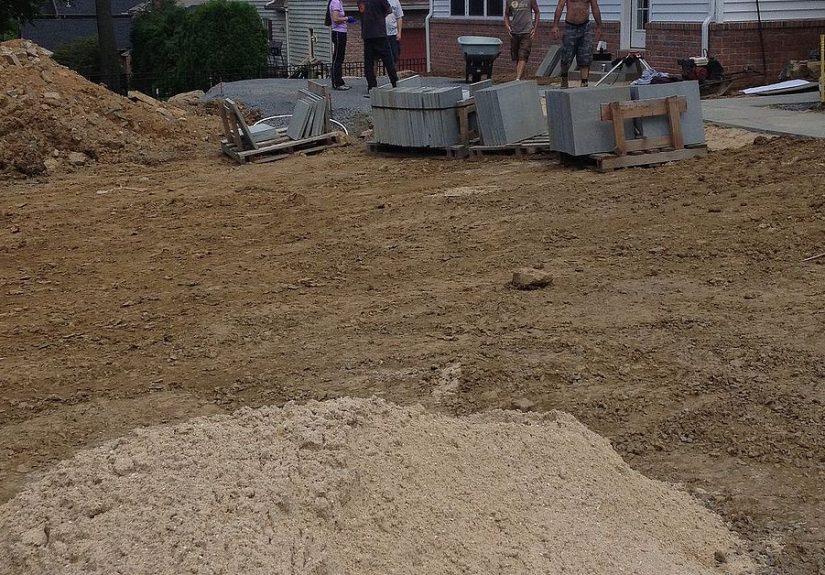
Hardscape is the structure of the backyard renovation. This includes patios, walkways, retaining walls, decks, steps, edging, and any built elements that shape movement and define use. Think of hardscape as the skeleton. Without it, the space can feel loose and unfinished, no matter how nice the plants are.
Patio or Deck?
Choose based on your yard conditions and how you want the space to feel. A patio often suits flat or gently sloped areas and creates a grounded, substantial look. It works well for dining, grilling, and fire pit seating. A deck can be ideal when the yard drops off, when the house sits higher than the grade, or when you want a warm, elevated transition from indoors to outdoors.
Many of the best complete backyard renovation projects use both. For example, a deck off the back door can lead down to a paver patio surrounded by planting beds. That layered approach helps the yard feel more architectural and more usable.
Choose Materials That Fit Your Home
Backyard design works best when it feels connected to the house rather than copied from a resort brochure with no sense of context. Modern homes often pair well with large-format pavers, clean lines, and restrained planting. Traditional homes can handle brick, natural stone, classic wood tones, and cottage-style borders. Rustic homes often look best with textured materials, gravel paths, timber details, and softer edges.
Durability matters too. Select materials based not only on style, but also on slip resistance, climate exposure, maintenance needs, and how often the space will be used. The goal is not just a pretty reveal. The goal is a yard that still looks good after muddy shoes, spilled drinks, and two summers of actual life.
Create Outdoor Rooms That Make Sense
The phrase “outdoor room” gets tossed around a lot, but it is useful. A successful backyard renovation often feels less like one giant empty space and more like a sequence of destinations.
Common Backyard Zones
- Dining area: best near the house or outdoor kitchen for convenience
- Lounge area: ideal for softer seating, shade, and evening lighting
- Cooking zone: needs ventilation, prep space, and safe clearances
- Fire feature zone: works best with comfortable circulation and proper setbacks
- Play area: should be visible, durable, and easy to supervise
- Garden zone: can be edible, ornamental, pollinator-friendly, or all three
The key is flow. Each zone should feel connected but not crowded. A path, a low wall, a pergola, or a change in material can create separation without making the yard feel chopped into awkward pieces.
Privacy, Shade, and Comfort Are Not Optional
People often focus on surfaces and plants but underestimate how much comfort shapes the success of a backyard. If the space is too exposed, too hot, or too bright, you simply will not use it enough to justify the renovation.
Privacy
Privacy can come from fencing, hedges, ornamental grasses, climbing vines, privacy walls, trellises, or pergolas with screens or drapes. The smartest designs mix methods. A fence alone can feel hard and boxy. Plants alone can take time to fill in. Together, they create softness, screening, and a more finished look.
Shade
Shade structures are game changers in a complete backyard renovation. Pergolas, umbrellas, shade sails, covered patios, and strategically placed trees all make the space more usable during hot weather. Shade is not just about comfort. It also protects furniture, reduces glare, and can help define a zone visually.
Seating and Storage
Do not stop at attractive seating. Think practical seating. Built-in benches, storage ottomans, deck boxes, and under-deck storage can keep cushions, games, and grilling gear from becoming part of the landscape in the worst possible way.
Landscaping That Looks Great Without Running Your Life
A complete backyard renovation should not leave you with a gorgeous new hobby you never wanted. Choose a planting strategy that matches the amount of time you realistically want to spend maintaining it.
Smart Planting Principles
- Use the right plant in the right place based on sun, shade, moisture, and soil
- Group plants with similar water needs
- Mix evergreen structure with seasonal color
- Include groundcovers or mulch to suppress weeds and reduce water loss
- Use trees and shrubs to anchor the design, not just flowers
Native and climate-appropriate plants are often the MVPs of a low-maintenance backyard. They tend to handle local conditions better, support pollinators, and reduce the drama around watering and plant replacement. You can still have a lush look without creating a landscape that behaves like a full-time internship.
Consider Sustainable Features
If you want your renovation to work harder, sustainable landscape elements are worth considering. Permeable pavers, rain gardens, drip irrigation, mulched planting beds, and drought-tolerant planting can reduce runoff and improve efficiency. A rain garden, for example, can turn a soggy problem area into a planted feature that actually contributes to the design.
Outdoor Lighting Makes the Renovation Feel Finished
Nothing exposes an incomplete backyard faster than darkness. Lighting is what turns a daytime yard into an evening destination. It also improves safety and helps highlight all the money you just spent making the place look good.
Layer Your Lighting
- Path lights for walkways and transitions
- Step and deck lights for safety
- Spotlights or uplights to highlight trees, walls, or focal plants
- String lights or decorative fixtures for atmosphere
- Task lighting near grills, prep areas, and outdoor kitchens
The best backyard lighting is layered, subtle, and intentional. You want enough brightness to move safely and enough warmth to create mood. You do not want the backyard to look like a car dealership grand opening.
Budgeting a Complete Backyard Renovation Without Panic
Complete backyard renovation costs vary wildly because “complete” means different things to different homeowners. For one person, it means grading, a new patio, fresh planting, and lighting. For another, it means an outdoor kitchen, custom deck, pergola, drainage system, retaining wall, and professionally designed landscape. Same phrase. Very different invoice.
The smartest budgeting strategy is to separate needs from luxuries and phase the project when necessary. Start with structural and site issues first, then hardscape, then utilities, then planting and décor. This keeps you from spending heavily on finishes before the foundation of the design is sound.
Items That Commonly Raise the Budget
- Drainage correction and grading
- Retaining walls and major excavation
- Electrical, gas, and plumbing work
- Custom decks, pergolas, and outdoor kitchens
- Premium stone, pavers, or built-in features
- Large tree removal or site clearing
If money is tight, focus on the changes that improve use the most. A well-designed patio, smarter planting, better lighting, and privacy upgrades can dramatically change the feel of a yard without requiring a reality-show budget.
A Step-by-Step Backyard Renovation Roadmap
1. Assess the Site
Measure everything. Note slopes, drainage, sun patterns, and views. Photograph the yard from multiple angles.
2. Define Your Priorities
Choose your must-haves: dining, lounging, play, gardening, privacy, or cooking.
3. Create a Layout
Map zones, traffic flow, utility needs, and focal points before selecting materials.
4. Solve Infrastructure Problems
Address drainage, grading, irrigation, and utility planning before cosmetic work begins.
5. Install Hardscape
Build patios, decks, paths, walls, edging, and structural features.
6. Add Softscape
Install trees, shrubs, perennials, lawn alternatives, mulch, and irrigation components.
7. Finish With Lighting and Furnishings
Layer in lighting, seating, textiles, storage, planters, and accessories that match the style of the home.
Conclusion
A complete backyard renovation is really about creating a better way to live at home. The most successful projects are not the ones with the most expensive features. They are the ones that solve real problems, reflect how the homeowner actually uses the space, and make the backyard feel welcoming from morning coffee to late-night conversations.
When you plan carefully, prioritize function, and layer in beauty with purpose, your yard stops being leftover square footage and starts becoming one of the best rooms you have. And unlike your actual living room, this one comes with fresh air, sunset views, and far fewer arguments about coasters.
Backyard Renovation Experiences: What It Really Feels Like
There is a funny emotional arc to a complete backyard renovation. At first, it feels thrilling. You picture effortless dinner parties, glowing string lights, and the kind of backyard that makes people say, “Wow, this is amazing,” while secretly wondering if you hired a television crew. Then the real work begins, and suddenly you are discussing drainage channels with surprising intensity and learning that soil has opinions.
For many homeowners, the biggest shift happens when they stop thinking about the backyard as decoration and start thinking about it as daily infrastructure. A patio is not just a patio. It is where muddy shoes land, where the grill needs power, where chairs need enough room to move, and where puddles absolutely cannot form after every storm. Privacy is not just a design feature. It is the difference between feeling relaxed outside and feeling like you are accidentally participating in neighborhood theater.
Another common experience is realizing that the “small details” are not small at all. The width of a walkway changes how comfortable the yard feels. The height of a step matters at night. The location of a shade structure can determine whether a seating area becomes a favorite hangout or a patch of decorative regret. Homeowners often discover that the best upgrades are the ones they barely noticed on day one but appreciate every single day afterward.
There is also the pleasant surprise of how much a finished backyard changes routines. People start eating outside more often. Kids spend more time in the yard. Morning coffee moves outdoors. Weekends feel less like a search for somewhere to go and more like an invitation to stay home. That is one of the strongest signs of a successful renovation: your backyard begins to compete with your indoor rooms, and sometimes it wins.
Of course, every renovation teaches a few lessons. Budgeting always feels easier before the utility work enters the chat. Plants look tiny at installation and somehow enormous when it is time to prune them. And once you add lighting, you will wonder why you waited so long. The yard suddenly feels complete, welcoming, and usable in a totally different way.
In the end, the experience of a complete backyard renovation is rarely about one dramatic reveal. It is about a hundred smart decisions coming together to make life feel easier, prettier, and more comfortable. That is what homeowners remember most. Not just how the renovation looked, but how it changed the way they lived in the space every day.