Table of Contents >> Show >> Hide
- What is the “Dinner Or Drinks” Chinoiserie Dog Bowl?
- Why chinoiserie works so well for pet bowls
- Ceramic dog bowl safety: what actually matters
- How to choose the right size (without overthinking it… too much)
- Cleaning and care: the unglamorous secret to a “pretty” dog bowl
- Styling ideas: turning a feeding station into a “pet bistro”
- Who should buy a Dinner Or Drinks Chinoiserie Dog Bowl?
- Bottom line
- Experiences related to the “Dinner Or Drinks” Chinoiserie Dog Bowl (what pet parents tend to notice)
Somewhere between “my dog is my child” and “why is there a chew toy in my toaster,” a new category of home décor has quietly taken over:
pet stuff that actually looks good. Enter the Dinner Or Drinks Chinoiserie Dog Bowla hand-painted, blue-and-white-inspired (and sometimes green or pink) ceramic bowl that treats your dog’s feeding station like it’s part of your design plan… not a sad corner of the kitchen.
This article breaks down what the bowl is, why the chinoiserie style keeps showing up everywhere (including your dog’s dinner), how to choose the right size,
and what “food-safe” should mean in real life. We’ll also get practical about cleaning, glaze safety, and whether a ceramic dog bowl is the right move for your pet’s habits
(some dogs eat politely; others act like the bowl owes them money).
What is the “Dinner Or Drinks” Chinoiserie Dog Bowl?
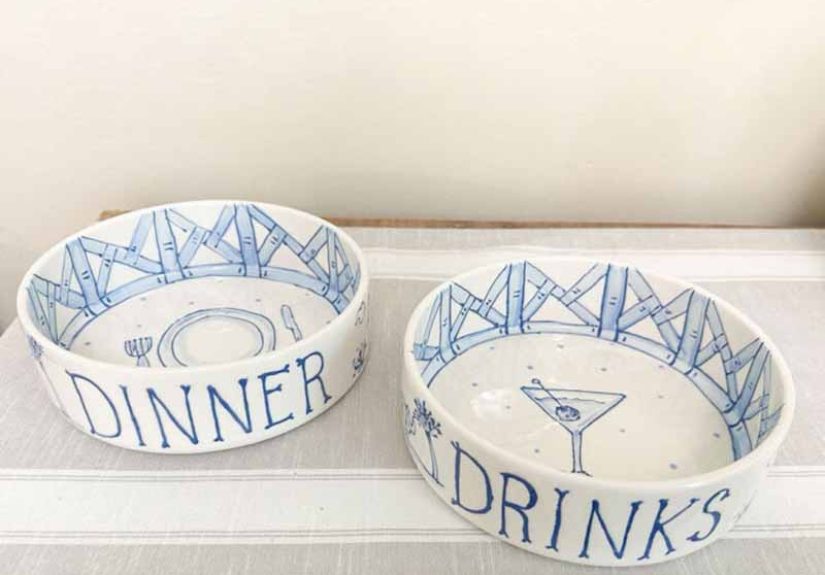
The “Dinner Or Drinks” concept is exactly what it sounds like: you can choose a bowl labeled Dinner (food) or Drinks (water),
so your dog has a matching set that looks intentional instead of “two random bowls I panic-bought at the pet store.”
The bowls are offered in multiple colorways and sizes, and they’re hand-painted to orderso they have that boutique, artisan feel rather than factory-perfect sameness.
Based on current maker details, the bowl is available in four sizesMini, Small, Medium, and Largeand offered in Blue, Green, and Pink.
The listed measurements and capacities are:
| Size | Approx. Dimensions | Capacity | Best For |
|---|---|---|---|
| Mini | 4.25" diameter x 2" tall | Not listed | Toy breeds, snacks, toppers, travel portions |
| Small | 6" x 2" | 18 oz | Small dogs, measured meals, smaller water portions |
| Medium | 7.75" x 2.25" | 1.2 L (about 40.6 oz) | Medium dogs, water bowl for multi-pet homes |
| Large | 9.75" x 2.75" | 1.5 L (about 50.7 oz) | Large dogs, big water drinkers, “splash zone” pups |
Care-wise, the maker notes that the bowls use lead-free, food-safe glazes. Dishwasher use is described as possible, but
handwashing is recommended to keep the piece looking its best over time (because dishwashers are basically tiny, steamy mosh pits for ceramics).
Why chinoiserie works so well for pet bowls
Chinoiserie is a Western decorative style inspired by (and often loosely interpreting) East Asian art motifsthink blue-and-white porcelain patterns,
florals, birds, pagodas, and scrolling botanicals. It originally took off in Europe as trade increased and imported porcelain became a status symbol.
In modern interiors, it reads as classic, layered, and a little bit glamorouslike your home has its life together even if your laundry situation says otherwise.
The reason it translates so smoothly to a dog bowl is simple: small object, big visual impact. A bowl sits on the floor, but it lives in your sightline.
If the kitchen is the heart of the home, your dog’s feeding station is the… slightly messy appendix. Chinoiserie gives that corner a “designed” feel without asking you
to remodel anything.
A quick cultural note (because style has history)
Chinoiserie is not the same as authentic Chinese decorative traditionit’s an European invention shaped by trade, fascination, and plenty of historical misunderstanding.
If you love the look, greatjust appreciate it as a Western design movement inspired by East Asian aesthetics rather than “real Chinese décor.”
Thoughtful styling starts with knowing what you’re actually styling.
Ceramic dog bowl safety: what actually matters
A good dog bowl isn’t just cute. It’s a food-contact item that gets exposed to saliva, acids in food, scrubbing, heat, and time.
When you’re shopping a ceramic dog bowlespecially a decorative onethere are three practical questions worth asking:
- Is the glaze food-safe (and lead-free)?
- Will the bowl chip, crack, or craze with normal use?
- Can I clean it thoroughly and often enough?
1) “Lead-free” and “food-safe” are not just cute adjectives
Lead in ceramic glazes is a real, documented risk in some pottery and ceramicware. U.S. regulators have long treated
leachable lead (lead that can migrate from a glazed surface into food/drink) as a serious issue, especially with
traditional or decorative pottery that isn’t made to modern food-contact expectations.
The practical takeaway: buy from reputable makers, look for clear “food-safe” statements, and avoid using any ceramic bowl that’s heavily worn, cracked, or visibly compromised.
Even when a piece is labeled food-safe, your job is to keep it that way: don’t use abrasive scrubbers that scratch glaze, and retire the bowl if chips or crazing appear.
Tiny cracks can become bacteria-friendly hideouts, and no one wants a “surprise science experiment” under the rim.
2) Ceramic vs. stainless steel: which is “best”?
Many veterinary and pet-care sources consistently point to stainless steel as the most durable, hygienic, and easy-to-clean option.
It doesn’t chip, it resists scratching (especially higher-quality bowls), and it can handle frequent washing.
Ceramic bowls, on the other hand, win on weight (less sliding), aesthetics, and the “this matches my home” factorwhile losing points for breakability.
So the smarter framing isn’t “ceramic is bad” or “stainless steel is ugly.” It’s:
ceramic is great for the right dog and the right owner habits.
If you’re willing to clean regularly, inspect for damage, and treat it like a real piece of tableware, ceramic can be a stylish, functional choice.
How to choose the right size (without overthinking it… too much)
Size matters for comfort, mess control, and portion sanity. A bowl that’s too small turns into a kibble avalanche.
A bowl that’s too big can encourage sloppy eating (for messy dogs) or constant “refill pressure” (for humans with functioning eyeballs).
Use these quick rules
- Mini: Tiny dogs, treats, toppers, or short travel meals. Great if you measure portions tightly.
- Small (18 oz): Most small dogs’ food portions and modest water servings; also good for cats who like wide bowls.
- Medium (~40.6 oz): A strong “main water bowl” for many households, or food for bigger eaters.
- Large (~50.7 oz): Big dogs, big drinks, or dogs who somehow turn hydration into performance art.
Practical tip: if you’re buying a matching “Dinner” + “Drinks” set, consider sizing them differently. Many pet parents like a slightly larger water bowl
(because refilling water ten times a day is a hobby nobody asked for).
Cleaning and care: the unglamorous secret to a “pretty” dog bowl
Here’s the truth: the prettiest bowl in the world still needs to be cleaned like it’s holding food… because it is.
Pet bowls can build up biofilm (that slippery film you feel when you “quick rinse” and pretend it counts).
And since pets lick the bowl, drop food, and return later like it’s a 24/7 buffet, bacteria can multiply faster than you’d think.
A realistic cleaning schedule
- Wet or raw food: Wash after every meal (no exceptions; sorry).
- Dry food bowls: Wash daily.
- Water bowls: Wash daily (and sooner if you see slime, crumbs, or a mysterious floating “gift”).
Dishwasher or handwash?
If the bowl is labeled dishwasher-safe, a dishwasher can be a strong optionespecially with high-heat or sanitizing cycles.
However, many experts recommend separating pet bowls from human dishes to reduce cross-contamination risk (particularly if your pet eats raw food).
If you handwash, use hot soapy water, scrub thoroughly, and let the bowl dry completely.
For artisan ceramic bowls specifically, handwashing is often recommended for longevity. Heat and harsh detergents can dull finishes over time,
even when the glaze itself is dishwasher-safe. In other words: your dishwasher won’t necessarily destroy it, but it also won’t treat it gently.
Styling ideas: turning a feeding station into a “pet bistro”
If you’re buying a chinoiserie dog bowl, you’re probably not aiming for “college apartment vibes.”
Here are design-friendly ways to make the feeding area look intentionalwithout turning your kitchen into a theme park.
1) Build a tiny “bar setup” (yes, for your dog)
- Pair “Dinner” + “Drinks” bowls in the same color for a matched set.
- Add a simple tray or mat underneath to protect floors and frame the look.
- Keep treats in a coordinating jar so the corner reads like a styled vignette, not a spill zone.
2) Let the bowl echo something else in the room
- Pick the bowl color that matches your backsplash, tea towels, or a nearby piece of art.
- If your home leans neutral, the classic blue-and-white bowl becomes a crisp accent instead of “random color on the floor.”
3) Make cleanup part of the system
- Keep a dedicated sponge or brush for pet bowls (your future self will thank you).
- Store extras so you can rotate clean bowls in without panic-washing at 7:58 a.m.
Who should buy a Dinner Or Drinks Chinoiserie Dog Bowl?
This bowl is a great fit if you want something that blends function + aesthetic, and you’re okay treating it like real ceramicware.
It’s especially appealing for pet parents who enjoy:
- Handmade details and a one-of-a-kind look
- A “designed” feeding area that doesn’t clash with the kitchen
- Heavier bowls that don’t slide easily
- Buying a matched food-and-water set for clarity (and cuteness)
You might skip ceramic (or keep it for water only) if your dog is a bowl-flipper, a chewer, or a “drop the bowl to announce dinner” type.
In those cases, stainless steel often wins on durability and stress reduction.
Bottom line
The Dinner Or Drinks Chinoiserie Dog Bowl sits at a sweet spot where pet essentials meet home décor: it’s designed to be used daily,
while still looking like it belongs in a curated space. If you choose the right size, keep up with cleaning, and inspect the glaze like you would with any ceramic dish,
it can be both a practical feeding solution and a small upgrade to your everyday home life.
And honestly? Your dog may not understand chinoiserie, but they’ll absolutely understand having a dedicated “Drinks” bowl that stays fresh and clean.
(They’ll still drink from a puddle if given the chance, but let’s focus on progress.)
Experiences related to the “Dinner Or Drinks” Chinoiserie Dog Bowl (what pet parents tend to notice)
Since this bowl is as much about lifestyle as it is about dinner, the real “experience” shows up in the little daily moments.
Pet parents who switch to a matched “Dinner” and “Drinks” setup often say the biggest surprise is how much calmer the feeding routine feels.
There’s something oddly satisfying about the dog having two clearly labeled bowlslike your kitchen just got promoted from “chaos cafeteria” to “tiny bistro.”
If you have kids (or a partner who claims they “didn’t know which bowl was which”), the labels can reduce the guessing game fast.
The second common reaction: the bowl becomes part of the room. With chinoiserie patterns, the feeding station stops feeling like a temporary pet corner and starts looking
like a deliberate décor moment. People who already love blue-and-white accentsginger jars, patterned napkins, porcelain vasestend to place the bowl where it visually
“belongs,” often near the kitchen island or a breakfast nook. It can feel a little silly to style a dog’s bowl, until you see that it actually looks nice in photos
(and yes, that matters in the age of spontaneous “my dog being cute” pictures).
On the practical side, many pet owners report ceramic bowls feel steadier than lightweight options. Dogs who push bowls around with their noseespecially when
chasing the last few kibblesmay create less sliding and clattering. That said, ceramic also brings a new habit: gentle handling. Owners who are used to tossing
stainless bowls into the sink like a basketball learn quickly that artisan ceramics prefer a calmer lifestyle. A lot of people end up adopting a simple routine:
quick rinse right after the meal, then a proper wash later, or rotating between bowls so one can be cleaned without rushing.
Cleaning experiences vary depending on how you feed your dog. If you serve wet food, the consensus is that frequent washing is non-negotiableceramic looks beautiful,
but leftover wet food plus time equals “science.” For dry food and water, people often find daily cleaning doable, especially if they keep a dedicated brush by the sink
(the “pet bowl brush” is not glamorous, but it’s effective). Some owners run dishwasher-safe ceramics through high heat occasionally, but many prefer handwashing
to keep the finish looking crisp longerespecially if the bowl’s main appeal is the hand-painted design.
Another surprisingly common experience: the bowl can influence how you set up the whole station. Once you have a pretty bowl, you might add a mat that doesn’t clash,
a tray that catches drips, or a small container for kibble scoops so the area stays tidy. It’s not that the bowl forces you to become an organized person.
It’s that it quietly invites you to pretend you are one. And on good days, that pretend can become realat least in the dog corner.
Finally, there’s the emotional “why this feels worth it.” For many people, a dog bowl is a daily touchpoint of care.
You fill it, wash it, refill itover and over. When that object is both functional and genuinely nice to look at, it adds a small moment of enjoyment to routine tasks.
Your dog is still going to act like they haven’t eaten in 12 years. But you might enjoy the process a bit moreand that’s a valid lifestyle upgrade.