Table of Contents >> Show >> Hide
- The Mystery Beneath Dry Tortugas
- How Divers Solved the Puzzle
- The Crew’s Harsh Survival Story
- What the Shipwreck Reveals About the 18th Century
- Underwater Archaeology Is Not Treasure Hunting
- Why Legal Protection Matters
- The Deep Mystery Was Solved by Patience
- Experiences Related to a Sunken 18th-Century Warship
- Conclusion
Some mysteries arrive with dramatic music, moonlit fog, and a detective in a trench coat. Others sit quietly under warm blue water for nearly three centuries, wearing a coat of coral and waiting for patient divers to ask the right questions. That is exactly the kind of mystery surrounding HMS Tyger, an 18th-century British warship whose remains were identified in Dry Tortugas National Park off the Florida Keys.
The story has all the ingredients a maritime history fan could want: a warship, old logbooks, stranded sailors, a reef with terrible timing, and underwater archaeologists who refused to treat “probably” as good enough. The shipwreck had been found decades earlier, but its true identity remained uncertain until new research connected scattered evidence on the seafloor with the written record. In other words, the ocean had kept the receipts.
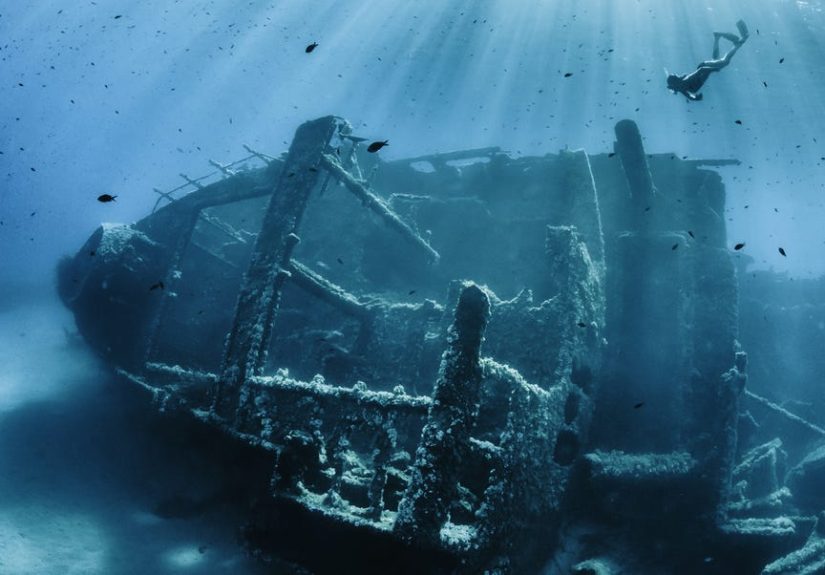
This sunken 18th-century warship is not just a dramatic tale of disaster. It is a case study in how underwater archaeology works: slowly, carefully, and with far less treasure-chest nonsense than pirate movies promised us. The real treasure here is knowledgeabout naval warfare, survival, colonial conflict, and the fragile cultural heritage hiding beneath the waves.
The Mystery Beneath Dry Tortugas
Dry Tortugas National Park is a remote cluster of islands about 70 miles west of Key West, Florida. Today, visitors know it for brilliant water, coral reefs, seabirds, and Fort Jefferson, the massive 19th-century brick fortress that dominates Garden Key. But long before Fort Jefferson rose from the island, another military story unfolded thereone involving a stranded British crew and a ship they could not save.
HMS Tyger was a British Fourth-Rate warship, originally built in the 17th century and still serving in the 18th century. In 1742, during the War of Jenkins’ Ear between Britain and Spain, the vessel was patrolling Caribbean waters near Cuba, Jamaica, and the Florida Keys. Its mission was part of a larger imperial contest for influence, trade, and control in the Atlantic world. Unfortunately for the crew, coral reefs do not care about geopolitics.
On January 13, 1742, Tyger ran aground near Garden Key. The ship took on water, and the crew tried desperately to lighten it. They shifted weight, moved supplies, and threw heavy guns overboard. For a brief moment, the vessel may have refloated, but the damage was too severe. The ship was doomed, and the crew abandoned it for Garden Key.
How Divers Solved the Puzzle
The remains now linked to HMS Tyger were first located in 1993, but shipwreck identification is not like putting a name tag on a lunchbox. Wooden ships decay, storms scatter artifacts, coral grows over metal, and centuries of sand can hide the most important clues. Archaeologists need patterns, measurements, materials, site context, and historical documents before they can say, “Yes, this is the one.”
The key breakthrough came when researchers reexamined old logbooks and compared them with a modern underwater survey. A marginal note in the historical record described how the crew had “lightened” the front of the ship after it struck the reef. That detail became incredibly important. During a later survey, National Park Service archaeologists and divers found five coral-encrusted cannons roughly 500 yards from the main wreck site.
Those guns were not random underwater furniture. Their size, type, and location matched the historical description of heavy objects thrown overboard when the crew tried to free the vessel. The evidence created a persuasive bridge between the written record and the archaeological site. The mystery was no longer just “an old British wreck.” It was HMS Tyger.
Why Five Cannons Mattered So Much
At first glance, five cannons on the seafloor may sound like a simple clue. But underwater archaeology is rarely simple. A cannon can tell researchers about a ship’s nationality, date range, military function, and how a wrecking event unfolded. In the case of HMS Tyger, the cannons helped explain the crew’s actions during the emergency.
The guns were found away from the main wreck site, consistent with the idea that they had been deliberately discarded rather than naturally scattered by storms. That matters because it connects human decision-making to physical evidence. The crew was not calmly packing for a beach vacation. They were trying to save a warship that had become, very inconveniently, attached to a reef.
Archaeologists often work like detectives, but instead of fingerprints and suspicious mustaches, they examine corrosion, ballast stones, ship fasteners, artifact distribution, and archival references. The HMS Tyger investigation shows how one small note in a centuries-old document can suddenly make five silent objects on the seafloor start talking.
The Crew’s Harsh Survival Story
After abandoning ship, approximately 300 members of the crew were stranded on Garden Key for 66 days. That sounds like a tropical escape until you remember the important details: heat, thirst, mosquitoes, limited supplies, enemy ships nearby, and no poolside smoothie service. The Dry Tortugas are beautiful, but they are called “Dry” for a reasonfresh water is scarce.
The survivors built shelters and early fortifications on Garden Key more than a century before Fort Jefferson was constructed. These makeshift defenses were not built for tourists with cameras. They were built by exhausted sailors trying to survive in hostile territory during wartime. The crew salvaged what they could from the wreck, attempted to get help, and even tried to engage a Spanish vessel. That attempt failed.
Eventually, the surviving crew burned the remains of HMS Tyger to prevent useful material from falling into Spanish hands. Then they used salvaged pieces of the wreck to build makeshift boats and made a difficult escape to Port Royal, Jamaicaabout 700 miles away through dangerous waters. It is one of those stories that sounds like an adventure novel until you imagine the thirst, fear, and sunburn. Suddenly, the novel needs more aloe.
What the Shipwreck Reveals About the 18th Century
The identification of HMS Tyger gives historians a sharper view of 18th-century naval life. Warships were not just floating platforms for battle. They were crowded workplaces, political tools, homes, prisons of routine, and sometimes deathtraps with sails. A single vessel carried sailors, officers, supplies, weapons, navigation equipment, food, repair materials, and the ambitions of an empire.
The War of Jenkins’ Ear, despite its oddly specific name, was part of a much larger struggle between Britain and Spain over trade and power in the Americas. British ships challenged Spanish influence in the Caribbean and Atlantic, while Spanish forces defended colonial routes and ports. HMS Tyger operated inside that tense maritime world, where reefs, storms, disease, and navigation errors could be as dangerous as enemy fire.
Shipwrecks like this help researchers move beyond battle maps and political summaries. They reveal practical realities: how ships were equipped, how crews responded to crisis, how military decisions were made under pressure, and how remote islands became temporary survival camps. The wreck also links Garden Key to a deeper timeline of military use, showing that the island’s strategic value existed long before the famous brick walls of Fort Jefferson.
Underwater Archaeology Is Not Treasure Hunting
Popular culture has trained many people to hear “shipwreck” and immediately imagine gold coins, jeweled goblets, and someone shouting, “We’re rich!” Underwater archaeologists usually have a different reaction: “Please do not touch that.” Historic shipwrecks are fragile, nonrenewable resources. Once disturbed without proper documentation, their information can be lost forever.
The HMS Tyger case highlights the value of preservation in place. The wreck was not fully stripped from the seafloor. Instead, archaeologists studied the site carefully, compared evidence, and monitored its condition. This approach allows future researchers to revisit the site with better tools, improved methods, and new questions. Today’s uncertain clue can become tomorrow’s answer.
Modern maritime archaeology may use sonar, magnetometers, photogrammetry, technical diving, archival research, and conservation science. But the goal is not to drag every artifact to the surface. Saltwater, oxygen, and careless handling can damage historic materials. Sometimes the best museum is the seafloor itself, provided the site is protected from looting, storms, anchors, and irresponsible visitors.
Why Legal Protection Matters
The positive identification of HMS Tyger did more than solve a historical puzzle. It also strengthened the site’s protection. Because the wreck is a British naval vessel in U.S. waters, it is protected under laws related to submerged cultural resources and sunken military craft. The remains and associated artifacts are considered sovereign property of the British government under international agreements.
That may sound like paperwork wearing a powdered wig, but it matters. Legal protection helps prevent unauthorized disturbance, artifact theft, and commercial salvage. A shipwreck is not just a pile of old objects. It is an archaeological site, and every object’s position can provide context. Remove the object without recording its surroundings, and the story gets holes in it big enough to sail through.
Protection also recognizes that warships can be sensitive cultural places. Some are graves. Others represent traumatic events, military service, or national heritage. Even when a wreck has no known human remains, it deserves careful treatment because it holds evidence of real people who lived, worked, suffered, improvised, and survived.
The Deep Mystery Was Solved by Patience
What makes the HMS Tyger discovery especially fascinating is that the wreck was not “found” in a single dramatic moment. It was identified through patience. The site had been known since the 1990s, but the correct answer required later researchers to return to the evidence with fresh eyes. They combined old documents, new surveys, artifact analysis, and historical reasoning.
That is often how real discoveries happen. Not with a thunderclap, but with a careful comparison. A note in a logbook. A cluster of cannons in the wrong-or-right place. A reef line. A ship’s known route. A crew’s desperate decision preserved in both ink and iron.
In that sense, HMS Tyger is a reminder that history is not always buried on land. Sometimes it is underwater, half-hidden by coral, waiting for someone disciplined enough to listen. The ocean may be dramatic, but it is also a very slow librarian.
Experiences Related to a Sunken 18th-Century Warship
Thinking about a wreck like HMS Tyger changes the way a person experiences the sea. A casual visitor may look across the waters of Dry Tortugas and see only turquoise beauty. A diver or maritime history enthusiast sees layers. The surface sparkles, fish move through coral, sunlight breaks into silver piecesand somewhere below, history sits quietly in the sand.
The first experience connected to a place like this is humility. The ocean makes even a large warship feel small. HMS Tyger carried hundreds of men, heavy equipment, and the confidence of an empire. Yet one reef changed everything. That contrast is powerful. It reminds us that technology, authority, and ambition all have limits. Nature does not need to be loud to win. Sometimes it just waits under shallow water.
For divers, underwater archaeological sites can feel different from ordinary reef dives. There is the usual beautyfish, coral, shifting lightbut also a sense of human presence. A cannon covered in marine life is no longer only a military object. It has become part artifact, part reef, part time capsule. Seeing something like that can make the past feel strangely close. Not polished and framed behind museum glass, but weathered, quiet, and still in the place where the story ended.
There is also a strong lesson in restraint. The most meaningful visitor experience is not taking something home. It is leaving the site intact. A responsible diver photographs, observes, controls buoyancy, avoids contact, and reports anything unusual to the proper authorities. That may sound less exciting than “discovering treasure,” but it is far more valuable. A stolen artifact becomes a lonely object. An artifact left in context remains a sentence in a larger historical paragraph.
Another experience comes from imagining the stranded crew on Garden Key. Modern visitors may arrive with sunscreen, water bottles, snacks, and a return ticket. The sailors of HMS Tyger had heat, thirst, insects, uncertainty, and enemy territory around them. Standing on an island like that, even comfortably, can make the survival story feel real. The distance to Jamaica was not a number on a page for them. It was a dangerous hope.
Wreck stories also invite reflection on how history is discovered. Many people imagine archaeology as digging up answers. In reality, it is often about building trust between clues. The HMS Tyger identification shows how evidence from different worlds can meet: the archive, the reef, the diver’s slate, the cannon’s measurements, and the ship’s final movements. That combination creates a richer experience than any single artifact could provide.
Finally, the story offers a fresh way to appreciate protected places. National parks are not only mountains, forests, and scenic overlooks. Some protect submerged landscapes where history and ecology share the same space. A shipwreck can become habitat. Coral and sponges can grow on the remains of human conflict. Fish can pass through the outline of an old disaster. It is beautiful, strange, and oddly hopeful.
To experience a sunken 18th-century warship, then, is not simply to look at old wreckage. It is to recognize a meeting point between survival, science, law, memory, and the living sea. HMS Tyger teaches that the past is not always gone. Sometimes it is just underwater, waiting for careful eyes and better questions.
Conclusion
The story of HMS Tyger proves that a shipwreck mystery can be solved without fantasy, exaggeration, or a single cursed necklace. Divers and archaeologists connected physical clues on the seafloor with details preserved in historical records, transforming an uncertain wreck into a clearly identified 18th-century British warship.
Its story reaches beyond the moment of discovery. It tells us about naval conflict, survival under brutal conditions, early activity on Garden Key, and the importance of protecting underwater cultural heritage. Most of all, it shows that shipwrecks are not silent. They speak through placement, material, damage, and context. We just need patient people willing to listenpreferably with dive gear, documentation tools, and a healthy respect for coral reefs.
Note: This article is based on verified public maritime archaeology records and reputable U.S. historical reporting about HMS Tyger, Dry Tortugas National Park, underwater archaeology, and shipwreck preservation. It is written as original SEO content with no source-link placeholders or publishing artifacts.