Table of Contents >> Show >> Hide
- The short answer: Yes, Medicare does pay for mammograms
- What Medicare covers for mammograms
- Screening vs. diagnostic mammograms: why the label matters
- How much does a mammogram cost with Medicare?
- What to expect before your mammogram
- What happens during the mammogram
- What to expect after the test
- Common questions Medicare beneficiaries ask
- How to avoid billing surprises
- Real-world experiences: what people often go through
- Bottom line
If you have Medicare and a mammogram is on your calendar, you probably have two questions swirling around at the same time: “Will Medicare pay for this?” and “What exactly am I walking into?” The good news is that Medicare does cover mammograms. The less-fun news is that the details depend on whether your test is a routine screening or a diagnostic follow-up. That tiny distinction can be the difference between a $0 preventive service and a bill that makes you squint harder than the mammogram machine does.
This guide breaks down how Medicare coverage works, what you may pay, how screening and diagnostic mammograms differ, and what usually happens before, during, and after the appointment. Think of it as the plain-English version of a topic that insurance paperwork tries very hard to make mysterious.
The short answer: Yes, Medicare does pay for mammograms
Original Medicare covers mammograms through Medicare Part B, which is the part of Medicare that handles many outpatient and preventive services. In general:
- One baseline mammogram is covered once in a lifetime for women ages 35 to 39.
- Screening mammograms are covered once every 12 months for women age 40 and older.
- Diagnostic mammograms are covered more often when they are medically necessary.
So yes, Medicare pays for mammograms, but the type of mammogram matters. A routine screening mammogram and a diagnostic mammogram do not follow the same cost rules, even if they happen in the same imaging center with the same cheerful front-desk clipboard.
What Medicare covers for mammograms
Original Medicare Part B
If you have Original Medicare, Part B is the coverage that matters here. A screening mammogram is considered a preventive service, which is why Medicare treats it more generously than many other outpatient tests. If your doctor or imaging provider accepts Medicare assignment, your routine screening mammogram usually costs nothing out of pocket.
Diagnostic mammograms are different. These are not billed as routine preventive screening. Instead, they are treated like medically necessary diagnostic imaging. That means, after you meet the Part B deductible, you generally pay 20% of the Medicare-approved amount. Depending on the facility and any additional imaging ordered, your costs can rise beyond what you expected if you walked in assuming the whole experience was “just a free mammogram.”
Medicare Advantage plans
If you have a Medicare Advantage plan, your plan must cover everything Original Medicare covers that is medically necessary, including mammograms. However, your copays, coinsurance, provider network, referral rules, and prior authorization requirements may be different. In other words, Medicare Advantage still covers mammograms, but the path to getting one can be more “insurance obstacle course” than “show up and smile politely.”
Before your appointment, check whether the imaging center is in-network and ask whether your test is being scheduled as screening or diagnostic. That one question can save a lot of confusion later.
Screening vs. diagnostic mammograms: why the label matters
This is the biggest source of confusion for many Medicare beneficiaries.
Screening mammogram
A screening mammogram is for someone who does not have symptoms and is getting checked routinely for early signs of breast cancer. This is the mammogram most people mean when they say they are “going for their annual.” Medicare covers screening mammograms once every 12 months for women 40 and older.
Diagnostic mammogram
A diagnostic mammogram is used when there is a reason to look more closely. Maybe you felt a lump. Maybe you noticed nipple discharge, breast pain, skin changes, or a thickened area. Maybe your earlier screening mammogram showed something that needs a second look. A diagnostic mammogram uses more targeted imaging and can be done more often than once a year when medically necessary.
From a patient perspective, the two tests may feel similar. From a billing perspective, they are definitely not twins. They are more like cousins who look alike at the family reunion but have very different personalities.
How much does a mammogram cost with Medicare?
Here is the practical breakdown.
For screening mammograms
If the provider accepts Medicare assignment, you generally pay $0 for a covered screening mammogram under Original Medicare. That is the easy part.
For diagnostic mammograms
You generally pay:
- The Part B deductible, if you have not met it yet for the year
- 20% coinsurance of the Medicare-approved amount after the deductible
Your exact bill can vary based on where the test is performed, whether additional views are needed, and whether other imaging such as ultrasound is ordered. Medicare does cover breast ultrasound only when it is medically necessary and ordered by a provider. It is not automatically included just because you would like extra reassurance.
What can unexpectedly raise your costs?
Even when the original appointment started as a routine screening, costs can change if:
- The radiologist recommends extra diagnostic images
- Your provider orders follow-up ultrasound
- You go to an out-of-network facility under Medicare Advantage
- Your provider recommends testing more frequently than Medicare covers for screening
That is why it is smart to ask two simple questions before the appointment: “Is this being billed as screening or diagnostic?” and “Does this provider accept Medicare assignment or participate in my plan’s network?”
What to expect before your mammogram
Preparation is refreshingly simple. You do not need to fast, and you usually do not need a dramatic life reset the night before. But a few practical steps can make the day easier.
What to wear
Wear a two-piece outfit if possible. That way, you only need to remove clothing from the waist up. You will likely be asked to remove necklaces and other jewelry in the area as well.
Skip certain products
On the day of the exam, avoid deodorant, antiperspirant, powder, perfume, lotion, or creams on your breasts or underarms unless the imaging center tells you otherwise. Some products can show up on images and make interpretation more difficult.
Bring prior imaging information
If you are using a new imaging center, ask whether they need your prior mammogram records. Comparison images can help radiologists decide whether something is new, stable, or completely harmless and merely trying to look dramatic.
Tell the staff about special circumstances
Let the imaging center know if you have breast implants, mobility limitations, breast symptoms, recent surgery, or a history of abnormal mammograms. If you have implants, it is especially helpful to use a center experienced in imaging people with implants.
What happens during the mammogram
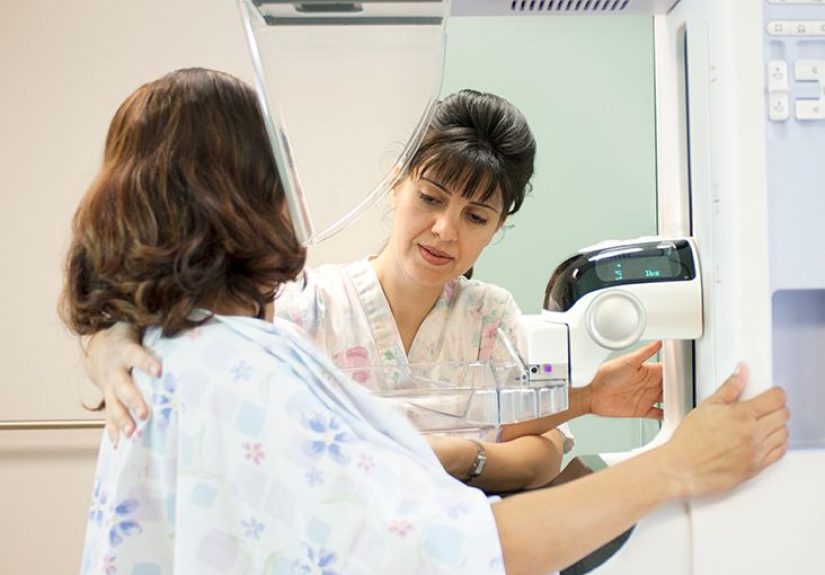
At the appointment, a technologist will position one breast at a time on the mammography machine. Your breast is compressed briefly between two firm surfaces so the machine can capture clear images. Yes, compression is the part nobody puts on a motivational poster. It can feel uncomfortable, and for some people it is painful, but it usually lasts only a few moments.
For a standard screening mammogram, two views of each breast are commonly taken. Some people need more images, especially if they have larger breasts, implants, dense breast tissue, or an area that needs closer evaluation. Diagnostic mammograms often involve additional targeted views from the start.
The entire visit is usually fairly quick, although the exact timing depends on whether extra images are needed. Most people spend more time checking in, changing clothes, and adjusting the paper gown than actually standing in front of the machine.
What to expect after the test
After the mammogram, you can usually return to normal activities right away. There is no recovery period, no sedation, and no need to spend the rest of the day lying on the couch announcing, “I have been through enough.”
Results are not always immediate. The radiologist reviews the images and sends a report. In many cases, screening mammogram results arrive within days, and the National Cancer Institute notes that people generally receive the radiologist’s report within about two weeks. If you do not receive results in that time frame, it is reasonable to contact your provider or imaging center.
If your mammogram is called abnormal, try not to panic. An abnormal mammogram does not automatically mean cancer. It means the radiologist saw something that needs more imaging or follow-up to clarify. The next step may be a diagnostic mammogram, ultrasound, MRI, or sometimes a biopsy, depending on what was seen.
Common questions Medicare beneficiaries ask
Does Medicare cover a mammogram every year?
Yes, Medicare covers a screening mammogram once every 12 months for women age 40 and older. That is Medicare’s coverage rule. It is not exactly the same thing as a universal medical rule for every person, so your provider may still individualize your screening plan based on risk factors and history.
What if I am high risk?
If you have a strong family history, a known genetic mutation, prior chest radiation, dense breasts, or a history of breast problems, your provider may recommend a different screening strategy. Medicare may cover medically necessary follow-up imaging, but the coverage category may shift from preventive screening to diagnostic evaluation depending on the situation.
Does Medicare cover 3D mammograms?
Medicare’s preventive-services guidance recognizes mammography and digital technologies used for breast cancer screening. In real-world practice, many centers now use modern digital imaging, including 3D technology. Still, it is wise to confirm with the facility and your plan how the service is being billed.
Does Medicare cover breast ultrasound too?
Yes, but only when it is medically necessary and ordered by your provider. It is not an automatic add-on to every screening mammogram.
How to avoid billing surprises
If you want the smoothest possible experience, do this checklist before the appointment:
- Confirm you have Part B or a Medicare Advantage plan
- Ask whether the test is screening or diagnostic
- Check whether the provider accepts Medicare assignment or is in-network
- Ask whether additional imaging could create separate cost-sharing
- Bring prior mammogram information if you are using a new center
That five-minute phone call can prevent the classic insurance plot twist in which a patient thinks she booked a routine preventive test and later learns the word “diagnostic” quietly wandered onto the claim.
Real-world experiences: what people often go through
The stories below are composite examples, not real individual patient profiles. They reflect common experiences many Medicare beneficiaries have when scheduling, receiving, and paying for mammograms.
Experience 1: the easy annual screening
Linda is 68, has Original Medicare with Part B, and books her annual screening mammogram at the same imaging center she has used for years. She confirms that the center accepts Medicare assignment and that the appointment is being billed as a routine screening. On the day of the test, she wears a zip-up hoodie over a T-shirt, skips deodorant, checks in, changes into a gown, and is done in less than half an hour. The compression is uncomfortable, but only for a few seconds at a time. A few days later, she gets a normal result in her patient portal. Her out-of-pocket cost is $0. For her, the process is exactly what Medicare preventive coverage is supposed to look like: simple, predictable, and not loaded with billing surprises.
Experience 2: the “free mammogram” that turned diagnostic
Carol schedules what she thinks is a standard screening mammogram. During the review, the radiologist wants a closer look at a small area and orders additional diagnostic images. Carol is understandably rattled, mostly because nobody enjoys hearing, “We just need a few more pictures,” while wearing a paper gown and trying to act emotionally stable. The follow-up testing does not show cancer, which is a huge relief. But a few weeks later, she receives a bill. That is when she learns an important Medicare lesson: the screening portion may be covered with no out-of-pocket cost, but diagnostic mammography is subject to Part B cost-sharing. Carol wishes someone had warned her ahead of time that coverage can change when the purpose of the imaging changes, even during the same episode of care.
Experience 3: navigating Medicare Advantage rules
Denise has a Medicare Advantage plan. She assumes mammogram coverage will work exactly like Original Medicare, but her plan requires her to use an in-network imaging center. She also learns that some follow-up imaging may need plan approval. Denise calls member services before scheduling and asks about network rules, copays, and whether her doctor’s referral is enough. That extra step saves her money and frustration. Her screening mammogram is covered, but she realizes that “covered” does not always mean “handled the same way as Original Medicare.” For people in Medicare Advantage, the benefits may be there, but the administrative fine print matters more.
Experience 4: when symptoms change the conversation
Ruth notices new breast pain and a change in skin texture. Instead of booking a routine screening mammogram online, she calls her doctor. Her clinician recommends diagnostic imaging because she has symptoms. Medicare still covers the medically necessary test, but now the appointment is classified differently and may come with coinsurance. Ruth is glad she called first, because a symptom-driven visit should not be treated like a routine annual screen. Her experience shows why the right question is not only “Does Medicare cover mammograms?” but also “What kind of mammogram am I actually getting?”
These examples all point to the same takeaway: Medicare coverage for mammograms is real and valuable, but the details depend on the reason for the test, the type of Medicare coverage you have, and whether follow-up imaging becomes necessary.
Bottom line
Medicare does pay for mammograms, and for many beneficiaries, routine screening mammograms are one of the best-covered preventive services available. If you are a woman 40 or older, Original Medicare Part B covers a screening mammogram every 12 months. If you are 35 to 39, Medicare covers one baseline mammogram. If you have symptoms or an abnormal screening result, Medicare also covers diagnostic mammograms when medically necessary, though those tests usually come with Part B cost-sharing.
The smartest move is to confirm whether your appointment is being billed as screening or diagnostic, verify that your provider accepts Medicare or participates in your Medicare Advantage network, and ask about any follow-up imaging before the appointment. That way, you can focus less on billing jargon and more on the actual point of the test: catching problems early and protecting your health.
And honestly, that is the best outcome here. Not a surprise bill. Not an insurance maze. Just clear coverage, a quick appointment, and peace of mind.