Table of Contents >> Show >> Hide
- What “Dubost Ivory Laguiole” Actually Means
- Materials & Build: Why It Feels So Good in the Hand
- What’s in the Box (and Why Some Sets Are 20 Pieces vs. 24)
- Design Details People Notice First
- How It Performs at the Table
- Care and Feeding of Your Flatware (A Love Story)
- How to Tell You’re Buying the Real Deal (and Not “Lagooole”)
- Styling Ideas: From Weeknight Pasta to French-Country Holiday
- Who Should Buy Dubost Ivory Laguiole Flatware?
- Ivory Handles vs. Wood vs. All-Stainless: A Quick Comparison
- FAQ
- Real-World Experiences with Dubost Ivory Laguiole Flatware (Extra Notes from Everyday Life)
- SEO Tags
Some flatware is purely functionallike the jeans you wear to paint a room. And then there’s Dubost Ivory Laguiole flatware: the kind of set that makes a Tuesday-night grilled cheese feel suspiciously like it deserves candlelight. With its creamy ivory handles, iconic little bee emblem, and French-made cred, this is the “I have my life together” silverware you can still toss into real life (kids, friends, spaghetti sauce… the whole circus).
If you’ve been eyeing this set and wondering what you’re actually gettingmaterials, feel, care, authenticity, and whether “ivory” means you’re about to adopt a tiny museum curator voice at dinnerpull up a chair. Let’s dig in, fork-first.
What “Dubost Ivory Laguiole” Actually Means
Dubost refers to Jean Dubost, a long-standing cutlery maker based in Thiers, Francea region widely recognized for knife and cutlery production. Laguiole refers to a classic French style of knife and flatware known for its slim profile and signature decorative detailsmost famously, the bee motif near the top of the handle.
One quick reality check (because the internet gets weird about this): “Laguiole” is a style and regional heritage, not a single protected brand name. That’s why you’ll see everything from excellent French-made pieces to “Laguiole-ish” lookalikes floating around online. Jean Dubost is one of the names people seek out specifically because the brand is transparent about origin, markings, and build quality.
Materials & Build: Why It Feels So Good in the Hand
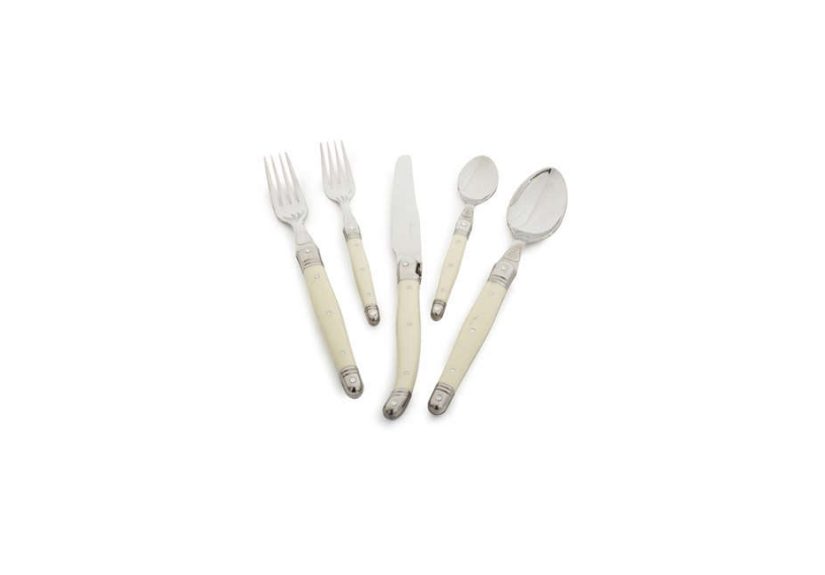
The main appeal of Dubost ivory Laguiole flatware is the blend of practicality and polish: stainless steel working ends paired with ivory-colored acrylic/ABS-style handles that are riveted into place. Many sets also feature metal end caps that make the silhouette feel more “finished” and substantialless cafeteria, more bistro.
Stainless steel that’s built for daily use
Stainless steel flatware quality is often discussed using ratios like 18/10 (the numbers commonly refer to chromium and nickel content), because nickel helps with shine and corrosion resistance. Retail listings for Dubost sets frequently describe their steel as heavy gauge and tempered, which translates to: it feels sturdier in the hand, it holds up to repeated use, and it’s not prone to that flimsy-bend moment that makes you wonder if your fork is secretly made from a soda can.
The “ivory” handle: warm, not precious
The word “ivory” here is about color, not material. You’re getting a creamy, warm neutral that reads classic at a formal table and cozy in a casual setting. It’s a particularly friendly shade if your dinnerware leans white, stone, linen, or anything in the “I like calm things” family. And because the handle material is acrylic/ABS-style plastic, it’s made for regular lifenot for being handled with white gloves.
What’s in the Box (and Why Some Sets Are 20 Pieces vs. 24)
You’ll commonly see two configurations:
- 20-piece set (4 place settings): typically includes dinner fork, salad fork, dinner/soup spoon, teaspoon, and knife (x4). This is the sweet spot for couples, small households, or anyone upgrading from mismatched hand-me-downs.
- 24-piece “everyday” set (6 place settings): often includes dinner forks, knives, soup spoons, and teaspoons (x6). This works well for frequent hosts or families who are tired of playing “who stole all the forks?” every other day.
Some retailers package Dubost sets in a wooden tray or wooden box, which makes the set giftable straight out of the gate. Translation: it’s registry-friendly, housewarming-friendly, and “I forgot my sister’s birthday” friendly.
Design Details People Notice First
The bee (aka the tiny flex)
The bee emblem is the visual shorthand that screams “Laguiole.” Depending on the piece, it may appear in relief or as an embossed detail. It’s charming, yesbut it’s also a cue to slow down and appreciate the craftsmanship instead of inhaling dinner like you’re in a cooking show montage.
Signature markings
Authentic sets from established retailers often note that the knives are signed (commonly with “Laguiole” and “Jean Dubost-France”), while forks and spoons may include branding like “JD FRANCE.” These details matter because the Laguiole style is widely copied.
Ergonomics that actually matter
Laguiole-style handles are typically slim and slightly curved, which makes them comfortable for most hands and visually sleek on the table. The ivory color adds softness, while the steel ends keep it from feeling too casual.
How It Performs at the Table
A flatware set can be beautiful and still annoy you daily (the culinary equivalent of shoes that look amazing but blister your soul). Dubost ivory Laguiole tends to win people over because it’s both pretty and practical:
- Knives feel balanced and cut cleanly for everyday mealsespecially if you eat a lot of chicken, pork chops, or roasted veggies.
- Forks are sturdy enough to handle salads and pasta without bending mid-twirl (humbling).
- Spoons have a comfortable bowl shape for soup, cereal, and the very serious business of ice cream.
The real charm is that the set looks “special” without demanding you act special. It’s designed to be used, not just admired.
Care and Feeding of Your Flatware (A Love Story)
Many Dubost ivory Laguiole sets are listed as dishwasher safe, but there’s a grown-up asterisk: dishwasher safe and dishwasher ideal are not always the same thingespecially for knives with sharper edges and riveted handles. If you want the set to stay handsome for the long haul, steal these habits:
Dishwasher tips that prevent spots, dullness, and handle drama
- Avoid long, scorching-hot cycles when you can. Heat and harsh detergent are the usual culprits behind premature wear.
- Don’t let flatware sit wet for hours after the cycle ends. Open the dishwasher soon after it finishes.
- Dry pieces promptly (especially around joints, rivets, and where the steel meets the handle).
- Keep knives from clanking against other metal during the wash. Less banging = fewer scratches and less edge dulling.
- Be picky about detergent. Some retailers specifically advise avoiding citrus-scented detergents for certain flatware finishes.
If you’re the “hand wash when it matters” type, you’ll love this: quick warm water + mild soap + immediate drying is still the gentlest care routine, especially for the knives.
Fixing spots, film, and the occasional “rainbow sheen”
Stainless steel can get water spots and mineral haze, particularly in hard-water areas. For a simple reset:
- Baking soda paste (baking soda + a little water) can lift residue without harsh scratching when used gently.
- White vinegar diluted in warm water can help dissolve mineral buildup; rinse and dry thoroughly afterward.
- For stubborn rust spots or discoloration, some household cleaning products formulated for stainless steel (like oxalic-acid-based cleansers) are commonly recommendedalways follow label directions and test gently.
The golden rule: dry thoroughly before storing. Most “mystery marks” love lingering moisture.
How to Tell You’re Buying the Real Deal (and Not “Lagooole”)
Because “Laguiole” is widely used as a style descriptor, the safest way to avoid disappointment is boring-but-effective: buy from reputable retailers and check product descriptions for clear details like:
- Made in France language (and ideally a mention of Thiers)
- Brand attribution to Jean Dubost
- Signature markings on the knife and “JD FRANCE” on other pieces
- Bee insignia (nice detail, but not a guarantee all by itself)
- Packaging such as a wooden box/tray and, sometimes, authenticity documentation depending on the seller
If a listing is vague about origin, avoids close-up photos of markings, and uses the word “Laguiole” like it’s seasoningconsider that a polite red flag.
Styling Ideas: From Weeknight Pasta to French-Country Holiday
The ivory handle is quietly versatile. A few easy pairings:
- Modern farmhouse: white plates + linen napkins + wood board in the center + this flatware = instant “Pinterest, but edible.”
- French bistro: simple stoneware, a carafe of water, and a big shared salad. Add the bee emblem and pretend you own a charming café.
- Holiday tables: ivory plays well with greenery, gold accents, and warm candlelight without screaming for attention.
- Outdoor dining: it looks elevated, but the handles won’t panic if someone eats corn on the cob like it’s a sport.
Who Should Buy Dubost Ivory Laguiole Flatware?
This set is a strong match if you want:
- A “nice” everyday set that isn’t too formal to use on a random Wednesday
- Giftable flatware for weddings, housewarmings, and grown-up milestones
- French-made style with recognizable design cues (hello, bee)
- A warm neutral that complements most dinnerware and kitchen aesthetics
You might skip it if you strongly prefer ultra-heavy, chunky, fully stainless restaurant-style flatwareor if you want a set where every piece is identical across multiple expansions for huge parties (though buying additional matching place settings usually solves that).
Ivory Handles vs. Wood vs. All-Stainless: A Quick Comparison
Ivory acrylic/ABS handle
- Pros: warm look, easy to match, more forgiving in daily use, generally lower maintenance than natural materials
- Tradeoff: you’ll want to be mindful with dishwasher habits to keep everything looking crisp
Natural wood handles
- Pros: gorgeous, tactile, artisan vibe
- Tradeoff: usually needs handwashing; wood can dry out or warp if abused by heat and prolonged moisture
All-stainless
- Pros: easiest care, often very durable, clean modern look
- Tradeoff: can feel colder visually; less of that signature Laguiole “handle personality”
FAQ
Is Dubost ivory Laguiole flatware actually dishwasher safe?
Many listings say yes, but best results come from smart habits: avoid overly long cycles, don’t leave pieces sitting wet in the dishwasher, and dry promptlyespecially knives and riveted areas.
Will it rust?
Quality stainless steel is corrosion resistant, not invincible. Rust spots are usually caused by moisture left on the metal, harsh detergents, or contact with other metals. Drying well and avoiding prolonged damp storage prevents most problems.
Does “ivory” mean real ivory?
Nothis is an ivory color. The handles are typically acrylic/ABS-style material designed for everyday durability.
What if I want to expand later?
Many major retailers sell additional place settings and matching pieces. If you’re building a long-term set, consider buying at least one extra place setting up front (because teaspoons have a mysterious habit of disappearing into another dimension).
Real-World Experiences with Dubost Ivory Laguiole Flatware (Extra Notes from Everyday Life)
Let’s talk about what it’s like to actually live with Dubost Ivory Laguiole flatware, because “French-made” is nice, but the real test is: does it survive spaghetti night, brunch chaos, and that one friend who insists on cutting everything with the side of their fork?
Experience #1: The immediate “upgrade” feeling. The first thing people notice isn’t a technical specit’s the vibe. Ivory handles read warm and intentional, like you chose them, rather than inherited them from a drawer full of mismatched orphans. Even basic meals feel more put-together. The set quietly changes the mood of a table the way a real cloth napkin does: not fussy, just… nicer.
Experience #2: Hosting without overthinking. This is the kind of flatware that looks equally good next to weeknight bowls or a holiday place setting. If you host, it saves you from the awkward “nice flatware vs. everyday flatware” debate. You can set the table quickly and confidently, because the ivory works with nearly everythingwhite plates, patterned dishes, wood chargers, even disposable-looking picnic plates if you’re doing an outdoor spread. The bee emblem becomes a conversation starter in the most pleasant way (“Wait, why is there a bee?”), which is a lot better than talking about the weather for the tenth time.
Experience #3: The dishwasher routine is the difference-maker. People who love this set long-term tend to do one tiny thing: they don’t leave it sitting in the dishwasher like a forgotten science experiment. Open the dishwasher when it finishes, shake off lingering moisture, and give the knives a quick towel-dryespecially near the handle. That small habit keeps the steel bright and reduces water spots dramatically. If you’re in a hard-water area, you may still see occasional spotting, but it’s usually easy to wipe away with a soft cloth.
Experience #4: The knives earn their keep. In many households, the dinner knife is the underachiever of the flatware world. With Laguiole-style knives, you often get a more satisfying cut for everyday foodschicken, roasted vegetables, sandwiches, even steak in a pinch. That doesn’t mean you should treat them like chef’s knives (please don’t hack through bones on your dining table), but they feel more capable than the average set.
Experience #5: It photographs beautifully (yes, that matters). If you’re someone who occasionally snaps a table photoholiday spreads, birthday brunch, cookie exchangeivory handles show up softly on camera. They don’t glare the way high-polish all-stainless sometimes can, and they don’t clash the way colorful handles might. The look is classic, and it stays classic even when your table theme changes.
Experience #6: It’s a “grown-up gift” that people actually use. Flatware can be a boring present… unless it’s this kind of flatware. A boxed Dubost set feels special, but it’s still practical, which is the sweet spot for weddings and housewarmings. It’s the rare gift that doesn’t get shoved into a closet “for someday.” It becomes the everyday set because it makes everyday feel better.
Bottom line: Dubost ivory Laguiole flatware tends to fit into real routines with minimal fuss. Treat it with basic care, and it rewards you with that small daily luxury of a table that looks like you meant it.