Table of Contents >> Show >> Hide
- What Kind of Movie Is Fire Saga, Really?
- Critical Rankings vs. Fan Rankings
- Ranking the Fire Saga Songs: Which Track Wins Eurovision of the Heart?
- Ranking the Performances: Who Steals the Show?
- From Mixed Reviews to Cult Status
- So Where Does Fire Saga Really Rank?
- Fan Experiences & Takeaways: Living in the World of Fire Saga
When Netflix dropped Eurovision Song Contest: The Story of Fire Saga in 2020, it felt like the universe was apologizing for canceling the real Eurovision that year. Suddenly we had Will Ferrell in sequins, Rachel McAdams singing her heart out, Dan Stevens purring in a velvet suit, and a soundtrack full of bops with lyrics that make absolutely no sense and yet feel spiritually correct. Since then, fans and critics have been arguing about one thing: how good is this movie really, and which Fire Saga songs deserve the crown?
On paper, the film is a mid-budget musical comedy with mixed reviews. In practice, it has quietly morphed into a cult classic: endlessly rewatched, quoted, and used as the soundtrack to many a chaotic living-room karaoke night. Rankings, hot takes, and “definitive” tier lists keep popping uppeople have very strong feelings about “Jaja Ding Dong,” and they are not shy about it.
This article dives into those rankings and opinions: how critics scored the movie, how fans elevated it, which songs and performances sit at the top of most lists, and why Fire Saga keeps hanging around in the cultural conversation like that one Eurovision act with too much smoke machine and not enough shirt.
What Kind of Movie Is Fire Saga, Really?
First, a quick refresher: Eurovision Song Contest: The Story of Fire Saga follows Lars Erickssong (Will Ferrell) and Sigrit Ericksdóttir (Rachel McAdams), two Icelandic small-town dreamers whose band Fire Saga accidentally lands a spot in the Eurovision Song Contest. Along the way, they face skeptical locals, skeptical judges, and a very supportive but also slightly terrifying Russian rival, Alexander Lemtov (Dan Stevens). Pierce Brosnan appears as Lars’s disapproving father, looking like he wandered off the set of a cologne commercial and never left.
Directed by David Dobkin, the film plays as both a spoof and a love letter. It pokes fun at the wild staging and melodrama of Eurovision, but it also nails key details: the elaborate staging, the “this could be a serious ballad, but also there are wolves” energy, and the sense that the whole event is ridiculous and deeply important at the same time. That tonal balance is exactly why fans keep revisiting the movie: it feels like Eurovision made by people who actually watch Eurovision.
Critical Rankings vs. Fan Rankings
Officially, Fire Saga sits in the “mixed, but interesting” category. On major review aggregators, the film lands in the middle of the pack: not a disaster, not a masterpiece, but a solidly watchable comedy musical. Some critics praised it as sweet, uplifting, and full of genuinely catchy songs; others complained about the length, pacing, or hit-and-miss jokes. It’s the cinematic version of a Eurovision entry that ends up somewhere between 9th and 17threspectable, but not grabbing the official trophy.
Fans, however, play by different rules. On social media, Reddit threads, and film forums, Fire Saga regularly ranks much higher than its critic scores suggest. It shows up on “best comfort movies,” “underrated comedies,” “most fun Netflix musicals,” and “movies to watch when you miss Eurovision.” Entertainment outlets have repeatedly included it among the best musicals streaming on Netflix, pointing to its surprisingly strong soundtrack and big-hearted silliness.
In other words: critics gave it a polite “douze…ish,” but audiences quietly handed it an honorary 12 points years later through replays, memes, and playlists.
Ranking the Fire Saga Songs: Which Track Wins Eurovision of the Heart?
Let’s be honest: the main reason Fire Saga lives rent-free in so many brains is the music. The fictional Eurovision entries and local Icelandic bar tunes are so convincing that some viewers genuinely thought they were real contest songs. Fan rankings vary, but a few tracks consistently float to the top.
1. “Husavik (My Hometown)” – The Emotional Winner
If this film had to submit only one track to the global jury, it would be “Husavik.” It’s the emotional climax of the movie: a sweeping ballad that starts softly and then explodes into full-blown key-change glory. Performed on screen by Lars and Sigrit, with vocals powered by Molly Sandén (My Marianne), the song is a love letter to both a person and a place.
“Husavik” didn’t just dominate fan playlistsit broke into awards territory. The song was shortlisted and later nominated for major honors, including an Academy Award nomination for Best Original Song. For a comedy that features a running joke about “Jaja Ding Dong,” having a legitimate Oscar-nominated ballad in the mix is wild in the best way.
Most fan rankings put “Husavik” squarely in first place. Even people who thought the movie was just okay often admit the final performance gave them goosebumps… or at least made them seriously consider moving to a small Icelandic fishing town.
2. “Jaja Ding Dong” – The Meme King
On the opposite end of the emotional spectrum lives “Jaja Ding Dong,” a song that sounds like it was engineered in a lab to get drunk people on their feet. It’s simple, repetitive, and gloriously unhinged. In the movie, locals demand it relentlessly at the bar, to the despair of Fire Saga, who would really prefer to sing literally anything else.
Outside the film, “Jaja Ding Dong” became a meme, a catchphrase, and a minor anthem. Fans spam comments with “PLAY JAJA DING DONG,” create tribute playlists, and rank it absurdly high just for the joke. In many fan lists, it lands in the top threenot necessarily because it’s musically complex, but because it captures the chaotic joy of Eurovision in under three minutes.
3. “Double Trouble” – The Actual Eurovision Banger
“Double Trouble” is the song Fire Saga take to the Eurovision stage, and it’s a pretty convincing contest entry. It has everything: synths, a dramatic tempo, staging mishaps, and a costume reveal that looks complicated enough to go wrong (which, of course, it does). Fans often rank it just below “Husavik” and “Jaja Ding Dong,” praising its “realistic Eurovision” feel.
The song works as both parody and homage: if it showed up in the real contest, most fans would assume it belonged to a smaller country with a limited budget and unlimited enthusiasma very Eurovision combination.
4. “Volcano Man” – The Dream Sequence Classic
“Volcano Man” never actually makes it to the contest; it lives in a fantasy music video that Lars imagines. Still, it’s one of the movie’s most iconic moments: absurd costumes, scenic Icelandic landscapes, and a melody that sounds like it should be played over footage of someone dramatically striding through lava.
In many rankings, “Volcano Man” becomes the unofficial openera bold, theatrical tone-setter that lets you know you’re not in a serious prestige drama. You’re in the land of feathered shoulder pads and synth-driven destiny.
5. “Lion of Love” and the Side-Character Slays
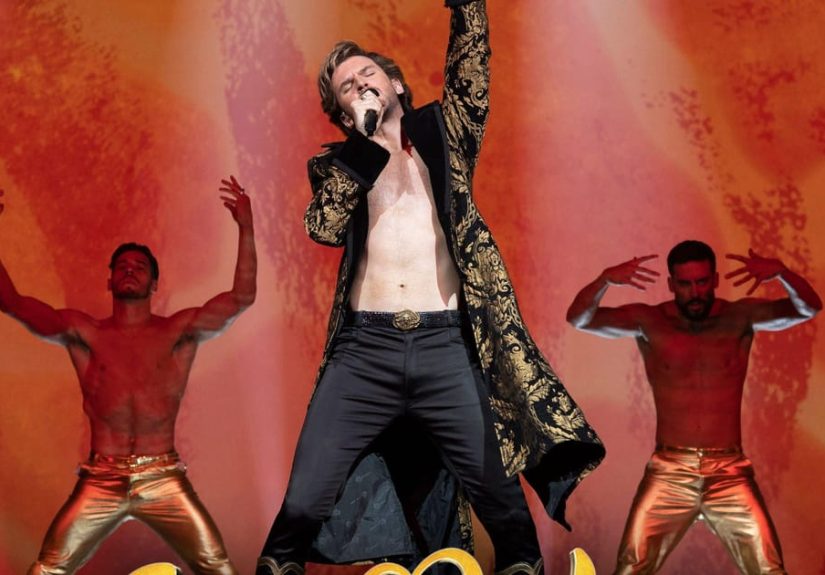
Dan Stevens’s Alexander Lemtov steals more scenes than is strictly polite, and his song “Lion of Love” is a big reason why. It’s over-the-top, sensual, and staged like a fever dream with lasers. While it doesn’t usually beat “Husavik” in rankings, it often lands in the upper half as the most deliciously camp entry in the film.
Together, these tracks form a mini Eurovision lineup that fans love to rank, re-rank, and fight about online. The consensus: even if you forget plot details, you remember the songs.
Ranking the Performances: Who Steals the Show?
Opinions split pretty neatly between “this is Will Ferrell doing his usual thing” and “this might be one of his more sincere, sweet performances.” As Lars, he mixes clueless bravado with genuine vulnerability, and while some critics found the jokes uneven, many viewers warmed to his earnestness.
Rachel McAdams, meanwhile, has become the stealth MVP in many rankings. Even though most of the heavy vocal lifting is dubbed by Molly Sandén, McAdams sells every performance emotionally and nails the awkward, hopeful energy of someone who loves both her bandmate and their dream more than she loves self-preservation. Fans frequently place Sigrit at or near the top when ranking characters.
Dan Stevens is the surprise breakout for a lot of viewers, with Alexander Lemtov often ranked as the film’s funniest presence. He leans all the way into glamorous, pansexual Eurovision drama, managing to be both ridiculous and oddly sincere.
Pierce Brosnan’s casting as Lars’s hyper-judgmental dad is more divisive. Some fans love the irony of a former James Bond glowering through an Icelandic fishing-village storyline; others… politely question the accent. Still, as a piece of stunt casting, he gives the film a little extra sparkle.
From Mixed Reviews to Cult Status
Here’s where things get interesting: even though the film opened to mixed critical reviews, its long-term trajectory looks a lot more like a cult success story than a forgettable mid-tier comedy. Over time, it has gained a loyal following among Eurovision fans, musical-comedy lovers, and people who just needed something warm and silly during a stressful year.
Streaming rankings, repeat viewings, and its appearance on “best musicals on Netflix” lists suggest that Fire Saga has more staying power than its initial critical reception implied. Articles continue to talk about its “shock” awards attention, especially the Oscar nomination for “Husavik,” and position the film as a modern comfort classic rather than a disposable spoof.
The latest twist: plans for a Broadway musical adaptation of Eurovision Song Contest: The Story of Fire Saga. Turning the movie into a stage show is basically the universe’s way of saying, “Yes, this was more than a throwaway Netflix comedy.” You don’t move something to Broadway unless you think it has legs… and maybe an extra key change.
So Where Does Fire Saga Really Rank?
If you go strictly by critic scores, Fire Saga is a middle-of-the-road film with a killer closing song. If you go by fan rankings, social media chatter, and streaming lists, it’s more like:
- Top tier among Netflix original comedies with original music.
- High-mid tier among modern movie musicals overall.
- Instant classic in the very specific subgenre of “comfort movies you quote with friends at 1 a.m.”
In other words, if this were the real Eurovision, the jury might give it a cautious 6 or 7 points, but the televote would slam a big, enthusiastic 12 on the scoreboard and drag it up the rankings at the last minute.
And that’s kind of perfect. Eurovision has always been about the tension between “serious” evaluation and chaotic public affection. Fire Saga lives right in that gap: technically flawed, emotionally beloved.
Fan Experiences & Takeaways: Living in the World of Fire Saga
Talk to people who love Fire Saga and you’ll notice something: they rarely just say, “It’s a good movie.” Instead, they tell you storiesabout watch parties, about crying at “Husavik,” about force-feeding “Jaja Ding Dong” to unsuspecting friends. The movie has become less of a two-hour streaming option and more of a shared experience.
For Eurovision fans, the film scratches a very specific itch. It captures the thrill of seeing tiny countries throw absolutely everything onstagedancers, lasers, questionable costume choicesand genuinely believing that music can unite a continent for one chaotic night. Watching Fire Saga when there’s no contest that year felt like a tiny consolation prize. Watching it now, between contests, feels like pre-gaming the real thing.
For non-Eurovision viewers, the movie often becomes a gateway drug. People start out thinking, “Okay, sure, I’ll watch the Will Ferrell Netflix thing,” and end up googling past Eurovision winners, falling down YouTube rabbit holes, and arguing about whether a Moldovan sax guy was robbed. Fans will often rank the film higher simply because it introduced them to a whole new world of joyful weirdness.
Then there’s the emotional side. A lot of viewers report a very specific reaction: they chuckle through the early slapstick, smirk at the off-key moments, and then, during “Husavik,” suddenly realize they’re fully invested. The song hits notes that aren’t just musical; it taps into themes of home, belonging, and the fear that pursuing your dream means losing the people and places that shaped you. That resonance is a major reason people’s rankings of the movie keep creeping upward on rewatch.
On the more chaotic end of the spectrum, Fire Saga has inspired drinking games, costume parties, and elaborate ranking spreadsheets. Fans will assign points to each song based on categories like “camp value,” “emotional devastation,” and “likelihood of your aunt sharing this on Facebook.” Heated debates erupt over whether “Double Trouble” is underrated, or whether “Volcano Man” deserves bonus points for sheer commitment to nonsense.
Opinions also vary by mood. Watch the movie on a random Tuesday while half-distracted by your phone, and you might think, “That was pretty cute.” Watch it during a rough week with friends, snacks, and the volume turned up, and suddenly it jumps several slots in your personal rankings. Like a real Eurovision final, the contextthe crowd, the energy, the momentchanges how everything lands.
Ultimately, that’s what makes Eurovision Song Contest: The Story of Fire Saga worth talking about years after its release. It’s not just a movie you passively consume; it’s something you argue about, sing along to, quote, and share. Rankings and opinions will always differsome people will die defending “Jaja Ding Dong” as high art, others will insist the film is only worth it for “Husavik”but that ongoing conversation is exactly what elevates it from “just another Netflix comedy” to a small but mighty cultural phenomenon.
So where should you rank it? Somewhere between “objectively fine” and “emotionally essential.” Or, in Eurovision terms: not always the critic’s choice, but permanently qualified for the grand final in the hearts of its fans.