Table of Contents >> Show >> Hide
- What Is an Upside-Down Christmas Tree?
- The History Behind Upside-Down Christmas Trees
- Why Upside-Down Christmas Trees Are Popular Again
- The Pros and Cons Before You Buy One
- How to Decorate an Upside-Down Christmas Tree Without Regretting It
- Safety Rules You Really Should Not Ignore
- Who Should Buy an Upside-Down Christmas Tree?
- Experiences People Commonly Have With Upside-Down Christmas Trees
- Final Thoughts
Some holiday trends whisper. The upside-down Christmas tree absolutely does not. It enters the room like it paid rent, rearranged the furniture, and demanded better lighting. But for all its modern, look-at-me energy, the upside-down Christmas tree is not just a social media stunt with ornaments. It has a real backstory, a few practical advantages, and more decorating strategy involved than most people expect.
If you have ever seen one suspended from the ceiling or mounted in a way that makes the branches point downward, you have probably had one of two reactions: “That is brilliant” or “Who flipped Christmas upside down and why?” The answer is a little bit of both. Today’s upside-down trees can feel whimsical, dramatic, and space-savvy, but their roots go back much further than trendy holiday catalogs.
This guide covers the history, symbolism, pros and cons, decorating tips, safety concerns, and real-life experiences that come with owning an upside-down Christmas tree. Whether you are considering one for a tiny apartment, a retail display, a pet-filled household, or simply because you enjoy making guests do a double take, here is everything you need to know before hanging the holidays from the ceiling.
What Is an Upside-Down Christmas Tree?
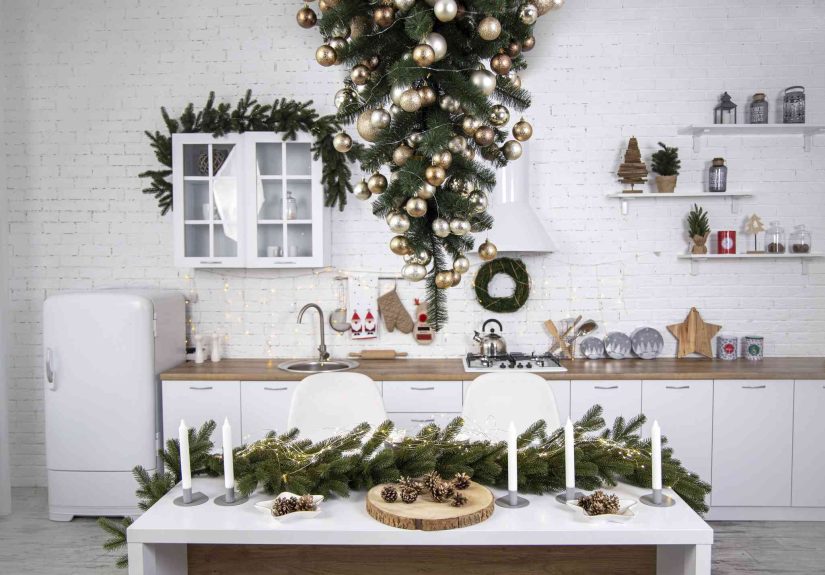
An upside-down Christmas tree is exactly what it sounds like: a tree displayed with the trunk or widest portion near the top and the tip pointing down. Some are suspended from the ceiling, while others are sold with special stands that create the illusion of a hanging tree without requiring you to drill into anything overhead.
At first glance, it looks delightfully rebellious. In practice, it is really just a different way to display the same holiday centerpiece. The ornaments still sparkle, the lights still glow, and someone in the family will still insist that one branch “looks weird” no matter what you do.
Modern upside-down Christmas trees are usually artificial. That is the most practical option because artificial trees are lighter, easier to secure, and less likely to turn your decorating project into an upper-body workout with needles.
The History Behind Upside-Down Christmas Trees
An older tradition than most people realize
Although upside-down Christmas trees feel like a recent design trend, the idea has deep roots in European holiday customs. Historians and lifestyle experts often point to older Christian symbolism and Eastern European decorating traditions as part of the tree’s backstory. One frequently repeated explanation connects the inverted tree shape to the Holy Trinity, with the triangular form serving as a visual religious teaching tool.
There is also a long-running legend involving Saint Boniface, a Benedictine monk associated with Germany. In popular retellings, he used an inverted fir tree to symbolize Christian belief. Some modern sources note that this specific story is difficult to verify in a strict historical sense, so it is best treated as tradition rather than courtroom evidence. In other words, it belongs in the “meaningful holiday legend” category, not the “please footnote this in a dissertation” category.
Eastern European influence matters too
Another important thread comes from Poland and nearby regions, where suspended evergreen arrangements were part of pre-Christmas decorating customs. These were not always full trees as Americans imagine them today, but they helped establish the visual idea of greenery hanging overhead as part of a festive home.
Later, hanging trees also made practical sense in smaller homes. In working-class households, suspending a tree could free up floor space. That detail is one reason the style feels oddly modern now: a centuries-old idea has reappeared in a time when studio apartments, open-concept rooms, and compact holiday layouts make space a premium all over again.
Why Upside-Down Christmas Trees Are Popular Again
They save floor space
This is the biggest practical selling point. A traditional tree takes up a footprint that can dominate a small room. An upside-down tree can open up more usable floor area for gifts, seating, party traffic, or simply the radical concept of being able to walk through your living room in December without brushing pine needles off your socks.
That makes the style appealing in apartments, condos, entryways, boutiques, restaurants, hotel lobbies, and homes where every square foot has to earn its keep. It can also work well in homes with curious pets or toddlers, though it is not a magical force field. “Out of the normal reach zone” does not mean “immune to chaos.”
They create instant visual drama
Even people who do not love the trend usually admit one thing: it is memorable. An upside-down tree draws the eye upward, changes the room’s visual rhythm, and becomes an immediate conversation starter. If your holiday style leans theatrical, eclectic, modern, or a little tongue-in-cheek, this tree delivers that high-impact look fast.
They feel fresh without abandoning tradition
Some holiday trends ask you to replace Christmas with something that vaguely resembles Christmas after reading three design blogs and drinking peppermint espresso. An upside-down tree is different. It still looks like a tree. It still holds lights and ornaments. It still feels festive. It just flips the usual script.
The Pros and Cons Before You Buy One
The advantages
Upside-down Christmas trees offer several clear benefits. They can free up floor space, make a small room feel less crowded, and keep ornaments farther from wagging tails or tiny hands. They also work beautifully in themed spaces because the shape is already dramatic before you add a single ribbon or bauble.
Some people also love how ornament visibility changes. Because the branches angle downward, dangling decorations can feel more prominent. Long ornaments, bead garlands, metallic drops, ribbons, and oversized bows often look especially striking on an inverted tree.
The drawbacks
Now for the reality check. These trees can be harder to install, harder to balance visually, and harder to decorate well. A traditional topper may not make sense. Heavy ornaments need thoughtful placement. Ceiling-mounted trees require real hardware, real planning, and real respect for gravity. This is not the time for flimsy shortcuts or “it seems fine” engineering.
They can also feel less cozy to people who love a classic, gathered-around-the-tree holiday setup. If your dream Christmas moment involves kids curled under low branches reading stories in plaid pajamas, an upside-down tree may look fabulous but feel a little emotionally off-script.
How to Decorate an Upside-Down Christmas Tree Without Regretting It
Choose the right tree first
If you are suspending the tree, go with a lightweight artificial model or one specifically designed for upside-down display. Some retailers sell inverted trees with dedicated mounting systems or cleverly disguised stands. Those are usually easier and safer than improvising with a standard tree and a burst of seasonal optimism.
If you are tempted by a real tree, think carefully. Real trees are heavier, less predictable, and harder to secure. They can also dry out, which creates an added fire hazard. For most households, an artificial version is the smarter choice.
Decorate in stages
The most effective decorating order is simple. Start with lights, ribbon, tinsel, or garland first. Then secure the tree. Add delicate ornaments last. This reduces the risk of breakage and keeps you from handling a fully decorated object while trying to mount it overhead like a holiday acrobat.
Many experts recommend lightweight and shatterproof ornaments, especially for the lower point of the tree where items are most visible and most vulnerable to movement. If you want to use heavier vintage ornaments, distribute them evenly so the display does not look lopsided or put unnecessary strain on the branches.
Think differently about the “top”
An upside-down tree changes where visual emphasis belongs. The broad upper portion becomes the main display area, while the pointed lower tip acts almost like a dramatic finishing detail. Instead of a traditional angel or star at the top, many decorators use a striking ornament, ribbon cluster, floral accent, or hanging statement piece near the lowest point.
The trick is not to force a standard tree formula onto a nonstandard tree. Let the shape lead the decorating plan.
Use gift placement as part of the design
Because more floor space is open below the tree, gift wrapping becomes part of the décor. You can arrange presents in a clean circle, create a color-coordinated display, or use baskets and decorative boxes to make the whole setup feel intentional. In a small room, that extra flexibility is a genuine advantage.
Safety Rules You Really Should Not Ignore
An upside-down Christmas tree is only charming when it stays where you put it. Safety matters even more than style here.
Use proper hardware
Do not hang a tree with adhesive hooks, bargain mystery hardware, or sheer belief. Use a heavy-duty hook or a mounting system rated for more than the full weight of the tree plus lights and ornaments. If ceiling installation is involved, secure it into a structural support and follow manufacturer guidance. If that sentence sounds annoying, it is still less annoying than a tree falling into your coffee table.
Keep it away from heat
The same rules that apply to any Christmas tree still apply here. Keep the tree at least three feet from fireplaces, radiators, space heaters, heating vents, candles, and other heat sources. If you use a live tree, keep it watered daily so it does not dry out.
Choose safer lighting
LED lights are usually the better choice because they produce less heat and are more energy-efficient. Check light strings for damage before decorating, avoid overloading outlets, and turn off tree lights before going to bed or leaving the house. If your tree has metallic materials, do not use electric lights on it unless the manufacturer explicitly says it is safe.
Mind the traffic flow
Put the tree in a lower-traffic area whenever possible. An upside-down tree still needs personal space. If people keep brushing against it, or if a pet sees the dangling ornaments as an all-you-can-swat buffet, the risk of damage goes up quickly.
Who Should Buy an Upside-Down Christmas Tree?
This style makes the most sense for people who want one or more of the following: saved floor space, a bold design statement, a conversation-piece holiday look, or a display that feels a little more curated than cozy-cabin traditional.
It is especially well suited to modern interiors, compact homes, retail displays, event spaces, and households that want to keep ornaments a bit farther from daily chaos. It can also be fun for families who already have a traditional tree elsewhere and want a second tree in a dining room, entry, or game room that feels more playful.
On the other hand, if you value easy setup, classic nostalgia, lots of heirloom ornaments, or a low-stress decorating routine, a regular upright tree may still be your best holiday friend. There is no shame in preferring a tree that obeys gravity in the traditional direction.
Experiences People Commonly Have With Upside-Down Christmas Trees
The experience of living with an upside-down Christmas tree is usually a mix of delight, curiosity, and a surprising number of practical comments from visitors. The first experience many people report is that the tree changes the energy of the room instantly. It feels more like an installation than a standard decoration. Guests notice it the second they walk in, and even people who claim they do not “get it” often spend a good few minutes staring at it, circling it, and asking how on earth it stays up.
In smaller homes, one of the biggest lived benefits is how much easier the room feels to navigate. Homeowners often realize that a traditional tree had been quietly monopolizing a corner, blocking a side table, or forcing furniture into awkward positions. With an upside-down tree, there is often more room for gifts, floor cushions, pet beds, or simply moving around during holiday gatherings without performing a sideways shuffle.
Families with pets or young children sometimes enjoy the extra distance between little hands and fragile ornaments, though the experience is not completely stress-free. Cats may still be fascinated by anything sparkly, and toddlers remain creative engineers of chaos. The difference is that the average ornament is less likely to be grabbed every twenty minutes. That alone can make the season feel a little calmer.
Decorating one, however, is often a learning experience. People who are used to “just putting things where they look cute” quickly realize that balance matters more on an upside-down tree. Heavy ornaments can pull the eye downward too harshly, while too many decorations at the narrow tip can make the whole design feel visually cramped. After the first try, many decorators become much more intentional. They edit more. They choose lighter materials. They use ribbon more strategically. They stop trying to make the tree behave like a traditional one and start treating it like a suspended centerpiece.
Another common experience is that gift placement becomes part of the fun. Because there is more visible floor area, wrapped presents, baskets, tree skirts, lanterns, and decorative boxes all have more room to shine. Some people say the area under the tree ends up looking more polished than it ever did with a regular tree because there is less crowding and more room for symmetry.
Emotionally, reactions vary. Some people absolutely love the modern, cheeky spirit of it. Others admire it but still prefer the warmth of a classic tree for their main family setup. That is perhaps the most honest takeaway: an upside-down Christmas tree is rarely neutral. It creates a memorable experience. It gives the home a point of view. And during a season already full of repetition, many people enjoy having one holiday element that feels just different enough to make Christmas feel new again.
Final Thoughts
Upside-down Christmas trees are not just a quirky modern fad. They draw from older traditions, offer genuine space-saving benefits, and create a dramatic holiday focal point that traditional trees simply cannot match. They also demand more thought, more planning, and more respect for safety than the average tree setup.
If you love statement décor, want to free up floor space, or enjoy holiday decorating with a little edge, this trend may be your perfect festive plot twist. If you prefer a more traditional, low-maintenance Christmas look, you can still admire the upside-down tree from a safe emotional distance and let someone else explain it to their relatives.
Either way, the upside-down Christmas tree proves that even one of the most established holiday symbols can still surprise us. And honestly, after decades of the same string lights, same skirt, and same box of tangled ornaments, a little surprise might be exactly what the season needs.