Table of Contents >> Show >> Hide
- A practical timeline: what’s usually safe, and when
- Why exercise is restricted after cataract surgery (the non-scary science)
- The first 48 hours: move like a calm, wise turtle
- Week 1: light activity is your friend; hero workouts are not
- Weeks 2–4: gradual return, with two big rules
- Workout-by-workout: when you can usually return (and how)
- Walking (often Day 1)
- Treadmill (usually after several days to a week, easy pace)
- Cycling (stationary first, then road later)
- Running (often ~1–2+ weeks, sometimes longer)
- Strength training (often ~1–2+ weeks, sometimes longer)
- Yoga and Pilates (gentle first; no inversions early)
- Swimming, hot tubs, and water sports (often 2–4+ weeks)
- Golf, tennis, pickleball (often ~1–2+ weeks, depending on intensity)
- Contact sports and high-risk activities (often 4+ weeks or surgeon clearance)
- How to exercise safely once you’re cleared
- Warning signs: stop exercising and call your surgeon
- Situations that can change your exercise timeline
- FAQ: quick answers to common questions
- Conclusion: be active, but be smart
- of Real-World Experiences: What Recovery Looks Like in Practice
Cataract surgery is often described as “quick,” “routine,” and “no big deal.” And medically speaking, it usually is.
But your eyeball doesn’t care about your calendar invites or your gym streak. For a short window after surgery,
your eye is healing from a tiny incision and adapting to a new intraocular lens (IOL). The goal is simple:
get the benefits (clearer vision) without earning a bonus round of swelling, pressure spikes, bleeding, or infection.
So… when can you exercise after cataract surgery? The honest answer is: it dependson your surgeon’s protocol,
your eye pressure, your healing speed, and what you mean by “exercise.” (A gentle walk is not the same thing as
deadlifting your bodyweight while doing a hot-yoga headstand. Please do not combine those.)
This guide breaks down a realistic, surgeon-friendly timeline, explains why restrictions exist, and gives a
workout-by-workout return planso you can move your body without making your eye file a complaint.
Always follow your surgeon’s specific instructions; they override any general article on the internet (including this one).
A practical timeline: what’s usually safe, and when
Most U.S. postoperative instructions share a common theme: light movement early, avoid strain and water exposure,
and wait for clearance before heavy lifting or high-intensity workouts. Here’s a blended timeline you can use
to planthen tailor with your doctor’s advice.
| Time After Surgery | Usually OK (if you feel well) | Usually NOT OK | Why It Matters |
|---|---|---|---|
| Day 0–1 | Rest, easy walking around the house, basic daily tasks | Straining, bending with head below waist, rubbing your eye | Pressure spikes and irritation can disrupt early healing |
| First 48 hours | Short gentle walks, very light activity | Bending/stooping, lifting heavy objects, vigorous exercise | Bending and straining can raise eye pressure when the incision is freshest |
| Week 1 | Walking, light stretching (no inversion), easy chores | Gym workouts, running, heavy lifting, sweaty high-intensity training | Reduce risk of pressure spikes, inflammation, and accidental eye rubbing |
| Weeks 2–3 | Light-to-moderate cardio; gradually resuming routine activities | Heavy lifting, contact sports; swimming often still restricted | Healing improves, but strain and water exposure can still increase risk |
| Weeks 3–4+ | Many workouts return with clearance; progressive strength training | Contact sports or anything that risks a direct eye hit (until cleared) | Protect the eye from trauma while tissues fully stabilize |
Notice how “usually” appears a lot. That’s not indecisionit’s realism. Some surgeons allow moderate activity sooner;
others prefer a stricter two-week pause for strenuous exercise or heavy lifting. Your safest path is the one that matches
your postoperative instructions and follow-up exam findings.
Why exercise is restricted after cataract surgery (the non-scary science)
Cataract surgery commonly uses a small incision and ultrasound to remove the cloudy lens, then inserts a clear artificial lens.
Even when the incision is tiny, your eye needs time to seal and calm inflammation.
The main exercise-related risks fall into four buckets:
1) Pressure spikes from straining and “head-down” positions
Heavy lifting, breath-holding (hello, unintentional “powerlifter face”), intense cardio, and bending with your head below your waist
can temporarily increase intraocular pressure. Early on, that can irritate healing tissue or worsen swelling.
This is why many instructions explicitly warn against bending and heavy lifting in the first days to weeks.
2) Infection risk, especially from water exposure
Pools, hot tubs, lakes, and even steamy environments can expose your eye to bacteria and irritants.
Many U.S. postoperative guides restrict swimming for at least a couple of weeksand sometimes longerbecause infection after eye surgery
is rare but serious.
3) Trauma risk (aka: “Please don’t get bonked in the eye”)
Contact sports, racquet sports at full speed, and activities where you could fall or catch an elbow can threaten the healing eye.
Even if you feel amazing, your eye would prefer not to take a basketball to the face this month.
4) The “oops, I rubbed my eye” problem
Sweat, dust, wind, and fatigue make it more likely you’ll touch your facethen rub your eye without thinking.
Eye rubbing is one of the most common “small” mistakes after surgery, and it’s one reason surgeons recommend protective shields at night
and caution with early workouts.
The first 48 hours: move like a calm, wise turtle
If your brain is screaming, “But I feel fine!”great. Use that energy to do the most underrated fitness move of all time:
recover. In the first day or two, the most common restrictions include avoiding bending/stooping, heavy lifting,
and anything that makes you strain.
- Do: short easy walks, gentle movement around the house, hydration, your prescribed eye drops.
- Don’t: bend at the waist to pick things up; instead, squat with your knees (your legs can handle ityour incision is busy).
- Don’t: lift “heavy.” If you’re unsure, treat a full grocery bag or a laundry basket as “heavy” and ask for help.
- Don’t: test your luck with “just one quick set.” Your eye is not impressed.
Practical trick: set up your space so you don’t need to reach, strain, or search. Put your eye drops where you can grab them easily.
Place frequently used items at waist height. Make your recovery environment boringin the best way.
Week 1: light activity is your friend; hero workouts are not
For many people, walking is the early green light. It keeps circulation moving and mood stable without raising eye pressure much.
The first week is usually the time to maintain activity, not build it.
Safe-ish options (generally)
- Walking: start short, build slowly, avoid windy/dusty areas if your eye feels irritated.
- Very gentle stretching: keep your head above your heart; skip deep forward folds and inversions.
- Stationary bike (easy pace): often delayed until at least several days to a week; follow your surgeon’s plan.
Common “not yet” list
- Running/jogging: bouncing + sweat + higher heart rate = not ideal early on.
- Weight training: especially anything that makes you strain or hold your breath.
- Yoga inversions: downward dog, headstand, shoulder standanything head-down is a no-go early.
- Swimming/hot tubs: infection risk; many protocols restrict for weeks.
If you’re a gym regular, the mental part can be harder than the physical part.
Remind yourself: this isn’t “falling off track.” This is preventing a complication that would keep you out much longer.
Weeks 2–4: gradual return, with two big rules
Many patients begin resuming more normal activity after early follow-upsoften around the one-week mark, sometimes later.
This is where you can usually expand from “walks only” to “light-to-moderate workouts,” depending on your doctor’s guidance.
Rule #1: Increase intensity slowly. Your eye may feel fine before it’s fully stable. Add time and effort in small steps.
Rule #2: Avoid water exposure and heavy straining until you’re cleared. Different surgeons pick different timelines, so ask.
If your surgeon says “no strenuous exercise for two weeks,” take that literally. If they say “avoid heavy lifting for at least a week,”
ask what weight limit they consider “heavy” for you. Some guidance uses simple anchors like “no more than a gallon of milk” early on.
Your job is not to negotiate. Your job is to heal.
Workout-by-workout: when you can usually return (and how)
Walking (often Day 1)
Walking is the classic early activity: low strain, low bounce, easy to stop if you feel off. Start with 5–10 minutes.
Wear sunglasses outdoors if light bothers you. Avoid dusty trails the first week unless you enjoy the hobby of “gritty eyeball.”
Treadmill (usually after several days to a week, easy pace)
A treadmill walk is usually fine once you’re comfortable walking at home. Keep it flat (no steep incline), skip sprint intervals,
and step off carefullyfalls are not part of the plan.
Cycling (stationary first, then road later)
Stationary cycling at a gentle pace is often allowed earlier than road cycling because you control the environment and reduce wind and debris.
Road cycling adds speed, wind, bumps, and eye-drying airflowso it’s commonly delayed. Wear protective eyewear when you do return.
Running (often ~1–2+ weeks, sometimes longer)
Running raises heart rate and involves impact. Many surgeons prefer waiting at least a week, and some recommend closer to two weeks for vigorous activity.
When you return, keep it easy: short jog, flat route, no hill repeats, and absolutely no “just seeing what happens” sprints.
Strength training (often ~1–2+ weeks, sometimes longer)
Strength training is tricky because the risk isn’t the dumbbellit’s the strain. Strain can raise eye pressure, especially with breath-holding.
A safe return usually looks like:
- Start with very light weights and higher reps.
- Exhale on exertion (no breath-holding).
- Avoid heavy compound lifts early (deadlifts, heavy squats, heavy bench).
- Skip “max effort” sets until your surgeon clears you.
What counts as “heavy”? Many postoperative instructions use ranges like 10–15 pounds early on, while others give higher limits.
If you’re not sure, treat anything that makes you grunt, strain, or turn red as “too heavy for now.”
Your eye doesn’t need your PR. It needs your patience.
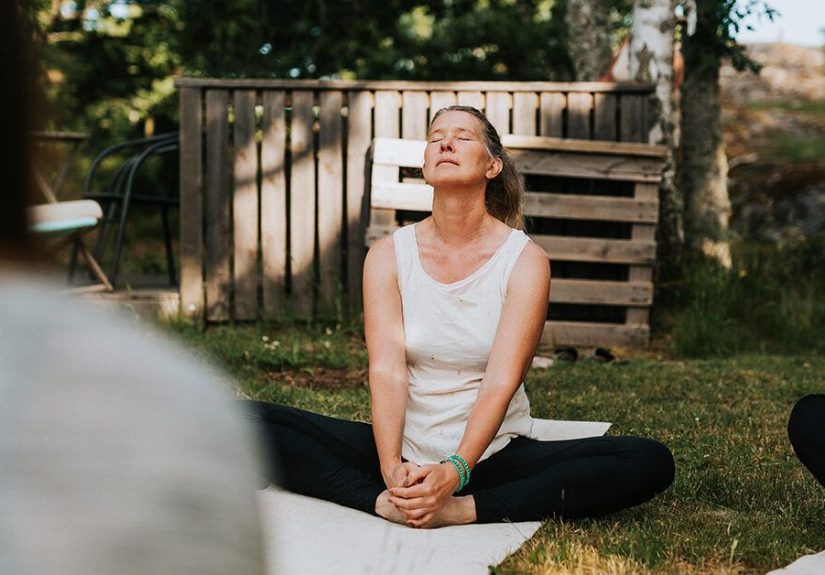
Yoga and Pilates (gentle first; no inversions early)
Yoga is sneaky: you can feel calm while your head is doing the exact “below-the-waist” thing surgeons warn about.
Early on, choose upright, gentle flows: seated stretches, supported poses, light mobility work.
Avoid forward folds, downward dog, headstands, shoulder stands, and any pose that puts your head low or makes you strain.
Swimming, hot tubs, and water sports (often 2–4+ weeks)
Water is one of the most common restrictions because of infection risk. Many surgeons advise avoiding pools and hot tubs for at least two weeks,
and some protocols extend that to four weeks. Even if you’re “just floating,” your eye is still exposed.
When you return, consider well-fitting swim goggles and avoid rubbing your eye afterward.
Golf, tennis, pickleball (often ~1–2+ weeks, depending on intensity)
These are usually “later than walking, earlier than contact sports.” The main concerns are quick head movement, sweating, and accidental hits.
Start with putting or gentle swings before full-speed rounds. Wear eye protection if there’s any risk of ball impact.
Contact sports and high-risk activities (often 4+ weeks or surgeon clearance)
Boxing, basketball, martial arts, and anything where an elbow might find your face should wait until your surgeon says you’re safe.
The risk is less about pressure and more about direct trauma.
How to exercise safely once you’re cleared
- Protect the eye: sunglasses outdoors; protective sports glasses for higher-risk activities.
- Keep sweat out: use a clean towel, sweatband, or pause to dabdon’t rub your eye.
- Watch your environment: avoid dusty gyms, smoky rooms, strong wind, and dirty water early on.
- Go “conversation pace” first: if you can’t talk, you’re probably too intense too soon.
- Don’t skip follow-ups: your doctor’s exam is what confirms you’re healing normally.
Bonus tip: set a reminder to blink. People blink less when concentrating (like during strength sets),
and dry eyes can feel extra annoying after surgery.
Warning signs: stop exercising and call your surgeon
Mild irritation, light sensitivity, and some blur can be normal early on. But these symptoms deserve prompt medical advice:
- Increasing pain (especially if it’s more than mild discomfort)
- Sudden worsening vision, new “curtain” or shadow
- Flashes of light or a sudden shower of floaters
- Significant redness, swelling, or discharge
- Nausea/vomiting with eye pain (can signal a pressure problem)
If you’re unsure, err on the side of calling. It’s far better to ask a “maybe silly” question than to ignore an early complication.
Situations that can change your exercise timeline
Your return-to-exercise plan may be more conservative if you have:
- Glaucoma or high eye pressure history (pressure spikes matter more)
- Complications during surgery or extra inflammation afterward
- Other eye conditions (macular degeneration, diabetic eye disease, prior retinal issues)
- Combined procedures or additional surgical steps
- Workouts that involve heavy straining (competitive lifting, CrossFit-style high intensity)
This doesn’t mean you won’t get back to your routineit just means your “when” and “how” might be different.
Ask your surgeon for a personalized clearance plan. A two-minute conversation can prevent a two-week setback.
FAQ: quick answers to common questions
When can I go back to the gym after cataract surgery?
Many people can return for light activity within about a week, but strenuous workouts and heavy lifting
often wait 1–2+ weeks (sometimes longer). The gym is also full of dust, shared surfaces, and the temptation to “just try one set,”
so bring your self-control like it’s part of your gym bag.
Can I do push-ups?
Push-ups combine effort, breath-holding risk, and a head-forward posture. They’re commonly delayed until you’re cleared for more strenuous activity.
If you’re itching to do something, start with walking and gentle, upright movements first.
When can I lift my grandkid?
The real issue is weight + sudden movement. Many instructions restrict heavy lifting for at least a week, sometimes two.
Ask your surgeon for a safe weight limitthen remember kids wiggle and head-butt unexpectedly (they are tiny chaos machines).
When is it safe to swim after cataract surgery?
Often after 2–4 weeks, but it varies widely. Follow your surgeon’s timeline because water exposure is strongly linked to infection risk.
Conclusion: be active, but be smart
The best approach to exercising after cataract surgery is not “do nothing” and it’s not “back to normal tomorrow.”
It’s a short, strategic pausethen a steady return. Start with gentle walking, avoid bending and straining early,
hold off on heavy lifting and vigorous cardio until cleared, and treat swimming and contact sports as later-stage activities.
Your reward for being patient is simple: a smoother recovery and a clearer view of the worldwithout unnecessary drama.
of Real-World Experiences: What Recovery Looks Like in Practice
Let’s talk about the part nobody puts on the discharge paperwork: the emotional rollercoaster of “I feel fine… so why can’t I do my normal workout?”
Here are a few real-world-style experiences (composites of common patient stories) that show how people actually navigate exercise after cataract surgery.
Think of these as friendly road signs, not medical orders.
The “I’m Not Doing Nothing” Walker
One of the most common wins is a simple walking habit. People often start with slow laps inside the house on Day 1kitchen to hallway, hallway to “I guess I’m lapping my furniture now.”
Within a week, many build to short outdoor walks, especially in calm weather. The biggest surprise?
Not the walking itself, but remembering not to rub the eye when it waters in the wind. Sunglasses become the MVP, not the fashion statement.
The takeaway: walking scratches the “I need movement” itch while keeping your eye pressure drama low.
The Gym Regular Who Learns the Art of the Light Weight
Gym folks tend to struggle most with the “no heavy lifting” rule because “heavy” is a lifestyle, not a number. A common approach is returning to the gym with an ego-free plan:
machines instead of free weights (more stability), lighter loads, and strict breathing cuesexhale on effort, no breath-holding.
The first session feels almost too easy… until they realize they didn’t leave with a pounding head, sweaty eye, or the urge to touch their face 300 times.
The lesson: a “maintenance week” is still trainingjust training your patience.
The Yoga Lover Who Discovers Upright Flows
Yoga enthusiasts often miss their routines, but the early no-inversion rule forces creativity. Many switch to seated mobility, gentle twists, supported poses, and breathwork.
Some even report they come back calmer because they finally explore the non-upside-down half of yoga class.
The pro move is treating “downward dog” like a temporary ex you’re not texting right now: fond memories, but not today.
The message: you can keep the ritual without the risky head-down positions.
The Swimmer Who Becomes a Land Creature (Temporarily)
Swimming restrictions frustrate people who rely on the pool for low-impact cardio. The workaround is often brisk walking, stationary biking, or water-free strength circuits at home.
Many swimmers say the hardest part is not fitnessit’s habit. So they keep the schedule: same swim time, different activity.
When cleared to return, they start with goggles, avoid rubbing their eye afterward, and keep the first sessions short.
The big point: replacing the routine (not just the workout) is what keeps momentum.
Across these experiences, the theme is consistent: people do best when they pick a “safe substitute,” follow the surgeon’s timeline,
and treat recovery like a training blockbecause it is. Your eyes will thank you. Quietly. With better vision. Which is kind of their love language.