Table of Contents >> Show >> Hide
If you’ve ever looked at a beetle and thought, “Why does that tiny guy look like he’s wearing a custom chrome wrap?” congratulationsyou’ve stumbled into one of nature’s funniest flexes. Insects don’t just survive; they commit. They cosplay as leaves, pretend to be bird poop (with unsettling confidence), and sparkle like they just left a disco. And the best part? A lot of that “color” isn’t paint at allit’s physics doing a magic trick in a bug-sized tuxedo.
This article is a guided tour through the bug world’s most extra residents: metallic beetles, transparent-winged butterflies, moths that look like they were designed by a tattoo artist, and glow-makers that turn forests into living starfields. Think of it as a 50-stop gallery showexcept the artists are six-legged, and they never charge admission.
Why Some Bugs Look Like They Fell Into a Glitter Factory
1) Structural color: when “paint” is actually architecture
Many insects get their shine from microscopic layers and patterns in their outer shells or wing scales. Instead of pigments absorbing and reflecting light like ordinary dyes, these nano-structures bend, split, and bounce light into metallic greens, electric blues, and oil-slick rainbows. Translation: your eyes are basically watching a tiny optical engineering project sprint across a leaf.
2) Pigments: the classic option, still undefeated
Not everything is structural. Insects also use chemical pigmentsespecially for deep blacks, bright reds, and warning colors that say, “I taste bad, and I’m not sorry.” Sometimes pigments and structural color stack together, which is how you get insects that look like they’re lit from within.
3) Disguise, drama, and survival
Spectacular looks aren’t just for your camera roll. Some insects use beauty to lure prey (hello, orchid mantis), confuse predators, attract mates, or vanish into the background like an expertly placed prop in a movie set. When you’re bite-sized, looking weird can be a life insurance policy.
4) Bioluminescence: the world’s smallest light show
Fireflies and their relatives generate light through chemical reactions inside their bodies. Depending on the species, those flashes can be a romantic “hey there,” a warning, or (occasionally) a deceptive trap. It’s like Morse codeif Morse code was adorable and flew.
“Glittery Gentleman” Gallery: 50 Spectacular Insects
Below are 50 real insects and insect life stages that earn a spot in the Hall of Fame for “How is that a real organism?” Some are famously flashy. Others are niche celebrities. All are proof that nature has no chill.
Metallic & Iridescent Icons
- Glorious scarab (Chrysina gloriosa) Green and silver like a luxury watch, but with legs and opinions.
- Jewel beetles (family Buprestidae) Metallic bodywork that looks poured, not grown, and somehow still aerodynamic.
- Emerald ash borer (Agrilus planipennis) Beautiful, destructive, and proof that pretty can be complicated.
- Golden tortoise beetle (Charidotella sexpunctata) A tiny living coin that sometimes “turns off” its gold like a mood ring.
- Blue “jewel” weevils (Eupholus spp.) Walking gemstones with a snout, as if rhinestones evolved teeth.
- Rainbow stag beetle (Phalacrognathus muelleri) A gradient masterpiece carrying antler-shaped face hardware.
- Goliath beetles (Goliathus spp.) High-contrast armor and “I lift” energy in insect form.
- Hercules beetle (Dynastes hercules) A horned heavyweight that looks like it belongs on a mythological trading card.
- Titan beetle (Titanus giganteus) Less glitter, more “please respect my personal space,” but undeniably spectacular.
- Ebony jewelwing damselfly (Calopteryx maculata) Velvet-black wings with an iridescent glow that reads “formalwear.”
- Green metallic sweat bees (various Agapostemon & relatives) Tiny metallic pollinators that look airbrushed.
- Bronze-winged beetles (many scarabs & leaf beetles) Subtle shine that turns blazing under the right sunlight angle.
- Metallic cuckoo wasps (family Chrysididae) Like living confetti… with a surprisingly intense lifestyle.
- Blister beetles (family Meloidae) Bright colors that politely suggest you should not handle them bare-handed.
- Blue carpenter bees (Xylocopa spp.) Big, buzzy, and occasionally shimmering like they’re wearing a satin jacket.
Masters of Disguise
- Orchid mantis (Hymenopus coronatus) A flower impersonator that lures pollinators into the worst surprise party.
- Leaf insects (family Phylliidae) The reason “Is that leaf moving?” is a valid question in the tropics.
- Stick insects (order Phasmatodea) Nature’s prank: a walking twig with impeccable stillness control.
- Dead-leaf katydid (Pterochroza ocellata) A crisp brown “leaf” that suddenly jumps, because chaos is the brand.
- Dead-leaf mantis (Deroplatys spp.) Looks like forest litter until it rotates its head like a tiny horror director.
- Thorn bugs / treehoppers (family Membracidae) Helmets so weird you’ll suspect they were designed by aliens.
- Giant swallowtail caterpillar (Papilio cresphontes larva) A bird-poop imitation that deserves an Oscar.
- Bagworm “walking pinecone” larva (family Psychidae) A portable home made of sticks, leaves, and pure determination.
- Caddisfly larva (order Trichoptera) Underwater architects building cases from sand, twigs, and tiny gravel bling.
- Lacewing “trash bug” larva (family Chrysopidae) Covers itself in debris like a camouflage hoodie with snacks attached.
- Antlion larva (family Myrmeleontidae) Digs sand pits and waits like an ambush gremlin with patience.
- Spiny flower mantis (Pseudocreobotra spp.) Floral-looking legs plus eye-like patterns that scream “don’t mess with me.”
- Hickory horned devil (Citheronia regalis larva) A neon, spiky caterpillar that looks dangerous (mostly bluffing).
- Puss caterpillar (Megalopyge opercularis) A fuzzy “don’t pet me” warning wrapped in marshmallow aesthetics.
- Walking stick nymphs (various) Tiny twigs-in-training: adorable, unsettling, and masters of freeze-frame.
Wings That Look Painted (or Photoshopped)
- Glasswing butterfly (Greta oto) Transparent wings that trade color for stealth, like nature’s invisibility cloak prototype.
- Blue morpho (Morpho spp.) Flashy blue that changes with angle, turning flight into a strobe effect.
- Monarch butterfly (Danaus plexippus) Iconic orange-and-black with a “don’t eat me” reputation.
- Zebra longwing (Heliconius charithonia) Sharp stripes and slow flight that looks calmly confident.
- Owl butterflies (Caligo spp.) Giant eye spots that say, “I’m not a snack; I’m a staring contest.”
- Painted lady (Vanessa cardui) A confetti pattern that somehow works everywhere it goes.
- Common buckeye (Junonia coenia) Eye spots in bold colors, like wing art made to intimidate.
- Madagascan comet moth (Argema mittrei) Long tails, luminous greens, and an overall “forest fairy” vibe.
- Io moth (Automeris io) A soft yellow moth that reveals startling “eyes” when it feels threatened.
- Madagascar sunset moth (Chrysiridia rhipheus) So colorful it looks fictional, yet casually exists.
- Rosy maple moth (Dryocampa rubicunda) Pink and yellow like cotton candy learned to fly.
- Giant leopard moth (Hypercompe scribonia) Polka-dotted elegance with a quietly dramatic underwing surprise.
- Cecropia moth (Hyalophora cecropia) One of the showiest North American moths, dressed like it’s always gala night.
- Polyphemus moth (Antheraea polyphemus) Huge eye spots on the wings, like it brought backup security.
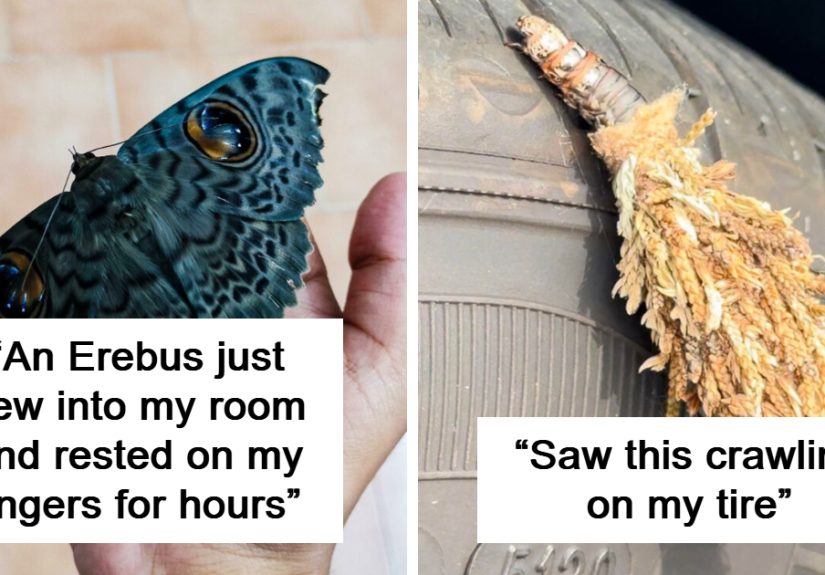
- Atlas moth (Attacus atlas) Massive wings with patterns that resemble snake heads, because intimidation is efficient.
Glow, Buzz, and Other Party Tricks
- Hummingbird clearwing moth (Hemaris thysbe) Hovers at flowers like a tiny hummingbird with transparent wings.
- Fireflies (family Lampyridae) Living lanterns that turn summer evenings into a soft-lit festival.
- Synchronous fireflies (Photinus carolinus) Some populations flash in coordinated bursts, like a natural light orchestra.
- Periodical cicadas (Magicicada spp.) Pop up on 13- or 17-year schedules, then throw the loudest reunion tour imaginable.
- Bombardier beetles (genus Brachinus and relatives) Defense system: a hot chemical spray, because escalation is an option.
How to Enjoy Spectacular Insects (Without Being a Jerk About It)
- Look first, touch last (or never). Oils, pressure, and stress can harm delicate wings and tiny legs.
- Skip the “relocation.” Moving insects for a photo can break camouflage strategies and expose them to predators.
- Use soft light. Diffuse flash, avoid repeated blasts, and never shine bright lights directly into clustered fireflies.
- Learn one host plant. Many showy caterpillars and moths track specific trees and shrubsfind the plant, find the drama.
- Be invasion-aware. Some dazzling insects are serious pests; report them if your local agency asks for sightings.
Final Thoughts
The next time something shiny lands near you, resist the urge to label it “random bug” and move on. It might be a living prism, a botanical impersonator, or a tiny engineer wearing armor built from light itself. Insects are proof that nature doesn’t just do “functional”it also does “absurdly stylish,” sometimes for survival, sometimes for romance, and sometimes because evolution loves a good plot twist.
Extra: of Real-World Bug-Watching & Photo Experiences
If you want the “Glittery Gentleman” moment in your own life, the biggest shift isn’t buying a fancy camerait’s changing your pace. Bug-watching rewards slow, curious movement. A typical beginner experience starts with frustration (“I swear there was a neon beetle here”), then turns into a strange kind of calm: you stop scanning like you’re speed-reading a billboard and start observing like you’re decoding a secret.
The most memorable outings often happen at two times: early morning and just after sunset. Mornings can feel like you’ve arrived backstage before the show begins. Insects warm up slowly, and dew makes wings and shells sparkle. That’s when metallic beetles look the most unrealsunlight hits them cleanly, and their structural colors seem to switch on like a spotlight. If you’re photographing, you’ll notice that tiny changes in angle can transform the color. The same insect can flash green, gold, and blue depending on where you stand, which is both thrilling and mildly infuriating (in the best way).
Night walks deliver a completely different kind of wonder. Instead of “What color is it?” the question becomes “Where is the light coming from?” Fireflies make you pay attention to patterns: single blinks, double blinks, long glows. When you watch long enough, you start seeing timing and rhythm, like the landscape is breathing. If you’re in a place known for synchronous fireflies, the experience can feel unrealmore like a stadium wave than an animal behavior. The most practical lesson from these nights is etiquette: keep lights low, use a red filter if you need a flashlight, and let your eyes adjust. You’ll see more by doing less.
For daytime “spectacular insects,” a simple trick is to follow flowers. Watch a patch of blooms for five minutes without moving. Hovering visitorslike clearwing mothsoften arrive in quick bursts. They’re fast, they’re jittery, and they will humble your camera skills. The good news: even if you miss the photo, you still get the experience of watching something that looks like a mash-up of moth and hummingbird do precision hovering like it’s running on a tiny jet engine.
Finally, the most satisfying experience is when knowledge turns into “bug radar.” Once you learn that certain caterpillars prefer certain trees, or that specific butterflies like specific sunny edges, your walks change. You’re not wanderingyou’re scouting. And that’s when the spectacular insects stop being rare miracles and start feeling like neighbors you simply hadn’t learned to notice yet.