Table of Contents >> Show >> Hide
- The Winner: Jamal Roberts Took the Season 23 Title
- Who Is Jamal Roberts? The P.E. Teacher With Arena-Ready Vocals
- How the Season 23 Finale Played Out (AKA: The Night Everyone Cried)
- Why Jamal Roberts Won: The Three-Layer Formula
- The Judges and the Big Change Everyone Noticed: Carrie Underwood Joined the Panel
- What Does the Winner Get? The Real Talk on Prize Money and the “Golden Ticket” Aftermath
- What Happened After the Win: Releases, Charts, and “Oh… This Is My Life Now”
- What About John Foster and Breanna Nix?
- How to Watch Season 23 Highlights (and Not Miss the Next Winner)
- Experience Section: What Season 23 Felt Like as a Viewer (and Why These Wins Stick With Us)
- Conclusion
If you came here for the spoiler because your group chat is already arguing like it’s the Supreme Court of Pop,
welcome. If you came here because you watched the finale live and are still emotionally recovering, also welcome.
Either way, Season 23 of American Idol (the 2025 season) ended with a winner who made the whole show feel
a little more like a Sunday morning church service… in the best way possible.
[1]
Let’s break down who took the crown, how it happened, why the win made sense (even if your personal fave got
voted off and you “will never forgive America”), and what’s next now that confetti has officially entered the chat.
The Winner: Jamal Roberts Took the Season 23 Title
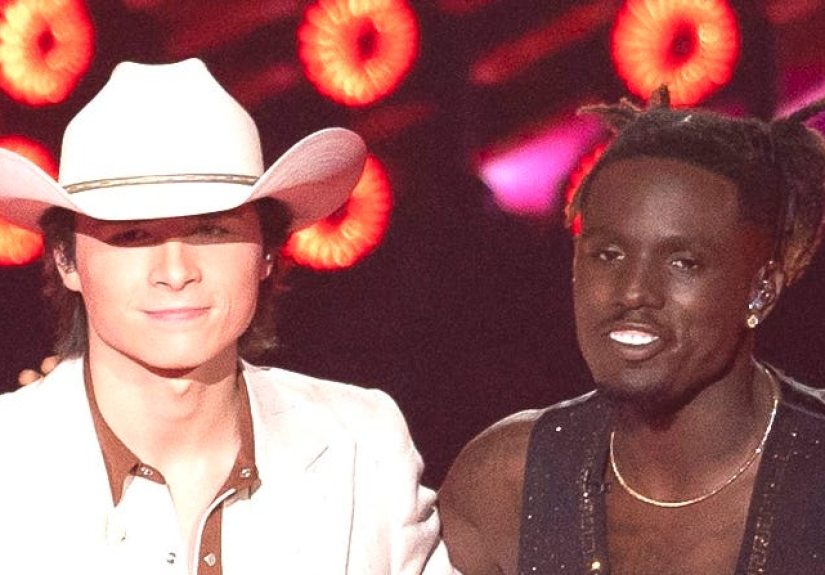
Jamal Roberts won American Idol Season 23 during the live finale on
May 18, 2025. He finished ahead of John Foster (runner-up) and
Breanna Nix (third place). [1][2]
Roberts wasn’t framed as a “surprise winner” so much as a “how have we not been giving this guy a standing ovation
since episode one?” winner. Viewers and outlets repeatedly described him as a soulful, story-first vocalist who
could make a cover feel like a personal testimony.
[1][3]
Quick recap (for the busy and the emotionally overwhelmed)
- Winner: Jamal Roberts [1]
- Runner-up: John Foster [2]
- Third place: Breanna Nix [2]
- Finale date: May 18, 2025 [1]
- Big finale moment: Roberts’ performance of “Her Heart” helped seal the win [1]
Who Is Jamal Roberts? The P.E. Teacher With Arena-Ready Vocals
One reason Jamal Roberts resonated so hard: he came in with a real-life job, real-life responsibilities, and
real-life humility. Major outlets described him as a P.E. teacher from Meridian, Mississippi and
a father of threea backstory that didn’t feel “packaged,” because it wasn’t.
[2][4]
Another key detail that made his arc hit: he didn’t just stroll onto the show like a seasoned superstar.
He reportedly auditioned multiple times before finally breaking through in Season 23.
That kind of persistence plays well on TV, surebut it also explains why he performed like someone who
understood how rare the moment was. [4]
And then there’s the vibe. Roberts’ voice lived in that sweet spot where gospel, R&B, and classic soul overlap.
It’s the kind of vocal identity that makes the judges lean forwardnot because they’re hunting for “the next
anyone,” but because they’re hearing the only him. [1]
How the Season 23 Finale Played Out (AKA: The Night Everyone Cried)
The Season 23 finale was a three-hour, celebrity-loaded sprint that felt like it had two goals:
(1) crown a winner, and (2) remind you that your television has a “maximum goosebumps” setting.
[3][5]
Reports noted big performances and guest appearances, including Jessica Simpson (in a widely
discussed return to TV performance) plus other star turns that turned the finale into a mini music festival.
[3][2]
Musically, Roberts’ finale moment centered on his performance of “Her Heart” (by Anthony Hamilton),
which multiple outlets highlighted as a key “this is why he wins” performance. [1][4]
The vote totals were huge
Here’s the headline you probably saw everywhere: the finale drew the biggest finale vote in ABC-era Idol history.
Some reporting put the count at 26 million, while another outlet reported it as over 27 million.
Different tallies can happen depending on how totals are described (live windows, platforms, or reporting updates),
but either way: a lot of thumbs were involved. [6][7][8]
Why Jamal Roberts Won: The Three-Layer Formula
American Idol winners usually have a “thing” beyond a big voice. In Jamal Roberts’ case, it was a three-layer
combination that tends to perform extremely well with votersespecially in a live finale.
1) He sang like he meant it (and people believe that)
The show has no shortage of vocal athletes. But what separates finalists from winners is convictionthe sense that
the singer isn’t trying to impress you, they’re trying to communicate with you. Coverage repeatedly framed Roberts’
performances as emotionally grounded and authentic. [1][4]
2) He built momentum, not just moments
A single viral performance can get you attention. Consistency gets you votes. By the finale, Roberts had stacked
enough strong weeks that the win felt like a culmination rather than a plot twist. [1][5]
3) He had “Idol-ready” mentorship in a new way
Season 23 leaned into guidance more visibly with Jelly Roll serving as the show’s first-ever
Artist in Residencea role designed to support contestants across the season, not just pop in for
a cameo lesson. That kind of ongoing coaching can help artists translate raw talent into live-show strategy.
[9][10]
The Judges and the Big Change Everyone Noticed: Carrie Underwood Joined the Panel
Season 23 also arrived with a headline-level change at the judges’ table:
Carrie Underwood joined as a judge, replacing Katy Perry.
Luke Bryan and Lionel Richie returned, with Ryan Seacrest still hosting.
[11][12][13]
From a fan’s perspective, Underwood’s presence did two things at once:
it raised the “this is a serious music show” energy, and it gave contestants advice from someone who has literally
lived the Idol before-and-after (and then proceeded to become a stadium-level career).
[11][12]
And yes, there’s a poetic symmetry here: a former winner evaluating future winners.
It makes the show feel less like a talent factory and more like an ongoing franchise storylike Rocky,
but with more rhinestones.
What Does the Winner Get? The Real Talk on Prize Money and the “Golden Ticket” Aftermath
Fans always ask the same question after the confetti settles: “Okay, but what did he actually win?”
Along with the title and the platform, post-show reporting commonly points to prize money and a recording contract,
though the money isn’t necessarily a simple “here’s a giant check, go buy a yacht” situation.
[14]
One widely cited explanation (via comments from a past winner) is that winners may receive a headline figure like
$250,000, but it functions more like an advance connected to the record deal and may be paid in parts,
with taxes and recoupment realities involved. [14]
In other words: winning Idol can be a career launchpad, but the “business of music” still shows up to the party.
(It always does. It never RSVPs. It just arrives.) [14]
What Happened After the Win: Releases, Charts, and “Oh… This Is My Life Now”
Post-finale momentum matters, and Roberts’ winner-week music traction became part of the story.
His song “Heal” landed at No. 1 on Billboard’s Hot Gospel Songs chart, according to chart coverage.
[15]
Industry coverage also described “Heal” as a fast-moving release around the finale window, with label/partner news
emphasizing its early impact. [16]
And if you’re wondering what the newly crowned winner wanted to do first, at least one post-finale interview recap
reported Roberts’ initial plan was wonderfully human: rest. The glamour of showbiz begins with…
needing a nap. Respect. [17]
What About John Foster and Breanna Nix?
The finale’s top threeRoberts, Foster, and Nixeach represented a different lane of “Idol appeal,” which is why the
vote felt genuinely competitive. ABC News described John Foster as an 18-year-old college student from Addis, Louisiana,
and Breanna Nix as a Denton, Texas native. [2]
Historically, being runner-up or third place is not a career-ending labelit’s often a visibility springboard.
In modern Idol, the finalists who keep releasing music, touring, and building an audience tend to outlast the
“final placement” conversation pretty quickly. The show ends, the real grind starts, and the internet moves on to
arguing about something else by Tuesday.
How to Watch Season 23 Highlights (and Not Miss the Next Winner)
If you want to rewatch the Season 23 rideauditions, Hollywood Week chaos, live shows, and that finale finishcoverage
around the finale pointed viewers to streaming options like Hulu for catching up. [5]
And if you’re planning to vote next season: treat voting like cardio. Hydrate, stretch your thumb, and don’t wait
until the last 30 seconds unless you enjoy living dangerously.
Experience Section: What Season 23 Felt Like as a Viewer (and Why These Wins Stick With Us)
Watching American Idol in 2025 isn’t just “watching a TV show.” It’s basically a weekly communal event where
half the country becomes amateur vocal coaches and the other half becomes part-time publicists.
Season 23 had that specific energy where the episodes didn’t just endthey spilled into social media, group chats,
and next-day office conversations like, “Okay, but did you hear that note?”
The experience starts early in the season with auditions, when everyone makes bold declarations like,
“This person is definitely Top 10,” based on 47 seconds of screen time and a dramatic piano sting.
Then Hollywood Week happens and suddenly your early favorites are gone, and you’re learning the ancient truth of
reality TV: potential is not the same thing as surviving the format.
By the time the live shows kick in, the vibe changes. You’re no longer watching talent get discoveredyou’re watching
talent learn to manage pressure in real time. The “experience” as a viewer becomes strangely emotional because you
start noticing the non-singing stuff: how someone handles critique, whether they recover from a shaky performance,
and how they connect with the room. That’s why a winner like Jamal Roberts hits differently. When the story is “working
adult, parent, community roots,” the stakes feel more relatable than “this person already looks like a label executive.”
[2][4]
Finale night itself is its own ritual. There’s the snack spread, the “I swear I’m not crying” insistence, and the
very modern tradition of watching with one eye on the TV and one eye on live reactions. Season 23’s finale also had
that big-event feeling because the show leaned into guest performances and spectaclegreat for casual viewers, and
chaotic for anyone trying to keep track of who’s singing what. [3][5]
Voting is where viewers become part of the narrative. You’re not just a fan; you’re a tiny, temporary member of a
massive decision-making organism. That’s why the “biggest vote” headlines matter: they validate the feeling that
“everyone was watching,” and they turn the winner into a genuine pop-culture result, not just a production choice.
[6][7]
And finally, there’s the afterglowthe part that lasts beyond the finale. A season winner doesn’t just give you a name;
they give you a soundtrack for a moment in time. Maybe you remember where you were when you heard the winner’s best
performance. Maybe you remember the friend you texted. Maybe you remember that one contestant who made you go,
“Wait, why did that lyric just personally attack me?”
That’s why Idol wins are sticky. They attach to memory. They’re part music, part story, part shared experience.
And in Season 23, Jamal Roberts didn’t just win a competitionhe won a season that a lot of viewers seemed to feel
with him. [1]
Conclusion
So yesJamal Roberts won American Idol Season 23 in 2025, and the win fit the season’s story:
a singer with deep roots, a big heart, and the kind of voice that makes a finale feel like a moment instead of just an episode.
[1][2]
If Season 23 proved anything, it’s that Idol still works best when it finds artists who sound like themselves
and when the audience shows up ready to vote like it’s a civic duty. [6][7]