Table of Contents >> Show >> Hide
- Meet Jonathan: The Tortoise Who Time Forgot
- A Shell in the Age of Steam (1830s–1870s)
- Voyage to Saint Helena and Empire Days (1880s–1910s)
- From Black-and-White Newsreels to Moon Landings (1920s–1960s)
- The Digital Age and Viral Fame (1970s–Today)
- What Jonathan Teaches Us About Time and History
- Experiences and Reflections on Jonathan’s Historical Journey
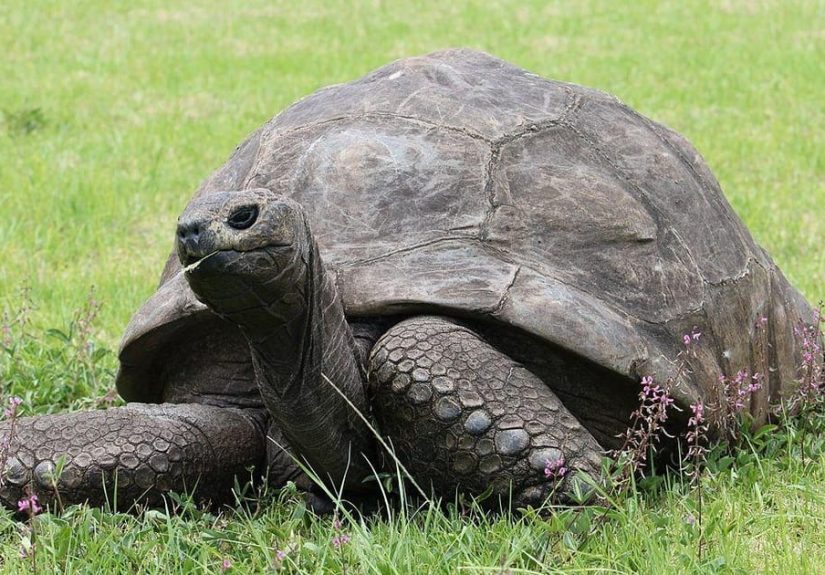
If you ever feel old because your back creaks when you stand up, meet Jonathan the tortoise.
Hatched around 1832 and still plodding around the lawn at Plantation House on the island of
Saint Helena, Jonathan is widely considered the oldest living land animal on Earth. He has
watched nearly two centuries of human drama unfold wars, inventions, moon landings, and
the rise of the internet all while focusing on his core priorities: sunbathing, grazing,
and the occasional romantic encounter.
In this time-travel tour through history, we’ll walk decade by decade through major historical
events Jonathan has “lived through.” He obviously didn’t watch Andrew Jackson’s speeches or
follow live coverage of Apollo 11, but his lifespan overlaps with an astonishing number of
milestones that shaped the modern world.
Meet Jonathan: The Tortoise Who Time Forgot
Jonathan is a Seychelles giant tortoise, a subspecies of Aldabra giant tortoise, believed to
have hatched around 1832 in the Seychelles archipelago in the Indian Ocean. Based on records
from when he arrived on Saint Helena in 1882 “fully grown,” experts estimate he was at least
50 years old at that point, which places his birth no later than 1832. Today, official
celebrations mark his birthday on December 4, and he has been recognized by Guinness World
Records and other authorities as the world’s oldest known living land animal and oldest
known chelonian (the group that includes turtles, tortoises, and terrapins).
Jonathan lives on the grounds of Plantation House, the residence of the governor of
Saint Helena, where he has seen more than 30 governors come and go. Caretakers feed him
a carefully prepared diet of fruits and vegetables including bananas, carrots, cabbage,
and apples to support his aging eyesight and beak. Despite being blind and having lost
his sense of smell, he still recognizes people by touch and continues to enjoy a peaceful,
pampered retirement on the lawn.
A Shell in the Age of Steam (1830s–1870s)
When Jonathan was a hatchling in the early 1830s, the world was still powered by steam,
sails, and handwritten letters. Trains were relatively new, photography did not yet exist,
and Queen Victoria had not yet taken the British throne. Jonathan’s early decades line up
with the rise of industrialization and new technologies that transformed daily life.
From Andrew Jackson to Queen Victoria
In 1833, not long after Jonathan likely hatched, Andrew Jackson was inaugurated for his
second term as president of the United States. The country had only 24 states, and the idea
of a “superpower” America was far in the future. Meanwhile, in Britain, young Princess
Victoria was still a teenager. She would become queen in 1837 meaning Jonathan is older
than the Victorian era itself. By the time her long reign began, this tortoise had already
been alive for several years.
The Birth of Photography and the Electric Age
One of the first great technological leaps Jonathan lived through was the invention of
photography. In 1838, the first photograph that clearly captured a human figure was taken
on a Paris street. While Jonathan was lumbering through his leafy world, humans were
learning to freeze time and preserve images including, eventually, many portraits of
Jonathan himself on Saint Helena.
A few decades later, in the 1870s, another invention lit up the world: the incandescent
light bulb. Thomas Edison and other inventors developed practical electric lighting in the
late 1870s. Jonathan, who had already outlived generations of people by then, went from a
world lit by candles and oil lamps to one increasingly powered by electricity at least
for humans. He continued to operate on pure sunlight.
Voyage to Saint Helena and Empire Days (1880s–1910s)
Jonathan arrived on Saint Helena in 1882 as a diplomatic gift, transported from the Seychelles
to this remote South Atlantic island. He was already mature, large, and impressive a living
symbol of longevity even by 19th-century standards. He settled into the lawns of Plantation
House, grazing contentedly while the British Empire stood near its peak.
In the late 19th and early 20th centuries, while Jonathan munched grass, global events moved
quickly. The telephone, the automobile, and early airplanes were invented. The first modern
Olympic Games were held in 1896. Cities electrified, telegraph cables spanned oceans, and
empires drew lines across maps with little thought for the people living there. On Saint
Helena, however, Jonathan’s daily routine changed very little: wander, bask, eat, repeat.
Surviving Two World Wars
Jonathan’s shell might be slow, but history is not. During his middle age, the world stumbled
into two devastating global conflicts. World War I began in 1914 and ended in 1918. World War II
raged from 1939 to 1945. Jonathan, living peacefully on Saint Helena, did not hear trench
artillery or see dogfights overhead, but his lifetime easily spans both wars. Many of the
young men who might have once visited the island, written letters home, or served in the
British Navy did not survive those conflicts. Jonathan did simply by staying where he was
and doing what tortoises do best: outlasting everyone.
From Black-and-White Newsreels to Moon Landings (1920s–1960s)
By the time televisions began flickering in living rooms and radios became household staples,
Jonathan was already a venerable elder. The early and mid-20th century saw human beings
sprint into the modern era with a speed that no tortoise, no matter how determined, could
match but Jonathan’s lifespan covers almost all of it.
The Space Age Begins
One of the most spectacular milestones Jonathan has lived through occurred in 1969, when
Neil Armstrong and Buzz Aldrin walked on the Moon. The journey from sail-powered ships
crossing the Atlantic in Jonathan’s youth to rockets leaving Earth’s atmosphere in his
adulthood is staggering. For humans, it was the ultimate “giant leap.” For Jonathan, it
was a distant rumor: somewhere far beyond the clouds he naps under, his fellow Earthlings
briefly visited another world.
That same era saw the rise of computers, satellites, and global television. Live broadcasts
connected continents. News of wars, elections, and Olympic Games could reach even a remote
island like Saint Helena. Visitors who arrived by ship and later by plane would snap
photos of Jonathan and share them with the world, turning him into a quiet but global
celebrity.
The Digital Age and Viral Fame (1970s–Today)
Jonathan’s later decades overlap with the birth of the modern digital world: personal
computers, the internet, smartphones, and social media. When he first hatched, the fastest
long-distance communication involved ships and couriers. Today, someone can take a selfie
with Jonathan and post it online in seconds, where millions of people can “meet” him
virtually.
As his age became better documented and publicized, Jonathan’s fame grew. Guinness World
Records formally recognized him as the world’s oldest known living land animal and the
oldest known tortoise, highlighting that he has lived through the presidencies of nearly
forty U.S. presidents, multiple British monarchs, and sweeping changes in global politics
and technology. Articles, documentaries, and travel blogs now introduce him as a “charming
old gentleman” and a living link to the 19th century.
Modern Medicine and a Senior Tortoise Diet
In recent years, Jonathan’s caretakers have adjusted his lifestyle to match his advanced age.
Veterinary teams monitor his health and provide a nutrient-rich diet to compensate for worn
beak surfaces and the loss of vision. A mix of fresh produce including leafy greens and
high-moisture fruits helps keep him hydrated and well-fed. This careful attention has
likely contributed to his astonishing longevity, showing how modern veterinary care can
support even the oldest of animals.
Yet for all that’s changed around him, Jonathan’s core routine is reassuringly simple. He
spends much of his day basking in the sun, feeling the warmth on his shell, then slowly
grazing as he moves around the lawn. He shares the grounds with other giant tortoises and
interacts with visitors who are thrilled just to see him take a few deliberate steps.
Jonathan’s life is the opposite of the hyperconnected, always-on world that has sprung up
during his lifetime and that might be part of his secret.
What Jonathan Teaches Us About Time and History
Jonathan’s lifespan is not just a trivia fact; it offers a surprisingly deep perspective on
time. Human history usually feels fast and compressed: we talk about “eras” industrial,
Victorian, modern, digital as if they were separate worlds. Jonathan’s existence quietly
connects all of them. The same individual who hatched when the idea of traveling faster than
a horse was revolutionary is still alive in an age of smartphones, streaming, and space
telescopes.
His continued presence forces us to see history not as distant, dusty chapters, but as a
continuous thread. For young visitors on Saint Helena, the fact that this tortoise was
already old when their great-great-grandparents were children makes the 19th century feel
strangely close. In a sense, Jonathan turns abstract timelines into something you can see,
photograph, and gently walk around.
He also underscores how short human lives are compared with the changes we start. A person
might spend a lifetime working on one piece of technology, one social movement, or one
political project. Jonathan has lived long enough to see many such efforts rise, peak, and
fade. Empires have expanded and broken apart, ideologies have come and gone, and our
gadgets have evolved at dizzying speed yet Jonathan has been the same calm, slow-moving
observer through it all.
In that way, he is a gentle reminder to take the long view. What seems like a permanent
feature of modern life a particular platform, a political leader, even a world power
might, from the perspective of a nearly 200-year-old tortoise, be just another passing
phase. Grass grows, seasons change, and the sun still rises over the same volcanic ridges
on Saint Helena. Jonathan’s steady presence suggests that resilience, patience, and
consistency might matter more than speed.
Experiences and Reflections on Jonathan’s Historical Journey
Standing a few feet away from Jonathan is like bumping into a time traveler who never
bothered to leave home. Visitors describe the experience as quietly profound: there he is,
slowly chewing on a leaf, while your mind rushes to realize that this animal was alive
before the American Civil War, before the light bulb, before the telephone, and long before
your grandparents were born.
Imagine arriving on Saint Helena once one of the most remote islands on Earth after a
long journey by ship or plane. The air is salty, the landscape rugged and green, and the
sense of isolation is unmistakable. Then you reach the lawn at Plantation House. Jonathan
is there, his shell weathered and textured by decades of sun and rain. You might expect a
moment of high drama, but instead, everything is calm. He takes a few unhurried steps,
stretches his neck toward the grass, and resumes his lunch. History, it turns out, often
looks like this: ordinary routines playing out while extraordinary things happen elsewhere.
Caretakers and veterinarians who work with Jonathan often describe him as gentle but
opinionated. He knows his favorite spots and moves toward them with deliberate purpose.
When feeding time arrives, he can be surprisingly motivated, heading straight for piles of
fresh vegetables with more energy than you’d expect from someone of his age. That quiet
determination has likely carried him through storms, droughts, and countless minor
disruptions on the island.
The emotional impact of Jonathan’s presence goes beyond curiosity about longevity. For
many people, he sparks questions about what really matters over the long term. Political
controversies and social media arguments feel less overwhelming when you compare them to a
life that has outlasted 19th-century monarchies, global wars, and several generations of
technology. Jonathan has never posted a single update, but he has gone “viral” around the
world simply by existing his story shared in classrooms, documentaries, news articles,
and travel blogs.
There is also something comforting in the way Jonathan’s world remains small and tangible.
His universe is a lawn, a handful of caretakers, a few fellow tortoises, and a reliable
schedule of naps and meals. Meanwhile, humans have built global networks, launched space
probes, and filled the planet with constant information. Jonathan shows that a meaningful
life does not require constant novelty or expansion; sometimes stability, good care, and a
sunny patch of grass are enough.
As Jonathan continues into his 190s and beyond, every year adds another layer to the story
of what one animal can live through. The next generation may someday look back and realize
that their childhood overlapped with the lifetime of a creature born before modern medicine,
before mass transportation, and before electricity was common. Whether you’re a history
buff, an animal lover, or simply someone who appreciates a great longevity story, Jonathan
the tortoise is living proof that time can be both unimaginably long and beautifully simple.
In the end, the most remarkable thing about Jonathan may not be any single event he has
lived through, but the way he ties them all together. From the age of steam to the age of
smartphones, he has remained the same calm presence in a world that never stops changing
a giant tortoise quietly reminding us that patience can outlast even the wildest chapters
of history.