Table of Contents >> Show >> Hide
- Is $400,000 Still a “Good” Home Budget?
- The National Picture: What $400,000 Usually Buys
- Where $400,000 Buys the Most House
- Where $400,000 Buys the Least House
- Monthly Payment: The Real Test of a $400,000 Home
- Down Payment and Closing Costs: What Buyers Need Upfront
- Property Taxes, Insurance, and HOA Fees Matter More Than You Think
- New Construction vs. Existing Homes at $400,000
- Regional Breakdown: What $400,000 Feels Like Across America
- How to Shop Smart With a $400,000 Budget
- Specific Examples: What $400,000 Might Buy
- Real-Life Experiences: What Buying a $400,000 Home Feels Like
- Conclusion: So, How Much Home Does $400,000 Buy?
Once upon a time, $400,000 sounded like the kind of home budget that came with a wraparound porch, a friendly golden retriever, and maybe a kitchen island large enough to host Thanksgiving and three awkward family debates. Today? Well, in some cities, $400,000 still buys a roomy house with a yard. In others, it buys a studio so compact your couch and refrigerator may need to negotiate custody of the living room.
The big question is not simply, “Can I buy a house for $400,000?” In much of America, yes, you can. The better question is: what kind of home, where, and with what monthly payment? In the current U.S. housing market, $400,000 is close to the national middle of the road. It is not bargain-bin money, but it is not luxury money either. It is the housing equivalent of ordering a solid entree: satisfying in many places, laughably insufficient in a few, and surprisingly generous in others.
This guide breaks down how much home $400,000 buys across America, including square footage, regional differences, monthly costs, and real-world buying experiences. Whether you are a first-time buyer, a relocating family, or simply someone who likes browsing real estate listings at midnight like it is a competitive sport, here is what a $400,000 home budget really means.
Is $400,000 Still a “Good” Home Budget?
Yes, but with a giant asterisk wearing a hard hat. A $400,000 budget is still powerful in many parts of the Midwest, South, and smaller metro areas. It can buy a three-bedroom single-family home, a newer townhouse, or a house with enough space for a home office, guest room, and the mysterious treadmill that becomes a clothing rack.
Nationally, however, $400,000 sits very close to typical home prices. Recent market data has placed the median existing-home price and median new-home price near the $400,000 range, while national listing prices have hovered somewhat above that level. That means $400,000 is no longer an extravagant budget; it is roughly the price of admission for the American middle-market home.
The catch is geography. In Cleveland, Detroit, Memphis, Buffalo, or parts of Texas, $400,000 can stretch into a spacious property. In San Francisco, Boston, Manhattan, San Jose, or Los Angeles, the same budget may push buyers toward condos, older homes, smaller units, or neighborhoods farther from the urban core.
The National Picture: What $400,000 Usually Buys
At the national level, $400,000 can often buy a modest to comfortable home, depending on local property taxes, insurance costs, housing inventory, and mortgage rates. In many areas, that budget may translate into a home between roughly 1,500 and 2,200 square feet. That is typically enough for three bedrooms, two bathrooms, and a layout that does not require guests to sit on the stairs during dinner.
However, the national average hides enormous variation. The same amount of money can buy nearly 5,000 square feet in some lower-cost cities and less than 500 square feet in some high-cost coastal markets. This is why national home price headlines can be misleading. America is not one housing market. It is hundreds of local housing markets wearing one big trench coat.
Typical $400,000 home features in affordable markets
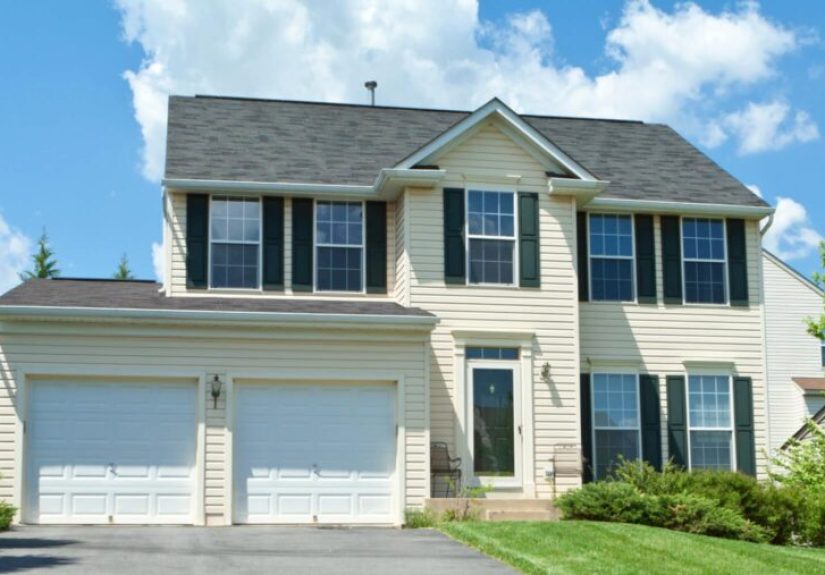
In more affordable cities and suburbs, a $400,000 home may include three or four bedrooms, two or more bathrooms, a garage, a finished basement, a fenced yard, and updated kitchens or bathrooms. Buyers may also find newer construction, larger lots, and neighborhoods with good schools or easy highway access.
Typical $400,000 home features in expensive markets
In higher-cost metros, $400,000 often means a condo, co-op, older townhouse, small bungalow, or fixer-upper. The home may be under 1,000 square feet, have higher monthly HOA fees, or require renovation. In the priciest cities, $400,000 may not be enough to compete comfortably for a traditional single-family home at all.
Where $400,000 Buys the Most House
If your dream is square footage, the Midwest deserves a standing ovation. Cities like Detroit, Cleveland, Toledo, Wichita, Indianapolis, and Kansas City tend to offer more space for the money than coastal markets. In these areas, $400,000 can potentially buy a large family home, sometimes with more than 2,500 square feet and occasionally much more.
Detroit is one of the most dramatic examples. Based on price-per-square-foot analysis, $400,000 can theoretically buy close to 5,000 square feet in Detroit. That is not just “room for guests” space. That is “which of the four spare rooms should become the podcast studio?” space.
Cleveland and Toledo also show how far money can stretch in legacy Midwest markets. In these cities, buyers may find older homes with character, larger lots, and substantial square footage. The trade-off is that some homes may require updates, and neighborhood-by-neighborhood differences matter a lot. A beautiful century-old home can be a bargain, but century-old plumbing may have its own opinions.
Affordable cities where $400,000 may go far
Some of the strongest markets for square footage include Detroit, Cleveland, Toledo, Buffalo, Memphis, Lubbock, Wichita, Indianapolis, Kansas City, San Antonio, Houston, and Fort Worth. These cities are not identical, but many share a few advantages: more land, lower price-per-square-foot costs, larger single-family housing stock, and less pressure from extreme coastal demand.
In parts of Texas, $400,000 can still buy a sizable home, especially outside the most expensive pockets of Austin or Dallas. San Antonio and Houston often offer larger homes than many coastal metros at the same price. Buyers may find newer subdivisions, open floor plans, and yards big enough for a grill, a dog, and one ambitious raised-bed garden.
Where $400,000 Buys the Least House
Now for the painful part: coastal sticker shock. In Manhattan, San Francisco, San Jose, Boston, Brooklyn, Irvine, San Diego, Honolulu, Los Angeles, and parts of the Seattle area, $400,000 may buy very limited space. In some of these markets, the number is closer to a down payment than a full home budget.
Manhattan is the classic example of real estate compression. A $400,000 budget may translate into only a tiny studio-sized amount of theoretical space. San Francisco and San Jose are not far behind in the “bring a tape measure and emotional support snack” category. In these cities, buyers often trade square footage for location, job access, transit, culture, and long-term appreciation potential.
In Boston and Brooklyn, $400,000 may be enough for a compact condo or co-op in certain neighborhoods, but buyers should expect competition, older buildings, higher monthly fees, and limited inventory. Los Angeles offers slightly more variation because the metro area is enormous, but in desirable central or coastal neighborhoods, $400,000 usually does not go far.
Why expensive markets stay expensive
High-cost cities share several forces: limited land, strict zoning, strong job markets, high incomes, investor demand, and long-term population pressure. When many people want to live in the same place and new housing is difficult to build, prices rise. It is not magic. It is supply and demand wearing designer sunglasses.
Monthly Payment: The Real Test of a $400,000 Home
The purchase price is only the headline. The monthly payment is the plot twist. If you buy a $400,000 home with 20% down, your mortgage loan would be $320,000 before closing costs. At a mortgage rate a little above 6%, the principal and interest payment may land around $1,950 to $2,000 per month.
With 10% down, the loan rises to $360,000, and principal and interest may be closer to the low $2,200s. With 5% down, the loan may be about $380,000, pushing principal and interest into the mid-$2,300 range. These estimates do not include property taxes, homeowners insurance, HOA fees, private mortgage insurance, utilities, maintenance, or the surprise expense known as “the water heater has chosen violence.”
In real life, a $400,000 home could easily cost $2,600 to $3,400 per month or more once taxes, insurance, and fees are included. In high-tax states, the number can climb higher. In areas with expensive homeowners insurance due to storms, wildfires, floods, or other climate risks, the monthly budget may feel very different from the listing price.
Down Payment and Closing Costs: What Buyers Need Upfront
A $400,000 home does not require every buyer to bring $80,000 for a 20% down payment. Many buyers use lower-down-payment options. A 10% down payment is $40,000. A 5% down payment is $20,000. FHA loans may allow qualified buyers to put down 3.5%, or $14,000 on a $400,000 purchase.
But the down payment is not the only cash needed. Buyers also need closing costs, which can include lender fees, appraisal fees, title insurance, escrow deposits, prepaid taxes, prepaid insurance, and recording charges. A practical planning range is often 2% to 5% of the purchase price, though the exact figure depends on location, loan type, and negotiations.
For a $400,000 home, that means buyers may need an additional $8,000 to $20,000 for closing costs. Seller credits, down payment assistance programs, lender credits, and local grants can reduce the burden, but buyers should not assume the listing price is the finish line. It is more like the starting gate.
Property Taxes, Insurance, and HOA Fees Matter More Than You Think
Two $400,000 homes can have completely different monthly costs. A $400,000 house in a low-tax county with modest insurance may be comfortable. A $400,000 house in a high-tax suburb with expensive insurance and a $350 monthly HOA fee may feel like it swallowed your budget whole.
Property taxes vary widely by state, county, and city. Some Northeast and Midwest communities have higher effective tax rates, while many Southern and Western states rely on different tax structures. Homeowners insurance also varies dramatically. Coastal Florida, parts of Texas, California wildfire zones, and storm-prone regions may come with higher premiums or limited insurance options.
HOA fees can also change the affordability equation. A condo priced at $400,000 with a $600 monthly HOA fee may cost more each month than a single-family home priced slightly higher with no HOA. Before falling in love with granite countertops and a balcony, buyers should read the monthly fee line carefully.
New Construction vs. Existing Homes at $400,000
New construction near $400,000 is possible in some markets, especially in parts of the South and Midwest. Buyers may find newly built townhomes, smaller single-family homes, or homes in developing suburbs. These properties can offer energy efficiency, modern layouts, builder warranties, and fewer immediate repairs.
However, new construction often comes with trade-offs. The home may be farther from city centers, have a smaller lot, include extra upgrade costs, or be part of an HOA. Builders may advertise a base price, but the model home usually includes upgrades that make buyers say, “Ah, so the beautiful kitchen is extra. Of course it is.”
Existing homes may offer better locations, mature trees, larger lots, and more architectural character. They may also come with older roofs, dated electrical systems, or renovation needs. At $400,000, the best choice depends on whether you prefer shiny and new, charming and established, or “I own a toolbox and fear nothing.”
Regional Breakdown: What $400,000 Feels Like Across America
Midwest
The Midwest is one of the strongest regions for $400,000 buyers. In many cities, that budget can buy a spacious single-family home with multiple bedrooms, a garage, and a yard. The buyer may even have room for renovations or furniture after closing, a concept that feels almost luxurious in high-cost markets.
South
The South offers variety. In cities like Memphis, San Antonio, Houston, Birmingham, and parts of North Carolina, $400,000 can still buy a comfortable home. In hotter markets such as Nashville, Atlanta, Charlotte, Austin, or Miami, the same budget may require compromises on size, commute, or condition.
Northeast
The Northeast is split. Buffalo and Philadelphia may offer strong value, while Boston, Brooklyn, Manhattan, and many New Jersey suburbs are much tighter. Buyers may find older homes, condos, or row houses, but property taxes and heating costs should be part of the calculation.
West
The West is the toughest region for $400,000 buyers in many major metros. California coastal cities, Seattle, Denver, and Honolulu often require major compromises. That said, inland markets, smaller cities, and parts of Arizona, Nevada, New Mexico, and Idaho may still offer opportunities.
How to Shop Smart With a $400,000 Budget
Start with the monthly payment, not the maximum purchase price. A lender may approve you for a certain number, but your real life includes groceries, gas, savings, healthcare, child care, travel, repairs, and the occasional emergency pizza. Buy the payment you can live with, not the biggest house a spreadsheet allows.
Next, compare total monthly costs across neighborhoods. Look at taxes, insurance, HOA fees, commute costs, school districts, utility bills, and maintenance. A cheaper house farther away may not be cheaper if the commute eats your time, fuel, and will to exist.
Finally, keep cash reserves. A home is not a museum exhibit. Things break. Paint chips. Gutters clog. Appliances stage dramatic exits. Even a well-inspected home can surprise you. A buyer with a slightly smaller home and a healthy emergency fund is often better positioned than a buyer who stretches to the limit and then panics when the furnace starts making whale noises.
Specific Examples: What $400,000 Might Buy
In Cleveland, $400,000 might buy a large renovated home or a property in a desirable suburb, depending on neighborhood. In Detroit, it may buy an impressive amount of square footage, though buyers should pay close attention to block-by-block conditions and renovation history.
In Houston or San Antonio, $400,000 may buy a newer single-family home with three or four bedrooms, especially outside the most expensive central neighborhoods. In Buffalo, buyers may find larger older homes with character, though winter maintenance and heating costs should be considered.
In Los Angeles, $400,000 may push buyers toward condos, smaller homes, or outer neighborhoods. In San Francisco or San Jose, it may mean a small condo, a below-market opportunity, or a search that requires patience and flexibility. In Manhattan, $400,000 is generally a compact-apartment budget, not a “spread out and buy a sectional sofa” budget.
Real-Life Experiences: What Buying a $400,000 Home Feels Like
On paper, a $400,000 home search looks clean: set the budget, pick the city, tour the listings, make an offer, move in, and celebrate with takeout on the floor. In reality, the experience is more emotional. Buyers quickly learn that every home has a personality, and some personalities need therapy.
One common experience is the “online listing glow-up.” A house may look enormous in photos because the photographer used a wide-angle lens powerful enough to make a closet look like a ballroom. You arrive expecting an open-concept dream and discover the dining room is actually a hallway with ambition. This is especially common in high-cost markets where $400,000 buys smaller spaces. Photos sell the dream; the tape measure tells the truth.
Another experience is the “affordable but far away” dilemma. Many buyers find that $400,000 buys a much nicer home if they move 30, 45, or 60 minutes from the job center. Suddenly, the kitchen is bigger, the yard is greener, and the garage exists. But the commute may become part of the mortgage. A lower price can cost more in time, gas, stress, and missed dinners. The smartest buyers test the commute before committing, ideally during rush hour, when traffic reveals its true villain form.
Buyers also discover that condition matters as much as size. A 2,400-square-foot house for $400,000 may seem better than a 1,700-square-foot house at the same price, until the inspection shows an aging roof, old HVAC system, drainage problems, and electrical work last updated when flip phones were cutting-edge technology. Sometimes the smaller, well-maintained home is the better deal.
In affordable markets, the experience can feel empowering. Buyers may have several options, room to negotiate, and the ability to choose between move-in-ready homes and properties with renovation potential. In expensive markets, the same buyer may feel like they are playing real estate musical chairs with fewer chairs and louder music. Flexibility becomes essential: different neighborhoods, condos instead of houses, older homes instead of new construction, or smaller spaces with better locations.
A $400,000 buyer also learns to budget beyond the closing table. The first year of homeownership often brings surprise expenses: lawn equipment, window coverings, paint, locks, tools, furniture, minor repairs, pest control, and utility setup fees. None of these feel dramatic alone, but together they can nibble at a savings account like raccoons in a campsite.
The best experience comes when buyers know their priorities before shopping. If space matters most, look at lower-cost metros or farther suburbs. If commute and lifestyle matter most, accept less square footage. If long-term value matters most, focus on neighborhood fundamentals: schools, jobs, infrastructure, safety, and future development. The perfect home rarely exists at any budget, but the right home usually does if buyers are honest about what they need, what they want, and what they can afford without eating instant noodles for the next 30 years.
Conclusion: So, How Much Home Does $400,000 Buy?
A $400,000 budget can buy a lot of home in America, or not much at all. It depends almost entirely on location. In many Midwest and Southern markets, $400,000 may buy a spacious single-family home with a yard, garage, and room to grow. In expensive coastal metros, it may buy a compact condo, a fixer-upper, or a ticket to a very competitive search.
The most important lesson is that price alone does not define affordability. Buyers must consider mortgage rates, taxes, insurance, HOA fees, repairs, commute costs, and lifestyle. A $400,000 house with high monthly costs may be less affordable than a $425,000 house in a lower-tax area. A smaller home in the right location may be a better buy than a larger home that makes everyday life harder.
In short, $400,000 is still a meaningful home budget in America. It just does not mean the same thing everywhere. In some cities, it buys space. In others, it buys access. The smartest move is to decide which one matters more before you start shopping.