Table of Contents >> Show >> Hide
- TL;DR: The Most Common Mammogram Schedules
- First, What Exactly Is a Mammogram?
- Why Do Mammogram Guidelines Differ?
- Major U.S. Mammogram Recommendations Compared
- How to Choose the Best Mammogram Frequency for You
- Specific Examples (Because Real Life Doesn’t Come in Neat Age Brackets)
- High-Risk Screening: When “Every 1–2 Years” Isn’t Enough
- Dense Breasts: What It Means for How Often You Screen
- 2D vs 3D Mammograms: Does It Change How Often You Go?
- When Should You Stop Getting Mammograms?
- What to Expect at Your Mammogram Appointment (So It’s Less Annoying)
- How to Make Any Mammogram Schedule Easier to Follow
- Bottom Line: So, How Often Should You Get a Mammogram?
- Real-World Experiences: What People Commonly Feel (and Wish They’d Known)
If mammogram guidelines feel like a group text where everyone replies with a different plan, you’re not imagining it.
In the U.S., multiple respected medical organizations publish recommendations, and they don’t always match word-for-word.
The good news: the “right” schedule is usually not a mysteryit’s a mix of your age, your risk level, and how you personally weigh
the benefits (finding cancers earlier) against the downsides (false alarms, extra testing, and occasional overdiagnosis).
This guide breaks down how often you should get a mammogram, why the advice varies, and how to pick a screening rhythm you’ll actually stick with.
(Because the best guideline is the one you followpreferably without needing a spreadsheet.)
TL;DR: The Most Common Mammogram Schedules
- If you’re at average risk and age 40–74: Many U.S. guidelines now support starting at 40 and screening every 1–2 years.
- If you want fewer false alarms: Every 2 years (biennial) is often recommended for average-risk peopleespecially by major preventive-task-force guidance.
- If you want maximum early-detection effort: Every year (annual) is commonly recommended by radiology-focused organizations and some cancer centers.
- If you’re higher risk: You may need earlier and/or more frequent screeningand sometimes breast MRI in addition to mammography.
First, What Exactly Is a Mammogram?
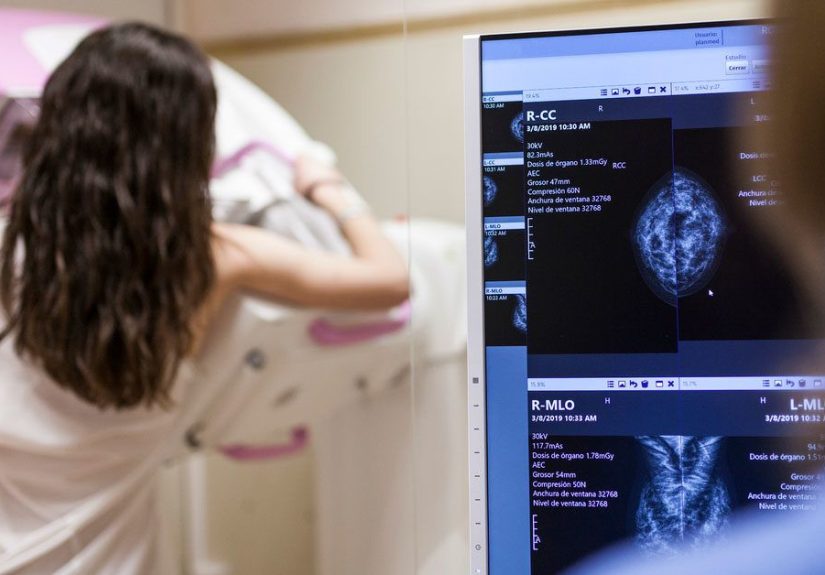
A screening mammogram is a breast imaging exam that uses low-dose X-rays to look for early signs of breast cancer
before you notice symptoms. Screening is for people who feel fine and are checking proactively. A diagnostic mammogram
is different: it’s used when you have symptoms (like a new lump) or when a screening image needs a closer look.
Mammography is widely used because it can detect cancers early, when treatment may be simpler and outcomes may be better.
But it’s not perfect: mammograms can miss some cancers (false negatives), and they can also flag something that turns out to be harmless (false positives).
Why Do Mammogram Guidelines Differ?
You’d think medical guidance would be one-size-fits-all. But breast cancer screening involves trade-offs, and organizations place different weight on those trade-offs.
Here’s what they’re balancing:
Benefit: Earlier detection and fewer breast cancer deaths
Screening can find cancers before they grow or spread. Earlier detection can mean more treatment options and, for many cancers, better outcomes.
That’s the main reason most major organizations recommend screening during midlife.
Downside: False positives, callbacks, and extra testing
Getting “called back” after a screening mammogram is commonand stressful. The reassuring part: most callbacks are not cancer.
They often happen because an image was blurry, a spot needs a different angle, or the radiologist wants to compare with prior images.
Downside: Overdiagnosis and overtreatment (the tricky one)
Some detected cancers grow so slowly that they might never cause harm during a person’s lifetime. Screening can still find them, which can lead to treatment that
may not have been necessary. This is one reason some groups favor biennial screening for average-risk peopleespecially as you weigh population-wide benefits and harms.
Why age matters
Breast cancer risk generally rises with age. At the same time, younger people often experience more false positives and extra testing.
That’s why some guidelines historically started at 50. But recent U.S. guidance has increasingly shifted to starting at 40,
reflecting updated evidence and concerns about cancers in the 40s.
Major U.S. Mammogram Recommendations Compared
Below is a plain-English comparison of what major U.S. organizations say for average-risk screening.
(If you’re higher risk, skip downyour plan may be different.)
| Organization | When to Start (Average Risk) | How Often | When to Stop |
|---|---|---|---|
| USPSTF | Age 40 | Every 2 years (biennial) | Through age 74; evidence insufficient ≥75 |
| American Cancer Society (ACS) | Option 40–44; start by 45 | Annual 45–54; then every 2 years or continue yearly ≥55 | Continue if in good health and expected to live ~10+ years |
| ACOG | Age 40 | Every 1–2 years | Individualize; commonly reassess later-life screening |
| ACR | Age 40 (average risk) | Every year (annual) | Individualize; don’t stop “prematurely” if healthy |
| NCCN | Age 40 | Every year (annual), often including tomosynthesis (3D) | Individualize based on health and life expectancy |
| CDC / NCI (public health info) | Generally aligns with USPSTF for average risk | Often summarized as every 2 years ages 40–74 | Discuss ≥75 (evidence limits) |
So… who’s right? They all arewithin their own goalposts. If a guideline aims to reduce population harms like false positives, it may lean biennial.
If it aims to maximize early detection, it may lean annual.
How to Choose the Best Mammogram Frequency for You
Here’s a practical way to decide, especially if your doctor says, “It depends” (which is true, but also not a schedule).
Step 1: Confirm whether you’re average risk or higher risk
Many people are average risk. You may be higher risk if you have a strong family history, certain genetic mutations (like BRCA),
a personal history of some breast conditions, or prior chest radiation at a young age. Risk assessment can also consider ancestry and other factors.
If you’re not sure, ask your clinician for a risk assessmentsome organizations encourage doing this early in adulthood so you’re not guessing later.
Step 2: If you’re average risk, pick “annual” or “every 2 years” based on your priorities
- Biennial (every 2 years) may be a good fit if you want fewer callbacks, fewer unnecessary tests, and you’re comfortable with slightly less frequent imaging.
-
Annual may be a good fit if you want the most frequent check-ins, you’re comfortable with a higher chance of false positives,
or you simply like the peace of mind of a yearly routine.
Step 3: Use age as a guidepostthen personalize
For many average-risk people, a simple plan is:
Start at 40, choose annual or biennial through your 50s and 60s, then reassess as you approach your mid-70s based on health and preferences.
If you’re over 74 or 75, screening becomes a more individualized decision because research is less definitive.
Specific Examples (Because Real Life Doesn’t Come in Neat Age Brackets)
Example 1: Age 42, average risk, hates medical drama
You might choose biennial screening starting at 40especially if your main goal is meaningful prevention with fewer “we need you to come back” phone calls.
You can still revisit the plan later if your risk changes.
Example 2: Age 47, average risk, wants maximum early-detection effort
You might prefer annual screening in your 40s and 50s, knowing the chance of false positives can be higher, but feeling the trade-off is worth it for you.
Example 3: Age 39 with a strong family history
This is where “average risk” rules may not apply. Your clinician may recommend earlier screening and possibly MRI in addition to mammography,
depending on your calculated lifetime risk and family history details.
High-Risk Screening: When “Every 1–2 Years” Isn’t Enough
If you’re higher risk, your screening plan may start earlier than 40 and may include more than mammography.
Some high-risk guidelines recommend adding breast MRI (and sometimes other imaging) along with mammograms.
The exact schedule depends on the reason you’re high risk and your clinician’s assessment.
High-risk categories often include:
- Known genetic mutations associated with breast cancer (e.g., BRCA1/BRCA2)
- Strong family history (especially multiple close relatives or early diagnoses)
- Prior chest radiation therapy at a younger age
- Calculated lifetime risk above certain thresholds (your clinician can estimate this)
If you suspect you’re in this group, don’t “self-prescribe” a schedule. Ask for a risk-based planbecause high-risk screening is where personalization matters most.
Dense Breasts: What It Means for How Often You Screen
Dense breast tissue is common and normal, but it can make mammograms harder to interpret because dense tissue and many abnormalities can look similar on X-ray.
Dense breast tissue can also be associated with increased breast cancer risk. That’s why the topic gets so much attention.
In the U.S., mammography facilities must now provide patients with breast density notifications and include density information in reports.
If your results say “dense,” it doesn’t automatically mean you need a different screening intervalbut it does mean you should discuss your overall risk
and whether supplemental imaging makes sense for you.
Do you need ultrasound or MRI if you have dense breasts?
Sometimes. But not always. Evidence and insurance coverage can vary, and major guideline groups don’t all agree on routine supplemental imaging for everyone with dense breasts.
The most practical move is to treat density as one important clue in a bigger picture:
your family history, personal history, prior biopsies, and formal risk calculations.
2D vs 3D Mammograms: Does It Change How Often You Go?
You may hear “3D mammogram” or “tomosynthesis.” This is a type of mammography that creates a series of breast images that can improve visualization in some cases.
It doesn’t automatically change how often you should screen, but it may be offered as part of screening (including in some guideline recommendations).
Radiation dose from screening mammography is small, and 3D can be slightly higher than 2D in many settingsstill generally in a low-dose range.
If radiation worries are keeping you up at night, talk with your clinician; for most people, the screening benefit is considered to outweigh the very small radiation risk.
When Should You Stop Getting Mammograms?
This is the most under-discussed question in breast cancer screening.
Some guidelines specify an upper age where evidence is strongest; others recommend continuing as long as you’re in good health and have a meaningful life expectancy.
-
If you’re in your mid-70s or older, ask: Would finding a cancer change what I’d do?
If you’d pursue treatment, screening may still make sense. If you wouldn’t, screening may add stress without clear benefit. - If you have serious health conditions that limit life expectancy, the balance of screening benefits vs. harms may shift.
What to Expect at Your Mammogram Appointment (So It’s Less Annoying)
A mammogram is usually quick, but it can be uncomfortable because the breast is compressed briefly to get a clear image.
Most facilities are used to nervous first-timers, so it’s okay to say, “Hi, I’m anxious and I’d like a play-by-play.”
How to prepare (the “don’t accidentally sparkle on X-ray” edition)
- Skip deodorant, powders, lotions, and perfumes under your arms or on your breasts the day of the exam.
- Wear a two-piece outfit so you only undress from the waist up.
- Bring prior images (or have them sent) if you’re going to a new facilitycomparisons over time matter.
- If you still have menstrual cycles, consider scheduling when your breasts are less tender if possible.
If you get called back
Deep breath. A callback usually means “we need more pictures,” not “we found cancer.”
Additional views, ultrasound, or a diagnostic mammogram can clarify shadows, overlapping tissue, cysts, or tiny calcifications.
Ask the facility what the next step is and how quickly results are typically availablehaving a timeline can reduce the mental spiral.
How to Make Any Mammogram Schedule Easier to Follow
- Pick a repeating month: “Every October” or “every spring” beats “whenever I remember.”
- Choose the same facility: consistent imaging and easy comparisons help reduce unnecessary callbacks.
- Ask about reminders: many clinics send texts or emails.
- Know your “why”: peace of mind, family history, staying proactiveyour reason helps you stick with it.
Bottom Line: So, How Often Should You Get a Mammogram?
For most people at average risk in the U.S., a solid modern starting point is:
begin screening at age 40 and continue through midlife with either annual or biennial mammograms,
then reassess later-life screening based on overall health and preferences.
If you’re higher risk, your “how often” may be more frequent and may include additional imaging.
If you have dense breasts, screening may still follow the same interval, but it’s worth a focused conversation about your overall risk and whether supplemental imaging is appropriate.
The best plan is one you can explain in one sentence, follow for years, and adjust when your life (or your risk profile) changes.
Prevention isn’t about perfectionit’s about consistency.
Real-World Experiences: What People Commonly Feel (and Wish They’d Known)
Even when you know the guidelines, the experience of actually getting a mammogram can feel like a different subject entirely.
Here are the most common “human moments” people reportplus practical ways they move through them.
1) The scheduling wobble is real. Lots of people plan to book “sometime this year,” and then life happenswork deadlines,
family stuff, the dog’s surprise vet visit, and suddenly it’s December. The hack that actually works isn’t motivationit’s structure:
tying your mammogram to a repeating season (“every fall”) or a predictable event (like your annual physical) turns it into a routine instead of a decision you re-make every year.
2) The first appointment is often the most intimidating. Not because the exam is long (it’s usually quick),
but because it’s unfamiliar and feels high-stakes. People often feel better when they know what the room looks like, what the technologist will ask,
and that they can request slower positioning or a brief pause. Many say the anxiety before the appointment is worse than the appointment itself.
3) Compression discomfort variesso do coping strategies. Some people barely notice it; others find it pretty uncomfortable.
Common “I wish I’d known” tips include scheduling when breasts are less tender, using calm breathing during compression,
and telling the technologist right away if you’re uncomfortable. People also report feeling more in control when they understand that compression is
about image quality (and fewer repeat images), not about making anyone’s day worse.
4) Callbacks can feel scary, even when they’re common. Many people describe a callback as the moment their brain goes full disaster-movie trailer.
But a huge number of callbacks are resolved with additional images or an ultrasound that shows a benign finding.
People who cope best often do three things: (a) ask exactly what follow-up is planned, (b) ask when results are expected,
and (c) remind themselves that “need more pictures” is not the same as “bad news.”
5) Dense-breast notifications spark a lot of questions. When someone learns they have dense breasts, the next thought is often:
“So… am I safe or not?” The most helpful experiences are usually when the conversation goes beyond density alone and includes an overall risk estimate.
Some people end up adding supplemental imaging; others don’t need to. Either way, people feel better when they leave with a clear plan that matches their risk level,
not just a vague “keep an eye on it.”
6) Confidence grows with consistency. After two or three screening cycles, many people describe a shift:
the mammogram becomes less of an emotional event and more of a normal health routinelike dental cleanings, but with fewer compliments about flossing.
The biggest “win” people mention is sticking with a schedule that fits their life: annual if they value maximum monitoring,
biennial if they want fewer false alarmseither way, consistent screening plus smart risk assessment is what makes the whole system work.