Table of Contents >> Show >> Hide
- What “Blow Drying Straight” Really Means (And Why It Works)
- Tools You Actually Need for a Straight Blowout
- Prep Work: The Secret to a Faster, Straighter Blow Dry
- The Straight Blowout Method: Step-by-Step
- Details That Make the Blowout Look Expensive
- Adjustments for Your Hair Type
- Troubleshooting: Common Problems and Fixes
- How to Make Your Blowout Last Longer
- Heat-Safe Habits (So You Keep the Shine You Worked For)
- Bonus: Real-World Blowout Experiences (The Stuff Tutorials Don’t Always Mention)
- Conclusion
A straight blowout is basically the adult version of “I’ve got my life together.” Your hair looks smooth, shiny, and somehow
like it just paid its taxes early. And the best part? You don’t need a salon appointmentyou need a plan, the right airflow,
and a little patience (the kind you usually reserve for loading a dishwasher correctly).
This guide walks you through how to blow dry hair straight with techniques that hairstylists rely on: proper prep,
smart sectioning, brush control, and finishing steps that keep frizz from throwing a surprise party on your head.
Whether you want sleek and straight or straight with bounce, you’ll get a perfect blowout at homewithout turning
your bathroom into a humid science experiment.
What “Blow Drying Straight” Really Means (And Why It Works)
When you blow dry hair straight, you’re doing two things at once:
removing water and shaping the hair while it dries. Hair is more flexible when it’s damp. If you guide it
to lay smooth while you dry (with tension from a brush and airflow aimed down the hair), you get a straighter, shinier result.
Think of it like wrapping a gift: you can’t get crisp edges if you just fling tape at it. You need tension, direction, and a clean finish.
Same energy. Better hair.
Tools You Actually Need for a Straight Blowout
You don’t have to buy a suitcase of gadgets, but the right basics make a massive difference in how fast you get doneand how good it looks.
1) A Blow Dryer With Settings (Not a One-Heat Wonder)
- At least 2 heat settings (low/medium/high) and 2 speed settings.
- Cool shot button to “set” the shape at the end.
- Concentrator nozzle (the narrow attachment) for sleek, straight results.
2) The Right Brush for Your Goal
- Paddle brush: easiest for a straighter, flatter finish (great for long hair).
- Round brush: best for straight hair with bounce, bend, and “blowout” movement.
- Brush size tip: smaller barrel = more bend/volume; larger barrel = smoother with less curl.
3) Sectioning Clips + a Comb
- Clips keep you from repeatedly drying the same top layer while the bottom stays soggy and resentful.
- A wide-tooth comb or detangling brush helps distribute product and prevents snags.
4) Heat Protectant (Non-Negotiable)
Heat protectant helps reduce moisture loss and limits heat stress. It also makes blowouts smoother because hair slides over the brush more easily.
Translation: less frizz, less drama.
Optional (But Nice):
- Microfiber towel or soft T-shirt for gentler drying.
- Root lift mousse or spray if your hair goes flat the second you blink.
- Light serum or smoothing cream if your hair loves humidity more than you do.
Prep Work: The Secret to a Faster, Straighter Blow Dry
Most blowout “fails” aren’t caused by the brush. They’re caused by starting with hair that’s too wet, too tangled, or coated in random products
that don’t play nicely together. Prep is where the magic starts.
Step 1: Gently Remove Water (Don’t Rough It Up)
After washing, squeeze out excess water in the shower, then towel-dry by pressing (not scrubbing). Scrubbing can puff up the cuticle,
which makes frizz more likely. Your goal is damp hair, not dripping hair.
Step 2: Detangle While Damp
Detangle with a wide-tooth comb or detangling brush. Start at the ends, then work upward. This keeps breakage down and makes sectioning easier.
Step 3: Apply Products in a Smart Order
- Leave-in conditioner (if needed): mid-lengths to ends.
- Heat protectant: all over, focusing on the outer layer and ends.
- Styling product (optional): mousse at roots for lift, smoothing cream for frizz control.
Tip: If your hair gets greasy easily, keep heavier products off your roots. If your ends feel like straw, they can handle more moisture and smoothing help.
The Straight Blowout Method: Step-by-Step
This is the core routine for a perfect at-home blowout. It works for most hair types, and you can tweak it for fine, thick, curly, or short hair.
Step 1: Rough Dry First (Yes, Before the Brush)
Start by rough drying with your hands until your hair is about 70–85% dry. This shortens styling time and reduces how long your hair is exposed to heat.
Focus on roots first because they hold the most water.
- Use medium heat and high airflow to start.
- Keep the dryer movingdon’t park it on one spot like it’s watching a movie.
- If your hair is very thick, rough dry in sections so you’re not only drying the top layer.
Step 2: Add the Concentrator Nozzle
Once you’re past rough drying, attach the concentrator nozzle. This focuses airflow so you can smooth the hair cuticle and get a straighter finish.
Step 3: Section Your Hair Like You Mean It
Sectioning is the difference between “sleek blowout” and “I tried my best.” Use clips and work in layers:
- Split hair into a top and bottom half (ear-to-ear).
- Clip the top away.
- Divide the bottom into left and right sections.
- Work upward in clean, manageable pieces.
Rule of thumb: your section should be no wider than your brush. Big sections look faster but usually take longer because you redo them.
Step 4: Blow Dry Straight With Tension (The “Chase the Brush” Technique)
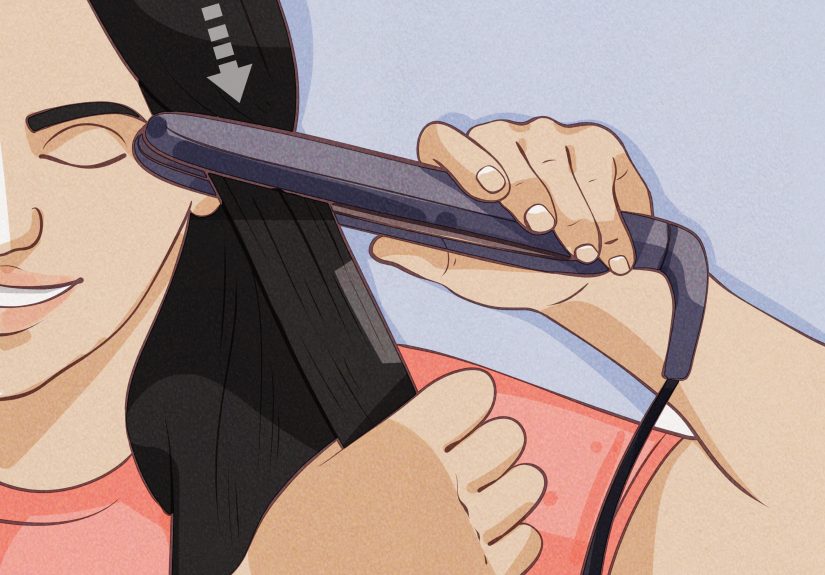
This is the technique stylists use: the dryer follows the brush, angled downward, while the brush maintains tension and guides the hair straight.
If You Want Sleek Straight (Paddle Brush Method)
- Place the paddle brush under a section near the roots.
- Pull the hair gently taut.
- Aim the nozzle down the hair shaft from roots to ends.
- Move brush and dryer together, slowly, until the section is fully dry.
If You Want Straight With Bounce (Round Brush Method)
- Put the round brush under the section at the roots.
- Lift slightly at the root for volume.
- Roll the brush just enough to create tension (don’t wrap your hair around it five times unless you enjoy detangling).
- “Chase” the brush with the dryer, always aiming downward.
- At the ends, roll slightly under (or slightly out) depending on the look you want.
Step 5: Cool Shot to Set Each Section
When a section is dry and shaped, hit it with a few seconds of cool air. This helps lock in the shape and reduces frizz.
Let it fall and cool before you touch it too much.
Step 6: Finish the Whole Head, Then Do a Final Polish
Once every section is dry, do a quick pass:
- Check the crown and hairline for damp spots (they hide there like they pay rent).
- Use a tiny amount of serum or lightweight oil on ends and flyaways.
- If you want extra smoothness, lightly brush through and do a short, gentle blast of air to re-set.
Details That Make the Blowout Look Expensive
Aim the Air Downward (Always)
For a straighter, shinier blowout, keep airflow directed from roots to ends. This smooths the cuticle instead of lifting it.
If you blast upward, you’ll usually get more frizz and puff.
Mind the Distance
Holding the dryer too close can overheat one area. A good guideline is keeping it several inches away and constantly moving,
especially when you’re smoothing around the front hairline and ends.
Use Heat Strategically, Not Aggressively
High heat isn’t automatically “better.” It’s just hotter. Many people get smoother results using medium heat with strong airflow,
then using cool air to set the finish.
Hands Off While It Cools
Touching hair too much while it’s warm can create frizz and collapse volume. Let the style cool, then fluff or brush gently if needed.
Your blowout doesn’t need constant emotional support.
Adjustments for Your Hair Type
Fine Hair
- Use a lightweight heat protectant spray (avoid heavy creams near roots).
- Use mousse or root-lift spray at the crown if you want bounce.
- Stick to medium heat and don’t over-dryfine hair can look crispy fast.
Thick or Coarse Hair
- Work in smaller sections than you think you need.
- Rough dry longer (to 80%+) before switching to the brush.
- Consider a smoothing cream and a touch of serum on the ends.
Wavy Hair That Frizzes Easily
- Use a smoothing cream or anti-frizz product before drying.
- Make sure hair is mostly dry before brushing to avoid puffiness.
- Finish with cool shot and a humidity-resistant finishing spray if needed.
Curly or Coily Hair (Straight Blowout Without a Flat Iron)
If your goal is a straighter blowout (not bone-straight), focus on tension and stretching the hair as you dry. Work slowly, use smaller sections,
and consider using a brush that grips well. Keep heat moderate and prioritize good product prepespecially heat protectant and smoothing support.
Short Hair + Bangs
- Short hair dries quickly, so start styling earlierdon’t wait until it’s almost dry.
- For bangs: dry them side-to-side first to remove cowlicks, then finish in the direction you want them to fall.
- A small round brush can add a soft bend; a paddle brush can keep it straighter.
Troubleshooting: Common Problems and Fixes
“My Hair Looks Frizzy Even After Blow Drying”
- Hair might have been too wet when you started using the brushrough dry more first.
- Airflow may have been aimed sideways or upwardaim down the hair shaft.
- Try a lighter smoothing product and finish with cool shot.
“It’s Straight, But It’s Flat”
- Lift at the roots with the brush while drying, even if you’re keeping the lengths straight.
- Use mousse at the roots or flip your head upside down briefly during rough dry.
- Avoid heavy conditioner at the roots and don’t overload with oils.
“My Ends Flip Weirdly”
- Decide your end shape on purpose: roll slightly under for polished, slightly out for modern bounce.
- Use cool shot on the ends after shaping.
- If needed, re-wet just the ends with a mist and redo that last inch.
“It Takes Forever”
- Rough dry longer before you start brushing.
- Use smaller sections (counterintuitive, but it’s faster because you don’t redo them).
- Make sure your dryer has strong airflowairflow dries hair; heat just makes it uncomfortable.
How to Make Your Blowout Last Longer
- Don’t touch it constantly. Fresh blowouts are not fidget toys.
- Sleep smart: loose top-knot, silk pillowcase, or a satin bonnet.
- Dry shampoo early: a light dusting at the roots after styling can help absorb oil before it shows up.
- Spot-fix in the morning: re-blow just the front pieces or crown instead of soaking your whole head.
Heat-Safe Habits (So You Keep the Shine You Worked For)
Blowouts are fun. Heat damage is not. The goal is to get the result with the lowest effective heat and less time under heat.
If you blow dry frequently, try alternating with lower-heat styling days, protective styles, or partial air-dry routines.
- Let hair partially air dry before blow drying when possible.
- Use lower heat settings whenever you can.
- Limit repeated passes over the same section.
- Keep the dryer moving and avoid hovering in one spot.
Bonus: Real-World Blowout Experiences (The Stuff Tutorials Don’t Always Mention)
Let’s talk about what happens in actual bathroomsnot the calm, perfectly lit universe where someone gently blow-dries one section and magically
becomes a shampoo-commercial person. In real life, the first “at-home blowout” attempt often includes one arm getting tired, a brush that briefly
becomes a hair tangle machine, and a moment where you wonder if a hat is a reasonable lifestyle choice.
A common experience: people start with hair that’s way too wet because they’re eager to “get to the styling part.” Then the blowout takes forever,
heat exposure doubles, and the result is frizzier because the cuticle stayed disturbed longer. Once you try rough drying to 70–85% first, it feels like
discovering a cheat code. The brush glides better. Sections dry faster. And you stop roasting the same spot on your head like it’s a marshmallow.
Another real-world lesson: section size matters more than most people think. The temptation is to grab big chunks to finish quickly,
but big sections rarely dry evenly. You’ll end up redoing the top layer while the middle stays damp. People who switch to smaller, brush-width sections
usually report a cleaner finish and a blowout that lasts longerbecause the hair is truly dry and shaped all the way through.
Many people also notice the cool shot is the underrated hero. At first it feels optional, like the “extra” button on a remote.
Then you try it consistentlyespecially on the front pieces and endsand suddenly the blowout holds its shape longer and looks smoother.
The change is most obvious on humid days, when hair is eager to revert to its natural personality.
If you’ve ever wondered why your blowout looks great until you walk outside, you’re not alone. The real-world fix is a combination approach:
solid prep (heat protectant + smoothing support if needed), a truly dry finish (no sneaky dampness near the roots), and a finishing product that
matches your hair (light spray for fine hair, anti-frizz for thicker hair). People with fine hair often report the biggest improvement when they stop
overusing oils and heavy creams near the scalpbecause “sleek” can turn into “greasy” fast.
Finally, there’s the confidence factor. Once you get your personal routine downyour brush type, your sectioning pattern, your ideal heat setting
blowouts stop being a “special occasion only” event and become a reliable tool. The most consistent feedback from regular blowout-doers?
The second attempt is always better than the first. By the fourth, you’ll be drying your hair straight like it’s a normal Tuesday
(because it is), and you’ll wonder why you ever fought with your brush like it owed you money.
Conclusion
Learning how to blow dry hair straight is less about having magical hands and more about using a repeatable method:
prep damp hair correctly, rough dry first, section small, create tension with the right brush, aim airflow downward, and set the style with cool air.
Do thatand your perfect blowout won’t be a once-in-a-while miracle. It’ll be a skill you can pull off at home whenever you want your hair
to look smooth, bouncy, and professionally finished.