Table of Contents >> Show >> Hide
- Why Boil Sweet Potatoes?
- Pick the Right Sweet Potatoes
- Prep Steps That Actually Matter
- How to Boil Sweet Potatoes on the Stove
- How Long to Boil Sweet Potatoes?
- Doneness Tests (So You Don’t Guess Wrong)
- Pro Tips for Better Texture and Flavor
- Troubleshooting Common Problems
- What to Make with Boiled Sweet Potatoes
- Storage and Reheating
- FAQs
- Experiences: Real-Life “How It Actually Goes” in the Kitchen
- Conclusion
Boiling sweet potatoes sounds almost too simplelike it should come with a warning label that says,
“May cause confidence.” But when you do it right, boiled sweet potatoes come out creamy, naturally sweet,
and ready for everything from quick weeknight sides to holiday mash-ups.
This guide walks you through the best way to boil sweet potatoes (whole or cubed), how long to boil them,
and the small details that separate “fork-tender perfection” from “orange baby food sadness.”
Why Boil Sweet Potatoes?
Baking is great when you want caramelized edges and deeper flavorbut boiling earns its place in your kitchen
because it’s fast, reliable, and ideal for recipes that want soft texture (mashed sweet potatoes, casseroles,
soups, purees, fillings, and meal prep).
- Speed: Cubes can be done in about 12–20 minutes once simmering.
- Texture control: Boiling makes it easy to stop right at “tender,” especially for mash.
- Low-fuss: No oven time, no foil, no waiting for a baking sheet to cool down.
- Easy peeling: Boil whole with the skin on, then slip it off after cooking.
Pick the Right Sweet Potatoes
The best boiled sweet potatoes start at the store. Choose firm potatoes with smooth skin and minimal bruising.
Try to grab similar sizes if you’re boiling wholeone giant and one tiny in the same pot is basically a
“choose your own doneness” situation.
- For boiling whole: Small-to-medium potatoes cook more evenly and faster.
- For cubes: Any size works, because you’ll cut them to a uniform shape.
- Avoid: Soft spots, deep cuts, or wrinkly skin (often a sign they’re drying out).
Prep Steps That Actually Matter
Wash first (yes, even if you plan to peel)
Dirt on the outside can hitch a ride to the inside while you peel. Scrub under cool running water and
pat dry. If you’re boiling whole with skin on, scrubbing is non-negotiable.
To peel or not to peel?
You can boil sweet potatoes with or without the skin.
Skin-on boiling is great for mash because it helps the potato hold together and makes peeling easier after cooking.
Peeled cubes are best when you want speed and clean, uniform texture.
Cut evenly for even cooking
If you’re cubing, aim for similar sizes. One-inch cubes cook fast and evenly; larger chunks take longer
but can stay a little fluffier inside.
How to Boil Sweet Potatoes on the Stove
Here’s the “golden rule” method: start the potatoes in cold water, then bring to a boil and reduce to a steady simmer.
That gives you more even cooking and better texture than a rolling, aggressive boil.
Method A: Boil Whole Sweet Potatoes (Best for Mash)
- Wash and scrub sweet potatoes well. (Leave skin on.)
- Place in a pot and cover with cold water by about 1 inch.
- Salt the water (about 1–2 teaspoons per quart is a good starting point).
- Bring to a boil over high heat, then reduce to a simmer.
- Simmer until tender, then test doneness (see “Doneness Tests” below).
- Drain and let them sit in the colander for 2–3 minutes to steam off extra water.
- Peel if desired once cool enough to handle; the skin should slip off easily.
Best for: mashed sweet potatoes, casseroles, soups, baby food, pie filling, and anything you’ll mash or puree.
Method B: Boil Cubed Sweet Potatoes (Fastest)
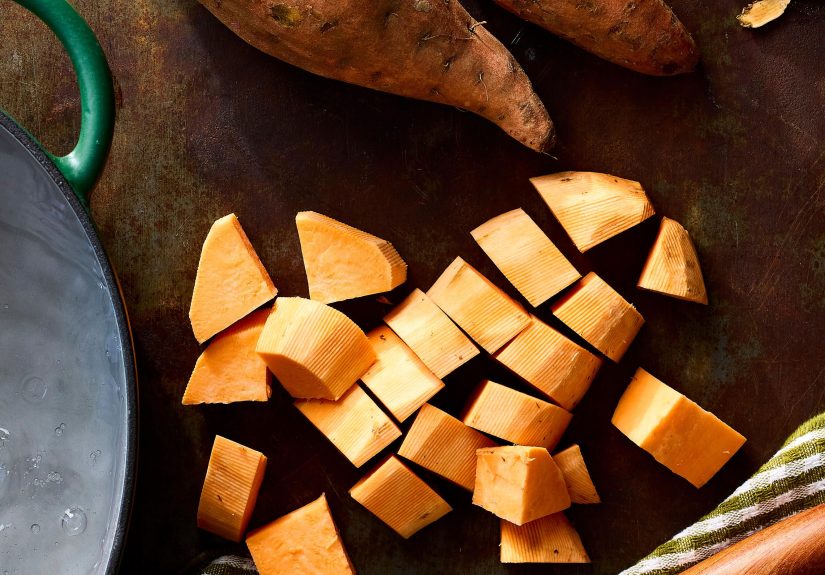
- Wash, peel (optional), and cut into even cubes (about 1 inch for fast cooking).
- Add to a pot and cover with cold water by about 1 inch.
- Salt the water for better flavor.
- Bring to a boil, then reduce to a gentle simmer.
- Cook until fork-tender (timing depends on cube size).
- Drain well. For mash, return cubes to the warm pot for 30–60 seconds to dry slightly.
Best for: quick sides, meal prep, salads, bowls, and mashing when you’re short on time.
Method C: Boil Slices/Rounds (Great for Salads)
Slices cook quickly and look nice in grain bowls or salad-style plates.
Keep them thick enough (about 1/2 to 3/4 inch) so they don’t fall apart.
- Slice sweet potatoes into even rounds.
- Cover with cold water, salt, bring to a boil, then simmer gently.
- Cook until a knife slides in with light resistance (tender, not collapsing).
- Drain and cool on a tray so steam can escape.
How Long to Boil Sweet Potatoes?
Timing depends on size, freshness, and whether they’re whole or cut. Use this as a starting point,
then let doneness be the final judge.
| Cut/Size | Typical Simmer Time | Best Use |
|---|---|---|
| 1-inch cubes | 12–15 minutes | Fast sides, meal prep, mash |
| 2-inch cubes | 20–25 minutes | Chunkier texture, stews |
| Slices (1/2–3/4 inch) | 10–15 minutes | Salads, bowls, plating |
| Whole small (about 5–6 oz) | 20–30 minutes | Peel-after cooking, mash |
| Whole medium (about 7–10 oz) | 30–40 minutes | Mash, casserole base |
| Whole large | 40–50 minutes | Batch cooking, puree |
Doneness Tests (So You Don’t Guess Wrong)
The knife test
Slide a small knife into the thickest part. If it goes in easily with minimal resistance, you’re done.
If the center fights back, simmer a few more minutes and test again.
The fork test (with a warning)
A fork should pierce easilybut if you stir aggressively with it, you can break apart tender cubes.
Test gently, then stop poking your dinner like it owes you money.
Pro Tips for Better Texture and Flavor
1) Start in cold water
Starting sweet potatoes in cold water helps them cook more evenly from outside to center.
Dropping them into already-boiling water can cook the outside fast while the inside lags behind.
2) Simmer, don’t rage-boil
A hard boil can bang pieces around, break edges, and turn cubes mushy faster than you want.
Keep it at a steady simmerbubbles, not chaos.
3) Salt the water (it’s not optional if you want flavor)
Salt seasons the potato as it cooks. You can always add butter or spices later, but starting with
under-seasoned sweet potatoes is like trying to fix a bland joke by speaking louder.
4) Steam-dry after draining
After draining, let the sweet potatoes sit for a couple minutes so excess water evaporates.
If you’re mashing, this helps prevent watery mash.
5) Want deeper flavor? Do a quick finish
Boiling gives you tenderness, not caramelization. If you want a richer taste, toss drained cubes in a hot skillet
with a little butter or oil for 3–5 minutes, or sprinkle with cinnamon, smoked paprika, or chili-lime seasoning.
6) Cool them for meal prep (and a different texture)
Boiled sweet potatoes cool into a firmer, sliceable texture that works great in bowls and salads.
Chill them uncovered until they stop steaming, then store.
Troubleshooting Common Problems
“They’re mushy.”
- Pieces are too small or uneven.
- Boil was too aggressive.
- They cooked too longstart testing earlier next time.
“They’re cooked outside but hard in the middle.”
- Potatoes were different sizes in the same pot.
- They were added to already-boiling water (especially whole).
- Heat was too high, cooking the exterior too fast.
“They taste flat.”
- Salt the water more generously.
- Finish with acid (a squeeze of lemon or a splash of vinegar) to wake up sweetness.
- Add a pinch of cinnamon, chili powder, or smoked paprika for instant “wow.”
What to Make with Boiled Sweet Potatoes
Boiled sweet potatoes are basically a blank canvasan orange one, but still a canvas.
Here are easy, specific ways to use them:
- Mashed sweet potatoes: Mash with butter, salt, pepper, and a little maple syrup (optional). Add cinnamon for cozy vibes.
- Sweet potato casserole base: Boil whole, mash, then mix with eggs, milk, and warm spices for a smooth filling.
- Soup shortcut: Blend boiled sweet potato with broth, sautéed onion/garlic, and ginger for a fast pureed soup.
- Breakfast add-in: Stir cubes into oatmeal with peanut butter and banana, or fold into pancake batter.
- Salad or grain bowl: Chill cubes, then toss with quinoa, black beans, corn, lime, and cilantro.
- Kid-friendly bites: Mash with a little yogurt or butter; keep seasoning mild and simple.
Storage and Reheating
Refrigerator
Let boiled sweet potatoes cool quickly (don’t leave them out for hours), then store in an airtight container.
For best safety and quality, use within a few days.
Freezer
Boiled sweet potatoes freeze well. Cool completely, then freeze cubes or mash in freezer bags.
Flatten bags for faster thawing and easy stacking.
Reheating
- Microwave: Splash of water, cover loosely, heat in short bursts, stir/flip if needed.
- Stovetop: Warm in a covered skillet with a little butter and a tablespoon of water.
- Oven: Spread on a sheet pan and warm at a moderate temperature until hot.
FAQs
Should I boil sweet potatoes whole or cut?
Whole is best if you want easy peeling and a smooth mash. Cut is best when speed matters or you want cubes for bowls and salads.
Do I need to cover the pot?
You can, but it’s optional. A lid helps water come to a boil faster. Once simmering, you can crack the lid to prevent boil-overs.
Can I boil sweet potatoes with the skin on?
Yesespecially for whole sweet potatoes. Wash well, boil, then peel after cooking if you don’t want the skin.
How do I avoid watery mashed sweet potatoes?
Drain thoroughly, then let them steam-dry. For extra insurance, return drained cubes to the warm pot for about a minute before mashing.
Experiences: Real-Life “How It Actually Goes” in the Kitchen
Let’s be honest: most of us aren’t boiling sweet potatoes because we want to meditate over a gently simmering pot.
We’re boiling sweet potatoes because it’s Tuesday, we’re hungry, and the sweet potatoes are staring at us from the counter like,
“So… what’s the plan?” Here are a few relatable kitchen moments that tend to happen when you start making boiled sweet potatoes part of your routine.
The Weeknight Shortcut That Saves Dinner
You get home, you’ve got 30 minutes, and cooking anything complicated feels like a personal attack.
Cubed sweet potatoes are the hero here. You peel (or don’t), chop into 1-inch cubes, and toss them into cold salted water.
While the pot heats, you can roast a sheet pan of broccoli, warm up leftover chicken, or open a can of black beans and pretend you’re “meal planning.”
By the time everything else is ready, your sweet potatoes are tender and waiting. The first time you pull this off, you’ll feel like you hacked time.
The “Oops, I Overcooked Them” Recovery Plan
It happens. You set a timer, then your phone rings, the dog barks, or you remember you left laundry in the washer.
When you come back, the cubes are a little too soft and the edges are breaking apart.
The good news? Overcooked sweet potatoes are rarely a total loss. You can mash them with butter and salt and call it intentional.
You can blend them into soup with broth and spices. You can even stir them into oatmeal with cinnamon and nut butter.
Boiled sweet potatoes are forgiving like thatthey’d rather become a new dish than complain.
The Holiday Prep Move That Makes You Look Organized
If you’ve ever made a sweet potato casserole on a holiday, you know the kitchen timeline can feel like airport security:
everyone is stressed, and something is definitely going to beep.
Boiling sweet potatoes ahead of time can make the day smoother. You boil whole sweet potatoes the night before,
peel them once they’re cool, and store them in the fridge. On the big day, you mash, season, and assemble without juggling
oven space or waiting for potatoes to bake. It’s not flashy, but it’s the kind of practical trick that makes people assume you’re the “host who has it together.”
The “I Want Healthy, But I Also Want Comfort” Moment
Boiled sweet potatoes land in a sweet spot: they’re naturally sweet, satisfying, and don’t require much added fat.
A lot of people discover that a simple bowl of warm sweet potato mashsalt, pepper, maybe a little butterfeels like comfort food
without the heaviness. And if you like bold flavors, you can go savory with garlic, smoked paprika, and a squeeze of lime,
or go cozy with cinnamon and a tiny drizzle of maple syrup. It’s one ingredient that can match your mood.
The Meal-Prep Bowl Era (Where Sweet Potatoes Suddenly Become “A Lifestyle”)
Once you start keeping boiled sweet potatoes in the fridge, they show up everywhere.
You add cubes to salads, toss them into grain bowls, or mash them as a base under sautéed greens and a fried egg.
And if you chill them first, they firm upso they hold their shape better and feel less like “soft side dish” and more like “ingredient.”
This is usually the point where someone in your house says, “Are we… sweet potato people now?” and you quietly nod.
The Kids-and-Picky-Eaters Test
Sweet potatoes can be a surprisingly good “gateway vegetable,” especially when boiled and mashed smooth.
You can keep seasoning simple, or mix in a little Greek yogurt for creaminess. Some families find that sweet potatoes go over best
when they’re served as part of something familiarlike a taco bowl, a breakfast plate, or alongside chicken nuggets.
It’s not a magic trick, but it’s one of those small wins that makes feeding people feel easier.
Conclusion
Boiling sweet potatoes isn’t complicatedbut the little choices (cold water start, gentle simmer, even cuts, and good draining)
make a big difference in texture and flavor. Once you know your timing and your preferred doneness, you can crank out
fork-tender sweet potatoes for mash, bowls, salads, soups, and meal prep like it’s your kitchen superpower.