Table of Contents >> Show >> Hide
- Why Cleaning Wiper Blades Matters (More Than Your Inner Procrastinator Thinks)
- How Often Should You Clean Windshield Wiper Blades?
- What You’ll Need (No Fancy Garage Required)
- Step-by-Step: How To Clean Windshield Wiper Blades (The Right Way)
- Step 1: Park Safely and Prep
- Step 2: Lift the Wiper Arms Carefully
- Step 3: Rinse Off Loose Grit (If Needed)
- Step 4: Clean the Windshield First (Yes, Really)
- Step 5: Wash the Rubber Edge with Soapy Water
- Step 6: Follow Up with Rubbing Alcohol (Optional, But Awesome)
- Step 7: Clean the Blade Frame and Joints
- Step 8: Dry and Inspect
- Step 9: Lower the Arms Gently and Test
- If Cleaning Doesn’t Fix It: Troubleshooting Like a Pro
- Pro Tips to Keep Wipers Cleaner Longer
- When It’s Time to Replace (No, Cleaning Can’t Perform Miracles)
- Conclusion
- Real-World Experiences: of “Yep, Been There” Wiper Drama
Windshield wipers are one of those heroic car parts that get exactly zero praise until the moment they failusually in the middle of a downpour, on a highway, while you’re late. If your wipers are streaking, squeaking, chattering, or smearing like they’re finger-painting across your glass, there’s a good chance they’re not “dead.” They’re just dirty.
The good news: cleaning windshield wiper blades is fast, cheap, and oddly satisfying (like peeling plastic off a new screen protector, but less risky). The better news: doing it regularly can improve visibility, reduce noise, extend blade life, and keep your windshield from looking like a modern art project titled “Anxiety in Gray Lines.”
Why Cleaning Wiper Blades Matters (More Than Your Inner Procrastinator Thinks)
Your wiper blades drag a thin rubber edge across glass at speed, under pressure, through whatever the road and weather throw at you: dust, grit, salt, pollen, tree sap, bug guts, road film, and leftover wax from the car wash that promised a “spot-free shine.” All that stuff builds up on the rubber and the windshield.
When the rubber edge is coated, it can’t flex and squeegee properly. That’s when you get:
- Streaks (uneven contact or contamination)
- Smears (oily film on the rubber or glass)
- Chattering/skipping (rubber grabs instead of glides)
- Squeaking (dry glass, residue, or a hardened edge)
- Poor visibility at night (streaks + headlights = instant chaos)
How Often Should You Clean Windshield Wiper Blades?
A solid rule of thumb: clean your wiper blades about once a month (or every time you wash your car) and inspect them every couple of weeks if you drive in heavy dust, snow/salt, lots of bugs, or intense heat. If you notice streaking or noise, clean them immediatelydon’t wait for the weather to “test your character.”
Cleaning helps, but blades don’t last forever. Most drivers end up replacing wipers about every 6–12 months, depending on climate and use. Sun and heat can age rubber fast; winter ice and grit can chew it up; and constant use wears the wiping edge down.
What You’ll Need (No Fancy Garage Required)
Gather these basics:
- 2–3 microfiber cloths (or clean lint-free rags)
- Warm water
- Mild dish soap or car wash soap
- Windshield washer fluid (optional but handy)
- Isopropyl (rubbing) alcohol (great for oily residue)
- Soft towel (to protect the windshield if a wiper arm snaps down)
- Optional: white vinegar (for light film), a soft detailing brush (for hinges), nitrile gloves (if you hate grime under your nails)
What Not to Use
Avoid harsh or petroleum-based solvents. They can damage rubber and leave nasty residue. Skip things like gasoline, kerosene, paint thinner, and other strong solvents. Also avoid aggressive abrasives that could scratch the windshield or shred the wiping edge.
Step-by-Step: How To Clean Windshield Wiper Blades (The Right Way)
This process takes about 10–15 minutes and works for most conventional, beam-style, and hybrid blades.
Step 1: Park Safely and Prep
Park on a flat surface, turn the car off, and make sure the wipers won’t move unexpectedly. Some vehicles have a wiper “service position” you can activate (often via the wiper stalk after turning the ignition off). If your car has that feature, it makes access easier and reduces the chance of bending anything.
Step 2: Lift the Wiper Arms Carefully
Gently lift each wiper arm away from the windshield until it stays up. Place a folded towel on the glass below the arm as a safety cushion. Wiper arms are spring-loaded, and if one snaps down, it can crack the windshield (and ruin your mood for the rest of the week).
Step 3: Rinse Off Loose Grit (If Needed)
If your wipers look dusty or gritty, lightly rinse the blades and windshield with water first. The goal is to remove loose particles that could scratch the glass or grind into the rubber when you wipe.
Step 4: Clean the Windshield First (Yes, Really)
Wiper blades can only perform as well as the surface they’re wiping. If your windshield has oily film, road grime, or wax residue, your freshly cleaned blades will immediately pick that up again.
Wash the windshield with warm soapy water (or an automotive glass cleaner) and wipe dry with a clean microfiber cloth. If you suspect oily road film, a second pass with a different clean cloth helps. Think of it as washing a plate: the first wipe loosens the mess; the second one actually makes it clean.
Step 5: Wash the Rubber Edge with Soapy Water
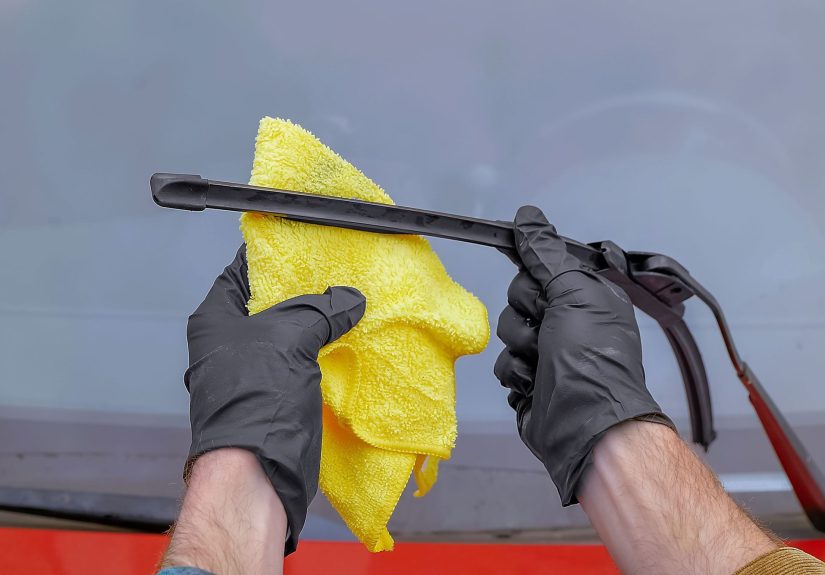
Mix warm water with a small amount of mild soap. Dip a microfiber cloth in the solution, wring it out so it’s damp (not dripping), then pinch the rubber blade between your fingers through the cloth and wipe from one end to the other.
Repeat until the cloth stops picking up dark residue. It’s normal for the first few passes to look like you just wiped a marker across your towel. That’s the gunk that was turning your windshield into a streak factory.
Step 6: Follow Up with Rubbing Alcohol (Optional, But Awesome)
If you deal with smearing, oily film, or stubborn residue, do a finishing wipe with isopropyl alcohol on a fresh cloth. This helps remove oils and leftover grime that soap sometimes leaves behind.
Tip: Don’t soak the blade; just dampen the cloth. You want clean rubber, not a science experiment.
Step 7: Clean the Blade Frame and Joints
Wiper performance can also suffer if the frame is packed with debris or the hinge points are stiff. Wipe down the blade’s plastic/metal frame and gently brush out trapped dirt near joints. If you see leaves, grit, or crusty buildup, remove it carefully.
Step 8: Dry and Inspect
Let the blades air-dry for a minute (or wipe them dry with a clean cloth). Then inspect the rubber edge:
- Look for cracks, splits, chunks missing, or a shiny/hardened edge.
- Check for warpinga blade that looks twisted may not contact evenly.
- Make sure the rubber edge feels smooth and flexible, not brittle.
Step 9: Lower the Arms Gently and Test
Lower each wiper arm back onto the windshield gently. Then test the wipers on a wet windshield (use washer fluid or water). Never “dry test” wipers on a dry windshieldit accelerates wear and can cause squeaking and chatter.
If Cleaning Doesn’t Fix It: Troubleshooting Like a Pro
Problem: Streaks That Won’t Quit
If the blades are clean but the streaks remain, the issue may be the windshield, not the wipers. Common culprits:
- Road film (oily grime that regular glass cleaner doesn’t fully remove)
- Wax or polish residue from automatic car washes
- Hard water mineral spots
Fix: Deep-clean the windshield with an automotive glass cleaner designed to cut film. In stubborn cases, detailers use clay bars or dedicated glass polishing productsbut if you go that route, follow product directions carefully to avoid scratching.
Problem: Chattering or Skipping
This often happens when rubber “grabs” the glass instead of gliding. Causes include wax residue, a dry windshield, or blades that are aging/hardening.
Fix: Clean both glass and blades again, confirm you’re using washer fluid, and inspect the blade edge for stiffness. If the rubber feels hard or looks cracked, replacement is the real solution.
Problem: Squeaking
Squeaking can be a sign of contamination, dry glass, or worn rubber. It can also happen if the wiper arm isn’t applying even pressure.
Fix: Clean the blades and windshield, ensure the windshield is wet when wipers run, and check the arm for obvious bending. If only one section wipes well, the arm spring may be weaksomething cleaning won’t fix.
Problem: Smearing (Looks Like Grease, Not Dirt)
Smearing usually points to oily contamination: road film, silicone residue, or overspray from products applied nearby.
Fix: Use rubbing alcohol on the blade edge and a film-cutting automotive glass cleaner on the windshield. Then test again with washer fluid.
Pro Tips to Keep Wipers Cleaner Longer
- Top off washer fluid and use a season-appropriate formula (bug remover in summer, de-icer blend in winter).
- Wash the windshield regularlya dirty windshield instantly re-contaminates clean blades.
- Don’t run wipers on ice. Defrost first. Ice can tear rubber edges or overload the wiper mechanism.
- Park in shade when possible. UV and heat accelerate rubber aging.
- Replace blades before they fail. Visibility is not the place to “wait and see.”
When It’s Time to Replace (No, Cleaning Can’t Perform Miracles)
Cleaning is maintenance. Replacement is reality. Swap your wipers if you see:
- Cracks, splits, or missing chunks in the rubber
- A hardened or brittle wiping edge
- Persistent streaking after cleaning the blades and glass
- Uneven wiping where one section never clears
- Metal frame damage or poor tension against the glass
If you replace blades and still get streaking, the windshield likely needs a deeper clean, or the wiper arm alignment/tension may need attention.
Conclusion
Cleaning windshield wiper blades is one of the highest-return, lowest-effort car care habits you can adopt. A few microfiber cloths, mild soap, and (optionally) rubbing alcohol can restore a clearer sweep, reduce noise, and help your blades last longer. Pair blade cleaning with a clean windshield and proper washer fluid, and you’ll spend less time fighting streaksand more time driving like you can actually see the road.
Real-World Experiences: of “Yep, Been There” Wiper Drama
Let’s talk about the moments that usually convince people to finally clean their wiper bladesbecause almost nobody wakes up and thinks, “Today feels like a wiper maintenance kind of day.” It’s usually more like, “Why does my windshield look like it’s being wiped with a greasy sandwich?”
The Pollen Apocalypse: Spring arrives, the trees start celebrating, and your car becomes a rolling allergy symptom. The windshield gets coated in yellow dust so fine it’s basically glitter’s annoying cousin. You hit the wipers during a light mist, and suddenly you’re rewarded with streaks that look like modern pinstripes. This is classic pollen buildup on both the glass and the rubber edge. A quick wipe-down with soapy water (and a follow-up alcohol swipe if it’s smearing) usually brings the wipers back from the dead.
The Bug Guts Road Trip: You drive two hours at highway speed and arrive with a windshield decorated like a horror movie for insects. The first time you run the wipers, you don’t “clean” the glassyou spread bug residue evenly across it. That’s when you learn a key life lesson: washer fluid is not a magic eraser. In these cases, cleaning the windshield first (yes, actually washing it) and then wiping the blades can stop the smearing cycle. Bonus points for using a washer fluid formulated for bugs when you travel.
The “Premium” Car Wash Wax Surprise: Automatic car washes can be amazing… until you leave with a slick wax film that makes your wipers chatter like they’re tap-dancing. The wipers skip, squeak, and act offended by your life choices. Cleaning the blades helps, but the real fix is deep-cleaning the windshield to remove that residue. Once the glass is truly clean, the blades can glide instead of grabbing.
The Winter Freeze Mistake: You’re late. The windshield is icy. You flip the wipers on like they’re tiny snowplows. The blades protest immediatelysometimes by tearing their own rubber edge or by smearing salt grit into the glass. After that, even on rainy days, the wipers streak because the edge is damaged or contaminated. The smarter move is defrost first, clear heavy snow/ice manually, then test wipers on a wet windshield. And if winter grit has turned your blades into sandpaper, cleaning may help temporarily, but replacement is often the real fix.
The “Why Is Only One Side Clear?” Mystery: You clean the blades, but one side still streaks. That’s often not dirtit’s uneven pressure. Wiper arms can weaken over time, or the blade can twist slightly. Sometimes a fresh set of blades solves it; other times the arm needs adjustment or replacement. Either way, the experience is the same: you stare at that one stubborn streak like it personally insulted your family.
Bottom line: most wiper problems start as a small maintenance issue and grow into a dramatic visibility crisis at the worst possible time. Cleaning your wiper blades regularly won’t make you immortal, but it will make you feel like the kind of person who has their life togetherat least in the “can see through the windshield” department.