Table of Contents >> Show >> Hide
- Why Long Hair Changes the Wig Game
- What You’ll Need
- Before You Start: Prep Your Natural Hair
- The Easiest Method for Long Hair
- Other Good Methods for Long Hair
- How to Make a Wig Look Natural When You Have Long Hair
- Common Mistakes to Avoid
- Quick Tips for Different Hair Types
- How to Keep Your Wig Comfortable All Day
- Quick & Easy Wig Routine You Can Actually Repeat
- Final Thoughts
- Real-Life Experiences: What Wearing a Wig With Long Hair Actually Feels Like
- SEO Tags
If you have long hair and you’ve ever tried to put on a wig by just stuffing everything into the back like you were packing a suitcase five minutes before checkout, you already know the problem: bumps, lumps, slipping, and a suspiciously round head shape that screams, “That is absolutely not my real bob.”
The good news is that wearing a wig with long hair is not hard once you know the trick. The goal is simple: get your natural hair as flat, smooth, and evenly distributed as possible. That creates a better base, makes the wig look more natural, and saves you from spending twenty minutes adjusting it in front of the mirror while whispering, “Why is it doing this?”
Whether you’re wearing wigs for fashion, convenience, protective styling, cosplay, performance, or just because you want mermaid hair on Monday and a sharp little bob on Tuesday, this guide walks you through the quickest and easiest way to put a wig on when you have long hair. We’ll cover prep, wig cap tricks, step-by-step methods, common mistakes, and real-life tips that make the whole process easier.
Why Long Hair Changes the Wig Game
Short hair can usually be brushed down, capped, and forgotten. Long hair has other plans. It wants to bunch at the nape, create a mysterious ridge at the crown, and escape in random little pieces near your ears. That is why the foundation matters more when your hair is longer, thicker, curlier, or layered.
A good wig application starts before the wig even touches your head. If the base underneath is bulky, the wig may sit too high, slide backward, or look oddly puffy. If the base is smooth and balanced, the wig sits better, feels more secure, and looks a whole lot more believable.
What You’ll Need
- A wig
- A wig cap, preferably nylon or mesh
- Bobby pins or flat hair pins
- A brush or wide-tooth comb
- Hair ties
- Optional: a little water, leave-in conditioner, or light styling cream for flyaways
- Optional: wig grip for extra security
You do not need a giant toolkit or a backstage glam squad. Most of the time, a wig cap, a few pins, and ten calm minutes will do the job.
Before You Start: Prep Your Natural Hair
1. Make sure your hair is dry and detangled
Do not put a wig over damp, tangled hair unless you enjoy discomfort and regret. Dry hair is easier to flatten and less likely to create weird shapes under the cap. Gently brush or comb through your hair first, especially at the nape where knots love to form.
2. Skip the huge bun
This is one of the biggest mistakes beginners make. A low bun may feel tidy, but under a wig it can create an obvious bump. Instead, spread the hair around your head in a flatter pattern. Think “distributed,” not “compressed into one baseball-sized lump.”
3. Avoid pulling your hair too tight
A snug foundation is good. A painfully tight foundation is not. Tight braids, hard yanks around the hairline, and too much tension can irritate your scalp and stress your hair. If it hurts, loosen it. A wig should make you feel fabulous, not like your scalp is filing a formal complaint.
The Easiest Method for Long Hair
If you want the fastest reliable method, this is it. It works especially well for beginners and for everyday wear.
Step 1: Part your hair into two sections
Use your fingers or a comb to split your hair into a left and right section. This makes the hair easier to control and helps you balance it across your head.
Step 2: Create two low braids
Braid each section loosely but neatly. You do not need Instagram-perfect braids. You just need them secure enough to keep the hair together. If your hair is very thick, you can make more than two braids for a flatter result.
Step 3: Wrap the braids around your head
Take each braid and wrap it around the back or sides of your head as flat as possible. Pin them down with bobby pins. The idea is to spread the volume out evenly instead of stacking it in one place.
Step 4: Put on the wig cap
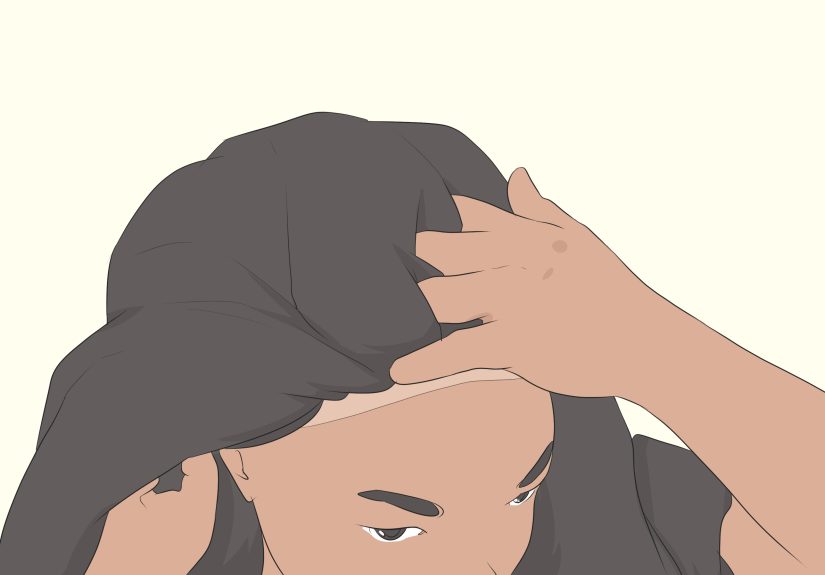
Stretch the wig cap open and start at the nape of your neck. Pull it up and forward over your hair toward your forehead. Tuck in any loose strands, especially around the ears and neckline. If necessary, add a few crisscrossed pins near the temples or nape for extra hold.
Step 5: Position the wig
Hold the wig at the sides or nape, depending on its construction. Place it from the back first, then pull it forward toward your natural hairline. Adjust the front so it sits where it should, then pull the nape down into place.
Step 6: Adjust the ear tabs and straps
Most wigs have ear tabs and adjustable straps. Make sure the ear tabs are even on both sides. If the wig feels loose, tighten the straps. If it feels like your brain is being gift-wrapped, loosen them a little.
Step 7: Blend and style
Once the wig is on, use your fingers or a wig-safe brush to settle the hair. If it is a lace-front wig, trim the lace carefully if needed and adjust the hairline so it looks natural. For regular cap wigs, a little fluffing at the roots can help the style fall into place.
Other Good Methods for Long Hair
The pin-curl method
If braids are not your thing, divide your hair into sections, twist each section into a flat little coil, and pin it close to your head. This works well for medium-to-long hair and can create a very smooth base under a wig cap.
The wrap method
Brush the hair around your head in one direction, wrapping it flat against the scalp and pinning it as you go. This can work especially well for straighter hair and for people who want a sleek, low-bulk foundation.
The multiple-braid method for very thick hair
If your hair is long and thick, two braids may still feel bulky. Try four to six smaller braids instead. Pin them in a circular pattern around your head so the bulk is spread out evenly.
How to Make a Wig Look Natural When You Have Long Hair
Choose the right cap size
If your wig is too small, it may ride up. If it is too large, it may slide around like it is searching for a better home. Measure your head if needed and choose a wig size that actually fits.
Use the right wig cap
A nylon or mesh wig cap helps hold your hair in place and reduces slippage. In hot weather, a breathable cap may feel more comfortable. If you find nylon too warm, try cotton or mesh options that allow better airflow.
Distribute hair evenly
This is the golden rule. The flattest wig application usually comes from spreading the hair across the head rather than concentrating it at the bottom or crown.
Mind the hairline
Even if the wig is beautiful, a crooked or too-low hairline can give the game away. Position the front carefully. A natural-looking placement usually matters more than perfection in every other detail.
Trim and customize if needed
Sometimes a wig looks more realistic after a little personalization. A trim, a few face-framing layers, or softer bangs can make the style look like yours instead of straight from the package.
Common Mistakes to Avoid
Using one giant bun
We need to talk about the bun again because it causes so much drama. A single bulky bun under a wig often creates a visible hump. Cute for a ballet class, not ideal under a sleek wig.
Ignoring the nape
The hair at the back of your neck loves to escape. Tuck it in well and secure it. If the nape is bulky or loose, the whole wig can feel off.
Overusing product
Heavy gels, oily serums, and sticky product can make your cap slide and can transfer onto the wig. Keep the prep light unless you specifically need a little control for flyaways.
Making the base too tight
Tight does not equal secure. Too much tension can stress your scalp and hairline. Comfort matters, especially if you plan to wear the wig for hours.
Skipping breaks
If you wear wigs often, give your scalp and natural hair some breathing room. Keep your hair clean, moisturized, and free from constant tension. Protective styling should actually protect your hair, not pick a fight with it.
Quick Tips for Different Hair Types
If your hair is very long
Try multiple braids and pin them flat in sections. You may also prefer a wig with a bit more density so the cap structure hides the foundation more easily.
If your hair is thick
Work in smaller sections. Thick hair usually behaves better when divided into more braids or more pin curls. Patience now saves frustration later.
If your hair is curly or coily
Stretching the hair gently before braiding can reduce bulk. Keep your strands moisturized, but avoid products so greasy that the cap slides around.
If your hair is fine but long
You may be able to use the wrap method or two very flat braids. Fine hair often needs less structure, but it can still slip, so a wig cap or wig grip can help.
How to Keep Your Wig Comfortable All Day
Comfort comes from balance: a secure wig, a breathable base, and a foundation that does not pull too hard. If you get hot easily, choose lighter cap constructions and breathable wig caps. If the wig shifts during the day, try adjusting the straps or adding a wig grip rather than pinning everything into oblivion.
Also, remember that the wig itself needs care. A clean wig feels better, styles better, and tends to look more natural. Brush it gently, store it properly, and follow the care directions for the fiber type. Synthetic and human-hair wigs are not the same, and they absolutely know when you treat them like they are.
Quick & Easy Wig Routine You Can Actually Repeat
- Detangle dry hair.
- Split into sections.
- Braid or pin flat.
- Put on a wig cap from nape to forehead.
- Tuck in loose strands.
- Place the wig from back to front.
- Adjust ear tabs and straps.
- Style and go be dramatic in the best way.
Final Thoughts
If you have long hair, putting on a wig is less about wrestling your hair into submission and more about building a smooth foundation. Once you stop relying on the giant bun method and start distributing your hair evenly, wigs get easier, faster, and a lot more comfortable.
The best part is that the process gets quicker with practice. The first time may feel like a puzzle. By the fifth time, you’ll be braiding, capping, and adjusting like you have your own dressing room and a nameplate on the mirror. The real secret is not magic. It is prep, placement, and a little patience.
So if you’ve been wondering how to put a wig on if you have long hair, now you know: flatten the base, use a wig cap, position the wig carefully, and avoid overcomplicating it. Quick and easy is absolutely possible. And yes, your head can look smooth instead of suspiciously shaped.
Real-Life Experiences: What Wearing a Wig With Long Hair Actually Feels Like
The first time many people with long hair try on a wig, the biggest surprise is not the wig itself. It is the realization that their own hair has opinions. Suddenly, the back of the head feels bulky, little strands rebel near the ears, and the wig that looked sleek in the box now sits on top like it is trying to rent space instead of move in permanently.
That learning curve is normal. In real life, most wig wearers do not master the process in one perfect try. Usually, there is a short experimental era. You try a low bun. Bad idea. You try shoving everything into one cap without sectioning. Worse idea. Then one day you part your hair, make two or four flat braids, pin them around your head, and suddenly the wig sits lower, smoother, and more naturally. That is the moment when things start to click.
People with very long hair often say the nape area is the hardest part. That makes sense because longer hair tends to collect at the back of the neck. One trick that changes everything is taking a little extra time with that section instead of rushing through it. When the nape is flat, the whole wig usually feels better balanced.
Another common experience is discovering that comfort matters just as much as appearance. A wig can look amazing for ten minutes and still be a terrible choice if the cap is too tight, the pins poke, or the straps feel like a tiny punishment device. Over time, most people learn their own sweet spot: secure enough to stay put, gentle enough to forget about for hours.
There is also a confidence shift that happens after a few successful wears. At first, many beginners assume everyone can tell they are wearing a wig. In practice, most people are far less observant than we think. What usually gives a wig away is not the fact that it is a wig. It is an awkward fit, a bulky base, or a hairline placed too low. Once those details improve, confidence tends to follow.
And then there is the freedom. Long-haired wig wearers often love how easy it becomes to switch styles without heat-styling their natural hair every day. You can tuck your hair away, protect it from constant manipulation, and still enjoy a different look whenever you want. One day it is sleek and straight. The next day it is soft curls. The day after that, maybe a sharp little bob that makes you feel like you pay bills early and never lose receipts.
The experience becomes even better when you accept that your routine does not need to look like anyone else’s. Some people love wig grips. Some swear by mesh caps. Some need six braids; others only need two. The best method is the one that keeps your hair flat, your scalp comfortable, and your wig secure. That is the real win.