Table of Contents >> Show >> Hide
- First, What Is an Unofficial Transcript (and What Isn’t It)?
- Before You Read: Find the Legend (a.k.a. the Transcript Key)
- The Anatomy of an Unofficial Transcript
- How to Read an Unofficial Transcript in 14 Steps (with Pictures)
- Step 1: Confirm you’re looking at the right person (yes, really)
- Step 2: Identify the academic level and program context
- Step 3: Find the term format (semester, quarter, mini-session)
- Step 4: Read one course line like it’s a sentence
- Step 5: Decode course codes and department abbreviations
- Step 6: Understand credits, units, attempted hours, and earned hours
- Step 7: Translate grades and grading bases (letter, pass/fail, audit)
- Step 8: Learn the GPA math: quality points are the secret sauce
- Step 9: Separate term GPA from cumulative GPA
- Step 10: Interpret special grades like W, I, IP, NR, and friends
- Step 11: Spot repeats and grade replacement rules
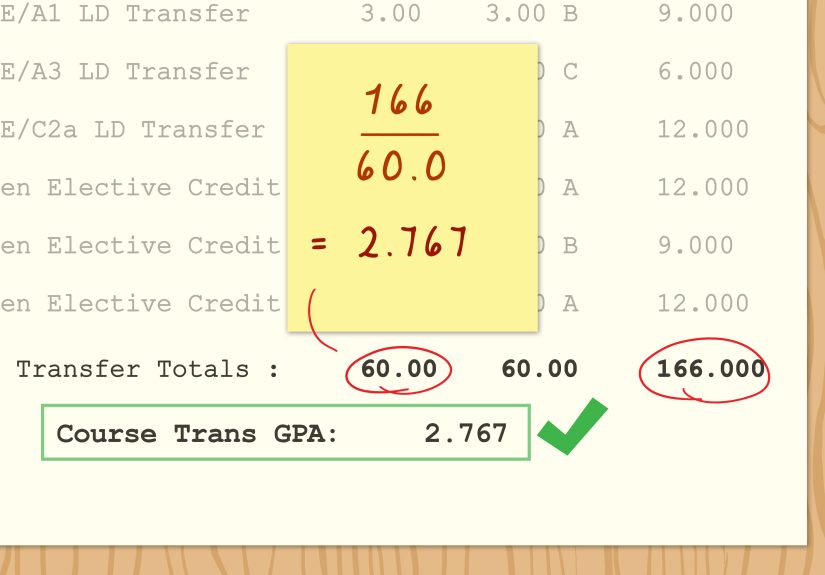
- Step 12: Understand transfer credit, AP/IB credit, and equivalencies
- Step 13: Check academic standing and honors notes
- Step 14: Do a quick “sanity scan” and know when to request official records
- Worked Example: Reading a Transcript Like a Pro (Without Becoming One)
- When an Unofficial Transcript Is Enough (and When It’s Not)
- Privacy: Share Smart, Not Sorry
- Extra: Real-World Experiences and Pro Tips (About )
- Conclusion: Read the Story, Not Just the Numbers
Your unofficial transcript is basically the “director’s cut” of your academic life: every class, every credit, every grade
plus a bunch of mysterious codes that look like they were invented by a sleep-deprived wizard in the Registrar’s office.
The good news? Once you know what to look for, it reads less like ancient runes and more like a very organized receipt.
In this guide, you’ll learn how to read an unofficial transcript confidently, spot what actually matters (GPA hours, quality points,
repeats, withdrawals), and avoid classic misunderstandings that make smart people say things like, “Wait… why is my GPA doing that?”
First, What Is an Unofficial Transcript (and What Isn’t It)?
An unofficial transcript is a student-accessible version of your academic recordusually downloaded from a student portal.
It typically includes your course history, credits, grades, term-by-term totals, and cumulative totals. It’s perfect for planning,
advising meetings, scholarship pre-checks, and personal recordkeeping.
Here’s the catch: unofficial means it’s not certified. It usually won’t include official security features like a registrar’s
seal/signature, tamper-evident paper, or a secure delivery method. Many schools require an official transcript (sent directly
from the institution or via an authorized service) for admissions, licensing, and certain job background checks.

Before You Read: Find the Legend (a.k.a. the Transcript Key)
If transcripts came with a decoder ring, it would be called the transcript key (or legend). Many colleges publish one that explains:
grade symbols (like W, I, IP), how GPA is calculated, what counts in “attempted” vs “earned,” and how repeats or transfer credits display.
If your unofficial transcript doesn’t show the key directly, look for a “Transcript Key,” “Legend,” or “Grading Basis” page in your school’s
registrar resources. Reading the key first is like reading the map before a road triptechnically optional, but it saves you from crying later.

The Anatomy of an Unofficial Transcript
Most unofficial transcripts are organized into a few predictable sections. Knowing the layout helps you read faster and miss fewer surprises.
- Student & school info: name, student ID (sometimes partial), program, college, and academic level
- Term sections: each semester/quarter with courses, credits, grades, and term totals
- Cumulative totals: overall attempted/earned credits and cumulative GPA (if your program uses GPA)
- Transfer/AP/IB credit: credit awarded from exams or other institutions
- Academic standing: honors, probation, suspension, or “good standing” notes
- Degrees awarded: degree type, major, and conferral date (if graduated)
How to Read an Unofficial Transcript in 14 Steps (with Pictures)
-
Step 1: Confirm you’re looking at the right person (yes, really)
Start at the top. Verify your name and identifying details. If your transcript includes a student ID, make sure it matches yours.
This sounds obviousuntil you download the transcript while logged into a shared family computer and suddenly become “Alex, Class of 2022.”
Picture idea: Highlight the header area showing name, program, and academic level. -
Step 2: Identify the academic level and program context
“Undergraduate,” “Graduate,” “Law,” “Medical,” or “Continuing Education” can change how grading works and what appears on the record.
Some programs use GPA; others show narrative evaluations or different grading bases. -
Step 3: Find the term format (semester, quarter, mini-session)
Make sure you know whether you’re viewing semesters (Fall/Spring), quarters (Autumn/Winter/Spring), or sessions (e.g., “Summer I/II”).
This matters because credit loads and GPA calculations can look “off” if you assume the wrong calendar. -
Step 4: Read one course line like it’s a sentence
Most course rows follow a pattern:
Course code → title → credits/units → grade → grade points/notes.
Once you can read one line, you can read the whole transcript.Example: ENG 101 | Composition I | 3.00 | B+ | (notes)
-
Step 5: Decode course codes and department abbreviations
Course codes usually include a department abbreviation (ENG, BIO, MATH) plus a number indicating level (100/200/300/400 or 1000/2000, etc.).
A 100-level course is generally introductory; a 300-level often assumes prerequisites. This helps you understand rigor and progression. -
Step 6: Understand credits, units, attempted hours, and earned hours
Credits (or units) measure course weight. But transcripts often track totals in multiple categories:
- Attempted hours: what you registered for that counts toward workload
- Earned hours: what you successfully completed for credit
- GPA hours: hours included in GPA calculations (often excludes W, I, pass/fail, and some special grades)
If you withdrew from a class, you may see attempted hours but not earned hours. That’s not your transcript being dramaticjust precise.
-
Step 7: Translate grades and grading bases (letter, pass/fail, audit)
Many transcripts use letter grades (A–F) with plus/minus. Others include:
P/NP (Pass/No Pass), S/U (Satisfactory/Unsatisfactory),
or AU (Audit).Pass/fail and audit courses often do not affect GPA, but may or may not count toward earned credits depending on policy.
Your transcript key tells you what counts. -
Step 8: Learn the GPA math: quality points are the secret sauce
Here’s the most common GPA logic:
Quality points = credit hours × grade point value.
Then:
GPA = total quality points ÷ GPA hours.So a 3-credit class with an A (4.0) typically earns 12 quality points. A 4-credit class with a B (3.0) earns 12 quality points.
Same points, different workload. Yes, this is why a rough grade in a heavy-credit class stings.
Picture idea: Include a simple graphic: credits × grade points = quality points; GPA = QP ÷ GPA hours. -
Step 9: Separate term GPA from cumulative GPA
Most transcripts show a term GPA (just that semester/quarter) and a cumulative GPA (everything so far).
Don’t confuse them. A rocky first semester might be followed by a steady climbyour cumulative GPA tells the long story. -
Step 10: Interpret special grades like W, I, IP, NR, and friends
These are the symbols that cause panic at 2:00 a.m.:
- W (Withdrawal): you left the course after add/drop; usually no quality points and no earned credit
- I (Incomplete): temporary grade pending remaining work; often excluded from GPA until resolved
- IP/P (In Progress/Progress): ongoing course; GPA impact depends on policy
- NR (No Report): grade not reported yet; should resolve later
Your school’s legend will clarify whether a symbol counts toward attempted hours, GPA hours, or earned credit.
-
Step 11: Spot repeats and grade replacement rules
If you repeated a course, your transcript may show both attempts. Some schools replace the earlier grade in GPA; others average,
use the most recent grade, or include both attempts but annotate the repeat. The transcript key and academic policy determine which.Reading tip: look for repeat indicators, “R” marks, footnotes, or remarks in the term totals.
-
Step 12: Understand transfer credit, AP/IB credit, and equivalencies
Transfer and exam credits may appear in a separate section or within term blocks, often without a letter grade.
You might see a course equivalency (e.g., “HIST 1XX”) and credits awarded.Important nuance: transfer credits may count toward earned credits but not your institutional GPA.
That’s why your transcript can show lots of earned credits while GPA hours look smaller. -
Step 13: Check academic standing and honors notes
Many transcripts include academic standing each term (e.g., Good Standing, Dean’s List, Probation).
Standing notes aren’t just decorative; they can impact eligibility for aid, athletics, or program progression. -
Step 14: Do a quick “sanity scan” and know when to request official records
Before you use your unofficial transcript for anything important:
- Check for missing grades or “NR” that never resolved
- Confirm repeated courses are marked correctly
- Verify transfer/exam credit posted as expected
- Match term totals (GPA hours and quality points) against your course list
If you’re applying to schools, licensing boards, immigration processes, or employers who require verification,
request an official transcript through your registrar or authorized transcript service.
Worked Example: Reading a Transcript Like a Pro (Without Becoming One)
Let’s translate transcript math into plain English with a simple example. Imagine your term shows:
| Course | Credits | Grade | Grade Points | Quality Points |
|---|---|---|---|---|
| ENG 101 | 3 | A | 4.0 | 12.0 |
| MATH 120 | 4 | B | 3.0 | 12.0 |
| HIST 110 | 3 | C+ | 2.3 | 6.9 |
Term totals:
GPA hours = 3 + 4 + 3 = 10 (assuming all are graded),
Quality points = 12.0 + 12.0 + 6.9 = 30.9.
Now compute:
Term GPA = 30.9 ÷ 10 = 3.09.
If you also had a withdrawn course (W) worth 3 credits, it might still appear as attempted hours on some summaries,
but typically wouldn’t add GPA hours or quality points. That’s how you can “take” a class, see it listed,
and still not have it affect GPAbecause the transcript is tracking multiple categories at once.
When an Unofficial Transcript Is Enough (and When It’s Not)
Usually fine for:
- Checking your progress before meeting an academic advisor
- Drafting a resume or verifying course titles and dates
- Scholarship pre-screening or early internship conversations (if they allow it)
- Personal GPA planning (“What do I need next term to hit 3.5?”)
Usually not fine for:
- College transfer applications that require certified records
- Graduate/professional admissions with strict document requirements
- Licensure, credentialing, or government verification processes
- Any situation where the recipient says “official transcript only” (they mean it)
Also note: some institutions consider an official transcript “official” only if it stays sealed (paper) or is delivered securely
(electronic). If you forward a secure PDF yourself, it may no longer count as official to the recipient.
Privacy: Share Smart, Not Sorry
Transcripts are part of your education record. Even if you’re allowed to view and download them easily, you should treat them like sensitive documents.
If you must share an unofficial transcript, consider:
- Redacting student ID, birthdate, or address if visible
- Sending via secure upload portals rather than email attachments when possible
- Double-checking recipients (autofill has betrayed the best of us)
- Keeping a clean copy for yourself and sending a separate copy for sharing
Extra: Real-World Experiences and Pro Tips (About )
People rarely struggle with the idea of a transcriptthey struggle with the “tiny surprises” inside it. One of the most common experiences
students report is the moment they realize their transcript is tracking multiple types of hours: attempted, earned, and GPA hours. You might feel like
you completed 15 credits in a semester, but the transcript totals show 12 earned and only 9 GPA hours. That’s not the transcript accusing you of lying;
it’s usually reflecting a mix of graded courses, pass/fail courses, labs with different credit weights, withdrawals, or incompletes.
Another classic scenario: the withdrawal (W). Students often assume a W is the same as an F because it “looks bad.”
In reality, many schools treat a W as a record of withdrawal without quality points, meaning it typically doesn’t lower GPA the way a failing grade does.
The bigger practical impact tends to be policy-related: too many withdrawals can affect financial aid requirements, athletic eligibility, or completion pacing.
The pro tip here is to read the transcript and the policy togetheryour transcript shows what happened, and the policy explains what it means.
Course repeats are another area where smart people get tripped up. It’s common to expect that repeating a course automatically “erases” the first grade.
But transcript practices vary. Sometimes both attempts remain visible, and only one counts in the GPA. Sometimes the most recent grade counts. Sometimes the
highest grade counts. Sometimes both count. If you’ve ever felt betrayed by math, this is often where the betrayal started. The fix is simple: locate the
repeat indicator on the transcript and confirm which attempt is included in GPA totals by checking the GPA hours and quality points for that term.
Transfer credit confusion comes up constantly, especially for students who took dual enrollment in high school, changed institutions, or brought in AP/IB credit.
A common experience is seeing credit awarded with no grade attachedthen worrying it “doesn’t count.” In many cases, it counts toward earned credits and degree
requirements but not the institution’s GPA. That’s why your transcript can show a strong number of total credits while your GPA hours are lower than expected.
When you’re planning graduation or aiming for honors thresholds, that distinction matters.
Finally, there’s the “administrative weirdness” phase: grades marked NR (not reported), IP (in progress), or I (incomplete). Students often screenshot these
and send them to friends like they’ve discovered a rare Pokémon. The best tip is not to panicthese codes usually mean “pending,” not “permanent.” But do
set yourself a reminder to follow up, because unresolved incompletes or missing grades can block registration, financial aid, or graduation clearance.
The most effective transcript readers aren’t the ones who memorize every code; they’re the ones who notice what changed (or didn’t) and ask questions early.
Conclusion: Read the Story, Not Just the Numbers
An unofficial transcript is a detailed snapshot of your academic journeyclasses, credits, grades, and the behind-the-scenes math that turns everything into
a GPA and progress totals. Once you know how to interpret course lines, credit categories, special symbols, and term vs cumulative totals, you can use your
transcript confidently for planning, advising, and applications that allow unofficial records.
When stakes are high (admissions, licensing, verification), request an official transcript through your registrar or authorized service. Meanwhile, keep
your unofficial transcript handyit’s one of the best tools you have for understanding where you are and what you need next.